Table of Contents >> Show >> Hide
- Why Venus Is a Volcano Superstar
- So… Are There Active Volcanoes on Venus?
- How Volcanoes Form on Other Planets (The Universal Recipe)
- Venus vs. Mars vs. Io: Same Volcano Word, Different Vibes
- What Counts as “Proof” of Volcanism on Another Planet?
- Why Venus Volcanism Matters (Beyond “Because Volcanoes Are Cool”)
- The Next Era: Missions Designed to Catch Venus in the Act
- Practical Takeaways: How Volcano Formation “Scales” Across Worlds
- Experiences: A “Field Trip” to Venusian Volcanoes (500+ Words)
- Conclusion
Venus is Earth’s near-twin in size and rocky makeupyet it behaves like the universe’s biggest “same ingredients, wildly different recipe” experiment.
The surface is hot enough to melt lead, the air is thick enough to feel like you’re scuba diving in soup, and the clouds are made of sulfuric acid.
So naturally, the big question is: does Venus still have active volcanoesand what can Venus teach us about how volcanoes form on other worlds?
Here’s the twist: for a long time, scientists strongly suspected Venus was volcanic, but catching an eruption in the act was tough because the planet is
wrapped in clouds that hide the surface from ordinary cameras. Then radar data (plus some clever detective work) started to reveal something spicy:
Venus doesn’t just have volcanoes. It likely has recently active ones, too.
Why Venus Is a Volcano Superstar
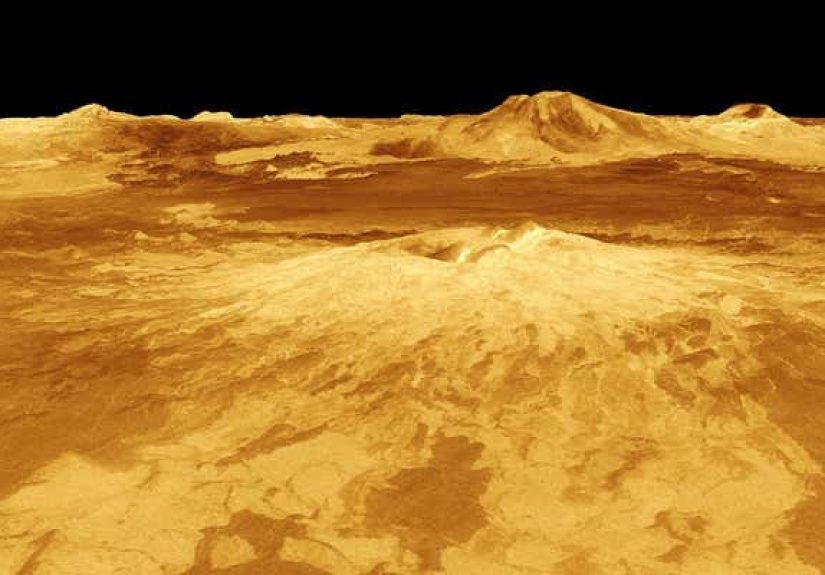
Venus is basically a giant volcanic landscape. Much of its surface is covered by broad lava plains and volcanic features. The planet has
large shield volcanoes (think “Hawaiian-style, but planet-sized”), volcanic rises, and unusual structures like coronaehuge, ring-like features
thought to form when hot material from the mantle pushes up the crust, then the crust collapses and fractures in dramatic patterns.
What makes Venus different from Earth?
- No clear modern plate tectonics (as far as we can tell): Earth’s volcanoes often form at plate boundaries or hotspots. Venus appears to run its heat engine differently.
- A thick, insulating atmosphere: Venus traps heat efficiently at the surface, but interior heat still must escapeoften through volcanism.
- Surface conditions that preserve volcanic shapes: With no oceans and limited erosion, volcanic landforms can remain visible for a very long time.
So… Are There Active Volcanoes on Venus?
The strongest “caught-you-red-handed” evidence for activity comes from radar observations by NASA’s Magellan spacecraft (early 1990s) that were analyzed
decades later with modern techniques. One famous case involves Maat Mons, where researchers compared radar images taken months apart and found a
volcanic vent area that changed shape and size in a way consistent with an eruption and/or lava lake activity.
Follow-up analyses have reported additional sites where radar brightness and patterns look consistent with relatively recent lava flows. Together, these findings
add weight to the idea that Venus is not a geologic museumit’s a planet that still has a pulse.
How radar “sees” eruptions through Venus’ clouds
Venus is cloud-blanketed, but radar doesn’t care about clouds the way visible light does. Radar can bounce off the surface and return signals that reveal
textures, slopes, and changes over time. If a volcanic vent expands, collapses, or fills; if fresh lava smooths out rough terrain; or if new flows alter the
surface reflectivity, radar can pick up a difference.
The catch: you need images of the same area at different times, from similar viewing angles, and you need serious expertise to tell “real change” from
“radar geometry being weird.” That’s why these results took decades to confirmand why they’re so exciting.
How Volcanoes Form on Other Planets (The Universal Recipe)
At the most basic level, volcanoes form when melted rock (magma) rises and erupts at the surface as lava, ash, or gases.
To get that magma, you need a heat source and a way to melt rock. Across the Solar System, there are a few main “magma-makers.”
1) Heat from a planet’s interior
Rocky planets retain heat from their formation and generate additional heat from radioactive decay. If the interior stays warm enough, parts of the mantle
can melt. That melt is buoyant, so it risessometimes pooling in magma chambers and eventually erupting.
2) Pressure changes (decompression melting)
If hot mantle rock rises, the pressure drops. Lower pressure can cause partial melting even if the temperature doesn’t change much. On Earth, this commonly
happens at mid-ocean ridges; on other planets, it can occur over mantle upwellings (plumes) without plate tectonics.
3) Adding “melt helpers” (volatiles)
Water and other volatiles lower the melting temperature of rock. Earth has lots of water cycling into the mantle at subduction zones, fueling explosive volcanism.
Drier worlds may have fewer “extra ingredients,” often leading to eruptions dominated by runny basaltic lava rather than big ash columns.
4) Tidal heating (the wild card)
Some worlds get kneaded by gravity. A moon in a tight orbit around a giant planet can be flexed like a stress ball, generating heat through friction.
The poster child is Io (a moon of Jupiter), which is the most volcanically active body in the Solar System.
Venus vs. Mars vs. Io: Same Volcano Word, Different Vibes
Venus: Broad shields, coronae, and possible modern activity
Venus’ volcanoes include massive shield volcanoes and wide volcanic rises. The planet’s lack of obvious plate tectonics suggests many volcanoes may be tied to
mantle upwellings and regional lithosphere behavior rather than classic plate-boundary settings. Coronae likely reflect plume-lithosphere interactions on a grand scale.
Mars: Home to the Solar System’s biggest volcanoes
Mars is famous for Olympus Monsso large it makes Everest look like a speed bump. Why can Mars build such huge volcanoes?
Two big reasons: lower gravity lets volcanoes grow taller before collapsing, and less erosion means mountains don’t get worn down as quickly.
Plus, if a hotspot stays put under a stationary crust for long periods, lava can stack up into a mega-shield.
Io: Volcanoes powered by gravity itself
Io’s volcanism is driven mostly by tidal heating. Instead of “cooling down with age,” Io stays hot because Jupiter’s gravity (and orbital resonances)
continually flex the moon’s interior. It’s like having a cosmic Pilates class that never ends.
What Counts as “Proof” of Volcanism on Another Planet?
On Earth, we can watch lava flow on a livestream. On Venus, we have to be more creative. Scientists look for several kinds of evidence:
- Surface change: New vents, altered calderas, or fresh flows visible in repeat imaging (especially radar for Venus).
- Thermal hotspots: Elevated heat signatures seen in infrared (hard on Venus, easier on airless bodies or thin-atmosphere planets).
- Gas signatures: Volcanic gases (like SO2) that spike and drop in ways that suggest injections from below.
- Fresh-looking lava: Flows with fewer impact craters and sharper edges, implying relatively recent emplacement.
The best scientific case often comes from combining multiple lines of evidencebecause one clue can be ambiguous, but several independent clues
pointing to the same story start to look like a solid conviction.
Why Venus Volcanism Matters (Beyond “Because Volcanoes Are Cool”)
Venus is central to understanding how rocky planets evolve. Volcanoes don’t just build mountains; they can reshape atmospheres, recycle crust, and alter climate.
On Earth, volcanism is tied to plate tectonics and long-term carbon cycling. On Venus, where the atmosphere is already extreme, volcanism could help explain:
- How the atmosphere became so dense and hot (outgassing over time can add CO2 and other gases).
- Why the surface looks relatively “young” in crater counts compared with some expectations (resurfacing by lava can erase older craters).
- Whether Venus has episodic “global resurfacing” or steadier, region-by-region volcanism.
The Next Era: Missions Designed to Catch Venus in the Act
The Magellan mission gave us a revolutionary radar view, but it’s like trying to understand modern weather with a few snapshots from the early 1990s.
New missions aim to map Venus with higher resolution and track surface deformationone of the best “tells” for active magma movement.
What scientists hope to measure
- Surface changes over time with better repeat imaging.
- Ground deformation (uplift or subsidence) that can indicate magma rising or draining.
- Rock type and composition clues that may distinguish older from younger lava flows.
If future radar mapping repeatedly shows new flows, changing vents, or deformation, Venus could become the best laboratory we have for studying
volcanic worlds without plate tectonicsan important lesson as we interpret rocky exoplanets around other stars.
Practical Takeaways: How Volcano Formation “Scales” Across Worlds
If you remember nothing else (except maybe “Venus is spicy”), remember these big rules:
- Heat is non-negotiable: No heat, no melt, no volcano.
- Gravity and erosion control volcano size: Low gravity + low erosion can build colossal shields (hello, Mars).
- Water changes eruption style: More volatiles often means more explosive potential.
- Planet structure matters: Plates, plumes, crust thickness, and mantle chemistry all influence where magma forms and how it erupts.
- Some worlds cheat with tidal heating: Moons like Io can stay volcanically active even if they’re small.
Experiences: A “Field Trip” to Venusian Volcanoes (500+ Words)
Let’s do something we cannot do in real life (for reasons including “instant pancake”): take a guided, imagination-powered expedition to Venus.
Not a sci-fi fantasy where you stroll around in a t-shirtthis is a realistic experience tour where the star of the show is how scientists experience Venus
through data.
First stop: the control room vibe. You’re not looking at a postcard photo; you’re looking at a radar mapblack, white, and speckled like a cosmic TV with bad reception.
Someone explains that the “snowy” texture is normal radar behavior. Another person says, “Okay, now compare this pass to the one eight months later,” and suddenly you’re
doing the most planetary version of a spot-the-difference puzzle ever.
Your eyes drift to a feature labeled Maat Mons. On one image, a vent looks compact. On the later image, it appears expanded, reshaped, almost like the
planet took a deep breath and exhaled lava. The team’s mood is cautiousno one is high-fiving yet. They talk about viewing angle, radar incidence, and how tricky it is
to separate “real geological change” from “the radar got a different look.” You learn that discovery is often less “Eureka!” and more “Wait… is that… can you run
that again?”
Next, you “fly” over Venus in a simulated 3D model made from radar topography. The volcanoes aren’t dramatic cone mountains like you might picture from Earth’s
stratovolcano posters. Many are broad shields with gentle slopes that stretch for milesless “Mount Doom” and more “a continent decided to become slightly taller.”
The calm shape is deceptive: on basaltic worlds, lava can travel far and build wide, low profiles. The experience is like hovering over a giant, ancient spill that
never fully cooled down in the planet’s memory.
Then you visit a corona in the dataan enormous ringed feature. Imagine a halo-shaped scar with fractures radiating like spokes.
The scientists describe mantle upwelling pushing the crust, then collapse, then volcanism. It’s like the planet tried to rise, cracked under pressure,
and then patched itself with lava. If Earth is a planet that constantly remodels with moving plates, Venus feels like a planet that remodels by
“stretch, sag, pour lava, repeat.”
Your tour guide (probably an over-caffeinated geophysicist) shifts to other planets. On Mars, the “experience” changes:
you picture a hotspot feeding a volcano for ages under a relatively stationary crust, stacking lava until Olympus Mons becomes absurdly huge.
On Io, the experience becomes almost musicaltidal flexing turning orbital motion into heat, heat into melt, and melt into relentless eruptions.
Same concept, different power supply.
Finally, you end the day with the most honest scientific experience of all: planning the next measurement.
The team debates what a future radar mission should prioritize: repeat passes to catch changes, interferometry to measure deformation, better resolution to map flows,
and ways to compare “before” and “after” without being fooled by geometry. The “experience” of Venus volcanism, for now, is the experience of inference:
building a story from signals, testing it against physics, and waiting for the next dataset to either confirm itor roast it.
And yes, somewhere in the background, someone jokes that Venus is the only planet that can turn “just one more look” into a multi-decade cliffhanger.
But when your reward might be proving active volcanism on Earth’s twin, it’s the kind of cliffhanger worth binge-watching.
Conclusion
Volcanoes form on other planets when heat generates melt and geology provides pathways to the surface. The detailseruption style, volcano size, and where volcanoes appear
depend on gravity, crust behavior, volatiles, and energy sources like tidal flexing. Venus is especially fascinating because radar evidence suggests it may still be
volcanically active today, offering a rare window into how a rocky planet can evolve without Earth-like plate tectonics.