Table of Contents >> Show >> Hide
- 1. Orcas Are “Killer Whales” That Aren’t Even Whales
- 2. They’re Apex Predators Who Scare Great White Sharks
- 3. Orca Cultures Have Different Menus and Traditions
- 4. Orca Families Are Run by Powerful Matriarchs
- 5. They Have Dialects and Possibly “Names”
- 6. Their Hunting Tricks Are Wildly Creative
- 7. Orcas Sometimes Kill for Reasons We Don’t Fully Understand
- 8. The “Orcas vs. Boats” Saga Is Real
- 9. Wild Orcas Almost Never Attack Humans
- 10. Orcas Are Living Climate and Ecosystem Indicators
- Bonus: Real-World Experiences With Orcas in the Wild
- Conclusion: The Ocean’s Smartest Super-Predators
If ocean animals had a group chat, orcas would be the chaotic admins running everything. They’re sleek, stylish, a little bit terrifying, and smart enough to outplay almost anything that swims, flies, or occasionally goes sailing where it shouldn’t. Often called “killer whales,” these black-and-white torpedoes are actually super-sized dolphins with family dramas, regional cultures, and hunting strategies that would put some special forces teams to shame.
Whether you know them from documentaries, memes about sinking boats, or that one childhood movie that made everyone cry, orcas are endlessly fascinating. Let’s dive into ten killer facts about orcas that show just how strange, powerful, and downright brilliant these animals really are.
1. Orcas Are “Killer Whales” That Aren’t Even Whales
Plot twist: orcas are not true whales. Biologically, they’re the largest members of the oceanic dolphin family, Delphinidae. Adults can grow up to about 26–32 feet long (that’s roughly a city bus turned sideways) and weigh up to 12,000 pounds for males, with females slightly smaller.
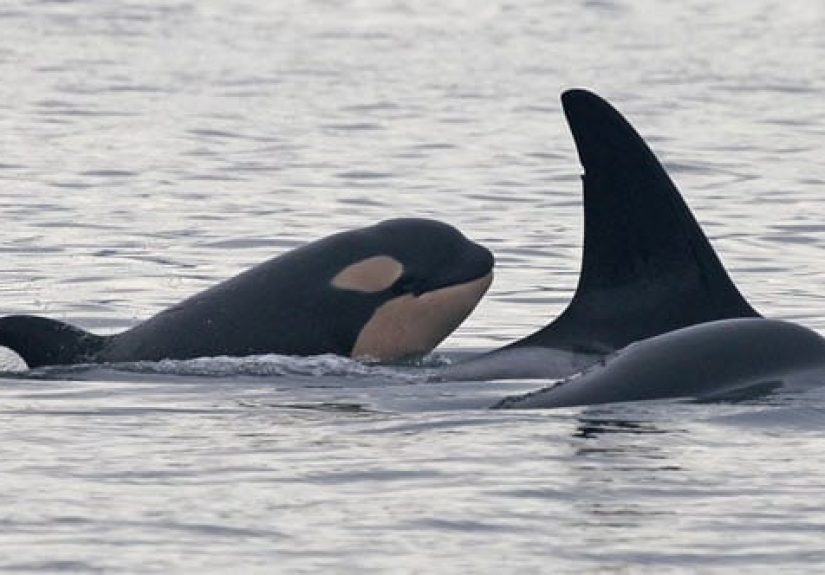
Their tuxedo pattern isn’t just for style points. The dark back and white underside create a kind of ocean camouflage called countershading. From above, they blend into the dark depths; from below, their lighter underside helps them disappear against brighter surface waters. That striking white eye patch? It may help other orcas recognize each other or act as a visual cue during group hunts.
So why “killer whale”? The original phrase likely came from sailors calling them “whale killers” after seeing them attack much larger whales. Over time, the words flipped, but the reputation stuck.
2. They’re Apex Predators Who Scare Great White Sharks
Sharks usually get the horror-movie roles, but in real ocean power rankings, orcas are often the final boss. They’re apex predators, meaning nothing regularly hunts themexcept humans, indirectly. Their menu covers fish, seals, sea lions, dolphins, porpoises, and even large whales. Different populations specialize in particular prey, but all share one thing: serious hunting skills.
In recent years, scientists have documented orcas targeting great white sharks in multiple regionsincluding South Africa, Mexico’s Gulf of California, and Australian watersflipping the sharks upside down to induce a paralyzed state called tonic immobility, then surgically removing the sharks’ energy-rich livers. The rest of the shark often drifts away minus its internal “energy bar.”
In some areas, the arrival of liver-loving orcas has literally cleared great whites out of historically shark-dense bays. When your presence makes great white sharks leave town, you’ve officially earned the title “killer.”
3. Orca Cultures Have Different Menus and Traditions
Not all orcas live the same lifestyle. In the Pacific Northwest, for example, there are “resident” orcas that mostly eat salmon, “transient” (or Bigg’s) orcas that hunt marine mammals, and “offshore” orcas that snack on sharks and rays. Each group has its own hunting strategies, travel routes, and social rules, almost like distinct cultures or nations.
These differences aren’t just instinct; they’re passed down through generations. Young orcas learn what’s on the acceptable menu by watching their families. An orca born into a fish-eating pod doesn’t suddenly grow up craving seal steaksit follows the tradition.
Scientists now talk about “orca cultures” because behaviors like hunting techniques, social etiquette, and even play patterns can vary from population to population and stick around for decades or centuries.
4. Orca Families Are Run by Powerful Matriarchs
Orca society is built around moms. Most populations live in matrilineal podsfamily groups centered around a female matriarch, her kids, and often her grand-calves. Males frequently stay with their mothers for their entire lives, forming tight, lifelong bonds.
Older females, especially post-reproductive ones, play a huge role. Like humans and a few other species, orca females can live long after they stop having calves. Grandmother orcas have been shown to improve their grand-calves’ chances of survival, especially when food is scarce. They know where salmon runs are strongest, when to move, and how to avoid trouble.
In other words, when grandma orca says, “We’re going this way,” the whole family listens.
5. They Have Dialects and Possibly “Names”
If you could listen underwater in orca territory, it would sound like a mash-up of whistles, clicks, and calls. Each pod has a unique set of callsa dialectthat can be recognized by other orcas. Neighboring pods may share some “phrases,” but still sound noticeably different, a bit like regional accents.
Some research suggests that orcas may even use specific call patterns to identify individual whales, functioning a bit like names. At a minimum, their vocal communication is sophisticated enough to coordinate hunts, maintain group cohesion, and teach younger animals.
Imagine trying to organize a group project while swimming at 20 miles per hour in the dark. Orcas pull it off with sound alone.
6. Their Hunting Tricks Are Wildly Creative
Orcas don’t just chase things; they engineer situations. In Antarctica, certain orcas work together to create waves that wash seals off ice floes. The whales line up, swim hard in formation, and generate a mini-tsunami that tips the iceand the sealinto the water where another orca is waiting.
In Argentina, orcas have learned to deliberately beach themselves to grab seals and sea lions near shore, then wriggle back into deeper water. This is incredibly risky, and young whales appear to practice and learn under the supervision of adults.
Elsewhere, orcas have been seen stunning fish with tail slaps, tossing prey into the air, or sharing weakened animals with younger pod members as training tools. It’s like a deadly classroom where “show and tell” involves live fish.
7. Orcas Sometimes Kill for Reasons We Don’t Fully Understand
Although they’re efficient hunters, orcas don’t always follow the “eat what you kill” rule. There are documented cases of “surplus killing,” where orcas kill preysuch as seals or porpoisesand then don’t eat them.
Why? Scientists have a few theories: practice for young hunters, play behavior, or maybe social bonding within the pod. It’s also possible that in certain situations the energy gain isn’t worth the effort of feeding, especially if the whales already have plenty of food.
Whatever the reason, it adds to their slightly unsettling mystique. Imagine being so good at hunting that you sometimes treat it as a side hobby.
8. The “Orcas vs. Boats” Saga Is Real
In recent years, a particular group of orcas off the Iberian Peninsula has become famous (or infamous) for interacting with sailboatsoften by ramming or biting their rudders. Since around 2020, hundreds of interactions have been recorded, and several vessels have actually sunk after repeated hits.
Despite dramatic headlines, no humans have been killed or seriously injured. The behavior seems focused on boat hardware, especially rudders. Some researchers think it started with a few curious or injured individuals and then spread as a social trendessentially, orca peer pressure meets “don’t try this at home.”
To reduce incidents, scientists and sailors now share guidelines, like slowing or stopping engines, avoiding sudden course changes, and, in some cases, trying distraction techniques to make the boat less interesting. It’s a strange reminder that these animals are intelligent enough to pick up new hobbies… even if we’d prefer those hobbies didn’t involve fiberglass.
9. Wild Orcas Almost Never Attack Humans
Given their size and power, you might expect wild orcas to be a major threat to humans. Surprisingly, there are no confirmed, deliberate fatal attacks on humans in the wild. Most in-water encounters with wild orcas involve them simply passing by, investigating briefly, or ignoring us entirely.
Captive orcas are a different story. In marine parks, stressed orcas have injured and killed trainers, leading to major debates about keeping such large, intelligent animals in concrete tanks. Captivity can drastically change their social dynamics, space, and stimulation levels, and those conditions appear to be linked to aggression.
In their natural environment, orcas seem to treat humans more like strange, noisy background objects than prey. Still, anything that weighs several tons deserves respectful distance.
10. Orcas Are Living Climate and Ecosystem Indicators
Because orcas sit at the top of the marine food web, their health reflects what’s happening across entire ecosystems. When salmon runs collapse, fish-eating orcas struggle. When pollutants like PCBs build up in the environment, they concentrate in orca blubber and can affect reproduction.
Shifts in their preysuch as changing shark or seal populationscan also reveal bigger climate-driven changes like warming waters, shifting currents, or overfishing. Tracking orcas is a bit like reading a “status report” on the ocean. If the orcas are in trouble, the ecosystem probably is too.
Protecting orcas means protecting their food, their habitat, and the intricate web of life beneath them. It’s conservation with built-in charisma: save the ocean, help the giant monochrome dolphin with better branding than most sports teams.
Bonus: Real-World Experiences With Orcas in the Wild
Planning an Orca-Watching Trip
If reading about orcas makes you want to see them in person, the good news is that there are responsible whale-watching operations in places like the Pacific Northwest, Alaska, Norway, Iceland, and Antarctica. The best operators work with researchers, follow strict distance rules, and prioritize the whales’ comfort over your Instagram feed.
Before you book, look for companies that advertise small boat sizes, trained naturalists on board, and compliance with local whale-watching guidelines. Many regions have clear rules about minimum approach distances, speed limits near whales, and the maximum number of boats allowed near a pod at one time.
What It Feels Like on the Water
Most trips start with a lot of scanning and suspense. You’ll hear conversations about dorsal fins and “blows” as everyone stares at the horizon. Then someone spots ita puff of mist, a flash of black and whiteand suddenly the boat goes quiet. Even in choppy seas, the first sight of an orca surfacing is weirdly calming and electrifying at the same time.
You might see a pod traveling in tight formation, surfacing in a rhythmic pattern. If you’re lucky, you could watch them hunt: coordinated turns, sudden accelerations, or tail slaps. Sometimes they switch into social modebreaching, spy-hopping, or rolling on their sides as if they’re just enjoying the day.
The sound is often what sticks with people most. On some trips, hydrophones are lowered into the water so you can hear the whales’ clicks and calls live. It feels like eavesdropping on an alien group chat in real time.
Respectful Distance and Responsible Awe
The most memorable experiences are often the quietest ones. A good captain will kill or slow the engine, hold the boat at a respectful distance, and let the whales decide what happens next. Sometimes the pod continues on its way with barely a glance. Sometimes they veer closer, passing under or alongside the boat, as if you’re just another odd-looking animal they’re sampling with their echolocation.
As a visitor, your job is simple: stay calm, listen to the crew, and resist the urge to lean over the rail with your phone at full stretch. Orcas don’t need us cheering or chasing them; they need space, predictable boat behavior, and healthy oceans.
Why Seeing Orcas Changes How You See the Ocean
It’s one thing to read about orcas coordinating hunts or leading multigenerational families. It’s another to watch a massive dorsal fin slice through the water while a calf surfaces beside it in perfect sync. In that moment, “killer whale” doesn’t feel like a horror label; it feels like a title of respect for a species that has mastered its world without inventing plastic or spreadsheets.
Many people leave an orca-watching trip with a new sense of responsibility. Once you’ve watched these animals move through their home with such intelligence and ease, it’s hard not to care about salmon runs, shipping noise, and climate change. You realize that protecting orcas isn’t just about saving one speciesit’s about keeping an entire planet of relationships intact.
If you ever get the chance to see orcas in the wild, go with a responsible operator, bundle up, bring binoculars, and be ready for long stretches of “nothing” punctuated by a few seconds you’ll never forget. Those seconds can change how you think about the oceanand your place in itfor the rest of your life.
Conclusion: The Ocean’s Smartest Super-Predators
Orcas are more than just striking animals with a slightly misleading nickname. They’re culture-bearing, family-centered, highly intelligent predators that dominate their ecosystems while also revealing the health of the oceans they patrol. From wave-washing seals to outmaneuvering great white sharks and, occasionally, terrorizing sailboat rudders, orcas show us just how inventive life can be when you mix brainpower, social bonds, and a lot of muscle.
Understanding orcas means understanding the oceans we depend on. The more we learn about their cultures, communication, and challenges, the clearer it becomes that “killer” doesn’t just describe their hunting skillsit describes how crucial they are to the story of the sea.