Table of Contents >> Show >> Hide
- Before You Start: The Small Mudroom “Math” (So It Actually Works)
- 31 Small Mudroom Ideas That Maximize Style and Function
- Go “Micro Mudroom” With a Bench + Two Hooks
- Choose a Slim, Closed Shoe Cabinet (Goodbye, Shoe Pile)
- Install a Peg Rail for Flexible Hanging
- Use a Floating Shelf as a “Landing Strip”
- Add Hooks to the Door (Yes, the Door)
- Make a Closet Do Double Duty
- Build to the Ceiling (Because Dusty Space Is Still Space)
- Try a Fold-Down Wall Bench
- Use a Boot Tray Like It’s a Design Feature
- Layer in a Washable Runner
- Create a “Command Center” Wall
- Use Baskets for Quick, Pretty Containment
- Make Under-Bench Storage Easy to Use
- Swap Standard Hooks for Flip-Down, Space-Saving Hooks
- Use the Space Under the Stairs
- Add a Narrow Console With Hidden Storage
- Use a Hall Tree When Built-Ins Aren’t an Option
- Plan a Dedicated Pet Station
- Include a Small Mirror to Expand the Space
- Use Durable Flooring That Forgives Life
- Try Beadboard, Shiplap, or Wainscoting for Practical Style
- Go Bold With Wallpaper (In a Controlled Way)
- Install LED Lighting That Doesn’t Feel Like a Basement
- Use Double Hooks for Maximum Hanging Power
- Create “Zones” With Color
- Use a Corner Bench to Unlock Awkward Space
- Hide a Laundry Hamper for “Entryway Overflow”
- Add a Charging Spot (So Devices Don’t Live on the Floor)
- Use Labels Like You Mean It
- Build a Seasonal Swap System
- Consider a Pocket Door or Curtain to Hide the Nook
- Small Mudroom Layouts That Work (Even When Space Doesn’t)
- Materials and Finishes That Survive Real Life
- Keep It Tidy: Simple Habits That Make Small Mudrooms Work
- Real-World Mudroom Experiences (About )
- Conclusion
A small mudroom is basically your home’s “bouncer.” It decides what gets in (clean humans), what gets stopped at the door
(mystery sidewalk sludge), and what needs to hand over its “keys and phone” immediately (your pockets, apparently).
The good news: you don’t need a huge footprint to get big mudroom energy. With the right mix of storage, surfaces, and
a little design strategy, even a skinny hallway or a coat closet can handle coats, shoes, backpacks, dog leashes, and the
occasional rogue soccer cleat.
Below are 31 small mudroom ideas that squeeze every drop of function out of tight spaceswithout making your entry feel like
a supply closet that fell into a Pinterest board. Expect practical layouts, specific examples, and “real-life” choices that keep
the mess contained and the style turned up.
Before You Start: The Small Mudroom “Math” (So It Actually Works)
Small mudrooms succeed when you design for the flownot just the photo. Think about what happens the second you walk in:
shoes come off, keys disappear, coats multiply, and someone asks where their other glove is. Plan your space around those moments.
- Prioritize vertical storage: Walls are your best friend when floor space is limited.
- Keep the “drop zone” obvious: A shelf + hooks + tray beats “we’ll just set it here.”
- Use a “dirty zone” surface: Boot tray, tile, washable rugsomething that can take a beating.
- Mix open + closed storage: Open for daily stuff, closed for visual calm (and “company’s coming”).
- Size for your household: One person’s minimalist nook is another family’s full-time gear depot.
31 Small Mudroom Ideas That Maximize Style and Function
-
Go “Micro Mudroom” With a Bench + Two Hooks
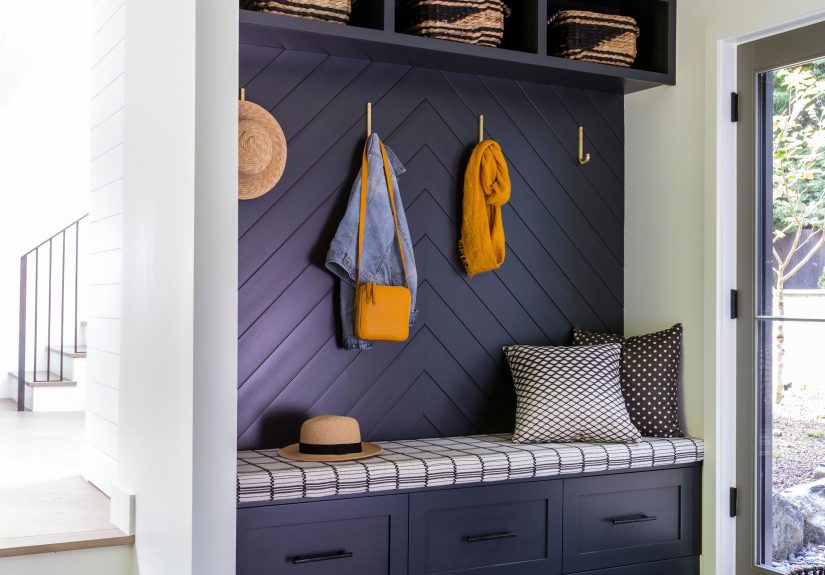
If space is tight, start with the essentials: a slim bench to sit and pull off shoes, plus two sturdy hooks for daily coats.
Add a small shelf above for keys and sunglasses. Simple, reliable, and shockingly effective. -
Choose a Slim, Closed Shoe Cabinet (Goodbye, Shoe Pile)
A narrow shoe cabinet can hold more than you expect while staying shallow enough for tight entryways. Look for flip-down
compartments and a top drawer for small items. The goal: shoes stored, floor visible, sanity intact. -
Install a Peg Rail for Flexible Hanging
Peg rails are classic for a reason: they hold coats, bags, hats, and leashes without looking bulky. Bonus: they fit almost
anywherehallway, behind a door, even above a baseboard heater (with safe clearance). -
Use a Floating Shelf as a “Landing Strip”
A shallow floating shelf (think: phone-depth, not bookshelf-depth) becomes the perfect landing strip for wallets, mail,
and keys. Add a small catchall tray so tiny stuff doesn’t wander off like it pays rent. -
Add Hooks to the Door (Yes, the Door)
No wall space? Use the back of the door for hooks or an over-the-door organizer. It’s ideal for lightweight items like
hats, scarves, dog leashes, or reusable shopping bags. -
Make a Closet Do Double Duty
Turn a coat closet into a mudroom nook by removing the door (or swapping it for a curtain) and adding hooks, shelves,
and a small bench. You keep the footprint the samejust give it a job description. -
Build to the Ceiling (Because Dusty Space Is Still Space)
Upper cabinets or shelves above eye level are perfect for off-season items: spare gloves, swim gear, holiday wrap, or
the boots you swear you’ll clean “later.” Use labeled bins so you can actually find things. -
Try a Fold-Down Wall Bench
When floor space is precious, a fold-down bench gives you a seat only when you need it. Pair it with wall hooks and a
slim shoe rack underneath. It’s like a Murphy bed, but for your dignity while tying shoes. -
Use a Boot Tray Like It’s a Design Feature
A boot tray isn’t glamorous, but it’s the MVP. Choose one that looks intentional (rubber, metal, or even a shallow ceramic tray)
and place it on the “dirty zone” surface. It quietly saves your floors daily. -
Layer in a Washable Runner
A washable runner softens a small mudroom and protects flooring from grit and moisture. Pick a pattern that forgives
dirt and a material you can actually clean without a chemistry degree. -
Create a “Command Center” Wall
Add a small board for notes, a calendar, or a mail sorter. Keep it streamlined: one spot for incoming papers, one hook
for keys, one slot for permission slips. Your future self will thank you loudly. -
Use Baskets for Quick, Pretty Containment
Baskets make open shelving feel tidy. Assign one per person (or per category: hats, gloves, dog stuff). Label them so
“where is it?” becomes “check your basket.” -
Make Under-Bench Storage Easy to Use
Shoe cubbies are greatif they’re not too tiny. Aim for cubbies that fit real-life shoes and boots. If you go with bins,
choose ones with handles so they slide out easily. -
Swap Standard Hooks for Flip-Down, Space-Saving Hooks
In narrow spaces, flip-down or low-profile hooks keep the wall looking cleaner and reduce “snag points” when people squeeze past.
It’s a small upgrade that feels surprisingly luxe. -
Use the Space Under the Stairs
Under-stair areas often become junk zones. Reclaim them with a bench, hooks, and low drawers for shoes. Even a single
built-in cubby can create a defined, functional landing spot. -
Add a Narrow Console With Hidden Storage
A slim console with drawers gives you a landing place without eating the walkway. Store sunglasses, keys, pet wipes,
and the “tiny stuff” that otherwise migrates to countertops like it’s on a road trip. -
Use a Hall Tree When Built-Ins Aren’t an Option
A hall tree combines hooks, a bench, and shoe storage in one piece. It’s great for rentals or quick upgrades. Choose one
with sturdy hooks and an easy-to-clean bench surface. -
Plan a Dedicated Pet Station
A small shelf with hooks for leashes, a basket for treats, and a spot for towels can keep pet chaos contained. Add a
washable mat for muddy paws, and you’re basically running a tiny spaagainst everyone’s will. -
Include a Small Mirror to Expand the Space
Mirrors bounce light and make tight entryways feel bigger. Choose one with a slim frame and consider a mirror + shelf combo
so you get function and the “do I look okay?” check in one move. -
Use Durable Flooring That Forgives Life
Porcelain tile (especially styles that mimic stone) is a mudroom hero: tough, easy to mop, and good-looking. If you’re
not changing flooring, define the mudroom zone with a heavy-duty mat. -
Try Beadboard, Shiplap, or Wainscoting for Practical Style
Wall paneling adds character and helps protect walls from scuffs. Paint it a durable finish for easier wipe-downs.
It’s the rare design detail that’s both pretty and genuinely useful. -
Go Bold With Wallpaper (In a Controlled Way)
Small spaces can handle big personality. Use wallpaper on one wall or inside a mudroom nook. The trick is pairing it with
simple storage so the pattern feels intentional, not chaotic. -
Install LED Lighting That Doesn’t Feel Like a Basement
Good lighting makes a small mudroom feel clean and planned. Add a flush-mount light or under-shelf LED strips. If you want
next-level convenience, motion-sensor lights are fantastic for hands-full arrivals. -
Use Double Hooks for Maximum Hanging Power
Double hooks hold more without adding more hooks. Great for families: coat on the big hook, backpack on the small hook,
and you’re suddenly not tripping over a pile of straps on the floor. -
Create “Zones” With Color
Paint the mudroom nook a different color to visually separate it from the rest of the home. This helps a small space feel
purposefullike it has boundaries, rules, and a mild sense of authority. -
Use a Corner Bench to Unlock Awkward Space
Corners are often wasted. A corner bench (even a small one) gives a seat and storage without blocking a path. Add hooks
above and you’ve got a compact mudroom “triangle” that works hard. -
Hide a Laundry Hamper for “Entryway Overflow”
If your entry becomes the dumping ground for sweaty gear or sports uniforms, add a lidded hamper nearby. It’s not glamorous,
but it prevents the “why does my hallway smell like practice?” mystery. -
Add a Charging Spot (So Devices Don’t Live on the Floor)
Create a small charging shelf or drawer for phones, earbuds, and portable chargers. It keeps cords contained and reduces the
“where’s my battery?” drama at the exact moment you need to leave. -
Use Labels Like You Mean It
Labels aren’t just cutethey’re behavioral design. Label baskets and cubbies (especially in a family space) so items return
to the right spot. It’s the closest thing to a self-cleaning mudroom. -
Build a Seasonal Swap System
Small mudrooms can’t hold everything all year. Rotate: heavy coats and boots in winter, sports gear in spring, beach items in summer.
Store off-season items up high or elsewhere so the mudroom stays functional. -
Consider a Pocket Door or Curtain to Hide the Nook
If your mudroom is basically “a corner near the kitchen,” a pocket door or curtain can visually separate it. The payoff:
clutter disappears fast, and the rest of the room looks calmer.
Small Mudroom Layouts That Work (Even When Space Doesn’t)
1) The “One Wall Wonder”
Best for hallways and tight entries: bench + hooks + shelf on a single wall. Keep the bench slim, store shoes underneath,
and choose hooks that can handle backpacks without bending into sadness.
2) The Closet Conversion
Best for homes without a true mudroom: a coat closet becomes a mini mudroom with shelves, hooks, and a small bench.
This layout hides clutter naturally and can be updated without major construction.
3) The Under-Stairs Nook
Best for unused space: a built-in bench, drawers, and hooks make the area purposeful. Keep the lowest storage for shoes and
the tallest for hanging coats or storing bulkier gear.
Materials and Finishes That Survive Real Life
- Flooring: Porcelain tile, durable vinyl, or a tough mat in the “dirty zone.”
- Benches: Sealed wood or wipeable surfaces. Cushions are nice, but choose performance fabric if you go soft.
- Hardware: Sturdy hooks, easy-grab pulls, and finishes that don’t show fingerprints instantly.
- Walls: Paneling or washable paint where scuffs happen.
Keep It Tidy: Simple Habits That Make Small Mudrooms Work
Even the best design can’t outsmart a daily avalanche of stuffunless you give it a few rules.
- Clear-floor policy: Shoes go in cubbies or on the tray. Nothing “just stays for a minute.”
- One-bag rule: Each person gets one hook (or two). Extras get stored elsewhere.
- Weekly reset: Five minutes: toss junk mail, wipe surfaces, return items to bins.
- Seasonal edit: Rotate gear so the mudroom holds what you actually use right now.
Real-World Mudroom Experiences (About )
In real homes, small mudrooms aren’t just a “design moment”they’re a daily negotiation between humans, weather, pets, and time.
One of the most common experiences people report after setting up a small mudroom area (even a micro version) is how quickly it
changes the mood of the whole house. Not because everything becomes perfect overnight, but because the chaos gets a designated address.
When coats have hooks that are easy to reach, they stop landing on chairs. When shoes have a real spotlike a boot tray or a cabinet
they stop migrating into the living room like they’re exploring new territory.
A typical “aha” moment happens when a household finally sizes storage to real behavior. For example: a family of four might install
beautiful, evenly spaced hooks… and then realize backpacks and winter coats need more breathing room than a fashion coat in a magazine.
The fix is usually simple: double hooks, a wider spacing plan, or a second row of hooks at kid height. Once kids can hang their own
jackets without needing an adult (or a step ladder, which would be dramatic), the system starts working on autopilot. The same goes for
baskets: unlabeled baskets are basically “decorative mysteries,” but labeled baskets turn into a game of “put it back where it lives.”
Another real-life learning: open storage is fast, but it needs boundaries. People love open cubbies for shoesuntil the cubbies are
too small for boots, and boots end up stacked like a wobbly sculpture. Many homeowners end up mixing open and closed storage: open cubbies
for daily sneakers, closed cabinets for the overflow. That combination often feels like the sweet spot in small spaces: you get convenience
without turning your entry into a constant visual reminder of everyone’s footwear decisions.
Pet owners have their own mudroom storyline. A leash hook by the door sounds small, but it can eliminate the frantic “where’s the leash?”
search while a dog does excited circles. Add a basket for wipes and a towel hook, and suddenly muddy paws don’t travel halfway across the house.
Even in a tiny entry, a two-foot-wide “pet corner” can make the difference between a calm arrival and a mop marathon.
And then there’s the weather factor. Rain, snow, and humidity are why mudrooms exist in the first place. People often discover that the
boot tray and washable rug do more than keep things cleanthey reduce stress. You can walk in, drop the wet stuff, and move on. No careful
tiptoeing. No “don’t step there.” The best small mudroom setups feel like they’re quietly taking care of you: they catch the mess, hide the clutter,
and make leaving the house faster. When you’re trying to get out the door on a weekday morning, that’s not just convenient. That’s a lifestyle upgrade.
Conclusion
A small mudroom doesn’t need to be bigit needs to be smart. Focus on the essentials (a place to sit, a place to hang, a place to store shoes),
then layer in storage that matches your real routine. Add durable finishes, good lighting, and a couple of style details you genuinely love, and you’ll
end up with an entry that feels organized, welcoming, and shockingly calm for the amount of chaos it contains.