Table of Contents >> Show >> Hide
- Meet UL: The Safety Nerd Behind the Label
- What Does “UL Listed” Actually Mean?
- Why UL Listing Matters for Homeowners and DIYers
- Where You’ll See UL Listed Marks Around the House
- How to Check for a Legit UL Mark (and Spot Fakes)
- When UL Listing Is Required (and When It’s Just Smart)
- Common UL-Related Mistakes DIYers Make
- Real-World Experiences: How UL Listing Shows Up in Everyday Projects
- The Bottom Line: Treat the UL Mark Like a Safety Shortcut
If you’ve ever squinted at the microscopic text on a power strip or light fixture, you’ve probably seen a little circle with the letters “UL” hiding there like a secret code. Most of us ignore it, the same way we ignore the “serving size” on ice cream. But that tiny mark can mean the difference between a safe, code-compliant project and a wiring disaster your insurance company really doesn’t want to hear about.
Whether you’re a weekend DIY warrior or the “I watched three YouTube videos, I got this” type, understanding what UL Listed means is a big part of doing safe electrical work at home. Let’s decode the label, talk about why it matters, and walk through how to use it to your advantage on your next project.
Meet UL: The Safety Nerd Behind the Label
UL originally stood for Underwriters Laboratories, an independent safety science organization that’s been testing products for fire, electric shock, and other hazards for over a century. Today they go by UL Solutions, but their job hasn’t changed much: beat up products in a lab so you don’t get hurt in your living room.
UL isn’t a government agency. It’s a Nationally Recognized Testing Laboratory (NRTL), which means U.S. regulators and code officials trust its testing. There are other NRTLs, but UL is the one you’ll see most often on consumer electrical gearthink extension cords, power strips, smoke alarms, ceiling fans, EV chargers, and even some appliances.
In plain English: UL is the nerdy third party that double-checks whether a product can handle real-world use without starting a fire, shocking you, or falling apart in a week.
What Does “UL Listed” Actually Mean?
When a product is UL Listed, it means three big things have happened behind the scenes:
- Representative samples were tested. The manufacturer sends products to UL’s labs. UL tests them against specific safety standards: overheating, insulation breakdown, wire sizing, how the product behaves under fault conditions, and more.
- The product met the applicable safety standards for its intended use. UL isn’t just checking “does it turn on?” They’re checking “does it stay safe when someone plugs it in wrong, overloads it a little, or uses it in normal household conditions?”
- Ongoing factory inspections keep quality in line. UL doesn’t just test once and walk away. They audit manufacturing to make sure the products rolling off the line match the tested samples.
That’s why the UL Listed mark is usually found on finished products that are ready for use: power tools, fixtures, surge protectors, heaters, fans, and so on.
UL Listed vs. UL Recognized vs. UL Classified
Here’s where the alphabet soup starts to show up. UL offers multiple types of markings, and they don’t all mean the same thing:
- UL Listed: A complete, finished product has been evaluated for safety for a specific use and environment. This is what homeowners and DIYers should look for on most household electrical items.
- UL Recognized Component: Usually marked with a backward “UR” symbol. These are components (like internal power supplies, relays, or certain wiring) meant to be used inside a larger UL Listed system. They’re not intended for standalone consumer use.
- UL Classified: The product has been tested for specific properties or hazardsfor example, fire resistance, bullet resistance, or performance under certain conditions. It doesn’t necessarily mean the product meets all the requirements to be fully Listed in every aspect.
For the typical homeowner, UL Listed is the label you’ll be hunting for. Recognized and Classified are more relevant to manufacturers, engineers, and specialty applications.
Why UL Listing Matters for Homeowners and DIYers
1. It Helps Prevent Fires and Electric Shocks
Most household electrical hazards boil down to three things: heat, loose connections, and bad insulation. UL testing pounds on those weak spots. A UL Listed product has been evaluated to make sure:
- Wire sizes are appropriate for the current rating.
- Insulation won’t break down under normal operating temperatures.
- Plugs, terminals, and screw connections stay secure and don’t arc easily.
- Enclosures protect you from live parts and resist damage from normal handling.
Will UL Listing magically prevent every possible accident? Of course not. If you plug a space heater into a $2 dollar-store cube tap and daisy-chain three more things onto it, you can still get in trouble. But a UL Listed heater plus a UL Listed power strip, used as intended, dramatically lowers the risk.
2. It Plays Nice With Electrical Codes
The National Electrical Code (NEC) is the rulebook most U.S. jurisdictions use for safe electrical installations. The NEC often requires equipment to be “listed” by an NRTL for certain usespanelboards, industrial control panels, conduit fittings, and many types of consumer products fall into that bucket.
UL is one of the most common NRTLs, so a UL Listed mark is usually a fast ticket to passing inspection. Use a random, unlisted no-name device you bought from a sketchy site, and a sharp-eyed inspector can absolutely red-tag the installation.
3. It Keeps Inspectors and Insurance Companies Happier
Nobody wants to talk about worst-case scenarios, but here we go: if there’s an electrical fire and the investigation finds overloaded, non-listed products cobbled together in a way that violates code, you may run into problems with insurance coverage or liability.
Using properly rated, UL Listed devicesas part of a code-compliant installationwon’t guarantee you never have issues, but it does show you selected equipment that met recognized safety standards. That’s a very different story than “I wired up a homemade heater out of spare parts and a dream.”
4. It Filters Out the Lowest-Quality Hardware
UL testing costs money. Maintaining a listing and passing surprise inspections costs money. Manufacturers who go through that process are investing in basic safety and quality. Those who don’t may cut corners on materials, wire gauge, or internal designthings you can’t see from the outside.
The UL mark isn’t a luxury logo. It’s a bare minimum sanity check that someone other than the marketing department has verified the product isn’t a ticking time bomb.
Where You’ll See UL Listed Marks Around the House
Once you start looking, you’ll see UL marks everywhere. Common places include:
- Power strips and surge protectors: A big one. Pay attention to the amp rating and whether it’s UL Listed for your use.
- Extension cords: Indoor vs. outdoor, gauge, and rating all matter. The UL mark helps confirm the cord meets those specifications.
- Light fixtures and ceiling fans: Especially important in damp or wet locations like bathrooms and covered porches.
- Smoke alarms and CO detectors: These life-safety devices are held to strict testing standards.
- GFCI and AFCI devices: Receptacles and breakers that protect against ground faults and arc faults are evaluated under detailed UL standards.
- Appliances and chargers: From kitchen gadgets to phone chargers and EV charging equipment.
If you’re installing something that will be hardwired into your homelike a new light fixture or a bathroom fanUL Listed should be your default expectation, not a nice bonus.
How to Check for a Legit UL Mark (and Spot Fakes)
Unfortunately, counterfeit marks exist. The good news: a quick visual check catches a lot of imposters.
Here’s what to look for:
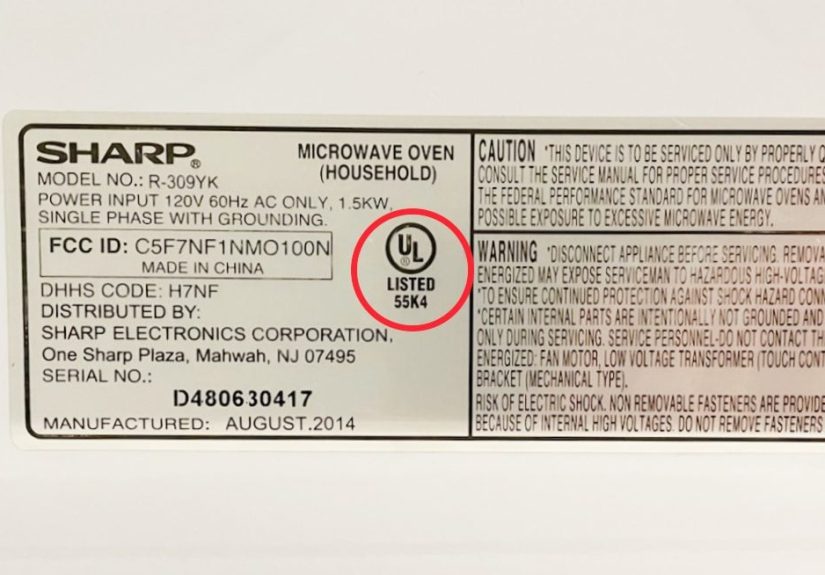
- The classic UL symbol. The letters “UL” inside a circle or as part of a “UL Listed” block logo.
- Accompanying text. You’ll often see “UL Listed” plus a product type (like “Portable Luminaire”) and a control or issue number.
- Location. On small items, the mark might be on the plug, the housing, or the label. On bigger gear, it could be on the nameplate or inside the cover.
- Spelling and quality. If the printing looks fuzzy, the logo is distorted, or “Listed” is spelled “Listad,” treat it like a bootleg movie download and walk away.
For high-stakes equipment, you can also look up the manufacturer and model in UL’s online certification directories to make sure the listing is real and current. For everyday homeowner gear, sticking with reputable brands and retailers plus a clean UL mark is usually sufficient.
When UL Listing Is Required (and When It’s Just Smart)
In many cases, local codes and the NEC don’t explicitly say “UL,” but they do say equipment must be listed or labeled by a recognized testing lab. UL just happens to be the most common lab for consumer electrical products.
Typical situations where listing matters a lot:
- Hardwired equipment: Panels, transfer switches, built-in appliances, and HVAC components often must be listed.
- Life-safety systems: Smoke alarms, CO detectors, alarm panels, and emergency lighting are almost always required to be listed.
- Wet or damp locations: Outdoor receptacles, landscape lighting, pool equipment, and bathroom fixtures have specific listing requirements.
Even when a listing isn’t strictly required by lawfor example, some decorative lamps or low-voltage gadgetsit’s still smart to choose UL Listed products. The extra couple of dollars you save on unlisted gear can disappear very quickly if you end up replacing it, or worse, dealing with a safety issue.
Common UL-Related Mistakes DIYers Make
Here are some classic “don’t be that person” moments when it comes to UL:
- Using indoor-only UL Listed gear outdoors. A product can be UL Listed for indoor dry locations only. That doesn’t make it safe on a rainy deck or under a leaky soffit.
- Overloading UL Listed extension cords. The listing assumes you respect the amp rating. Plugging in space heaters, air conditioners, and half the house into one cord still overheats it.
- Modifying UL Listed products in creative ways. Drilling new holes in fixtures, swapping cords, or bypassing safety features technically voids the listing, because the product isn’t in its tested condition anymore.
- Assuming any mark is as good as UL. Random “CE” or made-up symbols are not the same as a listing from an NRTL recognized in the U.S.
The pattern here is simple: use UL Listed products as intended, in the environment they’re rated for, within their electrical limits. Do that, and your projects are off to a good, safe start.
Real-World Experiences: How UL Listing Shows Up in Everyday Projects
Concepts are great, but stories are better. Here are a few common “I learned my lesson” moments where UL Listing makes a real difference.
The Bargain Power Strip That Wasn’t a Bargain
Imagine you’re setting up a home office in the corner of the living room. You grab the cheapest power strip you can find onlineno brand, no recognizable mark, but hey, it has six outlets and ships tomorrow.
Within a month, you notice it feels warmreally warmwhenever your space heater and computer are both running. The plug blades discolor slightly. The cord feels suspiciously thin for something claiming to be rated at 15 amps.
Now swap that mystery strip for a UL Listed power strip from a reputable brand. The internal wiring, contacts, and overload protection have been tested to handle their rated load. Is it still possible to misuse it? Sure. But you’re starting from a product designed not to melt the moment you ask it to do its job.
The DIY Light Fixture in a Damp Bathroom
Another scenario: you fall in love with a pendant light meant for a dry dining room and decide it would look fantastic over your bathtub. The fixture is UL Listedbut only for dry locations. That listing didn’t evaluate how it will handle humidity, condensation, or the occasional steamy shower that turns your bathroom into a sauna.
Choosing a fixture that’s UL Listed for damp or wet locations means UL has evaluated it for that specific environmentgaskets, corrosion resistance, and design that keeps moisture away from live parts. It’s not just about code; it’s about not mixing water and electricity in ways your future self might regret.
The Home Inspector and the Mystery Disconnect
Picture selling your home after adding a mini-split system you sourced and installed yourself. The outdoor disconnect box comes from a generic brand with no listing mark. When the buyer’s home inspector shows up, they pop the cover and frown.
“This disconnect doesn’t appear to be listed,” they note. Suddenly you’re looking at a repair request or a delay in closing while a licensed electrician replaces it with a UL Listed disconnect that clearly shows the rating and listing mark.
One small label would’ve saved you time, money, and stress.
The Weekend Warrior Who Knew When to Walk Away
On the flip side, here’s the success story. A DIYer heads to the store to buy a new bathroom exhaust fan. They compare two boxes: one has a clear UL Listed label, CFM rating, and suitability for installation over a shower with a GFCI circuit. The other looks cheaper, has vague specs, and no recognizable listing.
They choose the UL Listed model, install it according to the instructions, and pass inspection without drama. The fan runs quietly, doesn’t trip breakers, and doesn’t drip condensation onto the drywall. No sparks, no surprises, just a project done right.
That’s what UL Listing really buys you: fewer ugly surprises and fewer “I hope this is okay” moments.
The Bottom Line: Treat the UL Mark Like a Safety Shortcut
You don’t need to memorize entire UL standards or quote NEC article numbers to do safe DIY work at home. But you do need to make smart choices about the products you bring into your house.
Here’s the short checklist:
- For electrical gear, look for the UL Listed mark (or another NRTL listing) as a baseline.
- Match the product to the right environmentindoor vs. outdoor, dry vs. damp or wet.
- Respect the ratings for volts, amps, and wattage.
- Install according to the manufacturer’s instructions and local electrical code.
UL Listing doesn’t make a bad installation safe, but it does make a good installation safer. For a tiny logo that most people never notice, it does a lot of heavy lifting behind the scenes.
Next time you’re standing in the aisle debating between “super cheap mystery brand” and “slightly more expensive UL Listed brand,” remember: you’re not just buying plastic and copperyou’re buying the peace of mind that someone, somewhere, tried very hard to break that product before you ever plugged it in.