Table of Contents >> Show >> Hide
- Recipe at a Glance
- Ingredients
- Step-by-Step Stuffed Chicken Parmesan
- Why This Stuffed Chicken Parmesan Recipe Works
- Marinara: Homemade vs Store-Bought
- Stuffing Ideas (Because Mozzarella Loves Friends)
- Serving Suggestions
- Troubleshooting: Fixes for Common Chicken Parm Problems
- Make-Ahead, Storage, and Reheating
- FAQ
- Extra Kitchen Experiences (What It’s Like to Make Stuffed Chicken Parmesan)
Chicken Parmesan is already a comfort-food celebrity: crispy cutlet, cozy marinara, melted cheese, applause. Stuffed Chicken Parmesan is the “director’s cut”same plot, bigger twist. You take a juicy chicken breast, tuck in a gooey mozzarella center (plus a little Parmesan for good behavior), then bread it until it’s golden and crunchy. After that, it gets a quick marinara-and-cheese blanket that melts into the kind of dinner that makes people mysteriously offer to do the dishes.
This guide walks you through the method with practical “why this works” tips, so you get a crispy crust without cheese explosions, and tender chicken without dry, sad vibes. (Yes, we’ll talk about preventing the dreaded mozzarella lava leak. It’s a real thing. It’s also fixable.)
Recipe at a Glance
- Style: Italian-American comfort food
- Time: About 45 minutes (faster if you’re confident with a knife)
- Servings: 4
- Best features: Crisp crust, gooey center, saucy-cheesy finish
- Target internal temperature: 165°F (use a thermometerfuture you will thank you)
Ingredients
For the chicken
- 4 boneless, skinless chicken breasts (about 6–8 oz each)
- 1 teaspoon kosher salt, plus more to taste
- 1/2 teaspoon black pepper
- 1 teaspoon garlic powder
- 1 teaspoon Italian seasoning (or a mix of dried basil + oregano)
- 8 oz low-moisture mozzarella (cut into sticks or thick batons)
- 1/3 cup finely grated Parmesan (Parmigiano-Reggiano if you’re feeling fancy)
- 2 tablespoons chopped fresh basil or parsley (optional, but charming)
- 8–12 toothpicks (for “please don’t escape” security)
For the breading station
- 1/2 cup all-purpose flour
- 2 large eggs
- 1 tablespoon water (to loosen eggs)
- 1 1/2 cups panko breadcrumbs (or Italian-style breadcrumbs)
- 1/2 cup grated Parmesan (yes, morethis is Chicken Parmesan)
- 1 teaspoon salt
- 1/2 teaspoon pepper
- 1/2 teaspoon paprika (optional, adds warmth and color)
For finishing
- 1 1/2 to 2 cups marinara sauce (store-bought or homemade)
- 1 to 1 1/2 cups shredded mozzarella (or torn fresh mozzarella, well-drained)
- Extra Parmesan for topping
- Olive oil (2–3 tablespoons) for pan-frying, or cooking spray for baking
Step-by-Step Stuffed Chicken Parmesan
1) Prep your oven and pan
Heat oven to 400°F. Set a wire rack on a baking sheet (best for crispiness), or lightly oil a baking dish if that’s what you’ve got. If you’re pan-frying first, set a large skillet over medium-high heat and keep it ready.
2) Make a pocket (or butterfly) the chicken
Place a chicken breast flat on a cutting board. With a sharp knife, slice horizontally into the thick side to create a pocketdon’t cut all the way through. Think “pita pocket,” not “open-face sandwich.” If your chicken breasts are very thick, you can butterfly them like a book and then fold back over the filling.
Tip: If the chicken is slippery, pat it dry first. Moisture is the enemy of both knife control and crispy breading, so drying is basically self-care.
3) Stuff like you mean it (but don’t overstuff)
In each pocket, add 1–2 mozzarella sticks/batons (about 2 oz total per breast). Sprinkle a little Parmesan (and basil/parsley if using) inside. Press the chicken closed, then secure the opening with toothpicks.
Anti-leak strategy: Keep the filling about 1/2 inch away from the edges, and seal well with toothpicks. Overfilling is how mozzarella becomes a runaway artist.
4) Season and set up the breading line
Season the chicken on both sides with salt, pepper, garlic powder, and Italian seasoning. Set up three shallow bowls:
- Bowl 1: Flour
- Bowl 2: Eggs + water, whisked
- Bowl 3: Panko + Parmesan + salt/pepper (+ paprika if using)
5) Bread it (and let it restseriously)
Dredge each stuffed breast in flour (shake off excess), dip in egg, then coat thoroughly in the breadcrumb mix. Press the crumbs on gently so they adhere.
Place the breaded chicken on the rack/baking sheet and let it rest for 10–15 minutes. This little pause helps the coating hydrate and stick better, which means less breading heartbreak in the pan.
6) Crisp the outside: choose your method
Option A: Pan-fry then bake (classic restaurant vibe)
Add 2–3 tablespoons olive oil to a skillet over medium-high heat. When the oil shimmers, add chicken (don’t crowd). Sear 2–3 minutes per side until deeply golden. Transfer to the rack/baking sheet.
Bake at 400°F for 12–18 minutes, depending on thickness, until the center hits 165°F. (Insert thermometer into the thickest part of chicken, not the cheese pocket.)
Option B: Oven-baked (lighter, less splatter, still crispy)
Spray the breaded chicken generously with cooking spray or drizzle lightly with olive oil. Bake on a rack at 400°F for 20–25 minutes, flipping once halfway through, until it reaches 165°F.
Option C: Air fryer (maximum crunch with minimum drama)
Air fry at 375°F for about 12–16 minutes, flipping halfway, until 165°F. Work in batches so the air can circulate. Crispiness loves airflow.
7) Sauce + cheese, without sacrificing crunch
Once chicken is cooked through, spoon a small amount of marinara on topjust enough to coat the center. Leave some edges exposed so the crust stays crisp. Add shredded mozzarella and a sprinkle of Parmesan.
Return to oven for 3–5 minutes until cheese melts, or broil briefly (watch closely) for browned spots. Rest 5 minutes before serving so the cheese center calms down and stops trying to escape.
Why This Stuffed Chicken Parmesan Recipe Works
- Flour → egg → crumbs creates layers that cling and crisp, especially when the chicken is dried first.
- Panko brings bigger crunch than fine breadcrumbs (you can mix them if you want a “best of both worlds” crust).
- Resting the breaded chicken helps the coating set so it doesn’t slide off during cooking.
- Moderate sauce placement keeps the breading crisp instead of turning it into a tomato sponge.
Marinara: Homemade vs Store-Bought
If it’s a Tuesday and your calendar is already yelling at you, store-bought marinara is completely fair. Choose one you’d eat with spaghetti without feeling like you’re settling.
If you do make a quick sauce, keep it simple: sauté garlic in olive oil, add crushed tomatoes, a pinch of salt, and simmer 10–15 minutes. A small spoonful of tomato paste can deepen flavor fast. The goal isn’t to write a sauce memoirit’s to support the chicken’s crispy, cheesy hero arc.
Stuffing Ideas (Because Mozzarella Loves Friends)
Classic “extra cheesy”
Mozzarella + Parmesan + a pinch of Italian seasoning.
Spinach and cheese
Add a small handful of cooked, squeezed-dry spinach with mozzarella. (Dry is keywet spinach is basically a crust saboteur.)
Prosciutto-mozzarella
A thin slice of prosciutto inside adds salty depth. Keep it minimal so the chicken still closes neatly.
Spicy
Add crushed red pepper flakes to the breadcrumb mix, or tuck in a few thin slices of pepperoncini (patted dry).
Serving Suggestions
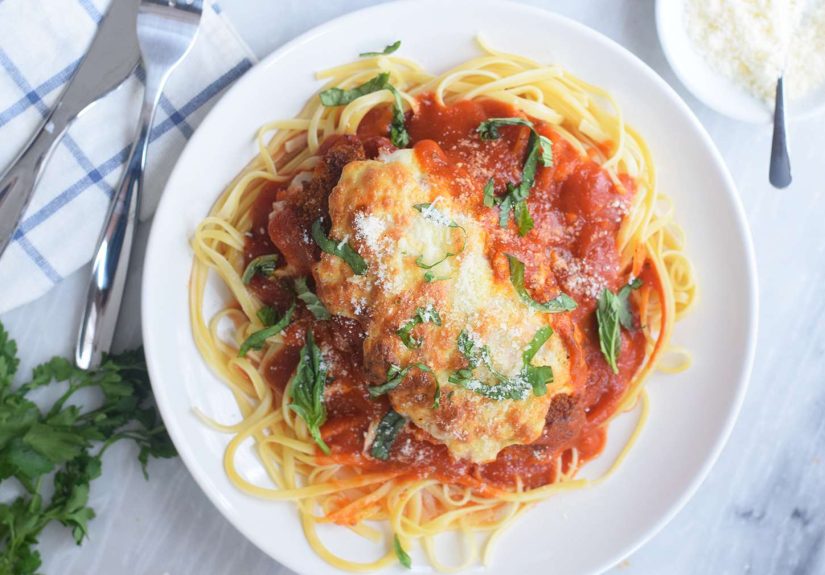
- Classic: spaghetti or linguine with extra marinara
- Light: arugula salad with lemon and shaved Parmesan
- Cozy: garlic bread + roasted broccoli or sautéed green beans
- Sandwich mode: leftovers on a toasted roll with extra sauce (the best “next day” flex)
Troubleshooting: Fixes for Common Chicken Parm Problems
“My breading fell off.”
- Pat chicken dry before flouring.
- Press crumbs gently onto the chicken.
- Let the breaded chicken rest 10–15 minutes before cooking.
- Don’t flip too early; let the crust form and release naturally.
“My chicken is cooked but the cheese leaked out.”
- Use thicker mozzarella sticks/batons instead of shredded cheese inside.
- Keep filling away from edges; seal with toothpicks.
- Don’t overstuff; aim for “cozy pocket,” not “overpacked suitcase.”
“It turned soggy after I added sauce.”
- Spoon sauce only on top center; keep edges bare.
- Heat sauce separately and add at serving if you’re very crunch-focused.
- Use a rack while baking so the bottom stays crisp.
Make-Ahead, Storage, and Reheating
Make-ahead
You can stuff and bread the chicken up to 8 hours ahead. Keep it covered on a tray in the fridge. Cook when ready. (This is a great “I’m hosting but pretending I’m chill” move.)
Leftovers
Store in an airtight container for 3–4 days. For best texture, store sauce separately if possible.
Reheating
Oven or air fryer is the crispness-friendly route: 350°F until warmed through. Microwaving works, but it turns the crust into “soft jacket” mode. Still tastyjust different vibes.
FAQ
Can I use chicken thighs?
For stuffing, breasts are easiest because they’re larger and naturally form a pocket. Thighs can work, but they’re trickier to seal and bread evenly.
Fresh mozzarella or low-moisture mozzarella?
Low-moisture mozzarella melts well and is less waterygreat for stuffing. Fresh mozzarella tastes amazing, but drain it well or it can soften the crust.
Do I have to fry it?
Nope. Baking or air frying can still deliver crunch, especially with panko and a rack. Pan-frying adds extra browning and that classic restaurant crisp, but it’s optional.
How do I know it’s safe to eat?
Use a thermometer and cook chicken to 165°F at the thickest part. It’s the most reliable way to avoid guessing games.
Extra Kitchen Experiences (What It’s Like to Make Stuffed Chicken Parmesan)
If you’ve never made a stuffed chicken Parmesan recipe before, the first “experience” is usually the pocket-cut. It feels slightly dramaticlike you’re performing a tiny surgery with high snack-based stakes. The trick is realizing you don’t need a perfect pocket; you need a functional pocket. The chicken isn’t judging your geometry. It just wants to hold cheese and stay closed long enough to reach the table. Once you do one breast successfully, the rest feel easier, and suddenly you’re moving with the calm authority of someone who owns at least one matching set of mixing bowls.
The second big moment is the stuffing decision. Most people start ambitious (“I’ll add mozzarella, Parmesan, basil, spinach, prosciutto, maybe a tiny orchestra…”) and then quickly learn that overstuffing is how you end up with cheese on the baking sheet and a suspiciously hollow chicken. The sweet spot is “generous but contained.” A couple of sturdy mozzarella batons melt into an oozy center without turning into a jailbreak. And when you seal the opening with toothpicks, it feels oddly satisfyinglike you’re securing a tiny treasure vault.
Breading is where the recipe becomes tactile and oddly relaxing. You go flour → egg → crumbs and watch the chicken transform from “plain protein” into “crispy future masterpiece.” Home cooks often notice that letting the breaded chicken rest for a few minutes changes everything: the coating looks less dusty, clings better, and fries/bakes with fewer bald spots. It’s a small patience tax that pays off in crunch dividends. Also, this is the moment your kitchen will look like a breadcrumb snow globe. Consider it ambiance.
Cooking brings the best sensory payoff. If you pan-fry first, the smell of Parmesan and toasted crumbs hits fastvery “red-sauce Italian place on a Friday night,” minus the wait for a table. In the oven, the chicken finishes gently while you prep sides, and you start to feel like you’re hosting a food show that only you can watch. Then comes the sauce-and-cheese topping: the classic mistake is drowning the crust. The experienced move is spooning sauce on the center, leaving edges exposed. You get the best of both worldssaucy middle, crunchy perimeter. When the cheese melts and starts to blister, you’ll understand why this dish has a fan club.
Serving is its own mini-event. The first slice is always a reveal: will it be gooey? Will it be dramatic? When the mozzarella stretches just enough (without turning into a rubber band prank), it feels like winning. This is also when people discover their “identity” as chicken parm eaters: some want extra marinara, some want extra Parmesan, and some quietly angle for the crispiest piece like it’s a competitive sport. And leftovers have their own charmmany cooks end up turning day-two stuffed chicken Parmesan into a sandwich with toasted bread, extra sauce on the side, and the kind of grin that says, “Yes, I planned this. No, you may not have a bite.”