Table of Contents >> Show >> Hide
- Why Cat Pose Is a Big Deal (Even Though It Looks Small)
- Breath + Alignment Cheat Sheet (So You Don’t Just… Round Randomly)
- Way 1: Classic Tabletop Cat Pose (Marjaryasana)
- Way 2: Cat–Cow Flow (Marjaryasana–Bitilasana)
- Way 3: Forearm Cat (A Wrist-Friendly Cat Pose)
- Way 4: Seated or Standing Cat (Chair Version + Wall/Counter Version)
- How to Use Cat Pose in a 5-Minute Spine Reset
- When to Modify (or Skip) Cat Pose
- FAQ: Quick Answers That Actually Help
- Real-World Experiences: on What Cat Pose Feels Like (and Why People Keep Coming Back to It)
- Conclusion: Pick the Cat That Fits Your Body Today
- SEO Tags
Cat Pose sounds like the kind of yoga move your pet could teach between naps. (Spoiler: your cat will not assist. Your cat will judge.) But Cat Pose (Marjaryasana) is one of those deceptively simple postures that can make your spine feel like it just got upgraded from “stiff and cranky” to “oh wow, I can rotate my head again.”
The best part: there’s more than one way to practice it. Whether your wrists complain, your knees have opinions, or you’re stuck at a desk wishing your chair came with a yoga instructor, these four approaches help you get the benefits of Cat Pose without forcing your body into a one-size-fits-all shape.
Why Cat Pose Is a Big Deal (Even Though It Looks Small)
Cat Pose is primarily a spinal flexion movementrounding your back in a controlled, breath-led way. Practiced slowly, it helps you:
- Mobilize the spine segment by segment (especially the upper back).
- Wake up deep core support by gently engaging the abdominals as you round.
- Release tension that builds from sitting, scrolling, and stress-squinting at emails.
- Coordinate breath and movement, which is the secret sauce of yoga that makes “stretching” feel like “resetting.”
Think of Cat Pose as a friendly “check engine” light for your posture: it shows you where you’re stiff, where you’re collapsing, and where you’re overworkingwithout yelling about it.
Breath + Alignment Cheat Sheet (So You Don’t Just… Round Randomly)
A solid Cat Pose isn’t about cranking your back into a dramatic Halloween-cat arch. It’s about even rounding, steady pressure through your support points, and a breath that stays smooth.
- Typical breath cue: Exhale as you round into Cat. (Exhale helps the ribs soften and abs engage.)
- Hands/arms cue: “Press the floor away” to broaden across the upper back.
- Head/neck cue: Let the head follow the spineno need to aggressively tuck the chin.
- Pelvis cue: Gently tuck the tailbone as part of the rounding, not as a separate, exaggerated squeeze.
Way 1: Classic Tabletop Cat Pose (Marjaryasana)
This is the “textbook” version most people learn first. It’s fantastic when your wrists and knees tolerate being on the floor, and it gives you the clearest feedback for spinal alignment.
How to do it (step-by-step)
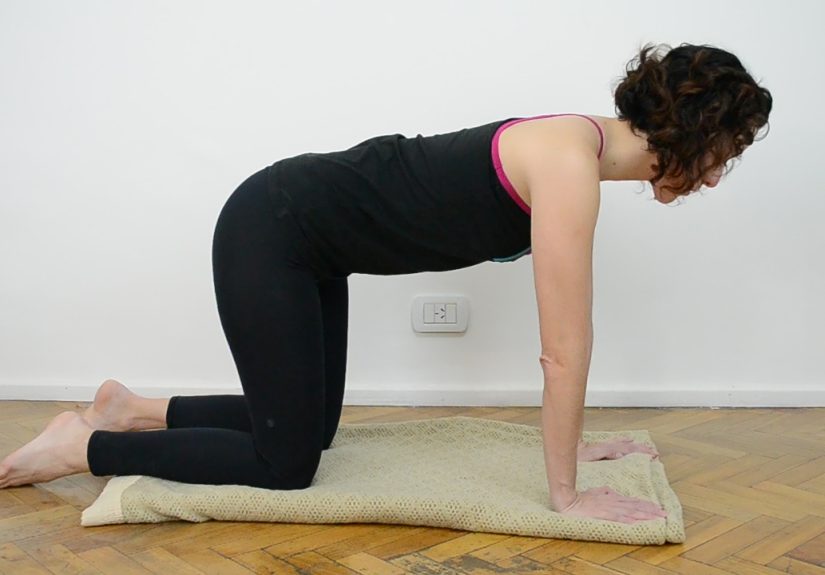
- Start on hands and knees in a Tabletop position: knees under hips, hands under shoulders. Spread fingers wide and press down evenly through the whole palm.
- Take a breath in to find a neutral spinenot arched, not roundedjust long.
- Exhale: draw your belly gently in and up, press the floor away, and round your spine toward the ceiling. Let your shoulder blades spread; let your head relax in line with the curve of your spine.
- Stay for 1–3 slow breaths. Each exhale can help you round a touch more without strain.
- Inhale: return to neutral (or move into Cow if you’re flowingmore on that in Way 2).
What “good” feels like
- A broad stretch across the upper back (between the shoulder blades).
- Gentle engagement in the lower belly, like zipping up tight jeansbut emotionally calmer.
- No pinching in the low back, and no sharp sensation in wrists or knees.
Common mistakes (and quick fixes)
- Mistake: Collapsing into the shoulders.
Fix: Press the floor away and feel the upper back widen. - Mistake: Only rounding the neck and upper back while the low back stays stuck.
Fix: Start the movement from the pelvis (gentle tailbone tuck), then let the wave travel up. - Mistake: Turning Cat Pose into a “crunch.”
Fix: Keep the belly gently drawn in, but don’t clamp down. Think “support,” not “sit-up.”
Make it kinder on joints
- Knees: Place a folded blanket or cushion under the knees.
- Wrists: Try yoga blocks under the hands, come onto fingertips, or make gentle fists to reduce wrist extension.
Way 2: Cat–Cow Flow (Marjaryasana–Bitilasana)
If Cat Pose is the “round,” then Cat–Cow is the “round + arch” combo that makes your spine feel like it’s been flossed from the inside. This is also one of the best warm-ups before a yoga class, strength training, or “existing as a human with a spine.”
How to flow it with your breath
- Start in Tabletop with a long neutral spine.
- Inhale to Cow: tip the pelvis so sit bones lift, belly softens, chest broadens, and your gaze lifts slightly. Keep the neck longno need to fling the head back like you’re trying to spot a UFO.
- Exhale to Cat: press the floor away, round the spine, and let the shoulder blades spread.
- Repeat for 6–10 slow rounds. Go smaller if you’re stiff; go bigger if it feels smooth and easy.
Why this version works so well
- Spinal mobility: You move through flexion and extension in a controlled, low-risk way.
- Core awareness: The exhale into Cat naturally invites abdominal support.
- Breath training: Syncing motion to breath helps calm the nervous system and improves body awareness.
Upgrade your Cat–Cow (without making it weird)
- Segment it: Move from pelvis → low back → mid back → upper back → neck, like a slow wave.
- Pause in Cat: Hold for 2 breaths and expand your ribs into your back body on the inhale.
- Stay pain-free: If you feel pinching in the low back in Cow, reduce the arch and focus on length.
Way 3: Forearm Cat (A Wrist-Friendly Cat Pose)
Love Cat Pose, hate wrist pain? Same vibe as “I love hiking, but my knees would like to file a complaint.” The forearm version keeps the spinal benefits while reducing load and wrist extension.
Set-up options
- Forearms down: Come to knees and forearms on the mat, elbows under shoulders.
- Hands elevated: Place hands on blocks, a couch edge, or a sturdy counter to reduce the wrist angle.
- Fists or fingertips: Useful if you want to stay on hands but limit wrist extension.
How to do Forearm Cat (step-by-step)
- Start on knees and forearms with elbows about shoulder-width apart.
- Inhale to find neutral: long spine, shoulder blades gently settled on the back.
- Exhale: press forearms down, draw belly in, and round the spine into Catfeel the upper back broaden.
- Inhale: return to neutral (or a gentle Cow-like opening if it feels goodkeep it small).
- Repeat for 6–10 slow breaths.
Form notes that save your shoulders
- Don’t sink: If your chest collapses between the shoulders, push the floor away to stay supported.
- Keep elbows under shoulders: Too far forward can overload shoulders; too far back makes rounding harder.
- Let the spine do the work: This is not a “shrug and tuck” situation.
Way 4: Seated or Standing Cat (Chair Version + Wall/Counter Version)
You don’t need to be on the floor to practice Cat Pose. In fact, seated and standing variations can be amazing if you: (1) work at a desk, (2) have knee sensitivity, (3) are easing into movement, or (4) simply prefer yoga that doesn’t require getting up from the ground like a newly awakened tortoise.
Option A: Seated Cat (Chair Cat Pose)
- Sit toward the front of a sturdy chair with feet flat, hip-width apart.
- Place hands on thighs or knees. Sit tall on an inhale.
- Exhale: round your spinelet your ribs move back, belly draw in gently, and chin soften toward the chest.
- Inhale: return to neutral (or add a gentle Cow-like opening by lifting the chest and lengthening the front body).
- Repeat for 8–12 slow rounds.
Pro tip: Move slowly enough that you can feel each section of your spine participate. If it turns into a fast chair-rocking contest, nobody wins.
Option B: Standing Cat (Wall or Counter Cat)
- Stand facing a wall or counter. Place hands on the surface at about shoulder height.
- Step back slightly so your arms are straight but not locked.
- Exhale: press the surface away and round your upper back, letting your chest draw slightly inward as the spine flexes.
- Inhale: return to neutral, feeling length through the spine.
- Repeat for 6–10 breaths, keeping it smooth and comfortable.
This version is great as a “micro-break” stretch between meetingsespecially if your desk posture has been slowly turning you into a question mark.
How to Use Cat Pose in a 5-Minute Spine Reset
Want a quick routine that uses Cat Pose like a reset button? Try this sequenceno incense required.
- 1 minute: Seated or standing Cat (slow, easy rounds).
- 2 minutes: Tabletop Cat–Cow flow (or forearm version if wrists need kindness).
- 1 minute: Hold Cat for 2 breaths, return to neutral for 1 breathrepeat.
- 1 minute: Child’s Pose or a gentle forward fold to finish (optional, keep it comfy).
The goal is not “deep stretch.” The goal is better movement qualityfeeling more spacious, more supported, and less stuck.
When to Modify (or Skip) Cat Pose
Cat Pose is generally gentle, but bodies are wonderfully diverse. Modify your approach if you notice:
- Wrist pain: use forearms, fists, fingertips, blocks, or a wall/counter version.
- Knee pain: add padding, reduce time on the floor, or choose a chair/standing variation.
- Neck sensitivity: keep the head aligned with the spine; avoid extreme tucking or lifting.
- Sharp pain anywhere: stop and choose a smaller range of motion or a different movement.
If you’re managing a current injury or a medical condition, treat Cat Pose like a friendly toolnot a dare. Comfort and control beat intensity every time.
FAQ: Quick Answers That Actually Help
Is Cat Pose the same as Cat–Cow?
Cat Pose is the rounding (flexion) part. Cat–Cow is a flowing combo of rounding (Cat) and arching (Cow). People often say “Cat–Cow” when they really mean “that spine warm-up on hands and knees.”
How long should I hold Cat Pose?
For a static hold, try 1–3 breaths. For a mobility flow, do 6–12 rounds at a slow pace. You’ll get more benefit from steady breathing and control than from holding forever.
Where should I feel it?
Commonly in the upper back and through the ribs. You may also feel gentle engagement in the abdomen. You should not feel sharp pain in wrists, knees, or low back.
Can Cat Pose help with back stiffness from sitting?
It can be a great option because it moves the spine through a comfortable range and encourages breath-led mobility. Pair it with regular breaks and posture changes for best results.
What if I can’t round much?
That’s normalespecially if your thoracic spine (upper back) is stiff. Go smaller, slow down, and imagine the back of your ribs widening on each inhale. Progress often comes from consistency, not force.
Real-World Experiences: on What Cat Pose Feels Like (and Why People Keep Coming Back to It)
Here’s the funny thing about Cat Pose: it’s rarely anyone’s “favorite” pose on day one. It looks too simple to be impressive, and the first few tries can feel like you’re just rounding your back and hoping that counts as yoga. Then something clicks.
A common first experience is realizing how uneven your spine feels. Many people notice they can round a lot in the upper back but barely move the mid-spineor the opposite, where the low back does all the work while the ribs stay stubbornly still. This isn’t a failure. It’s information. Cat Pose is basically a gentle scan that shows where you’re mobile, where you’re stiff, and where you’re borrowing motion from someplace else.
Another experience people report: Cat Pose feels surprisingly “emotional.” Not in a dramatic way, but in a subtle nervous-system way. When you slow the breath and move carefully, it can feel like the body finally gets the memo that it’s safe to let go of tension. Shoulders drop. Jaw unclenches. The space between the eyebrows stops hosting a permanent staff meeting.
On the practical side, Cat Pose often becomes a go-to because it’s repeatable. You can do it before workouts, after long drives, or during a two-minute “my back is cranky” moment. The seated and standing versions are especially popular in real life because they’re sneaky: you can do three slow rounds in a chair and suddenly your posture feels taller without anyone in the office needing to know you’re doing yoga instead of “thinking intensely.”
People also notice that the breath matters more than expected. If you rush, Cat Pose becomes a fidget. If you slow downexhale to round, inhale to expand it becomes a coordination drill for the ribs, diaphragm, and core. Over time, that can translate into better awareness during other yoga poses, and even during everyday moves like bending down to pick something up without making your spine do a sound effect.
The biggest “aha” moment is usually this: Cat Pose doesn’t demand flexibility. It rewards attention. When you stop trying to “get deeper” and start trying to “feel more evenly,” the pose improvesand so does how your back feels afterward. That’s why people keep returning to it. It’s simple, adaptable, and it meets you where you are, even on the days when your body feels like it’s running on yesterday’s software.
Conclusion: Pick the Cat That Fits Your Body Today
Cat Pose is a classic for a reason: it’s accessible, effective, and endlessly adaptable. Whether you practice the traditional tabletop version, flow Cat–Cow for mobility, switch to forearms for happy wrists, or do a seated/standing variation at your desk, the point is the same: move your spine with breath, control, and comfort.
Try one version today, notice how your back feels, and come back tomorrow. Your spine loves consistency almost as much as your cat loves being in the way.