Table of Contents >> Show >> Hide
- What Exactly Is Corian (and Why Is It White Everywhere)?
- Why We Chose White Corian for Our Kitchen
- Living with White Corian: The Good Stuff
- The “Let’s Be Honest” Part: Downsides of White Corian
- Corian vs Quartz, Granite, and Other Countertop Options
- How We Clean and Care for Our White Corian Counters
- Would We Choose White Corian Counters Again?
- Extra Real-Life Experiences with Our White Corian Counters
If you’ve ever fallen down a Young House Love rabbit hole, you’ve probably seen those dreamy white counters that make everything from a bowl of cereal to a sink full of dishes look stylish. White Corian countertops are one of those choices that seem super simple on the surface (literally), but there’s a lot going on once you actually live with them day after day.
Think of this as a friendly, real-life style review of white Corian counters in the spirit of Young House Love: what they look like in person, how they hold up to kids and cookies and spaghetti night, and whether we’d still choose them again now that the honeymoon phase is over. We’ll talk pros, cons, scratches, stains, heat, and cleaningplus how Corian stacks up against trendier options like quartz and natural stone.
What Exactly Is Corian (and Why Is It White Everywhere)?
Corian is a brand-name solid surface material made from acrylic resin and mineral fillers. In normal person language, that means it’s man-made, nonporous, and designed to be molded into smooth, seamless shapescountertops, sinks, backsplashes, window ledges, you name it. Unlike natural stone, it doesn’t need sealing, and unlike laminate, it feels thick and substantial instead of hollow and plasticky.
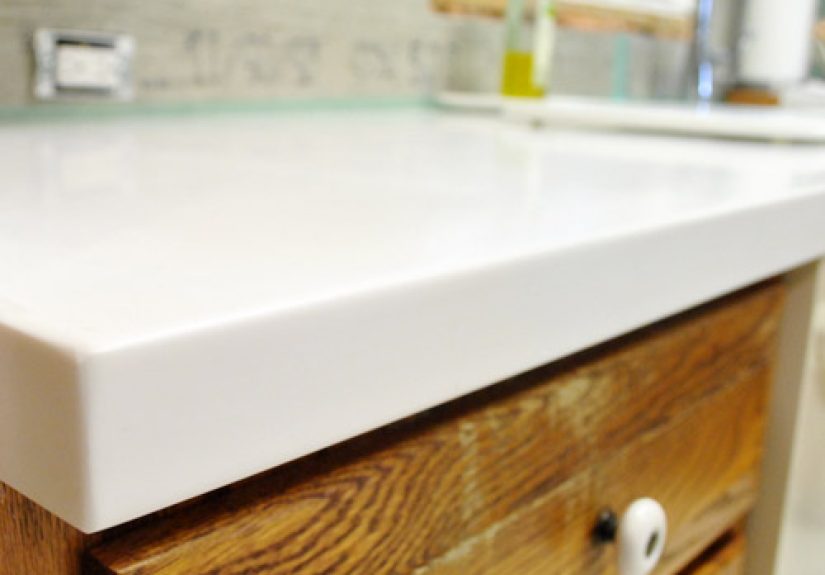
White Corian in particular has a big fan club because it looks clean, bright, and modern. It can mimic the airy vibe of white marble without the anxiety of etching, deep staining, and intense maintenance. It’s also one of the most forgiving surfaces to repair: light scratches and small dings can often be sanded or buffed out instead of living on your counter forever like battle scars.
Is it perfect? No. But it hits a very sweet spot between style, cost, and real-life practicality, especially for DIY-minded homeowners who love that soft, matte, “everything feels seamless” look.
Why We Chose White Corian for Our Kitchen
When you’re staring at 50 countertop samples under fluorescent lighting, your brain starts to melt. Here’s what pushed us toward white Corian instead of quartz, granite, or butcher block:
1. The seamless look
One of Corian’s superpowers is the invisible seam. Long runs of countertop can be joined so smoothly that it basically reads as one giant slab. You can also have a Corian sink bonded directly to the counter so there’s no crumb-catching lip. For a kitchen with lots of corners or a peninsula, that uninterrupted look is a big visual win.
2. A soft, matte white that isn’t too precious
White Corian has a more velvety, matte feel than glossy stone or polished quartz. It bounces light around the room and makes even small kitchens feel brighter, but it doesn’t scream “showroom only.” It feels approachable, which is nice when your actual life involves peanut butter, craft projects, and the occasional red sauce mishap.
3. Repairability and longevity
Unlike many stone or quartz options, solid surface counters can be resurfaced if they get scratched, dulled, or lightly stained. A fabricatoror a brave DIYer with the right pads and instructionscan sand and buff them back toward their original finish. That “fixable, not ruined” feature is a huge part of Corian’s appeal.
4. Budget and value sweet spot
Corian usually comes in below high-end quartz and natural stone, but above laminate. It’s not the cheapest option in the showroom, but it offers a high-end look with mid-range pricing and good long-term value. If you want something that feels substantial and custom without blowing the entire remodel budget, Corian often lands on the shortlist.
Living with White Corian: The Good Stuff
It’s genuinely easy to keep looking clean
One of the biggest wins: routine cleaning is a breeze. Day to day, warm soapy water or an ammonia-based household cleaner (not window cleaner) is usually all it takes to wipe up crumbs, sauces, and oily fingerprints. Because Corian is nonporous, spills sit on the surface instead of seeping in, which makes tomato sauce, coffee, and wine much less terrifying than they would be on unsealed stone.
In a white kitchen, this matters. You want to enjoy the bright look without feeling like you have to hover over every glass of iced coffee. A quick nightly wipe-down keeps things looking fresh and avoids the dull, cloudy film that can come from letting hard water dry on the surface.
Stains are usually fixable
Most day-to-day stains wipe away with regular cleaning. If something more stubborn sneaks inthink turmeric, berries, or a dried-on coffee ringmild abrasive cleaners and a non-scratch pad usually do the trick. Because the color runs through the entire material, you can gently buff the surface without revealing a different layer underneath.
The integrated sink is a game-changer
If you opt for a Corian sink fused directly into the counter, congratulations: you’ve just eliminated one of the grossest cleaning zones in the kitchen. There’s no caulk line or raised rim where gunk collects. You can wipe crumbs straight from the counter into the sink with a single swipe, and the whole area reads as one continuous, sculpted piece. It’s a small detail that quietly makes your kitchen feel custom and high-end.
It feels warm and soft under your hands
Corian doesn’t have that icy, cold-to-the-touch feel that stone does. It’s a bit softer and warmer, so leaning on the counter, kneading dough, or letting kids sit and craft at the peninsula feels more comfortable. If you spend a lot of time actually using your counters (not just admiring them), the tactile feel is a real plus.
The “Let’s Be Honest” Part: Downsides of White Corian
Scratches are a thing (especially with white)
Corian is durable, but it’s not invincible. It’s softer than quartz or granite, so dragging heavy pots, sliding gritty dishes, or cutting directly on the surface can leave faint scratches or scuffs. In a white kitchen, those tiny marks can catch light and be more noticeable at certain angles.
The good news: many minor scratches can be buffed out or softened so they’re less obvious. The bad news: you do have to be mindfulalways use cutting boards, avoid dragging metal across the surface, and keep grit or sand from acting like sandpaper under dishes.
Heat is not its best friend
Solid surface countertops can handle warm items, but not blazing-hot pots straight from the stove or oven. Intense heat can cause discoloration or even warping. That means trivets and hot pads are non-negotiable. If your cooking style involves landing cast-iron skillets anywhere they feel like landing, Corian might clash with your personality a bit.
It’s stylish, but not always the “in” material
Design trend reports and kitchen pros are very clear: quartz is currently the most popular countertop material in new kitchens, with natural quartzite also getting a lot of love. Corian and other solid surfaces are less trendy at the moment, even though they quietly keep doing their job in thousands of homes. If resale value and following the trendiest material matter a lot to you, white Corian may not feel like the buzziest choice.
Hard water and matte finishes need a bit of care
In areas with hard water, white Corian can develop a blotchy or slightly dull appearance if water is allowed to dry on the surface repeatedly. The fix is simpleregular wiping and an occasional deeper clean with a mild abrasive cleanserbut you do need to be consistent if you want that fresh, even matte look over time.
Corian vs Quartz, Granite, and Other Countertop Options
So how does white Corian stack up against the usual suspects?
Corian vs quartz
- Durability: Quartz is harder and more resistant to scratches and high heat, making it a better choice for extremely heavy-use kitchens or cooks who are hard on surfaces.
- Appearance: Quartz often mimics stone with realistic veining and patterns. Corian leans modern and smooth, with more uniform color and the possibility of fully seamless runs and sinks.
- Maintenance: Both are nonporous and low maintenance. Corian, however, can be sanded and repaired more easily if it gets scratched.
- Cost: Corian is often a bit more budget-friendly than premium quartz, depending on the pattern and brand.
Corian vs granite and marble
- Granite and marble offer one-of-a-kind natural patterns but need sealing and more careful stain management.
- Marble in particular is prone to etching from acids (like lemon juice or vinegar), which can be stressful in an all-white kitchen.
- Corian trades that natural, varied look for uniform color, easier repairs, and a more predictable, low-maintenance routine.
Corian vs laminate and butcher block
- Laminate is generally cheaper but can feel less substantial, and seams or edges can be more obvious.
- Butcher block brings warmth but needs regular oiling and more careful water management around sinks.
- Corian sits in the middle: it’s warmer and softer than stone but more durable and water-friendly than wood or basic laminate.
How We Clean and Care for Our White Corian Counters
Daily routine
Most days, the routine is incredibly simple:
- Wipe down counters with warm soapy water or a mild household cleaner.
- Dry with a soft cloth or paper towels to prevent water spots and hard water film.
- Use cutting boards, trivets, and placemats so the counters don’t have to be superheroes.
Weekly or “when you notice dull spots” refresh
Every so often (especially in busy zones by the sink, coffee station, or stove), we give the counters a slightly more intentional refresh:
- Use a non-abrasive or mildly abrasive cream cleanser designed for solid surface.
- Rub in a gentle circular motion with a non-scratch pad.
- Rinse thoroughly and dry to avoid residue buildup.
Dealing with scuffs and light scratches
For faint scuffs, a bit of extra elbow grease with a recommended cleaner and pad usually does the trick. For more noticeable scratches, some homeowners follow manufacturer instructions to use progressively finer sanding pads to restore the finish. If you’re nervous about going full DIY, a professional fabricator can come in and refinish an entire run of counters, making them look shockingly close to new.
Would We Choose White Corian Counters Again?
Short answer: yeswith our eyes open.
If you love the bright, seamless, modern look and want something that’s easy to clean and repairable, white Corian is a very solid choice. It’s especially great in kitchens where a calm, matte white surface fits the style of the cabinets and backsplash. The integrated sink and smooth transitions give the room that custom, thoughtfully designed feel that Young House Love fans know and love.
If, on the other hand, you’re extremely tough on surfaces, prone to dropping hot cast-iron pans on counters, or obsessed with the idea of using your kitchen counters as cutting boards, quartz or natural stone might better match your habits. The goal is not to baby your kitchenit’s to pick a material that matches how you actually live.
For us, the trade-offs are worth it. A few minor scratches and a healthy respect for hot pots feel like a fair price to pay for a bright, seamless, easy-to-clean surface that still looks fresh after years of “real life” use.
Extra Real-Life Experiences with Our White Corian Counters
Since we’re going deep, here’s the bonus round: practical moments and mini-lessons that don’t always make it into a before-and-after blog post.
Holiday baking marathons
During the holidays, our white Corian counters basically become a cookie factory. We roll out dough directly on silicone mats, line up cooling racks, and cover every square inch with sprinkles and powdered sugar. At the end of the day, the counters look wildbut clean-up is surprisingly painless.
A quick scrape of any dried dough with a plastic scraper, followed by warm soapy water, and everything is back to looking crisp and bright. No worries about butter soaking into porous stone, no panic about colored icing staining the surface permanently. As long as we don’t leave colorful messes sitting for multiple days, Corian forgives a lot.
Kids, crafts, and kitchen science experiments
One of the underrated perks of white Corian: it doubles as a craft table. We’ve had marker doodles, slime, food coloring, and DIY “volcano” experiments all happen right on the countertop. Do we cover the area with craft paper or trays first? Usually yes. Do we sometimes forget? Also yes.
When something sneaks past our defenses (like a rogue marker streak or a bit of dye), we spot-treat it with a mild abrasive cleanser and a non-scratch pad. Most stains lift with a little patience. Knowing that the material is solid all the way through makes it less stressful to tackle small accidentsyou feel like you have some margin for error.
Entertaining and buffet-style setups
For parties and casual get-togethers, the white surface becomes the ultimate neutral backdrop. Platters, charcuterie boards, and drink stations all look more pulled together when they’re sitting on a bright, simple base. Photos of food pop more, and even mismatched serving pieces feel cohesive against the white counter.
The only rule we’re strict about is no hot dishes straight on the surface. We keep a small stack of trivets and wooden boards within arm’s reach and use them as landing pads. Once guests get used to the idea that “everything hot lives on a trivet,” Corian is perfectly happy hosting the party.
How it ages in real life
Over time, our white Corian counters have developed what we’d call “light patina” rather than obvious damage. The highest-traffic zones near the sink and cooktop need more frequent cleaning and an occasional deeper refresh to stay as bright as less-used areas. But the overall effect is still clean and cohesive, not worn out.
Every few years, we like the idea of bringing in a pro to give the counters a full buff and refresh, kind of like sending them to a spa. Knowing that the material can be renewed, not just replaced, makes the investment feel smarter and more sustainable.
What we’d tell a friend considering white Corian
- If you’re willing to use cutting boards and trivets, you’ll be very happy.
- If you love a soft, matte white look more than dramatic veining, Corian will probably make you smile every time you walk into the kitchen.
- If you want low drama cleaning and the ability to fix minor flaws over time, Corian’s repairability is a big plus.
- If you want the absolute hardest, most heat-tolerant surface possible, quartz or stone might suit your lifestyle better.
At the end of the day, white Corian counters are like that friend who’s easy to live with, looks good dressed up or dressed down, and doesn’t demand constant attention. They might not be the flashiest option on Instagram, but in daily life, they quietly do their joband that might be exactly what your kitchen needs.
SEO JSON