Table of Contents >> Show >> Hide
- Before You Write: A 7-Minute Checklist That Saves Weeks
- The IRS Letter Format That Works Almost Every Time
- Way #1: The “Notice Response” Letter (When the IRS Asks for Info)
- Way #2: The “I Disagree” Letter (Disputing an IRS Notice or Correcting an Error)
- Way #3: The “Please Remove the Penalty” Letter (Penalty Relief / Abatement)
- Way #4: The “I Can’t Pay This All at Once” Letter (Payment Plan / Installment Agreement)
- Small Details That Make IRS Letters Work Better
- Quick “Do This / Not That” Summary
- Experiences From the “I Wrote the IRS and Lived to Tell the Tale” Club (About )
- Conclusion
Writing a letter to the IRS is a lot like writing to your future self: you want it to be clear, organized, and impossible to misunderstand. The good news? The IRS isn’t looking for poetry. They want facts, dates, proof, and a way to match your letter to your accountso your issue gets resolved without you developing a new hobby called “refreshing the mailbox.”
This guide walks you through four proven letter “types” you can use to respond to IRS mail, correct errors, request penalty relief, or ask for a payment plan. You’ll also get practical formatting tips, mini-templates, and exampleswritten in normal human language (with just enough humor to keep you from stress-snacking through a whole box of crackers).
Before You Write: A 7-Minute Checklist That Saves Weeks
1) Make sure you actually need to respond
Not every IRS letter requires a reply. Some notices are informational (translation: “FYI, we changed something”). If the notice says you must respond, it will usually include a deadline and instructions. If you do need to respond, don’t miss the due datedeadlines are the IRS’s love language.
2) Confirm the letter is legit (and not a scam wearing a trench coat)
The IRS generally contacts taxpayers by mail first, and legitimate notices usually include identifying details (often only the last four digits of your SSN) and a notice/letter number (like CP or LTR). If anything feels “off” (threats, weird payment methods, urgent demands), verify using official IRS resources or the phone number on the notice.
3) Know your goal in one sentence
- “I agree and I’m paying.”
- “I disagreehere’s my evidence.”
- “I messed up, but I had a good reasonplease remove the penalty.”
- “I can’t pay all at oncehere’s what I can do.”
4) Gather the basics the IRS needs to match your letter
Put these on page one (top area is best):
- Your full name and current mailing address
- Daytime phone number (and best times to call)
- Your Social Security Number or ITIN (many IRS letters show only the last 4; follow your notice instructions)
- The tax year(s) involved (example: 2023)
- The form type if relevant (example: Form 1040)
- The notice/letter number (example: CP2000, Letter 12C) and the date on the notice
5) Send copies, not originals
If you’re including documents (W-2s, 1099s, bank statements, receipts), send copies and keep the originals safe. Label your copies and highlight the key line items so the reviewer doesn’t have to play detective.
6) Use the address on the notice
IRS notices typically tell you exactly where to mail your response. That’s not a suggestion. It’s a GPS coordinate for your paperwork.
7) Keep proof you sent it
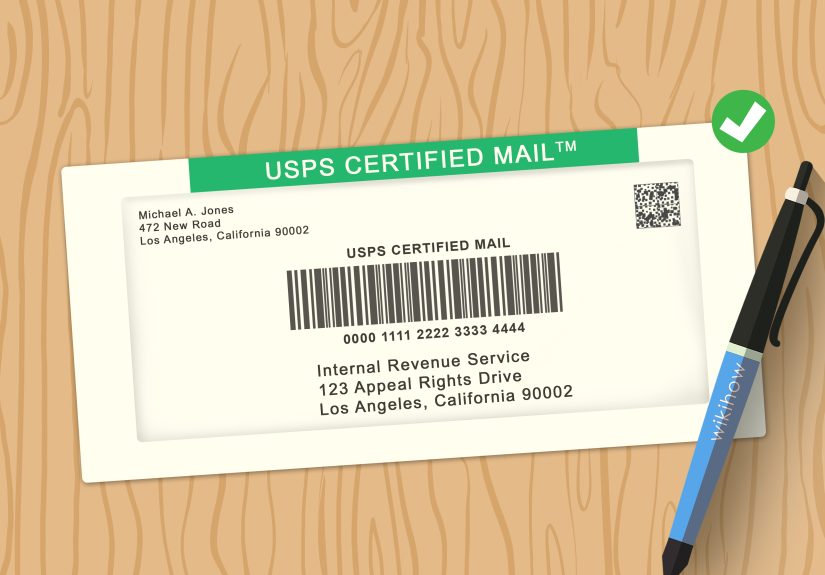
Keep a full copy of everything you mail. If you’re mailing, consider tracking (like certified mail/return receipt) so you can prove when it was sent and received. It’s the grown-up version of “I told you so,” except useful.
The IRS Letter Format That Works Almost Every Time
Think of your letter as a tiny, polite case file. The easier you make it to process, the faster it moves. Here’s a simple structure you can reuse:
- Header: Your info + date + IRS address (from the notice)
- Re: Notice number, tax year, and (if listed) your notice reference/ID
- Opening: “I’m writing in response to…”
- Body: Your request or explanation in short paragraphs or bullets
- Evidence list: “Enclosed: …”
- Close: What you want them to do + how to reach you
- Signature: Sign and date
Pro tip: Keep it professional and calm. No sarcasm, no threats, no glitter. (The IRS does not award bonus points for glitter.)
Way #1: The “Notice Response” Letter (When the IRS Asks for Info)
Use this letter when the IRS notice says something like: “We need more information,” “Send documentation,” or “Respond by X date.” Examples include requests for missing forms, verification, or clarification.
What to include
- A clear statement that you’re responding to the notice and the deadline/date
- The exact items requested (answered in the same order the notice lists them)
- Copies of documents the IRS requested
- A short “enclosures” list so nothing gets separated or overlooked
Mini-template
Example scenario
You receive a letter asking for a missing schedule or verification of withholding. Your response is basically: “Got it. Here it is. Organized. Labeled. You’re welcome.”
Common mistakes to avoid
- Sending a pile of papers with no explanation
- Ignoring the due date because you’re “pretty sure it’ll be fine”
- Sending original documents you can’t easily replace
Way #2: The “I Disagree” Letter (Disputing an IRS Notice or Correcting an Error)
Use this letter when you believe the IRS notice is wrongmaybe income was counted twice, a payment didn’t post, a dependent was denied, or third-party reporting doesn’t match what actually happened. The goal is to make your disagreement easy to understand and hard to ignore.
The winning strategy: claim + reason + proof
In tax-land, “because I said so” is not persuasive. Instead: State your position, explain why, then attach documentation.
What to include
- Whether you agree or disagree (say it plainly)
- What you believe is correct (include dollar amounts and line references if possible)
- Supporting documents (W-2s/1099s, corrected forms, proof of payment, bank statements, letters from employers)
- A simple summary table if numbers are involved (optional, but very effective)
Mini-template
Example scenario: “You say I didn’t pay. My bank says I did.”
If the notice shows a balance due but you already paid, attach proof (IRS payment confirmation, canceled check, bank statement highlighting the payment). In the body, include the date paid, amount, and payment method. This turns an emotional argument into a simple accounting fix.
Common mistakes to avoid
- Arguing feelings instead of facts (“This is unfair!”)
- Sending documents without labeling what they prove
- Writing a 6-page essay when 6 bullet points would do
Way #3: The “Please Remove the Penalty” Letter (Penalty Relief / Abatement)
Penalties can add up fast, but the IRS may remove or reduce certain penalties if you show reasonable cause and good-faith effortthink serious illness, natural disaster, records destroyed, or other circumstances that made compliance genuinely difficult. The key is to be specific, document what you can, and connect your situation to the timing of the late filing or late payment.
Two common paths
- Reasonable cause: You explain what happened, why it prevented compliance, and what you did to fix it.
- First-time penalty abatement: Sometimes available when you have a good compliance history (not guaranteed, but worth asking if it fits).
What to include
- The penalty type and tax year
- A timeline (dates matter)
- What event occurred and how it affected filing/paying
- What steps you took to comply as soon as possible
- Proof (doctor’s note, insurance claim, FEMA documentation, employer letter, etc.)
Mini-template
When forms might be better than a letter
Some types of penalty or interest relief may be requested using IRS forms (for example, Form 843 is used for certain abatement/refund requests). If your notice instructs you to use a form, follow that instruction. A letter can still help as a cover page, but don’t ignore the form requirement.
Common mistakes to avoid
- Being vague (“Stuff happened.”) give dates and specifics.
- Skipping documentation when it’s available
- Admitting things that hurt your case (“I forgot and didn’t care.”)
Way #4: The “I Can’t Pay This All at Once” Letter (Payment Plan / Installment Agreement)
If you owe money and can’t pay in full, you’re not aloneand you do have options. Many taxpayers qualify for an installment agreement (a monthly payment plan). Often, you can apply online, but there are situations where you may respond by mail or include additional financial information.
What the IRS wants to know
- You acknowledge the balance due (or the part you agree with)
- You want to resolve it
- What you can pay per month, and when you can start
- Whether you can make a down payment
- How you’ll make payments (direct debit is often the smoothest option)
Mini-template
Helpful details that improve approval odds
- Offer an amount you can consistently pay (missing payments makes everything worse)
- If you’re short-term tight but improving, say so (“My income is seasonal; it increases in June”)
- If the IRS requests financial details, complete the requested collection information forms carefully
Common mistakes to avoid
- Offering a payment you can’t actually make
- Ignoring the notice while “thinking about it”
- Sending a payment plan request to the wrong address (use the notice address)
Small Details That Make IRS Letters Work Better
Use “human-scannable” formatting
- Short paragraphs (2–4 sentences)
- Bullets for lists and timelines
- Bold key facts (notice number, tax year, amounts)
- Clear enclosure list
Match the IRS language
If the notice calls it “Tax year 2023” and “Notice CP2000,” use those exact terms. It helps routing and processing.
If you’re escalating: know when a formal appeal or protest applies
For certain disputes, the IRS may provide appeal rights and instructions. If you’re filing a written protest, follow the directions on the letter and send it to the address provided (not directly to the Independent Office of Appeals, unless instructed). When stakes are high, consider working with a qualified tax pro.
Quick “Do This / Not That” Summary
- Do: Reference the notice number, date, and tax year on page one.
- Do: Answer in the same order as the notice requests.
- Do: Include copies of proof and label what each document supports.
- Do: Keep copies and proof of mailing/tracking.
- Not that: Send originals, write a novel, or mail to a random IRS address.
Experiences From the “I Wrote the IRS and Lived to Tell the Tale” Club (About )
The first time most people write to the IRS, it feels weirdly formallike you should be wearing a suit just to type. But real life doesn’t happen in a vacuum. Here are a few common, relatable “experience patterns” that show what actually helps (and what tends to backfire).
Experience 1: The CP2000 Surprise Party Nobody Asked For
A freelance designer gets a CP2000 notice saying their income doesn’t match what was reported. Their first instinct is to panic and write a dramatic letter that basically says, “I swear I’m not a criminal.” The better move is boring: they pull their 1099s, compare totals, realize one client issued a corrected 1099, and write a two-page response: one page explaining the mismatch, one page with the corrected form and a simple spreadsheet summary. The tone is calm, the facts are clean, and the attachments are labeled. The result? The IRS can actually follow the thread without needing a Ouija board. The designer learns an important tax lesson: when numbers are involved, your letter should be part explanation and part “Here’s the proof, neatly stapled.”
Experience 2: The “But I Already Paid” Rabbit Hole
A couple receives a balance-due notice and immediately assumes the IRS “lost” their payment. (Possible, yes. Common feeling, also yes.) They draft an angry letter… then decide to pause, find their payment confirmation, and check their bank statement for the cleared amount and date. Their final letter becomes short and surgical: “Payment of $X made on date Y via method Z. Enclosed is proof.” They highlight the transaction line and include any confirmation number. That’s it. No venting, no twelve paragraphs of frustration. The couple’s biggest win wasn’t proving the payment existedit was making it easy for the IRS to match it to the right account.
Experience 3: Penalty Relief With a Timeline That Actually Tells Time
A small business owner files late during a medical crisis. Their first draft reads like a heartfelt memoir, which is understandablebut the IRS needs a timeline. They revise into a clear sequence: “Hospitalization dates, inability to access records, return filed immediately after recovery.” They attach a brief doctor’s note and show they’ve fixed the root cause (new bookkeeping help, calendar reminders, quarterly check-ins). This is where a tiny bit of structure is oddly comforting: a timeline reduces emotional overload and increases credibility. The business owner still gets to be humanbut in a way that helps the reviewer say “yes.”
Experience 4: The Payment Plan Letter That Didn’t Overpromise
Someone with seasonal income tries to “look responsible” by offering a huge monthly payment they can’t sustain. That usually leads to missed payments and more notices. The second attempt is smarter: they propose a realistic amount, mention seasonality, and offer a smaller amount now with a step-up later. They also keep it respectful and direct: “I want to resolve this. Here’s what I can consistently pay.” It’s not flashy, but it’s stableand stability is what payment plans are built on. The takeaway: the IRS doesn’t need you to sound heroic. They need you to sound reliable.
If there’s one universal “experience” lesson, it’s this: a good IRS letter is basically a well-labeled package. Clear on the outside, organized on the inside, and delivered in a way you can prove. You don’t have to love the processbut you can absolutely get good at it.
Conclusion
Writing to the IRS doesn’t require a law degree or a stress nap (though stress naps are valid). Pick the letter type that matches your goal, include the identifiers the IRS needs, answer the notice directly, attach clear proof, and keep copies of everything. Do that, and you give yourself the best chance of a faster resolutionand fewer “friendly” follow-up letters.