Table of Contents >> Show >> Hide
- What Makes Japanese Micro Kitchens So Smart?
- Kitchen of the Week Pick: The Japanese Micro-Kitchen Systems That Nail the Brief
- The Layout Playbook: How Micro Kitchens Stay Functional
- Counter Space Is a Myth: Here’s How Micro Kitchens Fake It
- Storage That Doesn’t Bully Your Elbows
- Appliances: Small Doesn’t Have to Mean Sad
- The Micro-Kitchen Habits Japan Gets Right
- How to Steal These Japanese Micro-Kitchen Ideas for Any Tiny Kitchen
- Conclusion: Tiny Kitchens Can Still Cook Big
- +: A Micro-Apartment Kitchen “Week of Real Life” (Experiences, Micro Edition)
If you’ve ever tried to dice an onion while balancing a cutting board on a sink ledge (because your “counter” is basically a suggestion), congratulations: you’re already living the micro-kitchen lifestyle. Japan just does it with more intentionand frankly, with more style. In dense cities where apartments can be compact by necessity, Japanese designers have turned the “tiny kitchen” into a masterclass in efficiency: minimal footprint, maximum function, and a suspiciously calm vibe that makes you want to apologize to your junk drawer.
This week’s spotlight is on Japanese micro-apartment kitchensespecially the ultra-compact, modular systems that pack a sink, cooktop, storage, and work surface into a footprint small enough to make a full-size range feel emotionally insecure. We’ll walk through what makes these kitchens work, highlight standout micro-kitchen concepts, and translate the best ideas into practical upgrades for small homes and rentals anywhere (yes, even if your “pantry” is a single shelf above the microwave).
What Makes Japanese Micro Kitchens So Smart?
Tiny kitchens exist everywhere, but Japanese micro kitchens often feel “designed,” not merely “leftover space.” The difference is a set of repeatable principles:
1) The kitchen is a tool, not a showroom
In many micro apartments, the kitchen isn’t expected to host a crowd, anchor an open floor plan, or support a 14-piece stand mixer collection. It’s built for daily cooking, quick cleanup, and staying out of your way. That mindset makes it easier to prioritize the essentials: a reliable heat source, a workable sink, and just enough prep space to keep dinner from becoming a countertop crime scene.
2) Vertical space does the heavy lifting
When you can’t expand outward, you expand upward. Rails, hooks, magnetic strips, pegboards, and narrow shelves turn walls and backsplashes into storage zoneskeeping tools within reach without sacrificing the little counter space you have.
3) Every surface is multi-purpose
In micro-kitchen thinking, the sink isn’t just for washing. It’s also counter space (with a fitted cover), a drying station (with an over-the-sink rack), and sometimes a staging zone for ingredients. Likewise, cabinet faces and side panels can become message boards, hanging zones, or slim storage for wraps and cutting boards.
4) Visual clutter is treated like a real design problem
Small spaces feel smaller when they’re visually busy. Japanese-inspired small-kitchen design often leans into clean lines, minimal hardware, and concealed storage so the eye can “rest.” The room doesn’t get biggerbut it stops feeling like it’s shouting.
Kitchen of the Week Pick: The Japanese Micro-Kitchen Systems That Nail the Brief
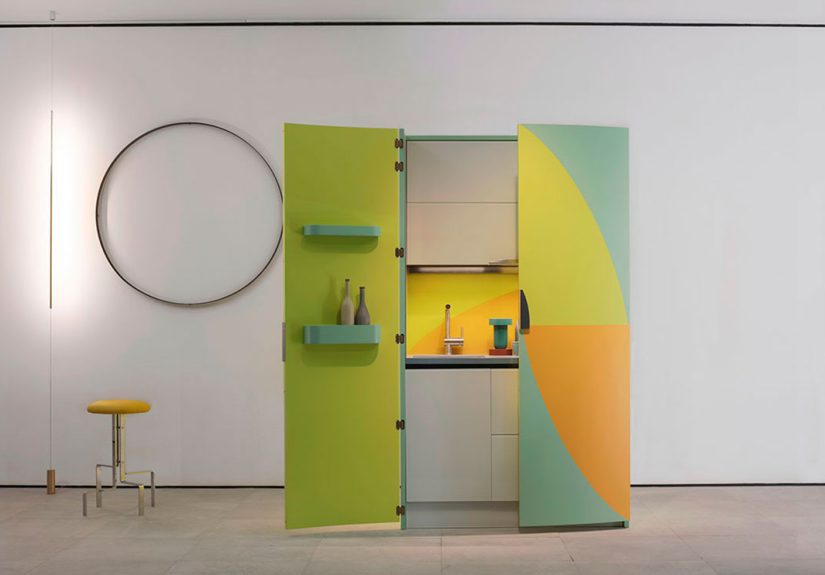
If micro kitchens had a red-carpet event, some of the most buzzed-about concepts come from Japanese maker Sanwa, which has been featured by U.S. design and home publications for its compact, modular kitchen units created specifically for small-space living. The big idea is simple: don’t shrink a normal kitchenbuild a kitchen that was always meant to be tiny.
The “everything you need, nothing you don’t” module
Many of these micro-kitchen setups combine a small sink, an induction cooktop, a sliver of counter, and a set of cabinets in a single, tidy run. Some versions use sliding or panel-style fronts that echo Japanese interior dividersso when you’re not cooking, the kitchen can visually disappear. That’s a huge win in a micro apartment where the kitchen is often in the same sightline as your bed, your desk, and your “I swear this is a dining table” surface.
Design detail that matters: integrated zones
The best micro kitchens don’t just “fit.” They guide you through tasks: prep near the sink, cook on a compact burner, store daily tools where your hand naturally reaches. That’s why small elementslike built-in rack systems, compact cabinet organization, and thoughtful panelingmatter more in a micro kitchen than they do in a big one.
Also, induction shows up frequently in these concepts for a reason: it’s efficient, compact, and doesn’t heat the surrounding air like a traditional gas flameuseful when your kitchen is basically one step away from your pillow.
The Layout Playbook: How Micro Kitchens Stay Functional
One-wall (Pullman-style) kitchens: the micro-apartment MVP
The one-wall layout is common in tiny apartments because it keeps plumbing, ventilation, and electrical needs consolidated while leaving the rest of the room flexible. A well-designed one-wall kitchen often relies on a tight “workflow line”: sink to prep to cook, with storage stacked above and below.
In practice, you’re building a mini assembly line. If you can stand in one spot and reach the sink, the cooktop, and your most-used tools, you’ve basically won tiny-kitchen bingo.
Galley logic (even when you don’t have a true galley)
True galley kitchens are two parallel runs. Micro apartments may only have one run, but they borrow galley principles: narrow footprint, high efficiency, and storage that prioritizes access over decoration. Designers frequently recommend using rolling carts or slim, movable surfaces to add “temporary counter” without committing precious floor space.
Counter Space Is a Myth: Here’s How Micro Kitchens Fake It
In micro apartments, counter space isn’t a fixed featureit’s something you create on demand. Japanese micro-kitchen ideas shine here because they treat “prep surface” as a flexible resource.
Sink covers and cutting boards that earn their rent
A fitted sink cover or a sturdy board that bridges the sink effectively doubles your prep area. Bonus points if it stores vertically when not in use. This is the kind of trick that feels small until you realize it’s the difference between cooking a real meal and ordering delivery because chopping an onion feels like a competitive sport.
Fold-down and pull-out surfaces
Small-space design roundups frequently highlight fold-down tables, rolling islands, and pull-out work surfaces because they provide functionality only when you need it. In micro-kitchen terms, that’s the dream: a surface that exists at dinner time and politely vanishes afterward.
Storage That Doesn’t Bully Your Elbows
The storage goal in a micro kitchen isn’t “more stuff.” It’s “the right stuff, placed where it’s easy to grab.” Here are the highest-impact tactics, inspired by U.S. small-kitchen guides and the micro-kitchen approach seen in Japanese concepts:
Go vertical: rails, hooks, pegboards, and magnetic strips
- Rails + S-hooks for utensils, strainers, and small pans you use daily.
- Pegboards for customizable storage that can evolve with your cooking habits.
- Magnetic knife strips to free counter space and keep knives accessible.
- Magnetic spice storage or narrow spice ledges to stop your cabinet from becoming a paprika avalanche.
Use the “dead zones” people ignore
- Toe-kick drawers under base cabinets for flat items like baking sheets and trays.
- The sliver beside the fridge for a narrow rolling pantry (yes, that weird 4-inch gap can be useful).
- Cabinet doors for wraps, lids, or cleaning tools using slim racks or tension rods.
- Above-cabinet space for baskets of rarely used items (labeled, unless you enjoy mystery bins).
Appliances: Small Doesn’t Have to Mean Sad
Micro-apartment kitchens often swap “full size” for “right size.” The trick is picking compact appliances that still support the way you actually cook, not the way a showroom thinks you cook.
Apartment-sized fridges: the sweet spot
Many apartment-friendly refrigerator models are designed with narrower widths that work better in tight layouts, and consumer testing organizations regularly evaluate options suited for small kitchens. The key is to measure carefully (including door swing) and choose the capacity that matches your grocery reality. If you cook often, prioritize usable interior layout over flashy features.
Induction and countertop “multi-taskers”
Japanese micro kitchens frequently lean on induction because it’s efficient and compact. Pair a single induction burner with a countertop convection toaster oven or a multi-function microwave, and you can cover most daily cooking without sacrificing half your floor plan.
When you can’t store it, it must audition
In a micro kitchen, every appliance should justify its footprint. If you love your rice cooker, keep it. If you own a waffle maker you use twice a year, it’s time for it to pursue other opportunities (like living in a closet).
The Micro-Kitchen Habits Japan Gets Right
Design is only half the story. The other half is how people use the space. Japanese-inspired home advice often emphasizes a calmer, more intentional relationship with belongingsespecially in small homes where clutter multiplies fast.
“Clear counter” is not a personality traitit’s a system
Micro kitchens stay functional because the counter isn’t used as long-term storage. That means:
- Tools have a home (ideally vertical or inside a drawer).
- Daily items are grouped by task (coffee zone, cooking zone, cleanup zone).
- Cleanup happens in small waves, not one dramatic midnight panic.
Small-space cooking leans on smart prep
In tiny kitchens, “mise en place” isn’t fancyit’s survival. Prepping ingredients before the heat goes on prevents the chaos of hunting for salt while something burns two feet from your face.
How to Steal These Japanese Micro-Kitchen Ideas for Any Tiny Kitchen
You don’t need to import a full micro-kitchen module to use the lessons. Start with the biggest friction points and fix them with the smallest moves.
If you have zero counter space…
- Add a sink-bridging cutting board or sink cover.
- Use a slim rolling cart as a movable prep surface.
- Mount a wall rail so utensils live off the counter.
If storage is chaos…
- Convert one cabinet into a “micro pantry” using bins, risers, and turntables.
- Use drawer dividers so you stop stacking tools like a risky game of Jenga.
- Install hooks or a pegboard for the items you reach for daily.
If the space feels cramped…
- Choose lighter finishes or reflective surfaces to reduce visual heaviness.
- Consider open shelving for a small, curated set (not every mug you’ve ever met).
- Hide what you can: uniform containers, closed fronts, minimal counter clutter.
Conclusion: Tiny Kitchens Can Still Cook Big
The best Japanese micro kitchens don’t pretend to be full-sizethey embrace their role. They prioritize workflow, multi-use surfaces, vertical storage, and appliances sized for real life. And that’s the real lesson for anyone living with a small kitchen: you don’t need more square footage. You need fewer obstacles between you and dinner.
So take a page from Japan’s micro-apartment playbook: make your walls work, make your surfaces flexible, keep the essentials close, and let everything else… politely move out.
+: A Micro-Apartment Kitchen “Week of Real Life” (Experiences, Micro Edition)
Let’s do a quick thought experiment: imagine you’ve just moved into a micro apartment in Japan. Your entire kitchen is a compact run along the wallsink, single induction burner, a narrow strip of counter that could double as a bookmark, and a cabinet that holds exactly three emotions: optimism, soy sauce, and a single pot.
Monday: You learn the first rule of micro-kitchen living: if the counter is covered, the kitchen is closed. So you keep it clear on purpose. Your cutting board becomes your “expandable counter,” bridging the sink like a tiny wooden drawbridge. Suddenly you can chop scallions without performing gymnastics. You feel powerful.
Tuesday: You discover that one burner is enoughif you stop cooking like you’re feeding a soccer team. You sauté vegetables, slide them into a bowl, then use the same pan for noodles. The rhythm becomes: cook, plate, wipe, repeat. It’s not restrictive; it’s oddly calming. Also, you begin to respect the humble lid, because it speeds cooking and reduces splatter (which matters when your “backsplash” is also your “everything within arm’s reach”).
Wednesday: You reorganize based on motion. The ladle goes near the burner. The dish soap lives by the sink. Spices move into a slim container you can grab with one hand. You realize micro kitchens punish “random storage” the way airports punish oversized liquids. Everything needs a reason to exist where it exists.
Thursday: You try to cook something ambitious and learn the second rule: prep first, heat second. You line up ingredients in small bowls like you’re hosting a cooking show for an audience of one (you). Now, when the pan is hot, you’re not searching for the sesame oil with your elbow. The micro kitchen rewards you with speed and fewer mistakes. You reward it by washing the cutting board immediately, because if you don’t, there is nowhere to put it. Consequences are immediate here.
Friday: You become a fan of multi-task appliances. A compact oven or convection microwave handles toast, reheats leftovers, and bakes a small tray of veggies. Your rice cooker becomes the quiet hero of the apartment: set it, forget it, and it doesn’t demand counter space foreverit can live on a shelf when it’s off duty. You start thinking like a micro-kitchen designer: “Does this earn its footprint?” If not, it’s a guest, not a resident.
Weekend: You invite a friend over. You don’t “host in the kitchen” because there isn’t room for two humans and a cutting board to coexist peacefully. Instead, you prep in advance, cook simply, and serve at a small table (or, let’s be real, a fold-down surface). The micro kitchen teaches you a final lesson: small spaces don’t kill hospitalitythey just require strategy. You can still cook with love. You just do it with fewer steps, fewer objects, and a lot more intention.
By Sunday night, you realize the micro kitchen didn’t shrink your lifeit edited it. And honestly? It’s a pretty good edit.