Table of Contents >> Show >> Hide
- Why Demodex Blepharitis Has Been So Hard to Ignore
- What Exactly Is Xdemvy?
- What the FDA Approval Means in Practical Terms
- The Clinical Trial Results Behind the Buzz
- How Patients Use Xdemvy
- What Side Effects Should Patients Know About?
- Will Xdemvy Replace Eyelid Hygiene?
- Who Should Ask About Xdemvy?
- A Practical Example of How This Approval Changes Care
- The Bigger Significance for Eye Care
- Conclusion
- Patient and Clinician Experiences: What This Topic Feels Like in Real Life
- SEO Tags
For a long time, Demodex blepharitis lived in the frustrating corner of eye care where patients felt miserable, doctors reached for lid scrubs and warm compresses, and the tiny mites throwing the party on the eyelids kept acting like they paid rent. That is why the FDA approval of Xdemvy is such a big deal. It marks a genuine shift from simply managing symptoms to directly treating a known cause of disease.
Xdemvy, the brand name for lotilaner ophthalmic solution 0.25%, is the first FDA-approved treatment specifically indicated for Demodex blepharitis. In plain English, that means eye care finally has a prescription drop designed to go after the mites linked to this specific form of eyelid inflammation, instead of just trying to calm the mess they leave behind. For patients who have spent months or even years hearing “it’s probably just dry eye” while their eyelids itch, burn, crust, and rebel before breakfast, this approval is more than a regulatory headline. It is a practical change in treatment options.
Why Demodex Blepharitis Has Been So Hard to Ignore
Blepharitis is common, but Demodex blepharitis is a special kind of nuisance. It involves an overgrowth of microscopic Demodex mites around the eyelashes and eyelid margins. These mites are not exactly rare. In fact, most adults have some Demodex on their skin. The problem starts when the population gets out of hand and begins contributing to inflammation, debris, redness, itching, and that gritty, irritated feeling that makes people want to rub their eyes every seven minutes.
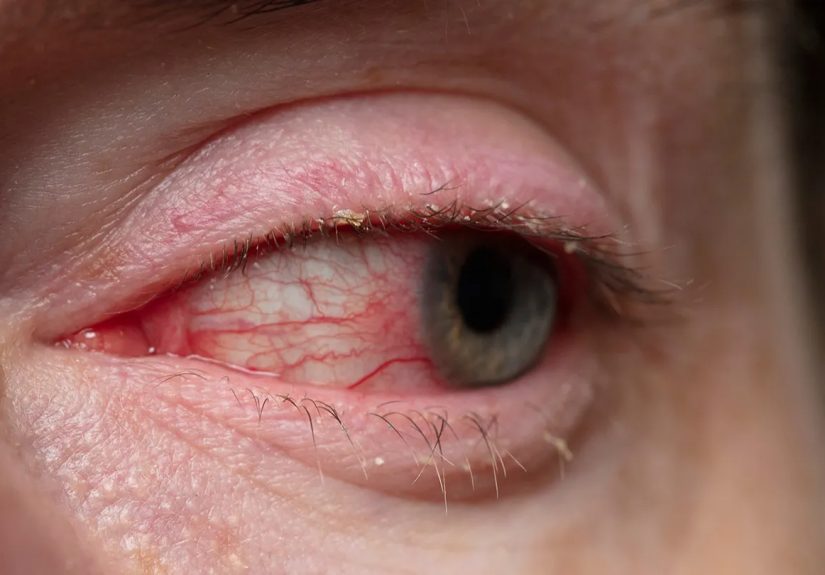
One reason Demodex blepharitis is often missed is that its symptoms overlap with other eye surface problems. Patients may complain of dryness, burning, fluctuating vision, foreign-body sensation, tearing, or recurrent styes. That can sound a lot like generic blepharitis, meibomian gland dysfunction, or dry eye disease. The difference is that Demodex blepharitis has a classic calling card: collarettes, those waxy, cylindrical cuffs of debris clinging to the base of the lashes. They are not subtle once you know to look for them, but plenty of people go undiagnosed because no one checked carefully enough.
That underdiagnosis matters. Demodex blepharitis is not just a cosmetic annoyance or a “wash your eyelids better” problem. It can affect comfort, visual quality, contact lens tolerance, and daily life. Some patients deal with years of recurring irritation before they get a correct explanation. In a condition this common, missed diagnosis is not a minor plot twist. It is the whole sequel.
What Exactly Is Xdemvy?
Xdemvy is a topical ophthalmic solution containing lotilaner 0.25%. It belongs to a category of anti-parasitic therapy known as an ectoparasiticide. That sounds like a word invented by a very serious lab coat, but the core idea is straightforward: it targets mites.
Mechanistically, lotilaner works as a selective inhibitor of gamma-aminobutyric acid, or GABA-gated chloride channels in mites. The result is paralytic activity in the target organism, leading to mite death. That matters because Demodex blepharitis is not just about inflammation floating around for no reason. It is connected to a living trigger. Xdemvy is designed to go after that trigger directly.
That cause-directed approach is what makes the approval so important. Traditional management strategies for blepharitis may still help with comfort and hygiene, but Xdemvy brings something new to the table: a treatment developed for Demodex blepharitis itself, not just the irritated aftermath.
What the FDA Approval Means in Practical Terms
The approval of Xdemvy gives eye doctors a clear prescription option for patients with confirmed Demodex blepharitis. It also helps legitimize the condition in a very public way. Once a disease gets an FDA-approved therapy, it usually receives more attention from clinicians, insurers, patients, and the broader medical community. In other words, Demodex blepharitis is no longer the eye-care equivalent of the family member no one talks about at Thanksgiving.
This matters because many patients have historically cycled through partial fixes. Warm compresses can help. Lid scrubs can help. Artificial tears can help. Tea tree oil products may reduce mites in some cases, though comfort and tolerability can be issues. But none of those options previously carried FDA approval specifically for Demodex blepharitis. Xdemvy changes that conversation by offering a standardized prescription regimen backed by pivotal trial data.
The Clinical Trial Results Behind the Buzz
The FDA approval was supported by two randomized, multicenter, double-masked, vehicle-controlled studies known as Saturn-1 and Saturn-2. Together, these trials evaluated 833 patients with Demodex blepharitis. To qualify, patients needed meaningful signs of disease, including collarettes, eyelid margin redness, and measurable Demodex density.
Patients were treated twice daily for six weeks. By Day 43, Xdemvy showed statistically significant improvement over vehicle across key endpoints. In the FDA label, improvement in lids was demonstrated by reducing collarettes to no more than two per upper lid. In Saturn-1, 44% of patients treated with Xdemvy reached that outcome by Day 43, compared with 7% in the vehicle group. In Saturn-2, the result was 55% for Xdemvy versus 12% for vehicle.
The drug also performed well on secondary measures that eye doctors actually care about in daily practice. In Saturn-1, mite eradication at Day 43 was achieved in 68% of Xdemvy-treated patients versus 17% with vehicle, while erythema cure was seen in 19% versus 7%. In Saturn-2, mite eradication was 50% versus 14%, and erythema cure was 30% versus 9%.
Those numbers matter because they show that Xdemvy is not just brushing debris around like a very expensive eyelid broom. It is reducing visible signs of infestation, lowering mite counts, and improving inflammation in a meaningful share of patients.
How Patients Use Xdemvy
The approved regimen is refreshingly simple: one drop in each eye twice daily, about 12 hours apart, for six weeks. There is no exotic dosing schedule, no lunar calendar, and no need to interpret a chart that looks like advanced algebra.
That said, a few practical instructions matter:
- Remove contact lenses before instilling the drop.
- Wait 15 minutes before reinserting contact lenses.
- If other ophthalmic drops are being used, space them at least 5 minutes apart.
- Do not let the bottle tip touch the eye, fingers, or surrounding surfaces.
- If a dose is missed, continue with the next scheduled dose instead of doubling up.
These details are not filler. They help reduce contamination risk, improve comfort, and keep the treatment routine manageable for real people who are also trying to remember passwords, car keys, and whether they already paid the electric bill.
What Side Effects Should Patients Know About?
According to the FDA label, the most common adverse reaction with Xdemvy is instillation-site stinging and burning, reported in 10% of patients. Other ocular adverse reactions reported in fewer than 2% of patients included chalazion or hordeolum and punctate keratitis.
That safety profile is relatively straightforward, especially for a condition that often requires ongoing attention. There are no listed contraindications in the FDA labeling. Still, “well tolerated” should never be translated into “ignore your eyes if something feels wrong.” Patients who develop new eye symptoms, trauma, infection, conjunctivitis, or unusual eyelid reactions should contact their eye doctor.
Will Xdemvy Replace Eyelid Hygiene?
Not completely, and that is actually a good thing to understand. Demodex blepharitis exists within a larger eyelid ecosystem that often includes meibomian gland dysfunction, bacterial overgrowth, rosacea, chronic irritation, and debris buildup. Xdemvy targets the mites, but healthy eyelid habits still matter.
In many cases, clinicians will still recommend supportive care such as warm compresses, gentle lid cleansing, and dry-eye support when appropriate. Makeup hygiene, contact lens care, and treating underlying conditions like rosacea or dandruff can also remain part of the long-term plan. The modern message is not “throw away every old blepharitis strategy.” It is “finally add a therapy that addresses the Demodex component directly.”
That shift is subtle but important. A patient with confirmed Demodex blepharitis may need more than hygiene, but a patient on Xdemvy may still benefit from good hygiene. This is not a contradiction. It is just what real medicine usually looks like: less magic wand, more smart combination.
Who Should Ask About Xdemvy?
Patients who keep dealing with itchy, crusty, red, irritated eyelids should not assume it is “just allergies” or “just dry eye,” especially if symptoms keep coming back. An eye care visit is worth considering when someone has repeated styes, lash debris, recurrent inflammation, or persistent discomfort that does not improve with basic self-care.
Signs that may raise suspicion for Demodex blepharitis include:
- Collarettes at the base of the eyelashes
- Morning crusting and eyelid irritation
- Burning, itching, or foreign-body sensation
- Recurrent styes or chalazia
- Lash loss, misdirected lashes, or chronic lid redness
- Dry-eye symptoms that never seem fully controlled
Older adults, patients with rosacea, and people with chronic ocular surface complaints may be especially likely to benefit from a careful exam for Demodex-related disease. Sometimes the diagnosis is obvious at the slit lamp once the clinician asks the patient to look down and inspects the lash base carefully. Sometimes lash sampling helps. Either way, the point is simple: a correct diagnosis opens the door to a more targeted treatment plan.
A Practical Example of How This Approval Changes Care
Imagine a patient in her late sixties who has been treated for “dry eye” for two years. She uses artificial tears, does warm compresses on and off, and still wakes up with itchy lids and a gritty feeling every morning. She has had a couple of styes, has stopped wearing eye makeup as often because her eyelids feel irritated, and assumes this is just part of aging.
At a comprehensive eye exam, the doctor notices collarettes around the lashes and mild lid margin erythema. Instead of stopping at a generic blepharitis label, the clinician identifies Demodex blepharitis and prescribes Xdemvy twice daily for six weeks, while also reinforcing lid hygiene. That is a very different clinical moment. The patient is no longer treating mystery irritation. She is treating a specific, visible, biologically plausible cause.
That kind of shift can improve adherence too. Patients are often more motivated when they understand what is happening and why a treatment makes sense. “You have microscopic mites contributing to your eyelid inflammation” may not be anyone’s favorite sentence of the week, but it is at least a clear one.
The Bigger Significance for Eye Care
Xdemvy’s approval is bigger than one bottle of prescription drops. It reflects a broader trend in ophthalmology toward more precise diagnosis and more targeted treatment. Eye care has moved steadily away from vague symptom buckets and toward mechanism-based therapy. Dry eye has seen that trend. Retinal disease has seen that trend. Now blepharitis, at least in its Demodex form, is getting the same upgrade.
That matters for clinicians, because it sharpens diagnostic habits. It matters for patients, because it validates symptoms that are easy to dismiss. And it matters for the market, because once a condition becomes more visible, research, awareness, and treatment innovation often follow.
In short, the FDA approval of Xdemvy is not just a win for one product. It is a sign that Demodex blepharitis is being taken more seriously as a distinct, treatable disease.
Conclusion
The FDA approval of Xdemvy gives eye care something it has needed for a long time: a targeted, prescription treatment specifically for Demodex blepharitis. For patients with itchy lids, collarettes, chronic irritation, recurrent styes, and years of half-fixes, that is meaningful progress. The clinical trial data show real improvements in collarettes, mite eradication, and eyelid redness, while the dosing schedule is simple enough to fit into everyday life. Xdemvy is not a reason to forget basic eyelid care, but it is a major reason to rethink how this condition is diagnosed and treated. Tiny mites may be microscopic, but the impact of finally having an FDA-approved way to treat them is anything but small.
Patient and Clinician Experiences: What This Topic Feels Like in Real Life
One of the most interesting parts of the Xdemvy story is how closely it lines up with what patients and clinicians have been experiencing for years. Demodex blepharitis often does not announce itself like a dramatic medical emergency. It shows up as chronic annoyance. Patients talk about itchy eyelids in the morning, eyes that feel dirty even right after washing, crusting that keeps returning, and the weird sense that their vision is “off” even when they cannot explain why. It is the kind of condition that quietly steals comfort from daily life.
Many people with Demodex blepharitis spend a long time bouncing between labels like dry eye, allergies, sensitive eyes, or generic blepharitis. They buy artificial tears, lid wipes, compress masks, and enough eye-care products to start their own small pharmacy shelf. Some get partial relief. Some do not. A lot of them simply learn to tolerate symptoms. They stop wearing contacts as long. They wear less eye makeup. They avoid rubbing their eyes in public because, frankly, it starts to look suspicious after the twentieth time.
Clinicians have their own version of this experience. For years, many eye doctors knew Demodex was part of the blepharitis picture, but treatment options were inconsistent, messy, or difficult for patients to stick with. Tea tree oil could help some cases, but not everyone tolerated it well. Hygiene-based approaches helped control debris but did not always solve the core problem. So doctors often found themselves managing the condition instead of truly targeting it. That can be frustrating when the diagnosis is visible right there at the slit lamp, sitting on the lashes like a row of tiny, unwelcome scarves.
The arrival of Xdemvy changes that experience in a practical way. For patients, it can be reassuring to hear that there is now an FDA-approved treatment specifically for what they have. That may sound small, but it matters. A named problem with a named treatment feels a lot more manageable than months of trial and error. For clinicians, it creates a clearer treatment pathway: identify collarettes, confirm the diagnosis, prescribe a targeted drop, and build supportive eyelid care around it.
Real-world treatment still requires expectations. Patients may notice improvement in comfort before everything looks perfect. Others may still need dry-eye support, warm compresses, or maintenance hygiene after the six-week course is over. Some may have recurrence over time, because Demodex does not exactly submit a formal resignation letter from the face and lashes. But even that conversation is easier when treatment is specific and evidence-based.
There is also an emotional side that should not be overlooked. Chronic eye irritation is exhausting. It can affect reading, driving at night, screen time, makeup use, contact lens wear, and confidence. When symptoms linger for years, people can start to feel dismissed or resigned. That is part of why this approval has generated such interest. It speaks not only to clinical efficacy, but also to the lived experience of patients who have been dealing with an underrecognized problem for a very long time.
So the “experience” of this topic is bigger than one approval notice. It is the experience of finally connecting symptoms to a cause, finally having a treatment that fits the diagnosis, and finally moving the conversation beyond “keep scrubbing your lids and hope for the best.” In medicine, that kind of shift is often where real progress begins.