Table of Contents >> Show >> Hide
- The Origin Story: From Monastic Refectory to Modern Table
- What Defines John Pawson Dinnerware and Glassware?
- Why These Pieces Work So Well on a Real Table
- How to Style John Pawson Dinnerware and Glassware at Home
- What Makes the Collection Feel Luxurious
- Should You Buy Into the Look?
- Experience: Living with John Pawson Dinnerware and Glassware
- Conclusion
- SEO Tags
If most dinnerware collections are trying to be the life of the party, John Pawson’s tabletop pieces are perfectly happy being the calm, impossibly well-dressed guest in the corner. They do not shout. They do not sparkle for attention like a game-show set. They do not beg for compliments. And yet, somehow, they end up getting them anyway.
That is the quiet power of John Pawson dinnerware and glassware. Designed with the same disciplined eye that made Pawson one of the best-known names in minimalism, these pieces turn the daily act of eating and drinking into something a little more considered. Not fussy. Not precious. Just considered. In a world full of overloaded tables, novelty mugs, and plates with more personality than stability, Pawson’s tabletop work makes a persuasive argument for restraint.
This is not minimalism for minimalism’s sake. It is minimalism with purpose: a plate that feels balanced in the hand, a bowl that frames food instead of fighting it, a glass that seems obvious only because the proportions are so carefully resolved. That is the trick, really. The objects look simple because a great deal of thought has already happened before they ever reach the table.
For anyone curious about designer dinnerware, minimalist glassware, or the enduring appeal of modern tabletop design, Pawson’s work remains a benchmark. It is elegant without being theatrical, useful without being boring, and serious without becoming humorless. That last part matters. Nobody wants a plate that looks like it would judge your pasta choices.
The Origin Story: From Monastic Refectory to Modern Table
The most interesting thing about the John Pawson tabletop collection is that it did not begin as a trend exercise or a luxury branding move. Its roots are practical, almost monastic in the most literal sense. The original collection grew out of Pawson’s work on a Cistercian monastery in Bohemia, where he began thinking about what the monks’ refectory actually needed: essential tools, disciplined forms, and objects stripped of anything unnecessary.
That background explains why the collection feels so different from typical “designer tabletop” launches. Rather than starting with decoration and adding function later, Pawson started with function and refined it until the object acquired beauty almost by accident. The result is a family of pieces that feels spare, but never empty. There is warmth in the proportions, softness in the surfaces, and a sense that each item is meant to be lived with rather than admired from a respectful distance.
That philosophy also helps explain why these objects still feel current. A well-designed plate does not go out of style because it was never following style to begin with. Pawson’s tabletop work fits today’s appetite for quiet luxury, warm minimalism, and timeless home design, but it also predates those buzzwords. It is not trying to be algorithm-friendly. It just happens to look very good in natural light, which, to be fair, does not hurt.
What Defines John Pawson Dinnerware and Glassware?
1. Proportion Comes First
Pawson’s best work always returns to proportion, and that is what makes the tabletop collection memorable. The rims are not overworked. The bowls do not wobble into sculptural drama. The glasses are not decorated into submission. Instead, every curve, diameter, and thickness feels edited. This is where the collection earns its reputation. The pieces do not rely on ornament to seem refined; they rely on scale.
That focus on proportion is especially important in tabletop design because these are objects people use up close. A house can impress from across a courtyard. A wine glass has to feel right in your fingers. A cup has to meet the mouth comfortably. A serving bowl has to hold food generously without becoming bulky. Pawson’s designs understand that intimacy, which is one reason they continue to appeal to serious design lovers and ordinary home cooks alike.
2. Materials That Support the Idea
The classic tabletop line is associated with restrained ceramics, glassware, and stainless-steel cutlery, with later additions in oak, mouth-blown glass, and stone. That material palette is no accident. Pawson tends to choose materials that age gracefully and let form do the talking. Ceramic pieces offer a matte, tactile quietness. Glass provides lightness and clarity. Stainless steel brings crispness and utility. Oak adds a gentle natural note. Marble and limestone introduce density and permanence.
What ties these materials together is not sameness, but discipline. None of them are asked to perform circus tricks. They are used honestly. The glass looks like glass. The ceramic looks like ceramic. The oak looks like wood, not wood desperately auditioning to be something else. In an era when many products seem terrified of simplicity, that honesty feels refreshing.
3. A Collection Built Around Essentials
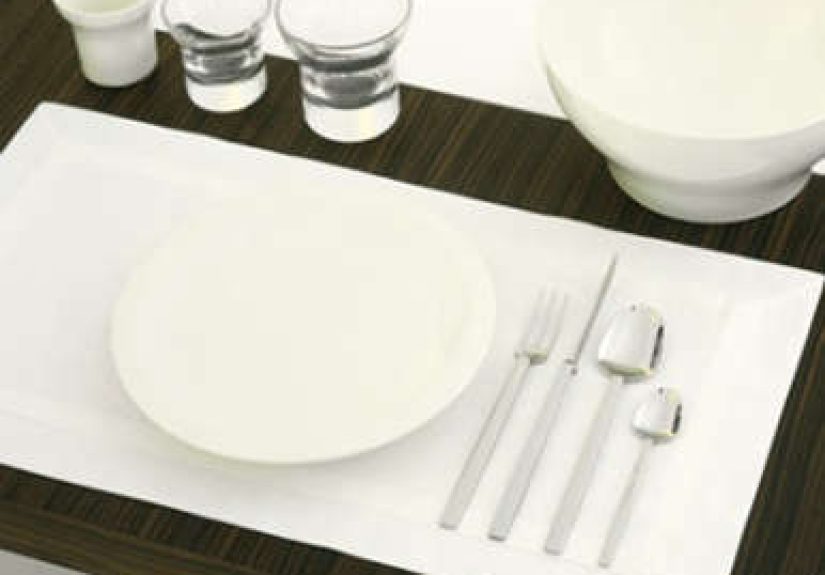
The enduring appeal of John Pawson tableware also comes from its concentration on essentials. The early family of objects includes plates, bowls, cups, water and wine glasses, a carafe, and cutlery. There are also salad servers and related serving pieces, each designed with the same stripped-back logic. Some versions of the cutlery even reexamine the fork itself, offering unusual three-prong and five-prong options. That tiny move says a lot about Pawson’s process: even the most familiar object is open to reconsideration.
Later tabletop-adjacent additions expand the world without breaking the mood. There are mouth-blown glass storage jars, oven dishes, marble bowls, marble vases, and solid-oak trays. These objects feel related rather than repetitive. They extend the language of the table into the kitchen and the room around it, suggesting that Pawson does not see dining as an isolated event. It is part of a larger domestic atmosphere.
Why These Pieces Work So Well on a Real Table
Minimalist dinnerware often runs into one of two problems. It either becomes cold and severe, making dinner feel like a medical procedure, or it becomes so “softly organic” that everything starts to look vaguely melted. Pawson manages to avoid both extremes.
His tabletop pieces have precision, but they also have calm. They frame food beautifully because they do not compete with it. A simple bowl can make soup, roasted vegetables, or even late-night cereal look more intentional. A clear water glass looks clean and architectural without becoming unfriendly. The effect is not sterile; it is clarifying. The object steps back just enough to let the meal come forward.
This is one reason Pawson’s tabletop work photographs so well in design editorials and real homes. The pieces do not dominate the table. Instead, they create order. Linen napkins look better next to them. Wood tables look warmer. Bread looks artisanal even when it came from the store in a paper bag you are trying to hide. The collection is incredibly good at making everyday rituals feel composed.
Another advantage is flexibility. Because the forms are so restrained, the pieces can live in different interiors without looking displaced. In a rustic kitchen, they feel serene. In a modern apartment, they feel precise. In a more traditional setting, they read as clean counterpoints rather than visual interruptions. That is the hallmark of timeless tabletop design: it adapts without losing its identity.
How to Style John Pawson Dinnerware and Glassware at Home
Keep the Palette Quiet
If you are styling a table around Pawson-inspired dinnerware, resist the urge to over-accessorize. Neutral ceramics, clear glassware, natural linen, brushed metal, and wood are enough. This is not the table for twelve competing patterns and an emotional-support centerpiece. Let negative space do some of the work.
Use Texture Instead of Clutter
Minimalism becomes inviting when texture steps in. Pair smooth ceramic plates with washed linen napkins, unfinished oak serving boards, stoneware bowls, or a low arrangement of branches. The point is contrast without chaos. Pawson’s work thrives in rooms where light, shadow, and material matter as much as color.
Mix with Restraint
You do not need an all-Pawson table for the look to succeed. In fact, mixing can make the setting feel more personal. A Pawson-style plate can sit comfortably beside vintage silver, handmade pottery, or a simple cotton tablecloth. The key is editing. The collection rewards a selective eye. One strong gesture usually beats seven decent ones.
What Makes the Collection Feel Luxurious
Luxury is often confused with elaboration, but Pawson’s tabletop work argues for something else: luxury as precision. The pleasure comes from edges that feel resolved, weights that feel intentional, and surfaces that do not overperform. These are objects that trust the user to notice the details.
That kind of luxury tends to age well because it is rooted in use, not spectacle. A flashy trend piece can look tired in two years. A beautifully proportioned bowl can stay relevant for decades. This is why John Pawson’s tabletop world speaks so strongly to people interested in buying less but buying better. The collection supports a slower, more deliberate vision of home life, where the same objects return to the table again and again and somehow look better every time.
It also helps that Pawson’s broader body of work has long been associated with warm minimalism rather than empty severity. Across homes, kitchens, books, furniture, and homeware, he has shown that restraint can be deeply livable. His dinnerware and glassware carry that same lesson into the smaller theater of the table.
Should You Buy Into the Look?
If you love color, maximalism, and dishes that announce every season with the energy of a marching band, this collection may not be your soul mate. But if you are drawn to minimalist dinnerware, modern glassware, and objects that make everyday routines feel quieter and better, then Pawson’s approach is enormously compelling.
The appeal is not just aesthetic. It is emotional. These pieces encourage a certain pace. They make room for the ritual of setting the table, pouring water, serving bread, or drinking coffee without rushing through it. They remind you that useful objects can also shape mood. That may sound lofty for a bowl, but a good bowl has been improving people’s evenings for centuries. Pawson just happens to be exceptionally good at proving it.
Experience: Living with John Pawson Dinnerware and Glassware
Using John Pawson tabletop pieces does not feel like “using designer objects” in the dramatic sense. It feels more subtle than that. The experience begins the moment you open the cabinet and notice how calm everything looks stacked together. There is no visual noise. No unnecessary flourish. Just a sense of order that somehow makes even a rushed weekday dinner seem a little more civilized.
A plate from this world does not demand attention, but it changes how you plate food. You instinctively leave more breathing room. A simple roast chicken, a pile of lemons, or a bowl of pasta suddenly looks intentional rather than accidental. The dinnerware seems to encourage editing, which is funny when you realize the object itself has already been edited within an inch of its life. It is like being quietly coached by a very elegant minimalist who would never actually say a word.
The glassware has a similar effect. A water glass feels balanced, clear, and refreshingly free of gimmicks. It does not need color tinting, etched slogans, or an aggressively “playful” silhouette to earn its spot at the table. It simply works. That sounds obvious until you realize how many glasses do not. Some are too thick, some too delicate, some weirdly top-heavy, and some apparently designed by people who have never had to load a dishwasher. Pawson’s approach feels blessedly adult.
What stands out most over time is how these pieces support atmosphere. Morning coffee feels quieter. Lunch at the counter looks more composed. Dinner with friends becomes less about staging and more about rhythm: passing the bowl, pouring the wine, setting down the salad servers, watching candlelight catch the rim of a glass. The collection does not create the evening by itself, of course, but it gives the evening better architecture.
There is also an emotional satisfaction in owning objects that do not try too hard. Many tabletop collections are designed for first impressions. Pawson’s pieces are designed for the fiftieth use. They get better as you become familiar with them. You begin to notice the weight of the cutlery, the curve of a bowl, the way a carafe sits on the table without fuss. These details are modest, but they accumulate into attachment.
And that may be the best way to understand the experience of John Pawson dinnerware and glassware: it is less about spectacle than about steadiness. The pieces bring calm to the table. They make everyday life look a touch more intentional and feel a touch less chaotic. In a home culture that often confuses more with better, that is a surprisingly radical pleasure. The result is not a museum display or a design lecture. It is simply a beautiful, deeply usable tabletopone that makes breakfast, lunch, and dinner feel like they belong to the same thoughtful world.
Conclusion
Tabletop: John Pawson Dinnerware and Glassware is ultimately a story about design discipline applied to everyday life. The collection’s appeal lies in its refusal to chase novelty. Instead, it returns to the essentials: proportion, material, balance, and use. Born from a monastic idea of necessity and refined into a modern tabletop language, these pieces show how minimalism can be warm, practical, and quietly luxurious.
For readers exploring John Pawson tabletop design, the lesson is clear: the best dinnerware does not need to perform tricks. It only needs to do ordinary things extraordinarily well. A plate should hold a meal beautifully. A glass should feel effortless in the hand. A bowl should invite daily use. Pawson’s work understands that truth and turns it into an aesthetic advantage.
That is why this collection still resonates. It is not about owning less for the sake of virtue or styling a table that looks too pristine to touch. It is about living with objects that improve the rhythm of daily routines. And honestly, if a plate can make leftovers feel elegant, that is not just good design. That is borderline sorcery.