Table of Contents >> Show >> Hide
- Table of Contents
- Quick Cheat Sheet
- Way 1: Citizenship by Birth (Born in India)
- Way 2: Citizenship by Descent (Born Abroad to Indian Parent[s])
- Way 3: Citizenship by Registration or Naturalization (Residency Route)
- Common Mistakes (and How to Avoid Them)
- Mini FAQ
- Conclusion
- Experiences: What the Process Feels Like in Real Life
Becoming an Indian citizen sounds romanticuntil you meet your true soulmate: paperwork.
Still, India has clear legal pathways to citizenship. The trick is figuring out which lane you’re actually in,
because “I love samosas” is not (yet) a recognized legal category.
This guide breaks down the three most common ways to become an Indian citizen:
by birth, by descent, and by registration/naturalization.
You’ll also learn what trips people up (spoiler: name mismatches and assumptions about dual citizenship).
If you’re in the U.S., you’ll see where Indian consular processes often fit in.
Quick Cheat Sheet
Here’s the fastest way to see which path might apply to you. (If you’re reading this at 1 a.m. while
staring at a scanner that refuses to scan, you’re among friends.)
| Path | Who it’s for | Main proof you’ll need | Big “gotcha” to watch |
|---|---|---|---|
| By Birth | People born in India who meet the rule for their birth date | Indian birth certificate + parents’ citizenship/immigration status | Rules change by date; parent status matters |
| By Descent | People born outside India with at least one Indian parent (with conditions) | Foreign birth certificate + parents’ Indian passport/citizenship proof + consular registration | Missing birth registration or passport conflicts can derail everything |
| By Registration / Naturalization | Adults qualifying through Indian origin, marriage, OCI status, or long residence | Residence history, visas, police clearance, language/character requirements (often) | Residency calculations and documentation are unforgiving |
Way 1: Citizenship by Birth (Born in India)
Citizenship by birth is the “I was literally there” route. But India’s rules are not a simple
everyone born here automatically qualifies system. The legal requirements depend heavily on
your date of birth and (for later periods) your parents’ status.
How it works (in plain English)
-
Older birth windows are simpler: People born in India in certain earlier periods may
qualify more automatically under the law. -
Later birth windows are stricter: For births after rule changes, the law looks at whether
a parent is an Indian citizen and whether the other parent is considered an “illegal migrant.” -
Some exceptions apply: Certain cases (like diplomatic immunity situations) can block
citizenship by birth even if the birth happened in India.
What you’ll typically need
- Indian birth certificate issued by the appropriate local authority
- Parents’ documents (Indian passport, citizenship proof, and/or immigration status documents)
- Evidence tying you to the parents listed on the birth certificate (often straightforward, sometimes not)
Practical next steps
-
Confirm your rule set: Identify the birth-date window that applies to you (the law has
changed over time). -
Assemble a clean document chain: The names, dates, and places must match across your
birth certificate, parents’ documents, and any later records. -
Apply for proof of citizenship/passport as applicable: Many people experience citizenship
“in practice” when applying for an Indian passport and being asked to prove eligibility.
Example
Example A: Priya was born in India in the early 1980s. Her parents were Indian citizens,
and she has a standard municipal birth certificate with consistent spelling. Her process is mostly about
retrieving records and showing continuitynot proving complex immigration status details.
Example B: Arjun was born in India after later legal changes. One parent is an Indian citizen,
and the other parent’s status becomes part of the citizenship-by-birth analysis. His “simple passport renewal”
turns into a “please provide 12 documents from three decades ago” scavenger hunt.
Way 2: Citizenship by Descent (Born Abroad to Indian Parent[s])
Citizenship by descent is the “born overseas, connected through parents” route. It’s common for families
in the U.S., Canada, the U.K., and elsewhere. But it’s also the route most likely to be disrupted by one
avoidable problem: not registering the birth properly (or on time) with the Indian mission/consulate.
What “by descent” usually means
If you were born outside India and at least one parent was an Indian citizen at the time of your birth,
you may qualifyespecially if the required steps (including consular registration) were followed.
The law also has special conditions when the parent’s citizenship is “by descent” (not by birth), and it can
require registration for citizenship to attach.
The paperwork backbone of this path
- Your foreign birth certificate (often needs proper authentication depending on location and use)
- Parents’ Indian passport(s) and/or citizenship documentation
- Parents’ marriage certificate (commonly requested to connect names and family relationships)
- Consular registration of birth documentation (or proof that it was completed)
-
If applicable: declarations related to the child’s nationality/passport status (because India does not treat
dual citizenship the same way some countries do)
What U.S.-based families should pay attention to
-
Name consistency: “Rajesh Kumar” vs “Rajesh K. Sharma” sounds like a small difference to humans,
but to a form, it’s basically a different species. -
Timing and process: Many consular processes emphasize registering birth within a defined timeframe,
or obtaining approval if late. Late registration may be possible, but expect more scrutiny. -
Passport realities: Having an OCI card (or being eligible for OCI) is not the same as being a citizen.
If you’re truly a citizen by descent, the goal is usually to obtain the correct citizenship status and documentation
(often culminating in a passport process).
Example
Example: Maya was born in California. Her parents are Indian citizens. They registered her birth through
the consular process while she was still a baby, and her documents match perfectly. Later, applying for the right status
is far smoother than for families trying to retroactively fix records when the child is 17 and needs documents yesterday.
Way 3: Citizenship by Registration or Naturalization (Residency Route)
If you weren’t born in India and can’t claim citizenship by descent, your path is usually through living in India
long-term and qualifying under registration or naturalization.
This is the route where people often say, “How hard can it be?” and then discover the answer is:
“Hard enough that you’ll learn what ‘ordinarily resident’ means.”
Registration vs. naturalization: what’s the difference?
-
Citizenship by registration is typically for people with a special connection to Indiasuch as
Indian origin, marriage to an Indian citizen, being a former Indian citizen, or (in certain cases) being an OCI cardholder
who meets additional requirements. -
Citizenship by naturalization is the broader residency-based route, usually requiring
significant residence in India, good character, and knowledge of a recognized Indian language.
Common registration categories you may hear about
Registration can apply in several situations. Depending on your circumstances, you might see categories such as:
- Person of Indian origin who has been ordinarily resident in India for a defined number of years
- Spouse of an Indian citizen with a defined period of ordinary residence in India
- Former Indian citizen applying after returning and residing in India for a qualifying period
-
OCI cardholder route (in certain cases): some OCI cardholders may be eligible to apply for Indian citizenship
through registration if they meet time and residence requirements
Naturalization: the high-commitment path
Naturalization is typically residence-heavy. The law’s schedule of qualifications includes:
- Continuous residence in India for a period immediately before applying (commonly described as 12 months)
- Aggregate residence over a longer lookback window (commonly described as a total number of years across the prior period)
- Good character (think background checks and not being a legal chaos gremlin)
- Language knowledge in a language listed in the Indian Constitution’s Eighth Schedule
- Intent to reside in India (or work in specified kinds of service)
What the process often looks like (high level)
-
Build lawful residence first: You generally need the correct visa and residence compliance to start counting time.
(If your residency history is messy, fix that firstcitizenship is not the place to “wing it.”) - Gather proof of residence: Expect to document where you lived and when, with supporting evidence.
-
Prepare identity and civil-status documents: Passports, birth certificates, marriage certificates,
and often police clearance documents come up frequently. -
Submit through official channels: Applications are commonly handled through government portals and reviewed by authorities.
Procedures can be updated, so always check the latest official instructions before filing. - Be ready for verification: Background checks, interviews, and document verification are common.
-
Plan for the “single-citizenship” reality: India does not treat dual citizenship like some countries do.
If you currently hold another citizenship, you’ll need to understand the renunciation implications before you can finalize Indian citizenship.
Example
Example: Daniel has lived and worked in India for years on valid visas, has consistent address history,
and speaks Hindi confidently. He may fit the naturalization profile if his residence calculations and documentation meet the legal threshold.
Contrast that with someone who “spent a lot of time in India” but can’t prove exactly when, where, or under what statusgreat travel stories,
not great citizenship evidence.
Common Mistakes (and How to Avoid Them)
1) Confusing OCI with citizenship
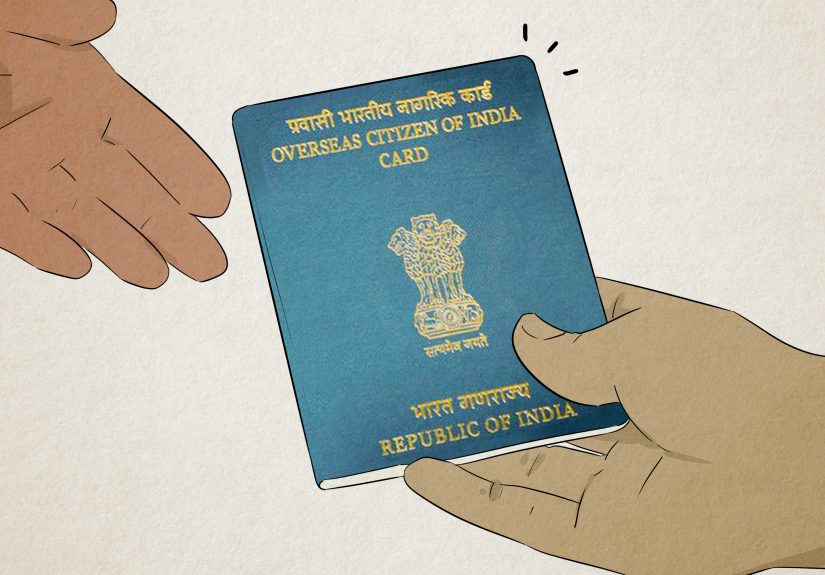
OCI is often described as “Overseas Citizenship,” which sounds like citizenship. Plot twist: it’s not.
OCI is best understood as a lifelong visa plus specific privileges, and it does not grant key citizen rights
like voting or holding constitutional posts. If your end goal is a passport and full political rights, OCI is a related topicbut not the finish line.
2) Assuming dual citizenship is automatically okay
Many countries allow dual citizenship broadly. India’s approach is different.
If you voluntarily acquire foreign citizenship, Indian citizenship can terminate under the law.
That’s why former Indian citizens are commonly required to surrender their Indian passport and follow
official renunciation/surrender procedures when they become foreign citizens.
3) Underestimating document consistency
Citizenship processes are less about “who you are” and more about whether your documents agree on who you are.
Keep your spelling consistent, document name changes, and don’t assume the officer will “just know” that “Mohammed” and “Muhammad”
are the same person.
4) Getting residency math wrong
“I lived there for about a decade” is not a calculation.
Residency requirements often depend on exact dates, qualifying status, and how time is counted.
Treat your residence history like a spreadsheet, not a vibe.
Mini FAQ
Is there a “fast track” way to become an Indian citizen?
For most people, the fastest “realistic” route is the one they already qualify for (birth or descent).
Residency-based routes require time, compliance, and documentation. Some laws also allow limited relaxations in special circumstances,
but those are not the norm.
Do I need a lawyer?
Not always. But if your situation involves late registrations, complex citizenship history, unclear residence calculations,
or major document inconsistencies, professional help can prevent expensive delays.
Can I keep my U.S. citizenship and become an Indian citizen?
This is a high-stakes question. India does not generally recognize dual citizenship the way the U.S. does.
Before making any citizenship decisions, review official guidance carefully and consider both countries’ rules.
(Translation: don’t rely on a cousin’s WhatsApp voice note as your only legal strategy.)
Conclusion
The three most common paths to becoming an Indian citizen are:
(1) citizenship by birth, (2) citizenship by descent, and
(3) citizenship by registration or naturalization.
Your “correct” path depends on where you were born, your parents’ citizenship, and whether you have the residence history
to qualify under India’s registration/naturalization rules.
If you take one thing away, let it be this: match your strategy to your category.
People waste months trying to force the wrong path, when a simpler legal lane existsor when they actually need to fix documents first.
Start by identifying your category, then build a clean document trail, and only then hit “submit.”
Experiences: What the Process Feels Like in Real Life
Legal guides tell you what to do. Real life teaches you how it feelsespecially when your scanner decides it “doesn’t support that file”
even though it supported the same file yesterday. Here are some common experiences people run into while pursuing Indian citizenship,
based on patterns that show up again and again in consular and long-term residency scenarios.
Experience 1: “I thought I was already a citizen…”
Many U.S.-born children of Indian parents grow up assuming their Indian connection automatically equals Indian citizenship.
Then adulthood arrives with a thudoften in the form of a university form, a visa application, or a job relocation request asking for proof.
Families discover that citizenship-by-descent can depend on whether the birth was registered properly and whether the documentation chain is clean.
The emotional arc is usually: confidence → confusion → frantic document search → long phone calls → finally, a tidy folder labeled
“DO NOT TOUCH (IMPORTANT).”
A surprisingly common turning point is realizing that tiny inconsistencies matter. One parent used a middle name sometimes,
an address changed formats across documents, or a birth certificate has a different spelling than a passport.
Fixing these is doable, but it takes timeand the process feels less like “becoming a citizen” and more like “becoming a historian”
who specializes in your own family’s paperwork.
Experience 2: The residency route is a marathon, not a montage
If you’re pursuing citizenship by registration or naturalization, it’s rarely a single dramatic moment.
It’s years of doing the right things consistently: maintaining lawful status, tracking addresses, renewing documents on time,
and keeping copies of everything (yes, even that random letter you almost threw out).
People often underestimate how strict residency math can be and how often they’ll be asked to prove “ordinary residence” with
evidence that is both specific and boringutility bills, lease agreements, official letters, and records that show continuity.
One of the most relatable experiences is the “timeline reconstruction.”
You sit down thinking you’ll list your past addresses from memory, and two hours later you’re cross-checking email receipts,
old rental agreements, travel stamps, and calendar entries like you’re solving a mysterybecause you are.
The win comes when your timeline is consistent, documented, and defensible.
Experience 3: The “dual citizenship” misunderstanding hits hard
People from countries that allow dual citizenship often assume India works the same way.
The first serious wake-up call is usually related to passports: former Indian citizens learning they must follow the rules for
renunciation/surrender and that OCI is not a backdoor to dual citizenship. Emotionally, this can feel like losing something,
even if OCI still provides significant travel and residency privileges.
Practically, the experience often includes careful decision-making: “What do I need long-termpolitical rights, a passport,
the ability to live and work in India, or flexibility with my current citizenship?” People who do best treat this as a strategy choice,
not just paperwork. They consult official guidance, ask the consulate the right questions, and think through consequences
before they commitbecause citizenship choices are hard to undo.
The biggest emotional relief usually comes when everything is aligned: your documents match, your category is clear,
and you’re no longer guessing which rules apply to you. At that point, the process still isn’t “easy,”
but it becomes predictableand predictable is the closest thing paperwork has to joy.