Table of Contents >> Show >> Hide
- Why Custom DIY Home Office Built Ins Are Worth It
- Start with the Wall, Not the Paint Color
- Best Layout Ideas for Home Office Built Ins with Desk
- Choosing Materials That Look Good and Behave Themselves
- How to Build Custom DIY Home Office Built Ins with Desk
- Desk Height, Comfort, and Ergonomics Matter More Than Fancy Hardware
- Storage Ideas That Make Built-Ins Actually Functional
- Design Details That Elevate the Final Look
- Common Mistakes to Avoid
- Final Thoughts
- Real-World Experiences with Custom DIY Home Office Built Ins with Desk
If your current “home office” is a laptop balanced next to a coffee mug, three sticky notes, and one mysterious charging cable that belongs to absolutely nothing you own, it may be time for an upgrade. Custom DIY home office built ins with desk solutions are one of the smartest ways to turn an awkward wall, spare bedroom, alcove, or even a closet into a hardworking workspace that looks polished and feels intentional.
The beauty of built-ins is that they do two jobs at once: they create a desk area tailored to your routine, and they squeeze useful storage out of vertical space that would otherwise sit there doing nothing but collecting dust and judgment. Whether you want floor-to-ceiling shelves, lower cabinets, a floating desktop, or a full wall of cabinetry worthy of a designer reveal, the right plan can help you build a workspace that looks custom without requiring a reality TV renovation budget.
In this guide, you’ll learn how to plan, design, and build custom home office built ins with a desk, what materials make the most sense, which layout ideas work best in real homes, and the small decisions that separate a beautiful office from a beautiful office that is wildly annoying to use.
Why Custom DIY Home Office Built Ins Are Worth It
A freestanding desk can work fine, but built-ins solve problems that ordinary furniture often cannot. They make the room feel finished, maximize wall space, create hidden storage, and reduce visual clutter. That matters more than people think. A home office is easier to use when paper piles, chargers, printers, files, and random office odds and ends actually have a home instead of staging a daily protest across the desktop.
Built-ins are especially useful in small spaces. An unused closet can become a compact “cloffice.” A narrow wall can hold a long desktop with cabinets underneath. A guest room can gain an office zone without turning into a cubicle farm. And a blank wall can be transformed into a custom workstation with shelving above, cabinets below, and enough personality to make video calls look less like witness protection housing.
Another major advantage is flexibility. You can build around your exact needs. If you need hidden printer storage, file drawers, closed cabinets, and charging stations, you can plan for them. If you prefer open shelving for books and decor, you can design for that too. A good DIY built-in desk setup is not just pretty. It is personal.
Start with the Wall, Not the Paint Color
The biggest mistake in a DIY built-in project is starting with the aesthetic before the measurements. Yes, picking a paint color is fun. No, it should not happen before you know where the outlets are, how your baseboards run, whether the floor is level, and how far the window trim projects from the wall.
Before you cut a single board, measure the full width and height of the wall in several places. Walls are rarely perfectly straight, and floors have a talent for being “almost level,” which is contractor code for “surprise.” Measure around baseboards, crown molding, door casing, vents, and electrical outlets. If you are building from wall to wall, expect to scribe filler pieces or notch components so the installation looks tight and intentional.
It also helps to sketch the design to scale. You do not need museum-quality drafting skills. A simple drawing with cabinet widths, desk span, shelf spacing, and overall height will save you from expensive mistakes. This is also the moment to decide whether you want one centered desk, a double workstation, or a hybrid design with storage on one side and open legroom on the other.
Best Layout Ideas for Home Office Built Ins with Desk
1. Wall-to-Wall Built-In Desk
This is one of the most practical options for a dedicated office. A long desktop stretches across the wall, while lower cabinets or drawer bases support the surface and upper shelves provide storage. This layout works well for one person who likes extra spread-out workspace or two people who need a shared office.
2. Desk Between Two Tall Cabinets
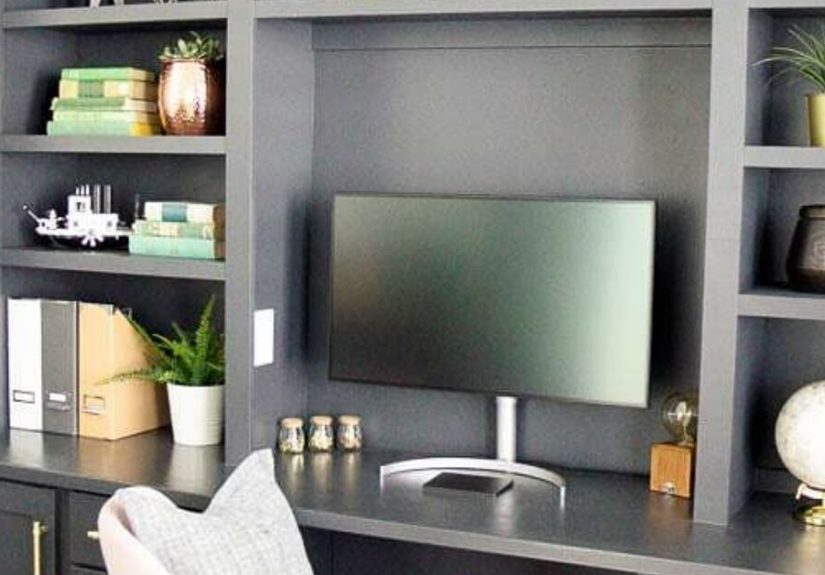
If you love the look of custom millwork, flanking a desk with tall cabinets or bookcases creates instant symmetry. This style feels expensive because it frames the workspace and gives the whole wall a built-in furniture effect. It is also excellent for mixing hidden storage with display space.
3. Cloffice Build
A closet office is perfect for smaller homes. Remove the closet doors, fit a desktop to the width, then add shelves above. When styled well, it feels cozy rather than cramped. If you still want the room to pull double duty, reinstall doors or add drapery so the workspace can disappear at the end of the day.
4. Floating Built-In Desk
A floating desk keeps the room visually lighter and can be a lifesaver in a narrow alcove. Pair it with wall-mounted shelves or cabinetry above. This option works best when you do not need lots of lower storage and want the office to feel airy rather than heavy.
5. Stock-Cabinet Hack
One of the smartest DIY routes is using stock kitchen or utility cabinets as the foundation. This shortcut saves build time, creates strong storage, and gives you drawers and doors without building every cabinet box from scratch. Then you add a custom plywood desktop, trim, and filler panels so the whole setup looks made for the room.
Choosing Materials That Look Good and Behave Themselves
For the main carcass of built-ins, 3/4-inch plywood is a workhorse. It is strong, stable, and suitable for cabinet boxes, shelves, and dividers. Furniture-grade birch plywood is especially popular for painted or clear-finished projects because it stays flatter than many budget sheet goods and gives a cleaner result.
MDF is another common choice, especially for paint-grade built-ins. It gives a smooth finish and crisp edges, which is why many DIYers use it for cabinet faces, end panels, or decorative trim details. The trade-off is weight and moisture sensitivity. MDF is great in dry indoor spaces, but plywood is usually the better structural choice when strength matters most.
Face frames, shelf trim, and decorative details are often made from 1×2 or 1×3 boards. These pieces help hide plywood edges, stiffen shelves, and deliver that custom-cabinet look. If you want shelves that appear chunkier and more substantial, adding a hardwood or solid-wood edge band is a clever trick.
For desktops, a 3/4-inch plywood top is a reliable choice. It can be doubled up, edged, or supported with cleats and cabinet bases to create a sturdy work surface. If you want a painted finish, MDF with proper support can work. If you want wood grain, plywood or a hardwood top usually looks better and holds up nicely over time.
How to Build Custom DIY Home Office Built Ins with Desk
Step 1: Define the Footprint
Mark the full width of the unit on the wall. Decide where the desk will sit, where lower cabinets will go, and how much knee space you need. Think about your chair movement, printer access, and monitor placement before locking in the design.
Step 2: Locate Studs and Power
Find and mark every wall stud. This matters because built-ins, desktops, cleats, and upper storage need real support. Also identify outlets and cable paths. If you need to hide electronics inside cabinetry, plan ventilation and cord management now, not after everything is painted and your patience has left the building.
Step 3: Build or Set the Base Cabinets
If you are using stock cabinets, level and secure them first. If you are building your own boxes, use 3/4-inch plywood and assemble with screws, glue, and pocket-hole joinery where appropriate. Check for level constantly. Built-ins only look custom when the foundation is square, plumb, and not doing interpretive dance against the wall.
Step 4: Install the Desktop
A standard desk height is about 30 inches, though some projects bump the surface to counter height or standing height depending on the intended use. Set the desktop on the cabinet bases or support it with wall cleats and side panels. Leave enough room underneath for legs, chair movement, and a comfortable sitting posture.
Step 5: Add Vertical Storage
Install tall side units, open shelving, or upper cabinets. Secure everything to studs. If you are building custom shelving, many DIY plans use 3/4-inch plywood for sides and shelves, often in moderate depths that are practical for books and office supplies without overwhelming the room.
Step 6: Trim It Out
This is the part that makes people say, “Wait, you built that?” Add face frames, fillers, crown molding if it suits your style, base trim, and edge banding. Cut around baseboards when needed, or remove and replace trim if that gives a cleaner fit. Small filler strips can hide uneven wall gaps and make the installation look truly custom.
Step 7: Sand, Caulk, Prime, and Paint
Sand the surfaces, fill screw holes, caulk the seams where built-ins meet the wall, and use a quality primer. For a painted look, semi-gloss or satin finishes are popular because they are easier to wipe clean. For a wood finish, use a protective clear coat so the desktop can survive mugs, keyboards, and whatever suspicious crumbs your workday produces.
Desk Height, Comfort, and Ergonomics Matter More Than Fancy Hardware
A custom desk should fit your body as well as your room. That means leaving enough clearance under the desk for legs and feet, avoiding bulky storage in the exact spot your knees need to exist, and making sure the desktop height works with your chair and keyboard position.
For comfort, keep your keyboard and mouse on the same surface and within easy reach. Your wrists should stay fairly straight, your shoulders relaxed, and your elbows close to your body. If the desktop ends up too high, you may need to raise the chair and add a footrest. If it is too low, it can force awkward shoulder and wrist positions that turn “productive morning” into “why does my neck hate me by lunch?”
Pay attention to the front edge of the desk too. A sharp, hard edge gets old fast. A softened profile, rounded edge, or wrist-friendly setup can make a big difference during long work sessions. In short, the prettiest office in the world is still a bad office if it makes your back file a complaint.
Storage Ideas That Make Built-Ins Actually Functional
The smartest custom DIY home office built ins with desk designs use a balance of open and closed storage. Open shelves keep books, baskets, and decor easy to access. Closed cabinets hide supplies, files, routers, printers, and the visual chaos that tends to bloom around home offices like weeds after rain.
Drawer bases are especially useful if you want paperwork and tech accessories close at hand. Tall cabinets can hold bins, overflow office supplies, or even craft materials if the room pulls double duty. A printer cabinet should have extra depth and ventilation. Shelves above the desk work best when they are high enough not to crowd your monitor but low enough to stay practical.
For a cleaner look, use baskets, labeled bins, and drawer organizers. Behind closed doors, organization matters even more. Otherwise, the cabinets become a place where office supplies go to lose both dignity and all known location data.
Design Details That Elevate the Final Look
If you want your DIY office built-ins to look high-end, focus on restraint and consistency. Use matching hardware, repeat the same trim profile throughout the unit, and keep shelf spacing deliberate. Back panels with wallpaper, grass cloth, or a contrasting paint color can add depth without making the space feel busy.
Lighting also plays a big role. A sconce, picture light, or under-shelf lighting can make the desk zone more useful and more attractive. If the office is tucked in a closet or alcove, lighting is almost non-negotiable. A beautiful built-in that turns into a cave at 4:30 p.m. is not exactly peak design success.
Color choices depend on the room. Crisp white is timeless, darker colors can create a cozy library feel, and wood tones bring warmth. If your office is part of a bedroom or living area, match the built-ins to the room’s architecture so the installation feels integrated rather than dropped in from another house.
Common Mistakes to Avoid
- Building before making a full measured plan.
- Ignoring baseboards, outlets, vents, and window trim.
- Choosing a beautiful layout with terrible legroom.
- Overloading shelves without proper wall support.
- Skipping studs and trusting drywall anchors for everything.
- Using only open storage when you know you prefer to hide clutter.
- Forgetting cord management and ventilation for electronics.
- Rushing the finish work, which is where custom projects either shine or quietly confess their secrets.
Final Thoughts
Custom DIY home office built ins with desk features are one of the best upgrades you can make if you work from home, manage a household, run a side hustle, or simply want a workspace that feels calm instead of chaotic. The most successful projects combine careful measurement, strong materials, smart storage, and everyday comfort. They are not just decorative. They are deeply useful.
You do not have to build an elaborate floor-to-ceiling library on your first try. Even a simple setup with stock cabinets, a plywood desktop, and a few well-placed shelves can look polished and perform beautifully. The goal is not perfection. The goal is a workspace that fits your room, supports your routine, and makes you feel a little more put together every time you sit down to work. That, and having a place to put the printer where it can no longer stare at you from the floor.
Real-World Experiences with Custom DIY Home Office Built Ins with Desk
One of the most interesting things about building a custom DIY home office is that the project usually changes the way people use the room, not just the way it looks. Before built-ins, many homeowners describe their workspace as temporary even when they have been using it for years. A folding table, a hand-me-down desk, or a laptop on the dining table gets the job done, but it always feels like the setup could vanish at any moment. Once built-ins go in, the room starts behaving differently. The work zone feels permanent, organized, and easier to return to every day.
A common experience is realizing that storage matters more than expected. At first, many people focus on the desk surface because that is the most visible part of the build. Then, after a few weeks of use, the real heroes turn out to be the drawers, the cabinet doors, and the shelf layout. A deep drawer for files, a cabinet for the printer, and one shelf reserved for everyday supplies can make the office dramatically easier to maintain. It is the difference between “Where did I put the charger?” and “I know exactly where it lives.” That may not sound glamorous, but in daily life it feels luxurious.
Another common lesson is that desk height and legroom are not details. They are the project. A built-in desk can be stunning, but if the chair cannot slide in properly, or your knees bump a drawer box every afternoon, the beauty fades fast. People who love their finished office almost always mention comfort. The desktop feels right. The monitor is at a good level. There is enough room under the desk. The lighting works. In other words, the office supports real work instead of only looking cute in photos.
Many DIYers also talk about how satisfying it is to use stock components in a custom-looking way. That is one of the biggest confidence boosters in this kind of project. You do not necessarily need to build every cabinet box from raw plywood to get a tailored result. Setting stock cabinets, adding a custom top, trimming the gaps, and painting everything to match can create a built-in look that feels far more expensive than it is. The first time someone assumes the unit was professionally installed, most DIY homeowners experience a very specific kind of joy. It is somewhere between pride and the urge to say, “Actually, let me tell you the whole story.”
There is also an emotional side to the project that people do not always expect. A dedicated office can improve focus because it creates boundaries. That matters whether you work remotely full time, manage bills and household paperwork, or just need a place to think in peace. Closing a cabinet door on office clutter at the end of the day can feel surprisingly calming. So can having shelves that display books, art, or family photos that make the space feel personal rather than corporate.
Of course, real-life DIY experiences also include a few humbling moments. Walls are not square. Floors slope. Paint takes longer than you think. Trim cuts that looked perfect in theory may need a second attempt and a little wood filler diplomacy. But that is part of why built-ins feel rewarding. You are not just buying furniture and pushing it against a wall. You are solving a puzzle that is unique to your house. Every adjustment, notch, shim, and filler strip becomes part of a final result that fits your exact space.
In the end, the experience of building custom home office built ins with desk storage is often about more than furniture. It is about creating a room that works harder, feels calmer, and reflects the way you actually live. And unlike many home trends that look exciting for about six minutes before becoming regrettable, a well-planned built-in office tends to age well. It stays useful, which is really the most flattering thing any home project can do.