Table of Contents >> Show >> Hide
- Why Charles Pictet Is Worth Visiting
- The Chalet That Made People Pay Attention
- A Swiss Language Built on Slope, Structure, and Light
- From Private Houses to Cultural Reuse
- What Charles Pictet Gets Right About Domestic Architecture
- Why Charles Pictet Matters Now
- Experiencing Charles Pictet’s Switzerland
- Conclusion
- SEO JSON
If some architects design houses that immediately yell, “Look at me, I’m important,” Charles Pictet tends to work in a quieter register. His buildings don’t strut. They settle. They observe. They seem to understand that in Switzerland, the mountains are already doing enough showing off.
That restraint is exactly what makes an architect visit to Charles Pictet’s work so compelling. Based in Geneva and known for projects in residential architecture, refurbishment, and interior design, Pictet has built a body of work that feels unmistakably Swiss without sliding into postcard cliché. There is wood, yes. There are slopes, stone, views, and a deep respect for landscape. But there is also rigor, choreography, and a refusal to let “mountain charm” become decorative noise.
The result is architecture that feels composed rather than staged. Whether he is reshaping a chalet in Les Diablerets, organizing a house on a difficult Geneva hillside, or helping convert an old hayloft into the Collection du Crest, Pictet works with a steady set of ideas: topography matters, circulation matters, light matters, and materials should never have to pretend to be something they are not. In a design culture often addicted to theatrics, that is almost rebellious.
Why Charles Pictet Is Worth Visiting
The title Architect Visit: Charles Pictet in Switzerland sounds simple, but it opens the door to a bigger question: what exactly are you visiting when you visit an architect’s work? With Pictet, you are not only visiting houses. You are visiting a way of thinking about Switzerland itself.
His projects suggest that Swiss domestic architecture is not just about neatness or minimalism. It is about precision in service of experience. That may sound suspiciously like something engraved on an expensive pencil, but stay with me. In Pictet’s work, plans are carefully tuned to slopes, paths, views, and sequences of movement. A staircase is never just a staircase. A window is never just a rectangular apology cut into a wall. Even the placement of a house on a lot is used to intensify the relationship between building and landscape.
That is why his homes feel calm without being boring. They are measured, but they are not sleepy. They are elegant, but they still have a pulse.
The Chalet That Made People Pay Attention
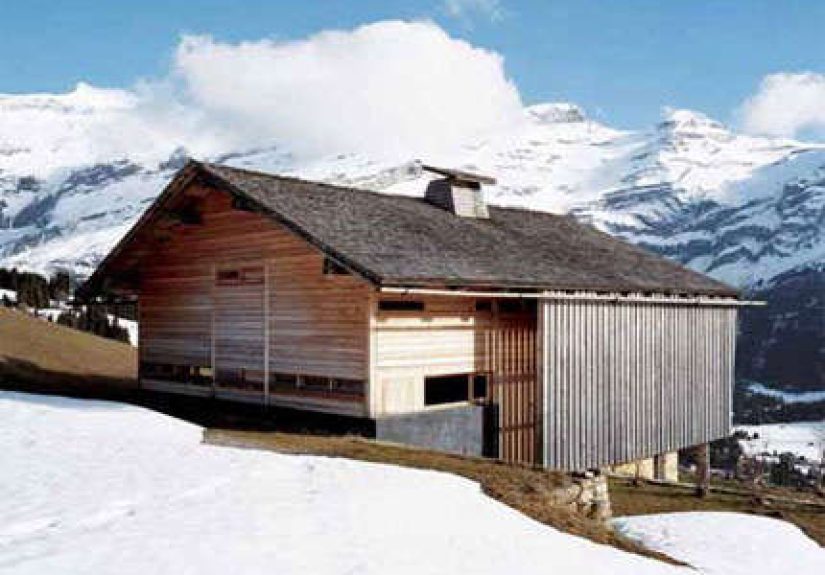
One of the best-known stops on any Charles Pictet tour is the chalet in Les Diablerets, completed in 2008. This project matters because it captures a central tension in contemporary Alpine design: how do you keep the emotional warmth of the chalet without turning the whole place into a lumberjack costume party?
Pictet’s answer is wonderfully disciplined. Instead of treating the chalet as a rustic theme, he uses it as a typology worth refining. The project keeps the wood-and-mountain DNA that makes Alpine architecture feel rooted, but it trims away the fluff. The atmosphere is pastoral without becoming precious, modern without becoming icy. It is the kind of house that seems to say, “Yes, we are in the Alps, but no, we do not need antlers in every room.”
That balance is one reason the project still resonates. American design coverage of Swiss chalets often praises the best examples for blending tradition and modernity, using local materials in more tailored, pared-down ways, and orienting rooms toward views rather than toward decorative nostalgia. Pictet’s chalet sits comfortably in that conversation, but with more restraint than many of its louder cousins. He seems less interested in reinventing the chalet than in removing everything that keeps it from breathing.
What Makes the Chalet Feel Contemporary
The first move is material honesty. Wood remains central, but it is not used as a sentimental prop. It has structure, presence, and weight. The second move is spatial clarity. Rather than burying daily life under layers of “coziness,” the house lets volume, daylight, and landscape do more of the emotional work. The third move is proportion. Everything feels tuned rather than piled on.
This is where Pictet becomes especially interesting. Plenty of designers know how to make a chalet look polished. Fewer know how to make it feel inevitable. Pictet’s version of Alpine modernism is not trying to win a costume contest. It is trying to make the old mountain-house idea sharper, calmer, and more useful.
A Swiss Language Built on Slope, Structure, and Light
To understand Pictet beyond the chalet, look at his Geneva-area houses. Several published projects reveal recurring themes that help define his architectural language.
In one house in Anières, built on steeply sloping ground, the structure is organized through a series of walls set perpendicular to the slope. Visible wooden joists and clearly expressed joints make the construction legible rather than hidden. That detail matters. Pictet does not seem interested in smoothing away the intelligence of how a building stands up. He lets construction become part of the architecture’s character.
In Vandoeuvres, another house is drawn diagonally across a gently sloping lot to enrich the garden and open areas. That sounds like a small planning decision, but it reveals a bigger instinct. Pictet does not treat the plot as a neutral rectangle waiting for a centered object. He treats siting as an active design tool. Rotate the house, and suddenly the garden gains tension, sunlight changes, circulation improves, and the experience becomes less predictable.
That instinct reaches an especially mature expression in the House in Villette, completed in 2023. Positioned diagonally to capture sunlight and views over a valley carved by the Arve, the house includes three staircases and several direct passages, some of them hidden. It wraps itself around a large cedar tree and works with a landscape designed in collaboration with Erik Dhont. This is not a house that simply occupies a site. It performs the site. It turns movement through the home into a sequence of discoveries.
And that may be one of Pictet’s most compelling talents: he makes circulation feel like experience rather than logistics. You do not merely get from one room to another. You arrive, pivot, glimpse, descend, reframe, and notice. The house changes because your position changes.
Why This Feels So Swiss
There is a temptation to reduce Swiss architecture to a few easy keywords: minimalist, precise, controlled, neutral. Charles Pictet’s work shows why that shorthand is incomplete. Yes, his projects are precise. Yes, they are composed. But their real Swissness comes from something deeper: a respect for terrain, climate, craftsmanship, and proportion.
His buildings do not compete with the landscape, but they do not disappear into it either. They hold their own through intelligence rather than spectacle. It is architecture with good manners and a very sharp mind.
From Private Houses to Cultural Reuse
Pictet’s later work with Baptiste Broillet also shows how his ideas scale into adaptive reuse and cultural architecture. The clearest example is the Collection du Crest in Jussy, where a former farm building was transformed to house an art collection centered on Genevan and Swiss artists.
What makes this project so memorable is not simply the conversion itself, though that is already impressive. It is the way the architecture preserves the logic of the agricultural estate while creating a new public experience. The galleries are set within a large farm building rebuilt after a 1989 fire, using an upper hayloft that had lost its agricultural function. The design emphasizes integration into the estate, and its large diamond-shaped windows frame the surrounding countryside with just enough drama to remind you that architecture is, among other things, a device for looking.
This project expands the usual conversation around Pictet. He is not only good at making houses feel settled and exact. He is also good at translating inherited structures into contemporary cultural use without flattening their history. That is much harder than it sounds. Adaptive reuse often slips into one of two traps: either the building becomes a museum of itself, or it gets polished so aggressively that its former life vanishes. The Collection du Crest appears to avoid both. It remains rooted in the estate, yet it clearly belongs to the present.
What Charles Pictet Gets Right About Domestic Architecture
The smartest residential architects understand that a house is never just an image. It is a sequence of habits. It is how light lands on the breakfast table. It is the angle at which you catch a tree while walking upstairs. It is whether the building makes rainy days feel moody in a good way or merely inconvenient. Pictet seems unusually attentive to those realities.
His work suggests several lessons for homeowners, architects, and design enthusiasts alike.
1. Let the Site Boss You Around a Little
Pictet’s projects are strongest when they surrender to the intelligence of the land. Slopes are not erased; they are used. Diagonal placement is not arbitrary; it is strategic. Views are framed, not merely harvested. This is a good reminder that architecture improves when it stops pretending every site is a blank page.
2. Materials Should Have a Job
Wood in a Pictet house is not there to whisper “cozy” into your ear every five minutes. Concrete is not there to look brutalist on Instagram. Materials carry structure, define thresholds, and clarify the building’s logic. That makes the spaces feel more grounded and less decorative.
3. Calm Is Not the Same as Plain
This may be Pictet’s secret weapon. His rooms are calm because they are controlled, not because they are empty. There is rhythm in the plans, tension in the siting, and drama in the way openings capture landscape. He proves that you can make architecture memorable without turning every moment into a special effect.
Why Charles Pictet Matters Now
There is a reason Charles Pictet’s work feels timely, even when some of the projects were published years ago. Right now, a lot of design conversations are circling back to ideas that his work has quietly practiced for some time: contextual design, adaptive reuse, legible materials, and homes that feel emotionally rich without being visually overworked.
In other words, Pictet feels current because he never chased trends too hard in the first place. His architecture does not depend on novelty. It depends on proportion, craft, and judgment. Those things age better than gimmicks. They also travel well across decades, climates, and clients.
For readers used to design media that celebrates the biggest gesture in the room, Charles Pictet offers a useful correction. Sometimes the most interesting architecture is not the one doing the most talking. Sometimes it is the one that has thought the hardest.
Experiencing Charles Pictet’s Switzerland
To talk about Charles Pictet only in terms of plans, sections, and materials would miss the point. His architecture also carries a mood, and that mood is easiest to understand as an experience.
Imagine arriving in Switzerland expecting all the usual postcard clichés: perfect chalets, perfect meadows, perfect shutters, perhaps a cow positioned by a publicist. Then imagine walking into a Charles Pictet project and realizing the real luxury is not sweetness. It is control. It is the sensation that every line has been argued for and every opening knows exactly what it wants you to see.
In a Pictet house, you notice how the landscape is never dumped into the room like a giant scenic wallpaper. It is edited. Framed. Delayed. Released. A stair turns, and suddenly the valley appears. A corridor narrows, and then the ceiling opens. A heavy wall anchors you on one side while glass loosens the other. The effect is subtle, but it changes how you move. You become more observant. You stop barging through space and start reading it.
That is why a visit to his work would likely feel less like touring a “design property” and more like learning a rhythm. Mornings would probably be about cool light, shadows moving across wood, and the odd thrill of a precisely framed tree doing more for your mood than an expensive object ever could. Afternoons would be about circulation: the pleasure of taking one route instead of another, of understanding that the house has options and that those options shape your day. Evening, in true Swiss fashion, would make everything look even more composed. Buildings that are disciplined by daylight often become quietly magical after dusk.
There is also something distinctly Swiss in the emotional temperature of these spaces. They are warm, but not gushy. Elegant, but not fragile. They do not beg for attention. They trust you to notice. That trust is refreshing. A lot of contemporary homes over-explain themselves. Pictet’s architecture seems to assume the opposite: that if the proportions are right and the materials are right, the building can afford to be patient.
And perhaps that is the lasting pleasure of an architect visit like this one. You come for the chalet, the hillside house, the diamond windows in a converted hayloft. But you leave thinking about discipline, restraint, and the rare beauty of architecture that knows when to stop. In a culture where more is often mistaken for better, Charles Pictet’s Switzerland makes a persuasive case for the opposite. Better can be quieter. Better can be slower. Better can be a cedar tree carefully wrapped by a house, a diagonal plan improving the garden, or a mountain retreat refusing to cosplay as a rustic fantasy.
That kind of experience stays with you. Not because it is loud, but because it keeps unfolding after you leave. Days later, you remember a stair, a shadow, a window, a wall. The house follows you home, which is perhaps the nicest compliment any architect can receive.
Conclusion
Charles Pictet may not be the first name tossed around in every mainstream design roundup, but that is part of his appeal. His architecture rewards close looking. From the refined Alpine calm of Les Diablerets to the topographic intelligence of his Geneva houses and the adaptive reuse sophistication of the Collection du Crest, his work shows how Swiss architecture can be rooted, exacting, and quietly generous all at once.
If you are interested in homes that respect landscape, materials, and movement rather than fighting them, Charles Pictet is absolutely worth the visit. His buildings do not try to overwhelm the Swiss setting. They try to deserve it. And honestly, that is a far more interesting ambition.