Table of Contents >> Show >> Hide
- What Is an Inductor, Really?
- 1. Inductors in Switching Power Supplies
- 2. Inductors in Filters and EMI Suppression
- 3. Inductors in RF Tuning and Oscillator Circuits
- 4. Inductors in Wireless Charging and Contactless Power Transfer
- 5. Inductors in Sensors, Proximity Detection, and Touch Interfaces
- How to Choose the Right Inductor for the Job
- Common Mistakes People Make with Inductors
- Practical Experience and Lessons from Real-World Inductor Use
- Conclusion
Inductors do not usually get the same rockstar treatment as processors, sensors, or flashy displays. They are small, quiet, and often tucked into the corners of a circuit board like the introvert at a loud party. But make no mistake: without inductors, a huge chunk of modern electronics would either perform badly, scream with electrical noise, or refuse to work at all.
At the most basic level, an inductor stores energy in a magnetic field and resists sudden changes in current. That simple behavior gives it an impressive resume. Inductors help smooth power, block high-frequency noise, create tuned radio circuits, transfer energy wirelessly, and detect the presence or position of metal objects. In other words, this little coil of wire has range.
In this guide, we will break down five practical applications of inductors, explain why they matter, and show where you are already using them in everyday life without even noticing. If you have ever charged a phone, used Wi-Fi, listened to a radio, or relied on industrial automation, you have already benefited from an inductor doing its job in the background like an electrical bodyguard.
What Is an Inductor, Really?
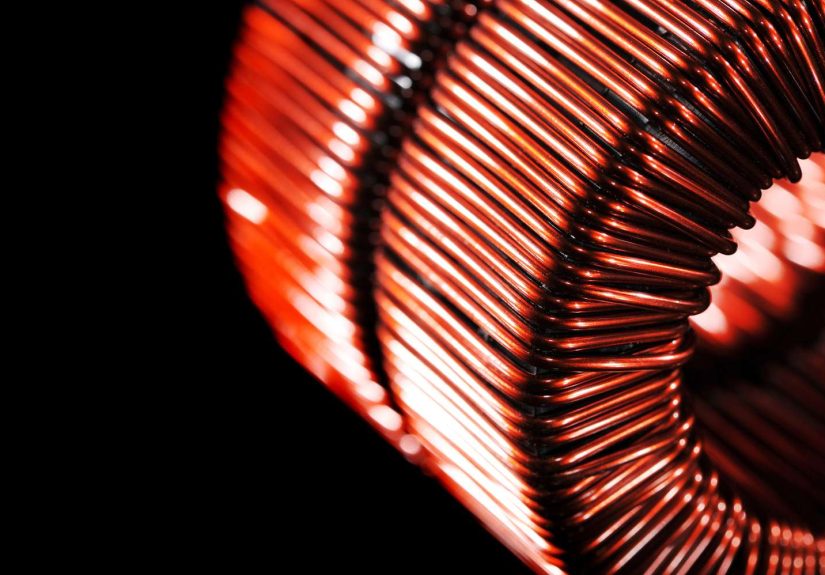
An inductor is a passive electronic component, usually made from a coil of wire wound around an air core, ferrite core, powdered metal core, or another magnetic material. When current flows through the coil, it creates a magnetic field. If the current changes, the magnetic field changes too, and the inductor pushes back against that change.
That behavior is exactly why inductors are so useful. They do not like abrupt current swings. Engineers love that. Noise loves abrupt current swings. Engineers do not love that. So naturally, the inductor often becomes the adult in the room.
Depending on the design, an inductor can be optimized for energy storage, filtering, high-frequency operation, low resistance, shielding, or sensing. A chunky power inductor in a DC-DC converter and a tiny RF inductor in a wireless front end may both be called inductors, but they live very different lives.
1. Inductors in Switching Power Supplies
Why this is the most common application
If you open a laptop charger, a phone charger, a power bank, a smart TV, or a router, there is a very good chance you will find an inductor handling power conversion duties. In switching power supplies and DC-DC converters, the inductor stores energy during one part of the switching cycle and releases it during another. This makes it possible to step voltage up, step voltage down, or do both with surprisingly high efficiency.
This is where terms like buck converter, boost converter, and buck-boost converter come into play. A buck converter lowers voltage. A boost converter raises it. A buck-boost converter can do either depending on the conditions. The inductor sits at the center of that action, smoothing ripple current and helping the converter produce a much cleaner pseudo-DC output.
That matters because modern electronics rarely run directly from their input voltage. A USB-C source might deliver one voltage, a battery might drift over a wide range, and the processor or sensor rail might need a completely different value. The inductor helps bridge that gap efficiently instead of wasting power as heat.
Real-world examples
- A smartphone may use inductors in regulators that feed the processor, memory, camera, and display.
- A wireless speaker may use a boost converter to raise battery voltage for its amplifier stage.
- An automotive system may use multiple inductors across different DC-DC rails to power infotainment, lighting, cameras, and control electronics.
One practical reason this application matters so much is efficiency. In portable devices, a better inductor choice can help extend battery life. In industrial and automotive systems, it can reduce heat, shrink the cooling burden, and improve reliability.
So yes, when your gadget runs cool and your battery lasts longer, there is a decent chance an inductor deserves a polite round of applause.
2. Inductors in Filters and EMI Suppression
The battle against electrical noise
Electronics are noisy. Not always in the “I can hear it” sense, but very much in the “this waveform is an absolute mess” sense. High-frequency switching, fast digital edges, motors, and power converters all create unwanted electrical noise. Inductors are a core tool for filtering that noise out.
When paired with capacitors, inductors form filter networks such as low-pass, high-pass, band-pass, and notch filters. In power systems, they are often used to block high-frequency ripple while allowing the desired DC current to pass. In EMI control, they frequently appear as chokes, especially common-mode chokes, which are used to suppress conducted interference on power and signal lines.
This is critical for products that must meet EMC requirements. If a device spits too much noise back into its power lines or radiates too much interference, it can fail compliance testing. That means redesigns, delays, and unhappy engineers drinking coffee at 1:00 a.m. while staring at a spectrum plot.
Where you see this in the real world
- Power adapters and chargers use inductors and chokes to reduce conducted noise.
- Industrial motor drives use filtering to limit interference from switching stages.
- Medical and aerospace electronics rely heavily on filtering because clean power and signal integrity are not optional.
- Consumer electronics like TVs, monitors, and routers use EMI filters to play nicely with other devices nearby.
Inductors in filtering applications are especially valuable because they offer frequency-dependent impedance. In plain English, they can be relatively friendly to useful low-frequency or DC current while becoming increasingly stubborn at higher frequencies. That is exactly the personality you want when electrical noise tries to sneak past.
3. Inductors in RF Tuning and Oscillator Circuits
The magic of resonance
Inductors become even more interesting when they team up with capacitors in resonant circuits. An LC circuit, often called a tank circuit, can be tuned to resonate at a specific frequency. That makes it incredibly useful in radio-frequency and analog signal-processing applications.
This is one of the classic applications of inductors. In radios, wireless modules, communication receivers, and oscillator stages, the inductor helps select, shape, or generate a desired frequency. A tuned circuit can emphasize one band while rejecting others, which is pretty convenient when the world is full of signals all trying to get your circuit’s attention at once.
Typical RF uses
- Band-pass filters in communication systems
- Oscillator circuits that generate stable frequencies
- Tuned amplifier stages in radios and receivers
- Impedance matching and RF isolation through choke inductors
For RF work, designers care about parameters like Q factor, self-resonant frequency, parasitic capacitance, and DC resistance. A poor inductor choice can throw off tuning, waste signal power, or introduce loss right where you wanted precision. That is why RF inductors are often tiny, specialized, and very carefully selected.
A practical example is a wireless receiver front end. The inductor may be part of a tuned LC stage that helps isolate the desired signal band. Without that selectivity, the circuit becomes more vulnerable to interference, poorer sensitivity, and sloppy performance. In RF, sloppy is not charming.
4. Inductors in Wireless Charging and Contactless Power Transfer
No cable, still power
Wireless charging looks like magic the first time you use it. Set a phone on a pad, and energy starts flowing without a visible conductor. Under the hood, though, it is not magic. It is magnetic coupling, and inductors are the stars of the show.
In a wireless charging system, one coil acts as a transmitting inductor and another acts as a receiving inductor. Alternating current in the transmitter coil creates a changing magnetic field. That field induces current in the receiver coil. Add control electronics, resonance, rectification, and regulation, and you have a practical charging system.
This same concept can be used in phone chargers, wearables, electric toothbrushes, medical devices, and some industrial systems where sealed or waterproof enclosures are helpful. It is also attractive when designers want to reduce wear from connectors or eliminate exposed contacts.
Why inductors matter so much here
Wireless power transfer depends heavily on coil geometry, alignment, coupling efficiency, operating frequency, shielding, and thermal design. The inductors are not just passive extras. They define the system’s behavior. A poorly designed coil can lead to weak charging, excess heat, misalignment problems, or poor overall efficiency.
This is one reason wireless chargers can feel very different in the real world. A good design has coils and control logic that work together smoothly. A bad design gives you a warm phone and a battery percentage that moves like it is stuck in traffic.
Inductors also show up in supporting power stages around wireless charging circuits. For example, buck-boost converters may be used to regulate the voltage feeding the charging subsystem, so the humble coil often pulls double duty in these products.
5. Inductors in Sensors, Proximity Detection, and Touch Interfaces
Yes, inductors can sense things too
Many people think of inductors only as power components, but they also play a major role in sensing. In inductive sensors, a coil generates a magnetic field. When a metal object comes near, it changes the electromagnetic behavior of the system. The electronics detect that shift and turn it into useful information.
This principle is widely used in inductive proximity sensors, position sensors, and inductive touch interfaces. These systems are especially valuable in industrial and rugged environments because they can be contactless, durable, and resistant to dirt, moisture, or physical wear.
Common sensing applications
- Detecting whether a metal part is present on a conveyor line
- Measuring the position of a moving metal target in automation equipment
- Creating touch controls behind metal or sealed front panels
- Monitoring mechanical movement in appliances, automotive systems, and industrial controls
That last example is especially neat. Inductive touch systems can work through materials like metal or plastic front panels, allowing sleek, sealed interfaces that are less vulnerable to contamination and wear than traditional mechanical buttons. That makes them attractive for appliances, industrial panels, and automotive dashboards.
Engineers also like inductive sensing because it can be highly reliable and contactless. No rubbing parts. No worn switch membranes. No drama. Just a coil, a magnetic field, and a clever measurement circuit doing detective work.
How to Choose the Right Inductor for the Job
Not all inductors are interchangeable, and this is where real design work begins. Choosing the wrong part can lead to higher losses, overheating, noise problems, or unstable performance. The right choice depends on the application.
Key selection factors
- Inductance value: Determines how strongly the component resists current change at a given frequency.
- Current rating: Critical for power designs so the core does not saturate.
- DC resistance: Lower resistance usually means lower conduction loss.
- Core material: Affects loss, saturation behavior, and frequency performance.
- Shielding: Helps reduce magnetic leakage and EMI.
- Self-resonant frequency: Especially important in RF and sensing applications.
- Q factor: A major concern in tuned and resonant circuits.
A power inductor for a high-current regulator needs a very different personality than an RF inductor in a tuned filter. One is built for current handling and efficiency. The other is built for precision at frequency. Asking one to do the other’s job is a bit like hiring a bodybuilder to play concert violin. Impressive, perhaps, but not ideal.
Common Mistakes People Make with Inductors
- Choosing inductance by value alone and ignoring current rating
- Forgetting that parasitic capacitance and self-resonance matter at high frequency
- Using an unshielded inductor where EMI is already a headache
- Ignoring layout, even though PCB routing can make or break filter and converter performance
- Assuming a bigger inductor is always better, even when size, losses, and response time matter
An inductor is not a magical fix-all. It works best when its electrical behavior, physical construction, and placement in the circuit all match the application. In electronics, context is everything.
Practical Experience and Lessons from Real-World Inductor Use
One of the fastest ways to respect inductors is to build a circuit that fails because of a bad one. That experience tends to be memorable. On paper, an inductor can look like a simple number in a schematic. In practice, it behaves like a component with opinions.
A common beginner experience happens in power supply design. Someone builds a buck converter, powers it up, and expects a smooth regulated output. Instead, the converter runs hot, the output ripples too much, and the waveform looks like it had a rough weekend. The culprit is often not the controller IC at all. It is the inductor value, saturation current, DC resistance, or layout around the inductor. The lesson is simple: the inductor is not decoration. It is the heart of the converter.
Another practical lesson appears in EMI troubleshooting. A device may work perfectly on the bench, then fail emissions testing. Suddenly the design team is swapping common-mode chokes, adjusting filter components, and reworking board layout. This is where inductors earn serious respect. A well-chosen choke can calm conducted noise dramatically, while a poor choice can leave just enough interference to ruin a test day. Nothing teaches component selection faster than watching a compliance failure with a deadline two weeks away.
RF circuits offer a different kind of humbling experience. A tuned circuit may simulate beautifully, but the real board lands off-frequency or shows more loss than expected. Why? Because at high frequencies, parasitics become part of the story. The inductor’s self-resonance, mounting style, trace inductance, and nearby copper all start joining the conversation. Designers who work in RF quickly learn that the inductor on a datasheet and the inductor on a real PCB are related, but not always identical twins.
Wireless charging provides another memorable lesson: coil alignment matters more than people think. It is easy to imagine that power simply jumps through the air because the charger and receiver are “close enough.” In reality, the geometry of the inductors, their coupling, and the surrounding materials make a huge difference. A design that looks efficient in concept can become frustrating in the field if the user must place a device with sniper-level accuracy just to get it to charge.
Inductive sensing also changes how people think about coils. Many engineers first meet inductors through power electronics, then later discover that the same basic component can detect metal, measure movement, or create sealed user interfaces. That shift is eye-opening. A coil is no longer just something that smooths current. It becomes part of a measurement system, where shape, spacing, and target material all influence the result.
The biggest practical takeaway is this: inductors reward respect. When chosen thoughtfully, they improve efficiency, tame noise, support communication, enable contactless power, and make sensing possible. When treated like generic parts, they can quietly sabotage performance. So if you work with electronics, learn your inductors early. They may be small, but they have a habit of deciding whether your design behaves like a polished product or a science fair project held together by optimism.
Conclusion
Inductors may look humble, but their applications are anything but small. They are essential in switching power supplies, filtering and EMI suppression, RF tuning, wireless charging, and inductive sensing. That range explains why they appear in everything from phone chargers and radios to factory automation and aerospace systems.
If you want one simple way to think about inductors, here it is: they help circuits manage energy and frequency with far more control than you might expect from a coil of wire. And in electronics, control is everything.
The next time you see an inductor on a schematic or a PCB, do not dismiss it as just another passive part. It might be storing energy, cleaning up noise, tuning a signal, transferring power through the air, or quietly sensing the physical world. Not bad for a little coil that rarely asks for attention.