Table of Contents >> Show >> Hide
- What Is a Tamegroute Pottery Bowl?
- Why the Green Glaze Is So Famous
- What Makes Tamegroute Pottery So Different from Regular Ceramic Bowls?
- How to Use a Tamegroute Pottery Bowl at Home
- How to Spot an Authentic Tamegroute Pottery Bowl
- Is a Tamegroute Pottery Bowl Food Safe?
- How to Care for a Tamegroute Pottery Bowl
- Why Designers and Collectors Love Tamegroute Bowls
- How to Style a Tamegroute Pottery Bowl Without Trying Too Hard
- Is a Tamegroute Pottery Bowl Worth Buying?
- Experiences with a Tamegroute Pottery Bowl: What It’s Really Like to Live with One
- Conclusion
Some bowls are just bowls. They hold lemons, catch keys, and quietly accept their destiny near the fruit flies. A Tamegroute pottery bowl, however, enters a room like it pays rent. It has drama. It has mood. It has that gloriously uneven green glaze that looks like moss, olive skin, old bronze, and a little bit of desert magic all got together and decided to become tableware.
If you have ever spotted one of these Moroccan bowls in a beautifully styled kitchen and immediately thought, “Well, now my plain ceramic bowl is giving me side-eye,” you are not alone. Tamegroute pottery has become a favorite among collectors, stylists, and anyone who likes their home decor with a little soul and a little swagger. But the appeal of a Tamegroute bowl is not just its color. It is the story, the craftsmanship, the imperfections, and the fact that no two pieces look like they came out of the same shift at a factory.
This guide breaks down what a Tamegroute pottery bowl is, why it looks so distinctive, how to use one, what to watch for when buying, and why these “perfectly imperfect” bowls have become such a lasting design obsession.
What Is a Tamegroute Pottery Bowl?
A Tamegroute pottery bowl is a handcrafted ceramic bowl associated with Tamegroute, a village in southern Morocco’s Draa Valley. The pottery tradition is centuries old and is known for its earthy forms, thick walls, and famously irregular glaze. While Tamegroute pieces come in many forms, including candleholders, planters, plates, jars, and pedestal bowls, the bowl is one of the most versatile and most searched-for styles.
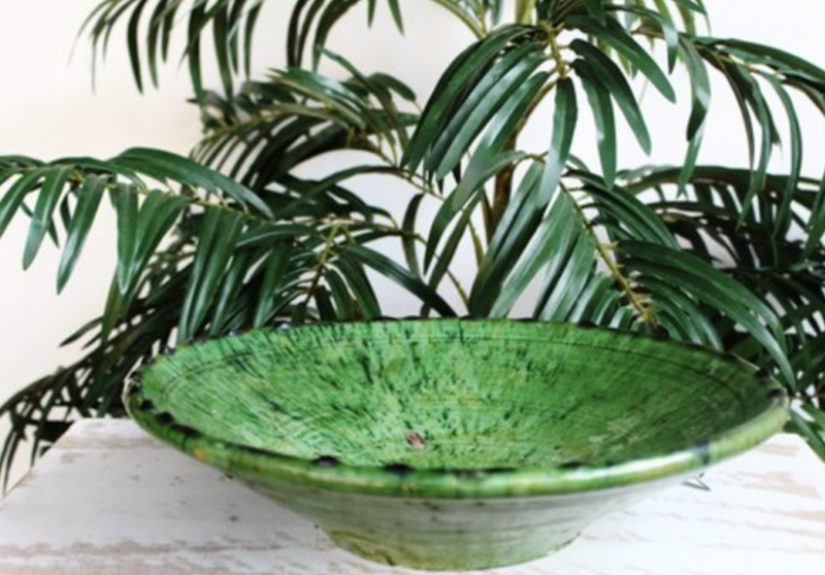
In practical terms, a Tamegroute bowl is what happens when traditional craft decides it has absolutely no interest in looking machine-made. The shape may wobble slightly. The rim may ripple. The glaze may pool, drip, blister, or shift from emerald to olive to smoky brown. In other words, the quirks are not a manufacturing fail. They are the point.
Why the Green Glaze Is So Famous
If Tamegroute pottery had a celebrity feature, it would be the glaze. That rich, moody green is the visual signature people fall for first. The color is traditionally tied to mineral-based glaze recipes and wood firing, which help create tonal variation rather than a flat, uniform finish. Depending on the piece, the glaze can lean emerald, sage, moss, olive, mustard-green, or even brown at the edges.
This is why a Tamegroute pottery bowl works so well in interiors. It behaves almost like a neutral, but a glamorous one. It can sit beside white marble, rustic wood, brass, black stone, linen, and warm plaster without looking out of place. It is green, yes, but it is not loud neon “look at me” green. It is cultivated green. The kind of green that probably owns a nice vintage lamp.
What Makes Tamegroute Pottery So Different from Regular Ceramic Bowls?
1. The imperfections are intentional, not accidental
A standard retail bowl often aims for symmetry and consistency. A Tamegroute bowl does the opposite. It embraces variation. You may notice uneven glazing, tiny marks, rough spots, glaze drips, or subtle distortions in shape. These details are part of the handmade appeal and one reason designers love using Tamegroute as a statement object.
2. Every bowl has its own personality
Mass-produced bowls tend to look like identical siblings. Tamegroute bowls are more like cousins who all inherited the same family cheekbones but made wildly different life choices. One may be deep and dramatic. Another may be squat and sculptural. Another may have a jagged rim that makes it look like it moonlights as modern art.
3. The surface tells a story
Tamegroute pottery often shows evidence of how it was fired and handled. Some authentic pieces are known for small firing scars or stacking marks, which collectors and sellers often view as signs of traditional production rather than defects. The result is a surface that feels alive, tactile, and deeply human.
How to Use a Tamegroute Pottery Bowl at Home
One of the best things about this bowl is that it earns its keep. It is decorative, yes, but it is also useful. Depending on the size and finish, a Tamegroute bowl can work in several rooms.
In the kitchen
- Use it as a fruit bowl for lemons, figs, avocados, or pomegranates.
- Place it on open shelving to add color and handmade texture.
- Style it with garlic bulbs or onions if you want your kitchen to look effortlessly editorial.
In the dining room
- Use a pedestal version as a centerpiece.
- Fill it with bread, citrus, or seasonal produce for a relaxed, collected table.
- Layer it with linen napkins and brass candlesticks for that “I casually host beautiful dinners” look.
In the living room
- Set it on a coffee table as a sculptural object.
- Use it to hold matchbooks, beads, or decorative spheres.
- Let it stand empty if the shape and glaze are striking enough. Empty bowls can still do emotional labor.
In the entryway or bedroom
- Use a smaller bowl for keys, jewelry, or loose change.
- Pair it with a mirror, lamp, and stack of books for instant texture.
- Choose a more irregular bowl if you want that collected, traveled-home feel.
How to Spot an Authentic Tamegroute Pottery Bowl
Because Tamegroute style has become popular, the market now includes both authentic handmade bowls and look-alikes inspired by the style. That is not necessarily evil villain behavior, but it does mean shoppers should pay attention.
Look for variation in the glaze
Authentic-looking bowls usually show depth and movement in the color. The glaze may darken around the rim, gather in thicker areas near the base, or reveal tiny bubbles and tonal shifts. If the green looks extremely flat and uniform, the piece may be a modern imitation rather than a traditionally styled bowl.
Expect irregular form
Handmade Tamegroute bowls often have thick walls, slightly uneven rims, and a weighty feel. If a bowl looks laser-perfect, ultra-thin, and suspiciously identical to every other bowl in the listing, caution is fair.
Notice the marks
Traditional firing methods can leave small scars or marks, especially inside bowls and plates. These are often treated as authenticity clues. In Tamegroute pottery, a little roughness is usually not a flaw. It is more like the ceramic equivalent of a handwritten signature.
Read the seller’s description carefully
Good sellers usually tell you where the bowl was made, whether it is handmade, how much size variation to expect, and whether it is intended for decorative use, dry food, or broader food service. A vague listing that says only “Moroccan style green bowl” is not exactly waving a giant red flag, but it is at least fluttering a medium-sized one.
Is a Tamegroute Pottery Bowl Food Safe?
This is where smart shopping matters. Some contemporary sellers market certain Tamegroute bowls as food-safe, especially for fruits, vegetables, dry foods, or serving. Other specialists are more cautious, particularly with traditional or vintage pieces, and recommend decorative use or dry foods only unless the seller clearly certifies the glaze and intended function.
So here is the practical answer: do not assume all Tamegroute pottery bowls are equally food safe. If you want to serve salad, soup, or anything acidic, verify the seller’s guidance first. If the bowl is vintage, extra caution is wise. If the seller says it is best for fruit, bread, or decorative styling, believe them. This is not the moment for rebellious vinaigrette.
How to Care for a Tamegroute Pottery Bowl
Tamegroute pottery is charming, but it is not indestructible. Think “artisan treasure,” not “dishwasher gladiator.”
Best care tips
- Hand wash gently with mild soap if the piece is approved for functional use.
- Avoid dishwashers and microwaves unless the maker explicitly says otherwise.
- Do not shock the bowl with sudden temperature changes.
- Use soft cloths instead of abrasive scrubbers.
- If the surface feels porous or highly textured, use liners or limit it to dry goods and styling.
In design terms, caring for a Tamegroute bowl is basically an excuse to be a little precious. And honestly, some objects deserve that energy.
Why Designers and Collectors Love Tamegroute Bowls
Tamegroute bowls have become favorites in design circles because they check several boxes at once. They add color without being flashy. They bring texture without creating clutter. They feel old-world and modern at the same time. And they look especially good in collected interiors where not everything is matchy-matchy.
In a world overloaded with smooth, sterile decor, a Tamegroute pottery bowl offers relief. It has visible handwork. It has nuance. It feels personal. It can make a kitchen shelf look more lived-in, a dining table feel more soulful, and a coffee table look like someone with excellent taste has recently been there.
That is part of the bowl’s staying power. It is not trendy in the disposable sense. It is stylish, yes, but it also taps into a bigger preference for handmade objects, artisanal decor, and pieces that tell a story.
How to Style a Tamegroute Pottery Bowl Without Trying Too Hard
Keep the surrounding palette simple
White, cream, sand, walnut, black, brass, and linen all play beautifully with Tamegroute green. Let the bowl do the talking and let the rest of the room nod supportively.
Mix it with other handmade materials
Tamegroute bowls shine next to wood boards, stone counters, woven baskets, aged metal, and natural textiles. Too many slick surfaces around it can make the bowl feel lonely.
Use odd numbers
A single pedestal bowl can look sculptural and strong, but a cluster of three pieces in different heights can be even better. Just avoid creating a ceramic family reunion unless you have the shelf space.
Let it be imperfect
Do not hide the drips, rough edges, or firing marks. Those details are exactly what make the piece interesting. A Tamegroute bowl is not supposed to look polished to perfection. It is supposed to look alive.
Is a Tamegroute Pottery Bowl Worth Buying?
If you love handmade decor, appreciate artisan craftsmanship, and want a bowl that can function as both object and utility, the answer is yes. A Tamegroute pottery bowl offers something many home accessories do not: a strong visual presence without feeling overdesigned.
It is especially worth buying if you value pieces with natural variation and can accept that “perfect” is not the assignment here. If you need your bowls to match exactly, stack like military recruits, and survive every kitchen battle, you may be happier elsewhere. But if you want beauty, texture, and character, Tamegroute delivers in a big way.
Experiences with a Tamegroute Pottery Bowl: What It’s Really Like to Live with One
Living with a Tamegroute pottery bowl is a little like living with an effortlessly stylish houseguest who somehow never overstays. The first thing most people notice is how often it changes mood. In the morning light, the glaze can look soft and mossy. By evening, it becomes darker and richer, almost smoky around the edges. You do not expect a bowl to have range, but somehow this one does. It is one of those objects that keeps catching your eye even after it has been sitting in the same place for weeks.
In the kitchen, the experience is surprisingly practical. A pedestal Tamegroute bowl filled with lemons or avocados can make an everyday counter look far more intentional. Suddenly your produce is not just produce; it is a lifestyle decision. Even a small bowl can make a shelf feel finished. Put one next to a cutting board and a linen towel, and your kitchen starts looking like it has opinions about olive oil.
There is also something deeply satisfying about the tactile quality. The rim may be slightly uneven. The glaze may feel thick in places and smoother in others. Tiny marks and drips make the piece feel handmade in a way that factory ceramics never quite manage. You do not handle it and think, “How flawless.” You handle it and think, “Ah, a person made this.” That feeling matters more than many people expect.
Guests tend to notice it too. Tamegroute bowls are conversation starters without being obnoxious about it. People ask where it came from. They touch the glaze. They hold it up to the light. Some are charmed by the imperfections immediately; others need a second to understand why the irregularity is beautiful. Then it clicks. The bowl feels collected, not merely purchased.
Of course, living with one also teaches you respect. This is not the bowl you toss into the dishwasher while speed-cleaning before company arrives. It asks for a gentler pace. You wash it by hand. You think about what goes into it. You avoid treating it like an indestructible big-box workhorse. Oddly enough, that small bit of care can make the object feel more valuable and more personal over time.
Perhaps the best experience of all is how adaptable it is. One week it holds citrus on the island. The next week it moves to the coffee table with beads and matches. Then it becomes an entryway catchall or a centerpiece for a dinner with bread and figs. It shifts roles easily, and because the bowl has so much character, it rarely disappears into the background. It keeps earning its place.
That is why people fall for a Tamegroute pottery bowl and then start looking for a second one. Not because they need another bowl, technically speaking. Nobody truly needs six dramatic green bowls unless they are opening a very chic olive bar. They want another because the first one changes the atmosphere. It adds warmth, history, texture, and a handmade honesty that many modern interiors are missing. Once you live with one, you understand the appeal immediately. It is decor, yes, but it also feels like a tiny daily reminder that imperfections can be the most memorable part of an object.
Conclusion
A Tamegroute pottery bowl is more than a decorative accent. It is a handmade expression of Moroccan ceramic tradition, recognizable for its complex green glaze, rustic texture, and beautifully irregular form. Whether you use one as a fruit bowl, a centerpiece, a catchall, or a purely sculptural object, it brings depth and character that mass-produced ceramics often cannot match.
The smartest way to buy one is with open eyes: expect variation, verify food-use claims, and appreciate the marks that make each piece unique. Do that, and you will not just own a bowl. You will own a piece with history, personality, and enough visual charisma to make your countertop look suspiciously more expensive.