Table of Contents >> Show >> Hide
Most people have at least one cabinet full of “special” glasses that are so precious, so formal, or so oddly shaped that they only come out when a holiday, a toast, and a tiny identity crisis happen at the same time. They look lovely. They also quietly collect dust. That is exactly why the idea behind glassware reimagined feels so fresh. Instead of designing one fixed set of vessels and hoping future generations love them forever, San Francisco designer Kaii Tu asked a smarter question: what if the thing worth passing down is not just the glass itself, but the system that can keep making new glassware as tastes, rituals, and homes change?
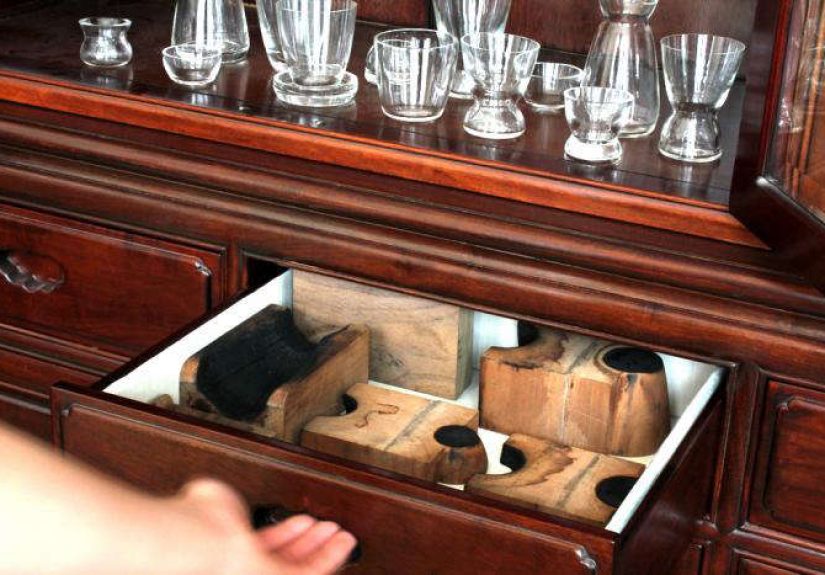
That question sits at the heart of Valence, Tu’s modular glassblowing mold system. At a glance, it sounds delightfully nerdy, like something a designer would explain at a dinner party while everyone pretends they were definitely already discussing mold logic. But the concept is surprisingly human. Valence uses a reconfigurable mold made from cherry wood, a traditional material in glassmaking, shaped with modern digital tools so that one mold can generate multiple vessel types. In other words, it treats modern glassware less like a static object and more like an evolving family language.
That makes this story bigger than one handsome set of glasses. It is about how contemporary design blends craft and technology, how tabletop objects can become both practical and poetic, and why a Bay Area mindset of experimentation feels perfectly suited to the future of home goods. If old-school heirlooms say, “Please preserve me exactly as I am,” Tu’s idea says, “Use me, adapt me, and make me relevant again.” That is not just clever design. That is design with a pulse.
The Designer Behind the Idea
Kaii Tu is not the kind of designer who arrived at glassware by accident. His background bridges art, craft, and rigorous problem-solving, which helps explain why his work feels both thoughtful and tactile. He studied visual and environmental design at Harvard, continued his design education at Design Academy Eindhoven, and later graduated from California College of the Arts with high distinction. Along the way, he built a reputation for combining analytical thinking with physical making rather than treating those as rival camps forced to glare at each other across the workshop.
That hybrid mindset matters. Plenty of designers can create beautiful things. Fewer can build systems that make beauty more flexible. Tu’s earlier work also showed an interest in form shaped by digital methods, including furniture concepts created through computer-aided design. So when Valence appeared, it did not feel like a random experiment. It felt like a designer following a consistent instinct: use precise tools to make objects feel more alive, more responsive, and more in tune with how people actually live.
There is also something distinctly West Coast about that approach. San Francisco design culture has long rewarded people who prototype, remix, test, and rethink categories that once seemed settled. In software, that impulse creates updates. In furniture and tabletop design, it creates objects that refuse to become museum pieces before their time. Tu’s work lives comfortably in that territory, where the old and the new are not opponents, but collaborators.
What Makes Valence Different?
The genius of Valence is not that it makes glass. Glassmakers have been shaping molten material into useful and beautiful forms for centuries. The real twist is that Valence reimagines the mold itself. Rather than serving as a one-note production tool, the mold becomes a modular design instrument. Tu has described it as an alphabet of simple forms that can create new object types from a single system. That is a powerful shift. Suddenly, designer glassware is not just about a finished goblet, tumbler, or vase. It is about a framework that can respond to different needs over time.
The material choice is important too. Cherry wood is a traditional material for glassblowing molds, prized for the way it behaves around heat and moisture. Tu keeps that craft lineage intact, but pairs it with computer-aided design and manufacturing methods. The result is a meeting of old and new that does not feel forced. No one is shouting, “Behold, innovation!” while waving a laptop near a furnace. Instead, the digital tools quietly improve precision, repeatability, and flexibility, while the handmade process preserves warmth, variation, and the slight unpredictability that gives glass its soul.
Valence is also conceptually elegant because it reframes the idea of inheritance. Traditional heirloom glassware often locks one generation’s preferences into the next generation’s storage problem. Tu flips that. With Valence, the heirloom is the means of making. The gift is adaptability. That is a much more generous way to think about legacy, especially in homes where tastes evolve faster than anyone’s willingness to admit they once loved frosted grapes on wine goblets.
A Fresh Chapter in a Very Old Story
For all its contemporary polish, Valence participates in a much older history of glass design. Mold-blown glass has deep roots. Museums and glass historians note that once glassblowing was invented, mold-blowing quickly expanded the range of shapes and decorative possibilities available to makers. Ancient molds were often built in multiple parts so they could be opened safely after forming the vessel. Over time, different materials were used, including clay, wood, and metal, depending on the application.
That historical backdrop makes Valence more interesting, not less. Tu is not rejecting tradition. He is entering a long conversation and adding a 21st-century answer. Instead of using a mold simply to standardize one repeated form, he uses it to create a family of forms. Instead of treating technology as a replacement for craft, he uses it to amplify craft. This is why the project feels thoughtful rather than gimmicky. It respects what came before while refusing to stop there.
Even the visual language of the finished vessels supports that idea. The glasses produced through the system feel restrained, clean, and purposeful. They do not rely on fussy ornament to announce value. Their appeal comes from proportion, clarity, and the quiet intelligence behind their making. In a design culture that often swings between over-styled nostalgia and sterile minimalism, that balance is no small achievement.
Why Reimagined Glassware Matters Right Now
There is a reason modern heirloom glass resonates today. People want home objects that are meaningful without being impractical, artful without being exhausting, and durable enough to survive actual human behavior. Contemporary design coverage has increasingly highlighted this appetite for pieces that function as both everyday tools and sculptural accents. The best tabletop collections are no longer rigid sets that demand total obedience. They are edited, layered, personal, and open to change.
That shift helps explain why a project like Valence still feels relevant. It speaks to a culture that is tired of disposable sameness but equally wary of overly ceremonial “good” objects that never leave the shelf. We want things we can live with. We want objects that improve a Tuesday lunch as much as they elevate a Saturday dinner party. Reimagined glassware succeeds when it turns ordinary acts such as pouring water, serving wine, or placing flowers on a table into small moments of design pleasure.
At the same time, the aesthetics of glassware have loosened up. Recent design coverage has pointed to glassware that is more expressive, more sculptural, and less afraid of irregularity. That does not mean every tumbler must look like it survived a surrealist thunderstorm. It means consumers have become more open to glass as character, not just container. Tu’s approach fits neatly into that broader mood while remaining more disciplined than trend-chasing novelty. His system is not trying to be weird for weirdness’ sake. It is trying to be useful, beautiful, and future-facing.
San Francisco as the Perfect Setting
The phrase San Francisco designer does more than pin a location on the map. It suggests a context. Few American cities have done more to normalize the fusion of craft, engineering, and experimentation. In the Bay Area, it feels perfectly natural for a designer to move between hand skills and digital workflows, between studio practice and systems thinking, between object-making and idea-making. Valence could have emerged elsewhere, but San Francisco gives it a home field advantage.
There is also the city’s long relationship with makers, artists, and independent design culture. When Valence appeared in a San Francisco Design Week context, it made sense. The project belongs to a local creative ecosystem that values direct engagement between designer and audience, prototype and conversation, concept and commerce. That environment rewards objects that do more than sit there looking expensive. It rewards objects with a point of view.
And Valence has one. It argues that handmade glassware does not have to be trapped between old-world romance and modern efficiency. It can be both intimate and intelligent. It can honor material tradition while borrowing accuracy from digital fabrication. It can feel heirloom-worthy without becoming frozen in time. In that sense, the project is not just about glassware. It is about how a city known for innovation can still produce objects with warmth, texture, and memory.
What This Means for the Future of Tabletop Design
Projects like Valence point toward a more flexible future for the tabletop world. For decades, many consumers were trained to think in terms of matching sets and fixed categories: these are wine glasses, these are water glasses, these are the ones for guests, and these are the ones you use when nobody important can see you. But life is messier and better than that. People entertain differently, live in smaller spaces, mix styles more freely, and often want fewer objects that can do more.
A modular mold system responds to that reality with remarkable grace. It suggests a design future where variety does not require waste, where customization does not require chaos, and where the tools of making carry as much narrative value as the things they produce. This matters for sustainability conversations too, even if the project is not preachy about it. Designing for long-term relevance is one of the quietest, smartest ways to push back against disposable culture.
In that way, Tu’s glassware is reimagined not only in shape, but in philosophy. It encourages us to see vessels not as dead-end products, but as living participants in domestic life. A tumbler can hold sparkling water today, stems from the garden tomorrow, and memory for years after that. Good design does not boss people around. It gives them possibilities.
Experiences That Make Reimagined Glassware Memorable
The most convincing argument for reimagined glassware is not found in a sketchbook or a workshop diagram. It is found in use. Imagine reaching for a glass in the morning and noticing that it does more than hold water. It changes the pace of the moment. The rim feels intentional, the proportions feel balanced, and the object has enough character to wake up the table before the coffee does. That is the power of thoughtful glassware: it can make a routine feel gently curated rather than accidental.
At lunch, the same design intelligence reads differently. A clean, adaptable vessel becomes a casual companion rather than a precious artifact. It does not ask to be admired from a safe distance. It wants to participate. That is a subtle but important distinction. Many inherited glass sets feel like they belong to a family archive. Reimagined glassware feels like it belongs to a living household. It invites fingerprints, refills, clinking ice, and the kind of unplanned use that tells you an object has truly entered your life.
Then there is the dinner-party experience, which is where good glassware often either shines or embarrasses itself. Traditional “formal” glasses can make the table feel stiff, as if everyone should sit up straighter and avoid telling any funny stories involving college roommates. Reimagined pieces soften that mood. Because they are sculptural but not stuffy, they create conversation without demanding reverence. Someone picks up a glass and asks about the shape. Someone else notices that no two vessels seem entirely alike. Suddenly the objects are doing what great tabletop design does best: they become social catalysts.
There is also an emotional experience tied to adaptability. A modular idea like Valence quietly reassures people that design can evolve with them. A young couple in a small apartment may want compact, versatile pieces that do double duty. Years later, the same system could support more specialized vessels for hosting, collecting, or gifting. That continuity creates a rare feeling in home design: stability without stagnation. The object story does not end when your lifestyle changes; it simply changes with you.
Gift-giving offers another layer of experience. Most people have received housewares that were technically nice but spiritually beige. Reimagined glassware, by contrast, carries narrative. It has a design story, a material story, and often a making story. That makes it easier to remember who gave it to you and why it mattered. The glass becomes attached to an occasion, then to a household rhythm, and eventually to memory. Years later, someone might not recall the exact dinner menu from a celebration, but they will remember the vessel that kept catching candlelight at the center of the table.
Display matters too, because contemporary homes increasingly blur the line between storage and presentation. A beautiful glass does not disappear when the cabinet door closes; it often lives out in the open, on a shelf, bar cart, or kitchen ledge. In that role, reimagined glassware behaves almost like small architecture. It reflects light, creates repetition and variation, and gives the room a feeling of intention. Even when empty, it contributes. That is no small feat for an object whose day job is basically “hold beverage.”
Perhaps the richest experience, though, is intergenerational. Traditional heirlooms often carry pressure: protect this, preserve this, do not question this. Reimagined heirlooms carry permission. They say it is okay to use the object differently than the last person did. It is okay to reinterpret value. It is okay to keep the spirit and update the form. That emotional flexibility may be the most radical part of all. It turns inheritance from obligation into participation.
In the end, that is why glassware from a San Francisco designer can feel bigger than a tabletop story. It reflects a broader desire for objects that are intelligent, beautiful, and alive to the realities of daily life. We do not just want things that last. We want things that keep making sense. And when glassware can do that while still looking elegant in the light, well, that is when design stops being decoration and starts becoming experience.
Conclusion
Glassware reimagined is not simply a trend piece about prettier cups. It is a smarter way of thinking about craft, use, and legacy. Kaii Tu’s Valence system shows how a San Francisco designer can bring together traditional cherry-wood molds, digital precision, and a flexible design philosophy to produce objects that feel current without becoming disposable. The result is a compelling model for the future of tabletop design: less rigid, more responsive, and much more in tune with real life.
That is what makes the project memorable. It honors the long history of mold-blown glass while rethinking what an heirloom can be in a modern home. Instead of handing down a fixed answer, it hands down possibility. And in a world full of short-lived products and overdesigned clutter, that kind of clarity feels downright refreshing.