Table of Contents >> Show >> Hide
If your dog has ever locked eyes with a camera like they already know where the light is, you are not alone in thinking, “This little ham could book a commercial.” And honestly, sometimes they can. The catch is that dog commercials are not won by pure fluff, soulful eyes, or a tail that deserves its own talent agent. They are usually won by preparation, temperament, and a human who knows how the business actually works.
That is the good news. You do not need a dog who can moonwalk, file taxes, and cry on cue. Most brands want a dog that looks natural, stays calm, follows simple directions, and can repeat the same behavior without turning the set into a furry improv show. In other words, the dog does not need to be a genius. Your dog needs to be reliable.
This guide breaks down the three smartest ways to get your dog into a commercial, from building the right skills to finding auditions and handling the process like someone who belongs there. If you are hoping to turn your best friend into the next canine scene-stealer, here is where to start.
1. Turn Your Dog Into a Commercial-Ready Performer First
Before you think about agents, auditions, or glossy pet photos, ask one brutally honest question: Can my dog stay focused in a noisy, unfamiliar place with strangers, lights, props, and repeated takes? If the answer is “sort of,” that is normal. It also means training comes first.
The biggest mistake owners make is assuming a cute dog is automatically a castable dog. Commercial work is not a beauty contest. It is a behavior contest wearing a cute collar.
Start with the basics that matter on set
Your dog should reliably know core cues such as sit, stay, come, down, and leave it. Those commands sound basic because they are basic, and that is exactly why they matter. On a commercial set, simple obedience keeps everyone safe, saves time, and makes your dog easier to direct. A dog who can hold a sit while a camera moves in is far more valuable than a dog who knows one flashy trick but loses focus after five seconds.
Loose-leash walking is another underrated superpower. A commercial dog may need to stroll beside an actor, cross a sidewalk, hop onto a mark, or ignore food, toys, crew chatter, and random distractions. If your dog treats every outing like a treasure hunt hosted by squirrels, work on calm leash manners before chasing casting calls.
Build confidence, not just commands
A commercial-ready dog is not simply obedient. That dog is comfortable. Your dog should be able to handle new people, surfaces, sounds, and routines without melting into a puddle of stress or turning into a furry alarm system. Think about what a set might include: bright lights, reflectors, boom mics, carts rolling by, unfamiliar flooring, makeup trailers, and a lot of waiting followed by sudden action.
That is why socialization and environmental exposure matter so much. Practice in different places. Visit pet-friendly stores. Train near mild distractions. Reward calm behavior. Let your dog get used to wearing different collars, bandanas, or harnesses. Take short car rides. Work around friendly strangers. Teach your dog that weird does not equal dangerous.
And here is the important part: do not bulldoze your dog into confidence. A frightened dog does not become camera-ready because you hoped really hard. Go gradually, use positive reinforcement, and read your dog’s body language. A dog who is naturally calm and social will usually have a much easier time with commercial work than a dog who is anxious, reactive, or easily overwhelmed.
Teach a few “money” behaviors
Once the basics are solid, add a few practical skills that help in commercial auditions. Great options include:
- Look at me
- Go to mark or mat
- Paw or shake
- Place head in lap
- Fetch and deliver
- Jump onto a couch or low platform
- Hold position while you step away
- Walk naturally beside a person
These are the kinds of actions that show up in pet ads all the time. Food brands want attentive dogs. Home brands want cozy dogs. Vet brands want affectionate dogs. Outdoor brands want happy walkers. The goal is not to build a circus act. The goal is to create a dog who can repeat useful, natural-looking behaviors on cue.
Consider formal training credentials
You do not need a wall of ribbons to book a commercial, but training credentials can help signal readiness. Programs like Canine Good Citizen and Trick Dog titles are useful because they show your dog has manners, responsiveness, and some experience performing on cue. They also help you as the handler. You become clearer, calmer, and better at communicating under pressure, which matters more than most owners realize.
Because here is the secret nobody puts on a casting flyer: dogs are often only half the audition. The other half is the human attached to the leash.
2. Get Your Dog Seen by the Right People
Once your dog is genuinely ready, it is time to stop daydreaming and start being visible. Dogs do not usually get discovered while chewing a tennis ball in your living room. They get opportunities because their owners make them easy to find, easy to evaluate, and easy to book.
Create a simple dog portfolio
No, your dog does not need a moody black-and-white headshot that screams “independent cinema.” But you do need a clean portfolio. Start with recent photos that clearly show your dog’s face, full body, coat color, size, and expression. Use natural light. Keep the background simple. Skip costumes unless they are relevant to the role you are pursuing. A hot dog costume is funny at Halloween and less helpful when a brand needs “friendly family Labrador energy.”
Also record short videos. These are gold. Capture your dog doing the basics: sitting, staying, coming when called, walking calmly, looking at camera, and performing one or two useful tricks. Keep clips short, clear, and well lit. Casting teams do not need a full documentary. They want fast proof that your dog can do what you say your dog can do.
Include practical details too: breed or mix, age, weight, height, temperament, training level, comfort around children, comfort around other animals, and any standout skills. Think of this as your dog’s résumé, only much cuter and with fewer buzzwords.
Look into pet talent agencies and casting platforms
There are agencies and casting services that handle animal talent, especially in larger entertainment markets. Some specialize in trained animals. Others are open to well-behaved pets with strong looks and good camera presence. Research carefully, check legitimacy, and avoid anyone promising instant fame for a suspicious fee that could also buy your dog an extremely fancy orthopedic bed.
A legitimate path often involves submitting photos, videos, measurements, and training information. Some agencies may want to see how your dog responds in person. Others may accept self-tapes first. Keep expectations realistic. Representation can help, but it is not a magic wand. It is a door opener, not a booking guarantee.
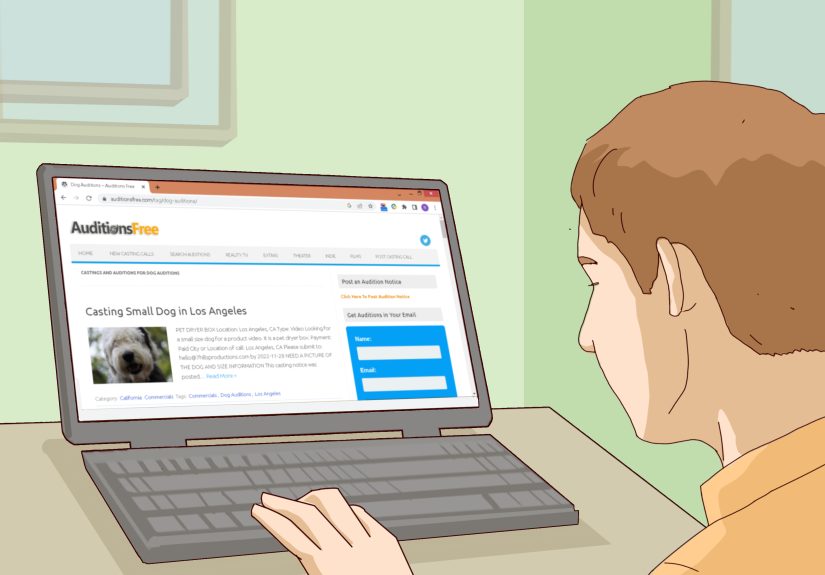
You should also monitor commercial casting platforms and pet-specific brand opportunities. Many modern ads, especially social, UGC, and branded content campaigns, look specifically for real pet owners and their real dogs. That means the commercial world is not limited to classic TV spots anymore. A campaign for pet care, home goods, travel, insurance, or wellness content might want authenticity over polished “show dog” energy.
Use social media as proof, not fantasy
A strong social presence can help, but not for the reason people think. You do not need a million followers. What matters is that your feed can show your dog looks good on camera, behaves in different environments, and can repeat cute or useful actions consistently.
Post clips that demonstrate reliability, not chaos. A dog who can gently take a treat, settle on a blanket, pose on cue, and interact happily with you sends a better signal than a dog who goes viral because he stole a sandwich and ran through a birthday party like a tiny criminal.
Brands increasingly like pets with built-in authenticity. If your content already shows your dog in natural routines, that can support your submissions. Just keep the account clean, current, and easy to browse.
Know your market
Not every dog needs to be in Los Angeles to work. Remote content, regional ads, influencer campaigns, and brand social videos have expanded the market. But geography still matters. The closer you are to active production hubs, the more opportunities you may see. If you live outside a major market, focus on regional casting calls, pet brands, local production companies, and remote creator campaigns featuring owners and pets together.
The goal is simple: make it easy for someone to say yes. If a casting director can quickly see what your dog looks like, what your dog can do, and whether your dog is easy to work with, you are already ahead of many people.
3. Audition Smart and Behave Like a Pro
If training gets your foot in the door and visibility gets you the audition, professionalism is what keeps you in the game. Commercial work moves fast, and people remember the handler who made life easier just as much as they remember the adorable dog in the scarf.
Read the casting notice like your paycheck depends on it
Because sometimes it does. Pay attention to what the production actually wants. Is the dog supposed to be calm, playful, large, hypoallergenic-looking, senior, puppy-ish, or comfortable with children? Do they want a dog-owner pair? Do they need a dog who can wear a harness, sit on furniture, or be handled by talent? If the notice asks for specific behaviors, do not “kind of” your way through it. Submit only if your dog can honestly do the job.
Overstating your dog’s abilities is a terrible strategy. A dog that cannot perform under pressure will reveal the truth in record time, usually in front of stressed producers, expensive equipment, and a clock that is moving faster than your dignity.
Make your self-tape clean and believable
Many first-round pet auditions happen by video. Keep the tape simple. Use good lighting, minimal background noise, and a plain environment where your dog can focus. Show the requested actions clearly. Avoid frantic baby talk, frantic editing, and frantic everything.
Be visible if the casting asks for owner-dog interaction. Some brands want chemistry between the two of you, not just a dog doing tricks in a vacuum. Smile, stay calm, and act like someone who would be easy to direct on set. Because again, you are part of the package.
Prepare for set realities
If your dog books the job, wonderful. Now bring professionalism to the actual production. Arrive with essentials: water, favorite treats, waste bags, leash options, a mat or crate for downtime, grooming supplies, and anything your dog needs to stay comfortable. Keep your dog exercised but not exhausted before call time. Nobody wants a dog bouncing off the walls, but nobody wants a dog who arrives cranky and depleted either.
Follow trainer and handler instructions exactly. Commercial sets involving animals run best when cues stay consistent. Do not freelance. Do not let everyone pet your dog. Do not turn downtime into a social hour if your dog needs focus. The calmer and more predictable you are, the better your dog will usually perform.
Put welfare before ambition
This matters. Not every dog enjoys commercial environments, and not every opportunity is right for every pet. If your dog is stressed, fearful, or physically uncomfortable, that is your answer. A good booking is not worth a miserable animal. Ethical productions care about welfare, safety, and appropriate handling. You should too.
It is also wise to understand the business side. Depending on the job and arrangement, animal exhibition or compensation-related work may involve rules, waivers, contracts, and, in some cases, regulatory questions that are worth checking in advance. Treat this like real work, not a random hobby with better head tilts.
Final Thoughts
There are three real ways to get your dog into a commercial: build the skills, get visible to the right people, and handle auditions like a pro. That is the formula. No fairy dust. No secret handshake. No tiny dog tuxedo required, though admittedly that does sound delightful.
If your dog is calm, social, trainable, and genuinely happy doing the work, you may be surprised how far that combination can go. Commercial casting teams are not just searching for the prettiest pup in town. They are searching for a dog who can deliver a usable performance without chaos. And when that dog comes attached to an organized, honest, easy-to-work-with owner, the odds get better.
So yes, your dog might absolutely have commercial potential. Just remember: the road to canine stardom usually begins with sit, stay, and please stop eating the set decoration.
Extra Insights: What Owners Learn From Real-World Experience
Once people start seriously pursuing commercial work for their dogs, they almost always learn the same lessons. The first is that waiting is part of the job. Dogs may spend far more time settling, standing by, and repeating tiny actions than doing glamorous movie-star stuff. A thirty-second spot can involve multiple takes of one simple moment, such as walking through a doorway or looking at an actor. Owners who succeed are usually the ones who train patience just as much as performance.
The second lesson is that “natural” on camera is rarely accidental. A dog that looks relaxed in a commercial often has a handler just off frame with treats, hand signals, or a very carefully timed cue. What looks effortless is usually the result of practice, planning, and repetition. That is why experienced owners stop chasing random party tricks and start polishing reliable actions that can be reproduced over and over. A calm head rest, a steady sit, or an easy walk beside a person often books more work than a dramatic trick that only works every third Tuesday.
Another common experience is discovering that the owner’s energy absolutely affects the dog. If the human is nervous, rushed, apologetic, or chaotic, many dogs pick up on that instantly. Owners who do well tend to act like calm teammates. They bring structure. They keep cues consistent. They avoid overselling. They do not panic if the dog misses one attempt. They reset, reward, and try again. In many cases, that calm professionalism matters almost as much as the dog’s talent.
People also learn that not every cute dog is a working dog, and that is perfectly fine. Some dogs love attention, novelty, and activity. Others prefer routine, quiet, and naps with zero interest in production life. Smart owners pay attention to the difference. They do not force a shy or stressed dog to keep auditioning just because the photos came out adorable. The best experiences usually happen when the dog actually enjoys the process.
One more thing surprises beginners: commercial opportunities are broader than they expect. Some dogs land polished ad shoots. Others appear in social content, regional campaigns, brand testimonials, or owner-and-pet lifestyle videos. Sometimes the dog is not even doing much beyond looking comfortable, affectionate, and real. That opens the door for ordinary family dogs with solid manners, not just superstar trick performers.
In the end, owners who stick with it usually stop thinking, “How do I make my dog famous?” and start thinking, “How do I make my dog reliable, comfortable, and easy to cast?” That shift changes everything. Fame is unpredictable. Preparation is not. And when preparation meets the right opportunity, that is often when a regular dog ends up in a commercial looking like they were born for it.