Table of Contents >> Show >> Hide
- What “Any Expedition” Really Means (and Why It Matters)
- Trailer Types: Single-Wheel vs. Two-Wheel (and the Third Category Nobody Talks About)
- Capacity, Volume, and the “Don’t Get Greedy” Rule
- Terrain Matchmaking: Choose the Trailer That Fits Your Route
- Compatibility: Axles, Hitches, and the Stuff That Makes People Say “Wait… what?”
- Load Like a Pro: Packing and Weight Distribution
- Safety for Real Expeditions: Visibility, Braking, and Standards
- Weatherproofing: Rain Happens (Even When You’re Being Good)
- Expedition Use Cases: Choosing the Right Trailer for the Job
- Maintenance: The Unsexy Secret to “Any Expedition” Reliability
- Conclusion: The Trailer That Matches Your Expedition Wins
- Field Notes: of Expedition-Style Trailer Experiences
- SEO Tags
Some people pack for a bike trip the way they pack for a weekend away: one bag, one toothbrush, one questionable energy bar that’s been in the drawer since the last administration. Other people pack like they’re relocating their entire life to a windswept ridge line. Either way, a bike trailer can be the difference between “epic adventure” and “why am I balancing a skillet on my handlebar like a circus act?”
But not all bike trailers are created equal. The right trailer for a gravel weekender is not the same as the right trailer for a kid-and-dog-and-diaper-bag mission, and neither is the right trailer for a backcountry expedition where your route includes washboard, roots, and your own questionable decision-making. Let’s break down how to choose a bike trailer for any expeditionand how to set it up so it feels like an upgrade, not a rolling anchor.
What “Any Expedition” Really Means (and Why It Matters)
When people say “expedition,” they usually mean one of these:
- Touring expedition: long miles on pavement and smooth gravel, often with predictable resupply.
- Bikepacking expedition: mixed terrain (including singletrack), lighter and more technical, sometimes remote.
- Family expedition: kids, pets, picnic supplies, and the reality that stops happen when someone drops a snack.
- Utility expedition: commuting, groceries, hauling gear to a campsiteadventure with a side of errands.
Your expedition “type” determines what matters most: tracking, stability, cargo volume, safety features, suspension, weather protection, and compatibility with your bike’s axle and frame.
Trailer Types: Single-Wheel vs. Two-Wheel (and the Third Category Nobody Talks About)
1) Single-wheel cargo trailers: the “follow-me-anywhere” option
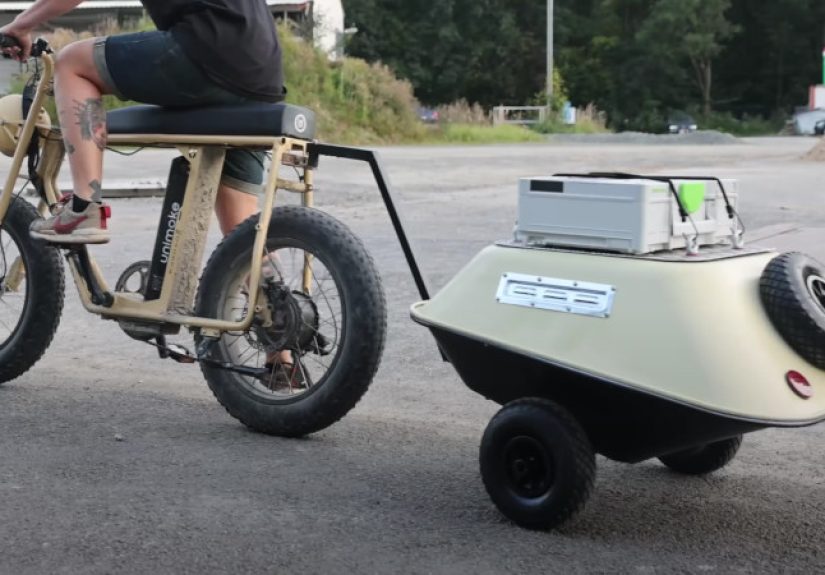
A single-wheel cargo trailer tracks in line with your rear wheel, which is a big deal on narrow paths and uneven terrain. This style is often favored for mixed-surface touring and bikepacking routes because it’s easier to thread through gates, ruts, and narrower trails than a wide two-wheel platform.
Tradeoffs? You typically get less capacity than a two-wheel trailer, and packing can feel like playing Tetris with stakes: load balance matters more, and you’ll want to keep weight low, centered, and secured tight so it doesn’t sway.
Real-world examples: models like the Burley Coho XC emphasize off-road tracking and include suspension for rough surfaces, while classic single-wheel designs like BOB-style cargo trailers are known for hauling respectable loads behind the rear hub.
2) Two-wheel cargo trailers: the “bring the kitchen sink” option
A two-wheel cargo trailer offers a stable platform with more volumegreat for road touring, errands, and camping setups that include bulkier gear. Two wheels also mean the trailer stays upright when you’re stopped (helpful when you’re loading a cooler, not doing a track stand at the trailhead).
Tradeoffs? Two-wheel trailers can add rolling resistance, and the width can be annoying on narrow trails, tight bollards, or crowded bike paths. If your route includes lots of singletrack or narrow squeeze points, measure twice, curse once.
3) “Commuter cart” trailers: the fold-and-roll category
There’s also a practical hybrid: compact cargo trailers that convert into a hand cart. If you want to ride to the market, load up, then roll everything into your kitchen without pretending your arms are forklift tines, this category is a gift.
These are not always ideal for technical backcountry riding, but for urban adventures and mixed errands, they’re shockingly effectiveand they can make car-free living feel less like a personality trait and more like a convenient choice.
Capacity, Volume, and the “Don’t Get Greedy” Rule
It’s tempting to think, “If the trailer can carry it, I can bring it.” That’s how people end up towing a full camp chair, a cast-iron pan, and a novel the size of a small microwave. Instead, use these guidelines:
- Pick capacity based on terrain: rough routes punish heavy loads. Smooth routes tolerate them.
- Remember your brakes: your bike’s stopping power matters as much as your trailer’s carrying power.
- Volume changes behavior: a big trailer invites big packing. Be intentional.
Many expedition-friendly cargo trailers are rated around 70 lb of capacity, while some touring-focused two-wheel options can go higher (for example, Burley’s touring trailer lineup includes models rated up to 100 lb). Those numbers aren’t just marketingthey’re a reminder that you’re towing a system, not wearing a backpack.
Terrain Matchmaking: Choose the Trailer That Fits Your Route
Pavement + smooth gravel: prioritize efficiency
For road touring, you want stable handling, low fuss, and weather protection. Two-wheel touring trailers shine here, especially when you’re carrying bulk (sleep system, food, layers, tools). Look for a low center of gravity and a secure cover or dry bag system so your gear stays dry in surprise rainor “it was sunny five minutes ago” drizzle.
Chunky gravel + forest roads: prioritize durability and tracking
On washboard and rough gravel, trailer wheel size and frame stiffness matter. A solid hitch connection reduces side-to-side wag. Suspension can help keep the trailer planted and reduce stress on cargo (and your patience).
Singletrack + narrow paths: prioritize single-wheel designs
If your expedition includes narrow trails, gates, or rutted tracks, single-wheel trailers can feel dramatically easier to manage because they follow your line. This is where “tracking” is more than a buzzwordit’s the difference between a smooth ride and clipping every rock like you’re collecting them.
Compatibility: Axles, Hitches, and the Stuff That Makes People Say “Wait… what?”
Before you fall in love with a trailer, confirm how it attaches to your bike:
- Quick-release (QR) skewer attachment: common on older touring bikes and many classic trailer systems.
- Thru-axle compatibility: common on modern gravel and mountain bikes; some trailers require specific adapters.
- Internal gear hub compatibility: not all systems play nicely herecheck before you buy.
- Secondary safety straps: many kid and cargo setups use backup straps as redundancy.
For example, some modern cargo trailers explicitly support 12 mm thru-axles (within certain length and thread specifications) and are designed around a quick attach/detach system. That’s greatunless your bike is the one weird standard that refuses to cooperate. (There’s always one.)
Load Like a Pro: Packing and Weight Distribution
Expedition success is less about owning the fanciest trailer and more about packing like someone who wants to keep riding past mile 20.
Keep it low and centered
Put dense items (tools, food, water) low in the trailer. High weight increases sway and makes the trailer feel “tippy,” especially on corners or off-camber terrain.
Balance side-to-side
Uneven loads can pull the trailer toward one side, making your bike feel like it has opinions about which shoulder of the road it prefers.
Secure everything
Interior tie-down points, straps, and bungees aren’t accessories; they’re sanity insurance. Many touring trailers include internal clips or rails specifically for this reason.
Embrace modular bags
Dry bags, compression sacks, and packing cubes make it easier to unpack quickly at camp without exploding your entire setup like a gear piñata.
Safety for Real Expeditions: Visibility, Braking, and Standards
Visibility is not optional
If you’re touring in mixed traffic, your trailer needs conspicuity: reflectors, a flag, and lights as appropriate. U.S. road safety guidance emphasizes front and rear lights and reflectors when visibility is poorapply that mindset to your whole setup, not just your handlebars.
Braking changes with a trailer
Even a well-designed bike cargo trailer changes how your bike handles and stops. Practice in a parking lot with a loaded trailer before you hit a big descent. Increase following distance. And if you’re hauling heavy loads frequently, make sure your brake pads are fresh and your braking system is dialed in.
If you’re carrying kids: look for tested safety features
Child-carrying trailers are their own category. Look for a sturdy frame, secure harness system (often five-point), good ventilation, weather coverage, and reliable hitch design. Industry standards like ASTM specifications for nonpowered bicycle trailers designed for human passengers cover things like structural integrity, tipover resistance, coupling security, and requirements for reflectors and flags.
Important reality check: cargo-only trailers are not designed for passengers. If the manual says “cargo only,” treat it like a hard boundary, not a creative writing prompt.
Weatherproofing: Rain Happens (Even When You’re Being Good)
A true expedition trailer setup assumes weather will changeand sometimes it will do so aggressively. Look for:
- Weatherproof covers or integrated lids for touring-style two-wheel trailers.
- Waterproof dry bags (sonically sealed seams or similar construction) for cargo compartments.
- Fenders or mudguards to cut down on spray, especially on wet gravel.
- Corrosion-friendly maintenance (wipe-downs, lubrication, and checking fasteners).
Even with a cover, keep critical items (sleep insulation, spare layers) in waterproof bags. Nothing ends a trip faster than sleeping in a damp jacket while pretending it’s “part of the experience.”
Expedition Use Cases: Choosing the Right Trailer for the Job
1) Multi-day road tour with resupply
Choose a two-wheel touring trailer with a weatherproof cover and higher capacity. Prioritize easy packing, stability, and quick access. This is where “nimble” matters less than “I can carry food and not cry.”
2) Off-road bikepacking with narrow trail sections
Choose a single-wheel trailer built for tracking and rough ground. Suspension can reduce bounce and keep the wheel planted. Pack lighter, keep the load low, and practice cornering on gravel before your route gets spicy.
3) Urban hauling + transit + stairs
Choose a compact trailer that can become a hand cart. You’ll appreciate folding features, quick-release wheels, and a design that doesn’t require a garage the size of a studio apartment.
4) Family adventures and multi-sport weekends
Choose a child trailer designed for passengers with strong safety features and modular conversion kits (bike-to-stroll, etc.). Comfort matters: suspension, ventilation, and easy harness adjustments turn “Are we there yet?” into “Can we do another lap?”
Maintenance: The Unsexy Secret to “Any Expedition” Reliability
Trailers earn their keep by being boringly reliable. Before each trip:
- Check hitch connection and backup straps.
- Inspect wheel quick releases or axle hardware.
- Spin wheels and listen for bearing grind.
- Check tire condition and pressure.
- Confirm reflectors/flag are secure.
- Do a short loaded test ride and brake check.
For longer expeditions, bring basic spares: a tube that fits the trailer wheel, a patch kit, and the tools needed to remove the wheel. The goal is simple: keep small issues from becoming “I’m pushing my bike while towing a trailer,” which is a very specific kind of regret.
Conclusion: The Trailer That Matches Your Expedition Wins
The best bike trailer for touring is the one that matches your route, your bike, and your tolerance for fiddly setup. Single-wheel trailers shine on narrow, technical terrain because they track behind you. Two-wheel trailers dominate for bulky loads and stable road touring. Commuter cart trailers make errands and mixed-use adventures feel easyand that’s a legitimate form of joy.
Choose based on terrain, capacity, and compatibility. Pack low and secure. Stay visible. Practice braking. And remember: the goal of an expedition is not to prove you can tow the maximum load rating. The goal is to ride farther, more comfortably, and with fewer “why did I bring this?” moments.
Field Notes: of Expedition-Style Trailer Experiences
Experience #1: The Gravel Rail-Trail “Confidence Builder”
A loaded trailer on a long, mellow gravel trail teaches you the basics fast: momentum is your friend, and your ego is not. Riders often report the first five miles feel weirdlike the bike has developed a polite but noticeable tail. Then your brain adjusts, and suddenly it’s just… normal. The big lesson here is packing: if you feel sway at speed, it’s almost always a top-heavy load or loose straps. Tighten, lower, re-balance, and the trailer stops trying to audition for a dance show behind you.
Experience #2: The “Water Carry” Desert Problem
When water is the heavy item you can’t negotiate with, a trailer becomes a genuine expedition tool. The trick is to keep dense weight low and centered and to accept that hills will feel… personal. On hot routes, the trailer lets you carry extra water without turning your frame bags into a sloshy brick. The lesson: plan your braking. Descents with extra weight are where you realize how much you love well-maintained brakes and a calm, steady pace.
Experience #3: The Grocery Run That Turns Into a Lifestyle
The first time someone hauls a week of groceries by bike trailer, something changes. It’s not just savings or convenienceit’s the ridiculous satisfaction of rolling home with a full load while cars sit in traffic. A cart-style trailer shines here because it can roll straight into the store and back out again. The lesson is practical: your “expedition” doesn’t need a mountain pass. Sometimes it’s a bag of oranges, a loaf of bread, and the smug joy of not hunting for parking.
Experience #4: The Muddy Camp Approach
Take a trailer onto a forest road after rain and you’ll learn two things: fenders are underrated, and tire pressure is a mood. Riders who drop pressure slightly (within safe limits) often find the trailer wheel tracks better on washboard and loose gravel. The lesson is restraint: don’t blast through mud like you’re in a commercial. Smooth inputsgentle steering, steady pedalingkeep traction and reduce fishtailing.
Experience #5: The “Family Adventure” Reality Check
Family trailer trips add a whole new set of metrics: snack availability, comfort, ventilation, and how quickly you can stop without drama. A safe harness system and stable parking stance matter because loading and unloading happens a lot. The lesson is pacing: shorter distances feel bigger when you’re hauling precious cargo. But the upside is hugefamilies often discover that a trailer turns a bike ride into a shared adventure, not a solo workout with a guilty conscience.
Across all these experiences, the pattern is consistent: the “perfect trailer” isn’t one modelit’s the one that matches your terrain, your cargo, and your real life. Get that match right, and your expedition feels less like suffering and more like freedom with wheels.