Table of Contents >> Show >> Hide
- What Was Discovered in Sicily (and Why It’s a Big Deal)
- The “Unique Decor” That Stole the Spotlight: A Mosaic Made to Flex
- A Quick Tour of Roman Bath Life (Because These Places Were Basically Ancient Wellness Centers)
- What a Huge Bath Says About Halaesa Archonidea
- How Archaeologists Actually Uncover a Bath Without Wrecking It
- The Other Surprise: Roads and Fortifications That Could Redraw the Map
- FAQ: Quick Answers About the Massive Roman Bath Discovery
- Why This Discovery Matters Beyond the Headlines
- Experiences: What It Feels Like to Encounter a Roman Bath (and Why This One Hits Different)
- SEO Tags
If you’ve ever wished you could time-travel to a place where hot tubs were public, gossip was an Olympic sport,
and “interior design” meant “let’s mosaic the entire floor,” archaeologists just handed you a postcard from the past.
In northern Sicily, excavators working at the ancient city of Halaesa Archonidea uncovered the remains of a
sprawling bath complexone of the largest ever found on the islandcomplete with a standout detail that makes Roman
bathing culture feel weirdly relatable: a show-off mosaic floor.
The discovery isn’t just a cool “look what we found!” moment. Bath complexes were the social engines of Roman cities:
places to clean up, unwind, talk politics, pitch business deals, and quietly judge someone’s sandal choice. So when
archaeologists find a big bath with rich decoration, it’s like uncovering a city’s ancient group chatonly made of stone,
water, and extremely patient tilework.
What Was Discovered in Sicily (and Why It’s a Big Deal)
The newly uncovered bath complex sits within the archaeological area of Halaesa Archonidea near modern-day Tusa,
on Sicily’s northern coast. Excavators reported a plan that includes two rooms with mosaic floors, a
courtyard with porticoed wings, and the remains of a large thermal bathing facility measuring around
800 square meters (about 8,600 square feet). That footprint puts it among the most extensive
bath complexes identified on the island so far.
Key features archaeologists reported
- Size: roughly 800 m² / 8,600 ft²huge for a city outside the empire’s mega-capitals
- Layout elements: mosaic-floored rooms, a porticoed courtyard, and the broader bath facility
- Extra discoveries nearby: a newly recognized network of streets and a stretch of fortifications
That last bullet is the sneaky headline within the headline. Alongside the bath, archaeologists also identified
previously unknown roads and a new segment of defensive works. In other words: they didn’t just
find a fancy place to soakthey found clues that could reshape how researchers map the city’s ancient street plan and
defenses.
The “Unique Decor” That Stole the Spotlight: A Mosaic Made to Flex
Roman baths were often decorated with marble, painted plaster, sculpture, and fountains. But the detail that keeps
popping up in reports about this site is the mosaic flooringa signature Roman move that’s both art and
advertisement. Mosaics take serious time, money, and specialized skill. Putting them in a bath was like saying:
“Yes, you may sweat here… but do it on luxury tiles.”
In Halaesa Archonidea, archaeologists described the complex as an “unicum” (essentially, a one-of-a-kind standout)
for Sicily due to both its scale and its rich decorative apparatus. The mosaic floors are a visible piece
of that claim: they’re not random scraps, but part of a deliberate decorative program that likely helped define the
building’s status in the city’s public life.
Why mosaics in baths mattered
- Durability: wet spaces destroy most finishes; mosaics survive (and look good doing it)
- Status signaling: a public building with luxury flooring suggests civic wealth or elite sponsorship
- Storytelling: many Roman mosaics used patterns, animals, myths, or visual “illusions” to entertain bathers
To be clear, not every bath mosaic featured dolphins or dramatic myth scenes. Some were geometric, some imitated
marble patterns, and some were purely ornamental. But in any form, mosaic floors were a “please notice me” detail
the ancient equivalent of installing designer lighting in a restaurant and then acting surprised when everyone takes photos.
A Quick Tour of Roman Bath Life (Because These Places Were Basically Ancient Wellness Centers)
To understand why this discovery matters, it helps to know what Roman baths actually did for a community. These weren’t
private bathrooms. They were public social hubspart hygiene service, part hangout spot, part civic monument.
In the empire’s bigger cities, bath complexes could include gardens, libraries, exercise courts, snack stands, and rooms
where you could lounge like it was your full-time job.
The classic sequence: cold, warm, hot (and repeat for drama)
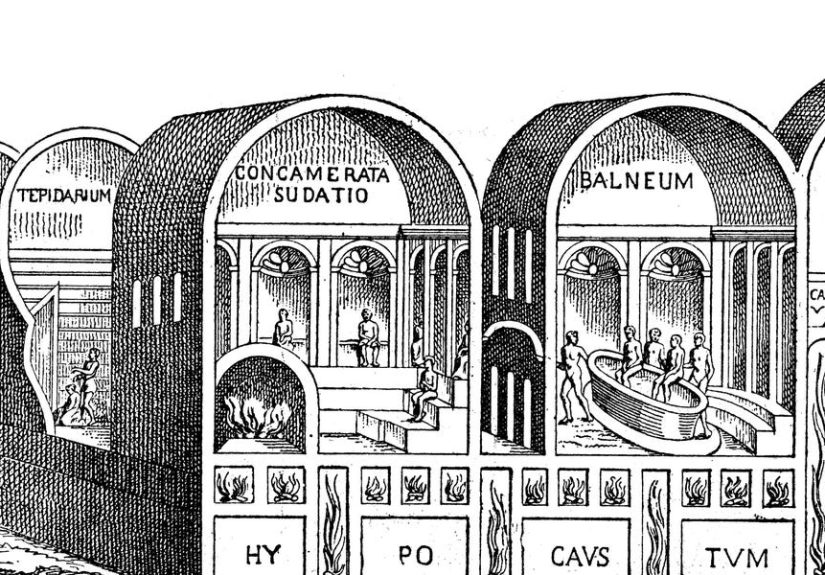
Large Roman bathhouses often revolved around three main bathing chambers:
frigidarium (cold room), tepidarium (warm room), and caldarium (hot room).
Many also had steam rooms and exercise areas. Bathing wasn’t a two-minute errand; it was a routine, an event, andlet’s
be honestprobably a personality trait.
The real magic trick: the hypocaust
Roman engineers didn’t just heat waterthey heated buildings. Many baths used a hypocaust, an underfloor
heating system that pushed hot air from a furnace through spaces beneath floors and sometimes up through hollow wall tiles.
It’s one of the most iconic examples of Roman building tech: clever, labor-intensive, and absolutely worth bragging about
to your neighbor who still thinks “warm floor” is a myth.
What a Huge Bath Says About Halaesa Archonidea
A bath complex this large doesn’t appear in a vacuum. It usually points to a city with resources, organization, and enough
population (or enough visitors) to justify the expense. Halaesa Archonidea’s history supports that idea. Ancient sources
and modern summaries describe it as a prosperous settlement that benefited from a strategic coastal position and political
decisions that aligned it early with Rome.
Roman politics, Sicilian geography, and civic “branding”
Halaesa was among the Sicilian communities that sided with Rome during the First Punic War. Later it enjoyed
special legal and tax privileges as one of the so-called “free and immune” cities. That kind of status tends to correlate
with economic stabilityexactly the condition that makes monumental public building projects like baths more realistic.
If your city has extra advantages, you’re more likely to invest in infrastructure that says, “We’re doing great, thanks for asking.”
Now add Sicily’s role as a crossroads between cultures. Trade, movement, and administrative needs often fueled public works.
A prominent bath complex could have served local residents, travelers, merchants, and officialsanyone who wanted to wash the
dust off, relax, and hear what everyone was complaining about this week.
How Archaeologists Actually Uncover a Bath Without Wrecking It
Archaeology isn’t “dig until you find something cool.” It’s “document everything so the cool thing still makes sense in
50 years.” When a mosaic floor appears, excavation often slows down because preservation becomes the priority. Mosaics can
crack, shift, or degrade quickly once exposed to weather, foot traffic, and sudden changes in moisture.
Common steps after a mosaic is revealed
- Careful cleaning: removing soil without scraping away fragile tesserae
- Detailed recording: photos, measurements, drawings, and sometimes 3D scanning
- Stabilization: consolidating loose sections so the mosaic doesn’t “flake” apart
- Protection: temporary coverings, controlled access, and plans for long-term conservation
Officials connected to the site indicated the findings are significant enough to prompt immediate conservation-focused
work so the area can eventually be protected and, ideally, made accessible for public enjoyment. That’s the best-case
scenario: a discovery that doesn’t just produce headlines, but becomes part of a living archaeological landscape people
can learn from (and yes, admire, and definitely photograph).
The Other Surprise: Roads and Fortifications That Could Redraw the Map
One reason archaeologists are excited is that the bath discovery didn’t come alone. Excavations also brought to light a
monumental complex that had not been previously recognized, alongside a street network and a
new stretch of fortifications. That’s city-planning evidenceclues about how Halaesa was organized, defended,
and connected internally.
Baths often weren’t isolated structures. They sat inside urban systems: near roads, near water infrastructure, near spaces
where people already gathered. Finding roads that link toward defenses suggests planners were thinking in networksmovement,
control, access, and security. In plain English: the bath may help researchers understand not only how Halaesa bathed, but how
it functioned.
FAQ: Quick Answers About the Massive Roman Bath Discovery
Where is Halaesa Archonidea?
The ancient site is near modern-day Tusa in northern Sicily, Italy, overlooking routes that connected coastal
and inland movement.
How big is the newly uncovered bath complex?
Reports place it at about 800 square meters (roughly 8,600 square feet), which is why it’s being
described as among the largest found on the island.
What’s the standout decorative feature?
The attention-grabber is the mosaic flooringtwo rooms with mosaic floors were reported, and the complex is noted
for unusually rich decoration for Sicily.
How did Roman baths stay warm?
Many used a hypocaust, an underfloor heating system that circulated hot air from a furnace below floors and sometimes
within walls.
Can people visit the site now?
Conservation and safety work typically come first. Public access often follows after stabilization and planning, especially when mosaics
are involved.
Why This Discovery Matters Beyond the Headlines
It’s tempting to treat discoveries like this as isolated “treasures.” But the real value is bigger: a bath complex is evidence of
daily life, civic priorities, engineering skills, and economic capacity. When archaeologists find a huge bath with rich
decoration, they’re seeing a community that invested in shared public spaceand they’re gaining a new anchor point for understanding how
the city was built around movement, defense, and social life.
And then there’s the human part. A mosaic floor isn’t just decoration; it’s labor. Someone designed it, someone laid it, someone repaired it,
and thousands of feet probably crossed it. It’s a reminder that ancient cities weren’t just “ruins-in-waiting.” They were loud, busy places where
people worked, argued, relaxed, and tried to make their corner of the world look impressive.
Experiences: What It Feels Like to Encounter a Roman Bath (and Why This One Hits Different)
Even if you’ve never stepped foot in Sicily, a Roman bath has a way of feeling familiar the moment you see one. Visitors who walk through bath ruins
often describe an immediate sense of layout logic: wide halls that once guided crowds, doorways that hint at temperature changes ahead, and
floor plans that still “read” like a public facility. You can almost tell where people lined up, where friends paused to chat, and where someone probably
complained that the hot room was “not hot enough, honestly.”
The most memorable experiences usually come from the small detailsespecially the surfaces under your feet. Mosaics have a particular power because they
don’t just decorate a wall you glance at; they structure your movement. You look down, then look again, because your brain recognizes the work:
thousands of pieces placed on purpose. In museums, a Roman mosaic panel can feel like a framed masterpiece. In a bath, it feels more intimate, almost like
discovering that an everyday place you’d normally rush through was once treated like a gallery.
That’s why the Halaesa Archonidea discovery lands so well. People who follow archaeologystudents, travelers, history buffs, the “I just like ancient stuff”
crowdtend to react strongly to finds that connect luxury with routine. Baths were daily or weekly rituals. A mosaic floor in a
bath suggests a community that wanted ordinary life to look extraordinary. It’s the ancient version of a city deciding that even the subway station deserves
public art, because why not make the commute slightly less miserable?
There’s also a different kind of “experience” that comes from watching excavations unfold through photos and field updates. Archaeology fans often talk about the
thrill of seeing a feature emerge gradually: first a hint of straight stone, then a corner of a room, then a patch of tesserae that proves you’re not looking at
random rubble. That slow reveal creates suspense in a way modern life rarely does. It’s not instant gratificationit’s earned gratification, the kind that happens
when careful work replaces the urge to rush.
And if you ever get the chance to visit a site like this after conservation work is complete, the experience can be surprisingly emotional. Roman baths were
designed to be communal. Standing in the ruins, you’re not just learning factsyou’re stepping into a space that once had noise, steam, footsteps, and conversation.
The mosaics help, too, because they act like a direct message from the past: “We built this to impress you.” Two thousand years later, it still works.