Table of Contents >> Show >> Hide
- What “interactive graffiti” really means
- Meet the mind behind the mischief: turning street objects into characters
- Why these pieces work: 5 tricks that make you double-take
- 30 new “pics” worth picturing
- When street art sparks joy, it can also spark connection
- The elephant in the alley: legality, respect, and not being That Guy
- How to experience interactive street art like a pro
- Experiences: what it feels like when the street starts playing back (extra )
- Conclusion: the city can be a gallery, a playground, and a mirror
Cities are basically giant adult-sized board games: lots of rules, lots of corners, and way too many metal boxes that nobody knows the purpose of.
Then an artist shows up and suddenly that “mystery utility thing” is a pirate, a worm, or a snack you’d absolutely eat off the sidewalk (conceptually, not hygienically).
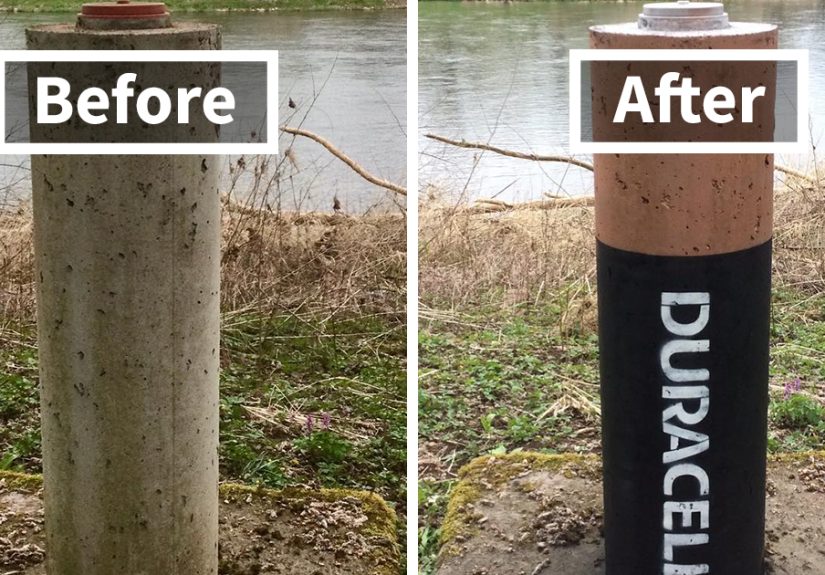
Welcome to the world of interactive graffitistreet art that doesn’t just sit on a wall, but plays with what’s already there.
It uses poles, pipes, manhole covers, parking blocks, and other urban “background noise” as part of the punchline. The result? Streets that feel less like
a commute and more like a scavenger hunt for delight.
What “interactive graffiti” really means
Interactive graffiti (often called site-specific street art or urban interventions) is art designed for one exact spot.
Instead of forcing a blank canvas onto the city, the artist treats the city as the canvasimperfections included.
A crack becomes a lightning bolt. A bent sign becomes a character’s arm. A parking block becomes a french fry that’s been waiting its whole life for its moment.
The magic is in the relationship between drawing and object: remove the real-world element and the art loses its superpower.
That’s why this style feels so surprisingyour brain registers the “ordinary object” first, then flips the switch to “WAIT, IS THAT… A FACE?”
From “tagging” to “tinkering with reality”
Graffiti has deep roots in identity, writing, and subcultureespecially in U.S. cities where names, crews, and styles evolved into a visual language all their own.
Over time, street art expanded into murals, stencils, installations, and public art programs. Interactive work is one playful branch of that evolution:
less “look at my name” and more “look at this pipe… now it’s an anteater.”
It’s still street art, still public, still part of an ongoing conversation about space and ownershipbut the vibe leans toward comedic timing and curiosity.
Meet the mind behind the mischief: turning street objects into characters
One of the best-known examples of this “surroundings-first” approach is street artist Tom Bob, whose work transforms everyday urban fixtures into
colorful characters and objects. He’s famous for spotting the hidden potential in things like pipes, manhole covers, hoses, and parking blocksthen painting just enough
to make the object “click” into a new identity.
The goal is simple: make people feel “happiness and wonder.”
That mission shows up in the choices: bold colors, friendly expressions, and concepts that feel instantly readable even if you only have three seconds before your bus arrives.
In this style, the city stops being a backdrop and starts being a cast of characters.
How this kind of work gets made (without a giant “ART GOING HERE” sign)
Interactive graffiti is part observation, part design, part stand-up comedy. The process usually looks something like this:
- Scout: Find a street object with a strong shapecurves, circles, long tubes, anything that can become a nose, mouth, or body.
- Read the environment: What color is the wall? What’s the foot traffic like? Will the piece be seen from a car, a sidewalk, or both?
- Sketch the “click” idea: The concept has to land fast. If people need a museum label, it’s not doing its street job.
- Paint minimal, amplify maximum: The object is already 60% of the piece. The paint just reveals the alternate reality.
When it’s done well, it feels like the art was always thereand you’re the one who finally noticed.
Why these pieces work: 5 tricks that make you double-take
1) Pareidolia: your brain loves faces (even in a mailbox)
Humans are experts at seeing faces in clouds, outlets, and oddly arranged snacks. Interactive street art leans into that wiring:
two bolts become eyes, a pipe becomes a snout, and suddenly the street has opinions.
2) Built-in 3D: the city provides depth for free
A painted mural can look flat; a painted mural that uses a real handle, hinge, or curb becomes instantly dimensional.
Shadows and textures do half the work, which makes the illusion feel more “real” than your brain expects.
3) Context comedy: the joke is where the joke is
Putting a fish on a wall is fine. Turning a drain into the fish’s mouth? Now it’s a moment.
Interactive graffiti is often a visual pun that only works in that exact location.
4) Minimalism with payoff
The best interventions don’t overpaint. They add a few lines, a color block, maybe a tiny characterthen let the street object stay recognizable.
That tension (“I know what that is” + “But also… what??”) is the spark.
5) Micro-stories that fit in a glance
A pirate peeking from a hose. A worm emerging from a manhole cover. A snack disguised as infrastructure.
These mini narratives give people a quick hit of joyperfect for real life, where nobody has time for a 14-minute interpretive explanation of a bollard.
30 new “pics” worth picturing
Below are 30 fresh, vivid examples of the kind of interactive graffiti that makes sidewalks feel like a playful gallery.
Think of these as “photo captions in words”inspired by the real techniques artists use (especially street-object transformers), designed to show how this style
interacts with the built environment.
- Parking block → French fry: A curb stop gets painted golden with a tiny ketchup crown. Suddenly, your car is parked next to lunch.
- Pipe → anteater: A blue pipe becomes a long snout; painted eyes on the wall complete a curious anteater searching for imaginary ants.
- Manhole cover → worm portal: The circle becomes a burrow; a cartoon worm “slides” out like it’s late for a meeting.
- Hose bundle → pirate beard: Hanging hoses turn into a swashbuckler’s beard with a tiny painted hat above them.
- Fire hydrant → dog: Add ears and a tail, and the hydrant becomes the city’s most responsible pup: always standing at attention.
- Electrical box → robot face: Existing vents become teeth; a few circles become eyes; now the utility box looks pleasantly judgmental.
- Cracked sidewalk → lightning bolt: The fracture becomes a superhero’s energy blastlike the pavement is powering up.
- Street sign pole → giraffe neck: Spots and a tiny head at the top turn a pole into a giraffe politely observing traffic.
- Bench armrest → shark fin: A simple fin silhouette makes the bench look like it’s swimming through a sea of commuters.
- Storm drain → monster mouth: Teeth painted around the grate make it look like the street is gently nibbling rainwater.
- Bollard → rocket: Flames painted at the base turn a safety post into a tiny launch sequence on the corner.
- Broken curb → piano keys: Chipped edges become a playful keyboard, as if the sidewalk is composing a jingle.
- Old sticker residue → ghost: The outline becomes a shy ghost waving, proving even grime can have charisma.
- Mailbox handle → elephant trunk: The metal curve becomes a trunk; painted ears make the mailbox look proud and helpful.
- Bike rack → octopus arms: The loops become tentacles; add eyes and suddenly it’s guarding bicycles like treasure.
- Fence gap → peekaboo character: A tiny painted face “hides” behind a missing slat. It’s spying… adorably.
- Parking meter → detective: Add a hat and magnifying glass; now it’s investigating your expired time with dramatic seriousness.
- Wall vent → harmonica: A musician is painted holding the vent like an instrumentinstant street blues.
- Trash can → hungry hippo: Paint a wide mouth around the opening. Feeding it becomes weirdly satisfying.
- Tree knot → one-eyed creature: The knot becomes an eye; the bark becomes fur; now the tree looks like it has a secret identity.
- Stair railing → dragon spine: The curve becomes a back ridge, with a dragon head painted at the top step.
- Pothole → tiny crater scene: Astronaut footprints painted around it. The street is now a moon mission.
- Parking lot line → jump rope: Two kids painted at either end, “jumping” the line. The lot becomes a playground blueprint.
- Corner crack → cartoon bite mark: Paint a “chomp” shape like the building took a snack-sized bite out of itself.
- Water spigot → trombone: A musician holds the spigot as the instrument’s mouthpiece. Instant sidewalk concert.
- Folded metal flap → butterfly wing: Add the second wing and it looks like the wall is mid-metamorphosis.
- Speed bump → sleeping cat: Paint paws and whiskers; the bump becomes a cat taking the world’s most inconvenient nap.
- Reflective sign → disco ball: Add dancers below and your “No Parking” sign is now hosting a tiny party.
- Concrete seam → zipper: Paint zipper teeth along the seam. The sidewalk looks like it can unzip into another dimension.
- Brick patch → bandage: Turn a repaired wall section into a cartoon band-aid, like the building is healing in public.
Notice the pattern? The city provides the “props,” the artist provides the “plot,” and you provide the reaction (usually a smile, sometimes a confused squint, occasionally both).
When street art sparks joy, it can also spark connection
Fun street art isn’t just decorationit can change how people feel in a space. Research and community programs around murals and public art have linked creative interventions to
things like stronger neighborhood pride, social connection, and increased street activity.
The “welcome mat” effect: people linger where they feel something
When a block feels interesting, people slow down. They take photos. They point things out. They return with friends.
That matters because vibrant streets are made of small human behaviorswalking, pausing, chattingnot just buildings.
Murals, community health, and collective efficacy
In Philadelphia, mural-based community programs have been studied for their effects on how neighbors relate to each other.
Some evaluations have reported increases in social cohesion and trustthe kind of “we’ve got each other” feeling that makes a place feel safer and more cared for.
That’s a big deal, because art is often dismissed as “extra,” when in reality it can be deeply tied to how communities heal and organize.
Street art as public conversation
Not all street art is lighthearted, and it doesn’t have to be. Large-scale street muralsespecially those connected to social movementshave acted as public memory:
visible, shared, and impossible to ignore. Whether temporary or preserved, they show how public space becomes a shared message board.
The elephant in the alley: legality, respect, and not being That Guy
Let’s be clear: painting on property you don’t own or have permission to use can be illegal. In many places, unauthorized graffiti is treated as vandalism or property defacement,
and penalties vary depending on location and damages.
That doesn’t erase the cultural importance of graffiti or the history of street artit just means there’s a real-world boundary between
“public creativity” and “property damage,” and communities often debate where that line should be.
How artists keep it playful without making it harmful
- Permission-based projects: Murals, festivals, and sanctioned walls create space for creativity without conflict.
- Non-destructive approaches: Temporary materials, removable installations, or painting on surfaces already designated for public art.
- Respect for the neighborhood: Avoiding memorials, private homes, small businesses, and culturally sensitive sites unless invited.
If you love this style, the best way to support it is to support artists and legal public art programsshare their work with credit,
attend mural events, and advocate for spaces where art is welcomed instead of erased.
How to experience interactive street art like a pro
You don’t need a museum ticket for this. You need curiosity, comfortable shoes, and the willingness to look at a pipe and ask,
“Could that be… a pirate?”
Try these street-art-friendly habits
- Walk slower than your schedule wants: Interactive pieces are often small and easy to miss.
- Look at the “boring stuff”: Utility boxes, rails, drains, and curbs are prime candidates.
- Photograph responsibly: Don’t block sidewalks, don’t climb structures, and don’t put yourself in traffic for a picture.
- Give credit when you share: Many artists post their work publiclyuse their name and handle when possible.
- Find local mural maps and festivals: Legal public art spaces are everywhere, and they’re growing.
Experiences: what it feels like when the street starts playing back (extra )
Imagine you’re walking through a normal neighborhood on a normal day. You’re thinking about normal thingstexts you forgot to answer, errands you don’t want to run,
the eternal mystery of why one sock always disappears. The city is doing its usual job: signs, pavement, poles, and a soundtrack of distant engines.
Then you see it: a parking block painted like a crisp, golden french fry. Not a mural. Not a billboard. Just a tiny visual prank tucked into the infrastructure.
You slow down without meaning to. Your brain does a double-takefirst recognizing the object, then realizing the object has been “recast” as something delightful.
It’s the smallest interruption, but it changes your mood like flipping on a light.
You keep walking, and now you’re paying attention. That’s the secret superpower of interactive street art: it turns you into a better observer.
A manhole cover stops being a circle and starts being a stage. A pipe stops being a pipe and starts being a nose, a trunk, a telescope, a trombone.
You start scanning the environment the way you might scan a “Where’s Waldo?” pageexcept the prize is a laugh, not Waldo’s questionable fashion choices.
The best part is how other people react. You might spot someone else noticing the same piece. There’s often a split-second of shared recognition:
the look that says, “Are you seeing this too?” You don’t have to talk to anyone (this is still a city; we have boundaries),
but you feel a little more connected to the people around you. A corner that used to be “just a corner” becomes “the corner with the tiny robot face.”
It becomes a landmark, a story, a memory anchor.
If you’re with a friend, interactive graffiti turns into a game. You catch yourself pointing like a kid: “Look! That trash can is a hippo!”
If you’re alone, it’s still a gameone where the city is quietly rooting for you to notice.
That shift matters. Urban life can feel like constant motion with no pause button. A playful street intervention gives you a pause that doesn’t demand anything:
no purchase, no ticket, no appointment. Just a moment of joy handed to you for free.
And if you’re the kind of person who makes thingswriting, drawing, design, musicthis art can be inspiring in a very practical way.
It reminds you that creativity isn’t only for “perfect conditions.” It thrives in constraints. It thrives in imperfections. It thrives in whatever weird shape the world offers.
A crack can be the start of an idea. A bolt can be an eye. A forgotten object can become a character.
The last and most important part of the experience is respect: appreciating the work without putting yourself or others at risk, and supporting legal public art when possible.
Because when cities make room for creativity, the payoff is realstreets that feel more human, more memorable, and a little less like you’re just passing through.
Conclusion: the city can be a gallery, a playground, and a mirror
Interactive graffiti works because it’s not just “art on a wall.” It’s art that listens to the street first.
It borrows the city’s shapes and textures, then gives them a second lifeone that’s fun, surprising, and oddly comforting.
Whether it’s a pipe turned into an animal snout, a parking block turned into a snack, or a drain turned into a tiny monster mouth,
these interventions remind us that public spaces don’t have to be emotionally neutral. They can be clever. They can be kind.
And sometimes, they can make you laugh on a Tuesdaywhich is basically urban magic.