Table of Contents >> Show >> Hide
- Why Basement Bathrooms Play by Different Rules
- Drywall vs. Cement Board: Where Each Material Belongs
- Basement Bathroom Layout Planning: What to Frame Before You Hang Board
- How to Install Drywall in the “Dry Zone” Areas
- How to Install Cement Board in Wet Zones
- Cement Board on Floors: Don’t Skip the Thinset Underlayment Step
- Waterproofing Options for a Basement Shower or Tub Surround
- Code and Best-Practice Reality Check
- Common Mistakes (and How to Avoid Them)
- Wrap-Up: Build It Like You Want to Forget About It
- of Real-World Lessons People Learn the Hard Way
Finishing a basement bathroom is a little like hosting a pool party… in a sweater… in a room that used to be a cave.
You’re dealing with humidity, cooler surfaces, and the kind of “mystery damp” that makes paint peel and grout sulk.
The good news: if you choose the right wall materials (drywall where it belongs, cement board where it matters) and
install them with a moisture-first mindset, you can get a basement bath that feels solid, looks sharp, and stays that way.
This guide walks through how to plan, hang, and prep drywall in the dry zones, how to install cement board (or other
tile backer) in wet zones, and how to avoid the classic basement-bath trapslike building a “moisture sandwich” inside
your walls or trusting tile and grout to do a waterproofing job they were never hired for.
Why Basement Bathrooms Play by Different Rules
Above grade, a bathroom’s biggest moisture challenge is usually what you can see: steam, splashes, and a kid who treats
the shower like a car wash. In a basement, the hidden stuff matters just as much. Concrete and masonry are cool and can
encourage condensation when warm, moist indoor air meets cold surfaces. That’s why basements demand a “control layers”
approach: manage water, air, and vapor so the wall can dry safely rather than trapping moisture behind pretty finishes.
Start with moisture management, not tile choices
Before you hang anything, confirm the basement is dry enough to finish. Fix bulk water issues first (grading, gutters,
foundation cracks). Then plan your assemblies so they can dry in at least one direction. Many high-performance basement
wall approaches rely on continuous rigid insulation against concrete to reduce condensation risk and often avoid interior
polyethylene vapor barriers that can trap moisture in certain assemblies.
Ventilation is non-negotiable in a basement bath
A basement bathroom without dependable exhaust is basically a humidity factory with a door. Right-size your fan and duct
it outdoors. Common guidance recommends at least 50 CFM intermittent exhaust for many bathrooms, with higher airflow for
larger rooms. A simple rule you’ll see often is roughly 1 CFM per square foot, with a practical minimum around 50 CFM for
small bathrooms. Use a timer switch so the fan actually runs long enough to matter.
Drywall vs. Cement Board: Where Each Material Belongs
Drywall: great for dry zones, risky for wet zones
Standard drywall is perfectly fine for bathroom areas that won’t see direct waterthink the ceiling (outside of specialty
steam conditions), the vanity wall, and the toilet area. For a basement, many DIYers prefer mold-resistant drywall (often
“purple” or similar) in the general bathroom area because it offers better resistance to moisture compared with standard
paper-faced panels. Water-resistant “greenboard” can be appropriate in limited situations, but modern code language and
best practices generally keep water-resistant gypsum products out of locations with direct water exposure.
The key idea: “water-resistant” is not “waterproof.” If a surface will be tiled and routinely splashed (shower walls,
tub surrounds, and other true wet areas), plan on a tile backer and a waterproofing strategynot just a hope-and-a-prayer
layer of grout sealer.
Cement board (and friends): stable under tile, but not waterproof by itself
Cement backer board is designed to be a durable, tile-friendly substrate in wet or high-moisture areas. It won’t turn to
mush like gypsum when it gets damp, and it offers a solid bond surface for thinset and tile. But cement board is still
porousmeaning it can allow moisture to move through itso a proper shower or tub surround still needs a real waterproofing
approach (a sheet membrane or a liquid-applied membrane, or a board that has a built-in moisture barrier).
Alternative backers you’ll see include fiber-cement boards, glass-mat gypsum tile backers, and membrane-faced foam boards.
Some products incorporate moisture barriers at the surface, which can simplify the buildespecially if you’re trying to
keep your basement walls from accumulating hidden moisture.
Basement Bathroom Layout Planning: What to Frame Before You Hang Board
1) Make the framing “tile-ready”
Tile installations are picky. If studs are bowed or corners aren’t reinforced, your tile layout will advertise it forever.
Before board goes up, check stud spacing and straightness, add blocking for grab bars and towel bars, and reinforce shower
corners where backer panels meet. Many cement-board instructions call for studs aligned and spaced no more than 16 inches
on center for wall applications in showers and tub surrounds.
2) Plan for plumbing and penetrations
Every pipe and valve penetration is a future leak path unless you detail it correctly. Plan for solid backing around valve
bodies, consider pre-formed seals if using sheet membranes, and keep holes in backer board as tight as practical. The less
you Swiss-cheese your wall, the easier waterproofing becomes.
3) Pick your waterproofing strategy early
Decide whether you’ll use a surface-applied waterproofing (sheet or liquid) or a behind-the-board moisture barrier. In
many assemblies, you typically choose one approachdoubling up (plastic behind cement board + a surface membrane) can trap
moisture between layers, especially in basements where drying potential is already limited.
How to Install Drywall in the “Dry Zone” Areas
Step 1: Prep the basement wall assembly correctly
If your bathroom includes exterior foundation walls, confirm your insulation and air-sealing plan is appropriate for your
climate and basement conditions. Many building-science approaches favor continuous rigid foam against concrete as both
insulation and a condensation control layer, with a framed wall inboard and no interior polyethylene vapor barrier in
certain assemblies. This helps reduce the chance that warm indoor air reaches a cold surface and condenses inside the wall.
Step 2: Hang drywall with bathroom realities in mind
Use the right thickness (commonly 1/2-inch for walls; 5/8-inch can be helpful for ceilings or where sag resistance/fire
performance is needed). If you’re using mold-resistant panels, follow the manufacturer’s fastening guidance. Keep seams
tight, avoid crushed edges, and don’t leave gaps that become air leaks. In a basement bathroom, air leakage is a moisture
delivery systemso treat the drywall as part of your air-control layer, not just decoration.
Step 3: Finish drywall to resist humidity
Use quality joint compound and proper drying time. Prime everything before paintingespecially in a basement where humidity
can vary. Choose a bathroom-rated paint with good moisture resistance. Then caulk at changes of plane and around trim to
reduce air leakage and keep damp air from sneaking into cavities.
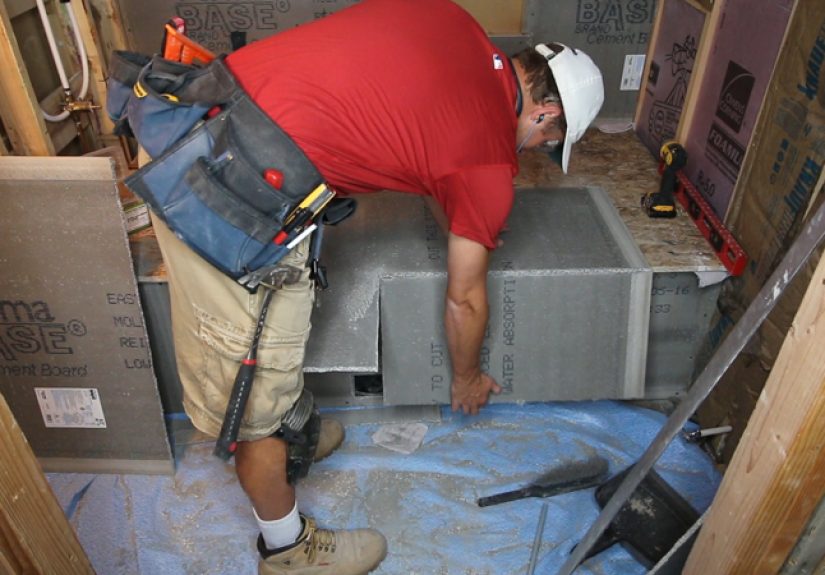
How to Install Cement Board in Wet Zones
Step 1: Use correct framing and spacing
Many cement-board installation instructions specify straight studs and maximum spacing of 16 inches on center for walls in
shower and tub enclosures. Add blocking at corners and along panel edges so every edge is supported. A flat, stiff substrate
is one of the best “anti-crack” upgrades you can make.
Step 2: Cut boards safely and accurately
Cement board often cuts by scoring and snapping, though holes for valves and fixtures may require carbide tools or hole saws.
Wear a respirator and manage dustcement-board cutting can create silica-containing dust. Make clean cutouts; sloppy openings
make waterproofing harder.
Step 3: Maintain the right gaps and clearances
Leave a small gap between panels (commonly around 1/8 inch) and keep panels slightly above tubs, shower pans, or floors
(for example, about 1/4 inch above the tub or shower base is a common guideline in manufacturer instructions). Those small
gaps prevent wicking and movement damageand they give you space for proper sealant and waterproofing transitions.
Step 4: Fasten correctly (this is where many installs fail)
Use cement-board rated screws or approved fasteners and follow spacing requirementsmany instructions call for fasteners
roughly every 8 inches on center on walls. Keep fasteners back from edges (often around 3/8 inch from edges) and don’t
overdrive; a fastener head that tears the board surface reduces holding power and can create a weak point under tile.
Step 5: Treat seams with alkali-resistant tape and thinset
Don’t use paper drywall tape or all-purpose joint compound on cement board seams. Instead, embed alkali-resistant fiberglass
mesh tape in thinset mortar and smooth it flush. This ties the panels together so the tile layer isn’t spanning “independent
islands” that move differently.
Cement Board on Floors: Don’t Skip the Thinset Underlayment Step
If your basement bathroom floor will be tiled and you’re using cement board as an underlayment, the board usually goes over
a bed of mortar/thinsetnot as glue, but as a bedding layer that eliminates voids and improves support. Many manufacturer
instructions also specify staggering joints, maintaining an 1/8-inch gap between sheets, and fastening in a prescribed pattern.
A flatter, fully supported underlayment reduces cracked grout lines and hollow-sounding tile.
Also pay attention to floor stiffness requirementstile assemblies often target deflection limits like L/360 for ceramic tile
and more stringent limits for natural stone. Even in a basement, transitions and framing around stairs or landings can introduce
movement that tile doesn’t forgive.
Waterproofing Options for a Basement Shower or Tub Surround
Option A: Liquid-applied membrane over cement board
A liquid membrane (rolled, brushed, or sprayed) can create a continuous waterproof layer when applied at the correct thickness,
with proper detailing at corners, seams, and penetrations. Follow the product’s instructions carefully for cure times and
compatible mortars; many systems call for polymer-modified mortars meeting ANSI performance standards for tile installation.
In a basement, liquid membranes are popular because they’re relatively forgiving around odd shapes and retrofits.
Option B: Sheet membrane system
Sheet membranes create a consistent waterproofing layer with overlapped seams and pre-formed accessories for corners and
penetrations. Some well-known systems allow installation over solid backings like gypsum board or cement backerboard, creating
a waterproof and even vapor-tight enclosure when installed correctly. This approach can be especially appealing in basements
where controlling vapor movement matters as much as controlling bulk water.
Option C: Panels with integrated moisture barrier
Some tile backer panels include a built-in moisture barrier on the face, reducing the steps required to create a water-managed
assembly. Manufacturer guidance may still require careful treatment of seams and penetrations, but these products can simplify
the “do I need a barrier here?” debatehelpful when your basement wall assembly already has limited drying potential.
Code and Best-Practice Reality Check
Water-resistant gypsum products have limitations in shower/tub compartments and aren’t intended for direct exposure to water.
Many code resources and checklists also warn against installing water-resistant gypsum board over certain vapor retarders in
tub/shower compartments, and they emphasize using approved backer materials for tile in wet areas. Local code enforcement can
vary, so the safest path is: use an approved tile backer in wet zones, and use drywall (preferably mold-resistant) in dry zones.
Common Mistakes (and How to Avoid Them)
-
Using drywall in the shower because “it’ll be tiled.” Tile and grout are not waterproofing systems.
Use an approved backer and a real membrane strategy in wet areas. -
Skipping waterproofing because cement board “handles water.” Cement board survives moisture better, but it can still
let moisture through. Protect framing with a membrane plan. -
Creating a moisture sandwich. Be cautious about stacking a behind-board plastic barrier with a surface waterproofing membrane,
especially in basements where drying paths are limited. - Overdriving fasteners. A chewed-up board face can weaken holding power and telegraph movement into tile.
- Wrong tape and mud on cement board seams. Use alkali-resistant mesh tape + thinset, not drywall compound.
- Under-ventilating the bathroom. A timer switch is cheaper than mold remediation and far less annoying than repainting.
Wrap-Up: Build It Like You Want to Forget About It
The goal of a basement bathroom isn’t just “looks finished.” It’s “stays finished.” Put drywall where it can stay dry,
put cement board (or an approved tile backer) where water will show up, and treat waterproofing and ventilation as core
structural choicesnot optional upgrades. If you get the layers right, the tile becomes the pretty suit on top of a smart
system, not the system itself.
of Real-World Lessons People Learn the Hard Way
Almost everyone who tackles a basement bathroom hits the same three “character-building moments,” usually in this order:
(1) the studs aren’t as straight as you thought, (2) the plumbing is never exactly where the backer board wants it to be,
and (3) humidity in a basement doesn’t care about your weekend schedule.
The first moment shows up when you hold a long level across the shower wall and realize you’re about to tile a gentle wave.
DIYers often describe this as the point where optimism leaves the chat. The fix is boring but powerful: shim and plane the
framing until it’s flat, add blocking so every panel edge is supported, and reinforce corners so the backer board doesn’t
flex when you press on it. Tile is basically a rigid skin; if the wall moves, the grout complains loudly.
The second moment is the “hole saw tango.” Valve cutouts, shower head arms, tub spouts, and random pipes all demand openings,
and openings are where waterproofing plans go to dieunless you keep them tight and detail them carefully. A common success
story is the person who cut the smallest practical hole, then used a compatible seal or carefully applied membrane detailing
around it. A common regret story is the person who cut a huge opening “just to be safe,” then tried to patch waterproofing
back together with vibes and caulk. Caulk is great at edges; it is not a substitute for a continuous membrane around a
penetration.
The third momenthumidityusually appears after the bathroom is technically finished. Someone takes a hot shower, turns off
the fan, and the mirror fogs like a movie scene. In basements, that moisture can linger longer because the surrounding
surfaces are cooler. People who end up happiest tend to do two simple things: install a properly sized exhaust fan and put
it on a timer so it runs long enough to clear steam. It’s an unglamorous upgrade, but it’s the difference between “fresh”
and “why does this corner smell like a towel that gave up?”
Another shared lesson: cement board installs feel slow because they reward patience. You’ll see many DIYers mention that
spacing fasteners correctly and resisting the urge to overdrive screws is harder than it sounds. When the drill is buzzing,
it’s easy to treat every screw like a race. But a clean, flush fastener head is what you want; chewed edges and cratered
faces create weak spots that can show up later as cracked grout lines. Similarly, the seam step (alkali-resistant tape plus
thinset) feels like a detourbut it’s what turns separate panels into one stable surface.
Finally, basement bathrooms teach a special kind of humility about “just one more layer.” If you already have an assembly
designed to control moisture, piling on extra plastic in the wrong place can trap moisture rather than stop it. The people
who win long-term are the ones who choose a coherent systemdrywall in dry zones, approved backer in wet zones, one clear
waterproofing approach, and ventilation that runs like it means it.