Table of Contents >> Show >> Hide
- Table of Contents
- Why Herby Latkes Are Better
- The 5 Keys to Crispy Herby Latkes
- Best Herby Latkes Recipe
- Toppings and Sauces That Make Latkes Sing
- Make-Ahead, Freezing, and Reheating
- Flavor Variations (Without Ruining Tradition)
- Troubleshooting: Save Your Latkes
- FAQ
- Kitchen Experiences: The Real-Life Herby Latke Moments
Latkes are already a vibe: crispy edges, fluffy centers, and the kind of sizzling soundtrack that makes everyone “just happen” to wander into the kitchen.
Now add a blizzard of fresh herbsparsley, dill, chives, scallionsand suddenly your classic potato latkes taste brighter, fresher, and (politely) more interesting
than your cousin’s “secret recipe” that’s basically potatoes plus confidence.
This guide gives you a best-in-class herby latkes recipe with the real tricks that matter: how to control moisture, how to use potato starch to your advantage,
how to keep the crust snappy (not soggy), and how to serve latkes like you planned your life. You’ll also get variations, toppings, and a troubleshooting section
that’s basically a latke emergency kit.
Why Herby Latkes Are Better
Traditional potato latkes are delicious because they’re simple: potato, onion, egg, salt, and hot oil doing the heavy lifting.
Herbs don’t replace that classic flavorthey upgrade it. Think of herbs as the “fresh outfit” your latkes put on when they want compliments.
What herbs actually do (besides looking fancy)
- Brightness: Dill and parsley cut through richness, so the latkes taste less heavy and more “one more won’t hurt.”
- Better toppings synergy: Herby latkes love sour cream, smoked fish, lemon, chili crisp, and anything tangy.
- More aroma, more appetite: Fresh herbs bloom in the heat, making your kitchen smell like a holiday… even if it’s a random Tuesday.
The best part: you don’t need complicated ingredients. You just need the right technique so the herbs don’t come at the cost of crispiness.
The 5 Keys to Crispy Herby Latkes
1) Moisture management is everything
Potatoes and onions are basically water balloons wearing trench coats. If you don’t remove moisture, you get latkes that are soft, steamy, and oddly sad.
The goal is to squeeze the shreds until they’re noticeably drier. This is the single biggest difference between “crispy!” and “why is it mushy?”.
2) Keep (and use) the potato starch
When you squeeze the potatoes and onion over a bowl, the liquid will settle and leave a layer of pale starch at the bottom.
That starch is a natural binder and crisp-maker. Pour off the water, scrape up the starch, and mix it back in. Free upgrade. No subscription required.
3) Don’t rinse away your crisp potential
Rinsing shredded potatoes can wash away helpful starch. Instead, focus on squeezing. If browning worries you, work in batches and move quickly,
or briefly hold peeled potatoes in cold water before gratingthen grate and squeeze promptly.
4) Oil temperature matters more than the amount of oil
Too cool = greasy latkes. Too hot = dark crust, undercooked middle. Aim for about 350°F in the pan.
If you don’t have a thermometer, test with a small pinch of batter: it should sizzle steadily right away (not violently smoke, not lazily bubble).
5) Drain on a rack, not paper towels alone
Paper towels are fine in a pinch, but a wire rack keeps air circulating so the bottoms don’t steam themselves into softness.
If you want latkes that stay crisp while you cook batches, rack drainage is the move.
Quick safety note: Frying involves hot oil. Keep the area clear, use a stable pan, and add latke batter gently so oil doesn’t splash.
If you’re cooking with someone younger, active supervision is a smart idea.
Best Herby Latkes Recipe
This herby latkes recipe is built for crisp edges and a tender center, with herbs added in a way that boosts flavor without adding extra moisture.
It uses the “save the starch” trick and a small amount of dry binder (matzo meal or flour) to keep the pancakes sturdy.
Herby Latkes (Crispy Potato Latkes with Herbs)
- Yield: About 12 latkes (3-inch), serves 4–6
- Time: 25 minutes prep + 20 minutes cook
- Skill level: Beginner-friendly with one workout: squeezing potatoes
Ingredients
- 2 pounds russet potatoes (about 3–4 medium), peeled
- 1 medium yellow onion
- 2 large eggs
- 1/4 cup potato starch (or 3 tablespoons potato starch + 1 tablespoon cornstarch)
- 2–3 tablespoons matzo meal or all-purpose flour (optional but helpful)
- 1 1/2 teaspoons kosher salt, plus more to finish
- 1/2 teaspoon black pepper
- Herbs: 1/2 cup chopped parsley + 1/4 cup chopped dill + 1/4 cup chopped chives (or scallions)
- Neutral oil for frying (canola, sunflower, grapeseed, or vegetable oil)
- Optional: 1/2 teaspoon baking powder (for slightly lighter latkes)
Step-by-Step Instructions
-
Grate the potatoes and onion.
Use the large holes of a box grater or a food processor grating blade. Work quickly so the potatoes don’t sit too long. -
Squeeze out the liquid (seriously).
Transfer grated potatoes and onion to a clean kitchen towel or cheesecloth over a bowl.
Twist and squeeze until the mixture feels drier and you’ve removed a lot of liquid. -
Harvest the starch.
Let the bowl of liquid sit for 1–2 minutes. Carefully pour off the watery top, keeping the pale potato starch that settles at the bottom.
Add that starch back into a large mixing bowl. -
Mix the batter.
Add the squeezed potato-onion mixture to the bowl with the saved starch.
Stir in eggs, potato starch (and matzo meal/flour if using), salt, pepper, and baking powder (if using).
Fold in the chopped herbs last. -
Heat the oil.
In a heavy skillet (cast iron is great), heat about 1/4 inch of oil over medium-high heat until shimmering.
Aim for roughly 350°F. -
Fry in batches.
Scoop about 2 tablespoons of mixture per latke into the pan and flatten gently.
Fry 3–4 minutes per side until deep golden and crisp. Avoid overcrowding; it drops the temperature and invites greasiness. -
Drain and season.
Transfer cooked latkes to a wire rack set over a sheet pan. Immediately sprinkle with a pinch of salt.
Repeat with remaining batter, adjusting heat to keep a steady sizzle. -
Serve hot.
Latkes are best within minutes. If you’re waiting on people, keep them warm and crisp in the oven (instructions below).
What “perfect” looks like
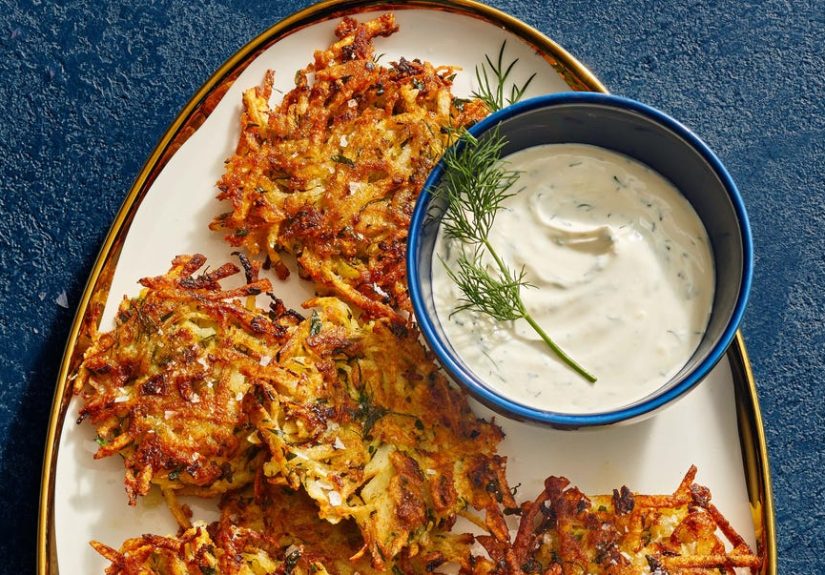
A great herby latke has lacy, crunchy edges, a tender center, and herbs that taste freshnot wet or grassy.
If you break one open, it should look cooked through, not translucent or gummy.
Toppings and Sauces That Make Latkes Sing
Classic toppings like applesauce and sour cream will never go out of style. But herby latkes invite a little extra creativity.
Here are topping combos that work especially well with dill, parsley, and chives.
Classic (because classics are classic)
- Sour cream + chives (extra herby, extra cozy)
- Applesauce (warm it with cinnamon if you want a sweet-savory moment)
Herb-forward sauces
-
Green goddess-style sour cream: Mix sour cream (or Greek yogurt) with lemon zest, lemon juice, minced garlic, salt, pepper,
and a handful of finely chopped herbs. It’s tangy, fresh, and dangerously spoonable. - Lemon-dill yogurt: Greek yogurt + dill + lemon + a drizzle of olive oil + salt. Great with smoked salmon.
Party toppings (for when you’re feeling fancy)
- Smoked salmon + sour cream + dill (latkes go full brunch mode)
- Chili crisp + scallions (spicy-crunchy-meets-crispy-crunchy)
- Quick pickled onions (acid makes fried foods taste lighter)
Make-Ahead, Freezing, and Reheating
Keeping latkes warm (without turning them soggy)
Put drained latkes on a wire rack over a sheet pan in a 250–300°F oven. The rack is important: it prevents steam from softening the bottoms.
Don’t cover them tightly; trapped steam is the enemy of crisp.
Freezing latkes for later
- Cool completely on a rack.
- Freeze in a single layer on a sheet pan until firm.
- Transfer to a freezer bag or container with parchment between layers.
Reheating (to bring the crunch back)
Reheat on a rack in a 425°F oven until hot and crisp, usually 8–12 minutes (longer if frozen).
Microwaves make latkes softuse the oven when crispiness matters (and it always matters).
Flavor Variations (Without Ruining Tradition)
1) Extra-herby “garden latkes”
Use a mix of parsley, dill, chives, and a little basil. Keep herbs finely chopped so they distribute evenly.
If you add very delicate herbs, add them right before frying so they stay bright.
2) Gluten-free herby latkes
Skip flour/matzo meal and rely on potato starch plus eggs. If the batter feels loose, add 1–2 extra tablespoons potato starch.
(Too much starch can make latkes a little gummy, so increase gradually.)
3) Sheet-pan latkes for a crowd
If you’re feeding a group, oven-baked or sheet-pan latkes can reduce stovetop chaos.
You’ll trade a little “pan-fried drama” for a calmer kitchen and more consistent timing.
Press the latkes thin and use enough oil on the pan to encourage browning.
4) Scallion + herb latkes (more savory)
Increase scallions and use dill and parsley as backup singers. This variation pairs especially well with tangy yogurt sauces.
Troubleshooting: Save Your Latkes
Problem: My latkes are soggy
- Cause: Too much moisture or oil not hot enough.
- Fix: Squeeze harder; add 1–2 tablespoons potato starch; make sure the oil is sizzling steadily before frying.
Problem: My latkes fall apart
- Cause: Not enough binder, or the mixture is too wet.
- Fix: Add another egg if you made a huge batch, or add 1–2 tablespoons matzo meal/flour (or potato starch).
Problem: They’re too dark before the inside cooks
- Cause: Oil temperature too high or latkes too thick.
- Fix: Lower heat slightly and press latkes thinner. You want deep golden, not “campfire marshmallow.”
Problem: They taste greasy
- Cause: Oil too cool or latkes sitting on a flat plate/paper too long.
- Fix: Maintain heat; drain on a rack; keep batches warm in the oven on a rack.
Problem: Herbs taste dull
- Cause: Herbs chopped too early, or not enough seasoning.
- Fix: Chop herbs right before mixing; season the batter well; finish with a pinch of salt after frying.
FAQ
What potatoes are best for herby latkes?
Russet (Idaho-style) potatoes are the go-to for crispiness because they’re starchier and less waxy.
Yukon Golds can work too, giving a slightly creamier center, but russets are the crisp champion.
Do I have to peel the potatoes?
Peeling gives a cleaner texture and classic look. Leaving some peel adds a rustic vibe and a tiny bit more texture.
Either worksjust make sure the potatoes are clean.
Can I make the batter ahead of time?
It’s best to fry soon after mixing. Potatoes can darken and release more liquid as they sit.
If you must wait, keep the mixture cold and stir before frying, then check if it needs an extra spoonful of starch.
How do I keep latkes crispy for serving?
Drain on a wire rack and hold in a 250–300°F oven on that same rack. Avoid stacking or covering tightly.
Crispiness hates humidity.
Kitchen Experiences: The Real-Life Herby Latke Moments
Here’s what people don’t tell you about making the best herby latkes recipe: the cooking part is only half the story. The other half is the
little parade of moments that happens around the pantaste tests, topping debates, and the strangely universal belief that the “next batch” will be even crispier.
Herby latkes turn those moments up a notch because the aroma is louder, the color is prettier, and the toppings suddenly feel like a creative hobby.
First comes the herb chopping confidence. Parsley? Fine. Dill? Bold. Chives? Sophisticated.
Five minutes later your cutting board looks like a garden had a minor leaf explosionand somehow that’s the point.
Fresh herbs make latkes feel more alive, and they also give the cook an easy win: people notice the green flecks and assume you know what you’re doing.
(Let them believe it. No one needs to know how long you spent squeezing potatoes like you were trying to wring out a rainstorm.)
Then comes the frying soundtrack: that steady sizzle that says, “Yes, dinner is happening.”
In many households, the kitchen becomes a magnet. Someone appears asking, “How long until they’re done?”as if you’re running a latke
drive-thru with a digital timer. Another person claims they’re “just here for the smell,” then mysteriously ends up holding a plate.
Herby latkes intensify this because the dill and chives perfume the air; it’s cozy, savory, and a little bit celebratory even on ordinary days.
The classic experience is the first-latke ritual. The first one is always a test: salt level, oil temperature, thickness.
It’s also the one that disappears fastest because “we had to check.” If your first latke is slightly misshapen, congratulationsyou’ve made an authentic latke.
Crisp edges are the prize, not geometry. Most cooks quickly learn that thinner latkes deliver more crunch per square inch, while slightly thicker ones
lean into a softer, hash-brown-like center. The best batches often strike a balance: thin enough to lace at the edges, thick enough to stay tender inside.
Toppings become a friendly argumentespecially with herby latkes. Applesauce fans want sweet contrast; sour cream fans want tang.
Then someone suggests smoked salmon, and suddenly you’re having brunch energy at dinner. A lemony herb sauce (or “green goddess” sour cream)
tends to convert everyone because it matches the latkes’ fresh flavor and makes each bite feel lighter. This is also where people get creative:
a sprinkle of flaky salt, a few extra chives, maybe a dab of chili crisp for heat. The latke becomes a crispy canvas, and the herbs give it permission to be playful.
Finally, there’s the leftover reality: in theory, you’ll have extras. In practice, the “extras” become breakfast.
Reheated in a hot oven, herby latkes turn into a crispy base for eggs, or a sidekick to anything that needs crunch. Many home cooks describe the best surprise as
how well herbs hold up after reheatingespecially sturdier ones like parsley and chives. It’s not quite the same as fresh-from-the-pan crisp, but it’s still
the kind of leftover that feels like a reward. And honestly, if a food is still good the next day, it’s not just deliciousit’s dependable.