Table of Contents >> Show >> Hide
- Quick Snapshot: What “Best” Means in 2025
- The Best Recessed Lights (2025): Top Picks by Use Case
- 1) Best Canless Slim Option for Most Homes: Ensenior Ultra-Thin LED Recessed Lights
- 2) Best Budget-Friendly Canless Multipack: Amico Ultra-Thin LED Recessed Lights
- 3) Best “Small Space” Slim Pick: TORCHSTAR Dimmable Slim LED Recessed Lights
- 4) Best “Classic Look” Baffle Trim: Sunco Dimmable Recessed Downlights (5/6")
- 5) Best for Large Areas (Value + Volume): Sunco 6-Inch Slim LED Downlights (Multipack)
- 6) Best Retrofit for Existing Cans: Halo RL-Series LED Retrofit Downlights (5/6")
- 7) Best Smart Recessed Lighting (Color + Ecosystem): Philips Hue Recessed Downlights
- 8) Best Budget Smart Wafer Option: GE Cync Smart Wafer Recessed Lights
- 9) Best for Bathrooms and Showers: Wet-Location Rated Canless Downlights
- 10) Best “Aim the Light” Option: Gimbal / Adjustable Recessed Downlights
- How to Choose Recessed Lights That Don’t Make You Regret Everything
- Start with the Ceiling Reality Check: Retrofit vs. Canless
- IC Rating and Airtight (AT): The Stuff That Saves Energy (and Headaches)
- Brightness: Stop Thinking in Watts, Start Thinking in Lumens
- Color Temperature (CCT): Warm, Neutral, or Daylight?
- Trim Style: Glare Control and Aesthetics
- Dimming: Compatibility Is Everything
- Certifications Worth Caring About
- Room-by-Room Recommendations
- Installation Notes (Not a Substitute for Code)
- Final Advice: The Best Recessed Lights Are the Ones You Won’t Notice (In a Good Way)
- Real-World Experiences: What Recessed Lighting Is Like After the Install
- Experience #1: “Why does this room feel… cold?” (Color temperature whiplash)
- Experience #2: The dimmer drama (flicker, buzz, or “it only dims to 60%”)
- Experience #3: “Why is there a shadow line on my wall?” (Layout and spacing reality)
- Experience #4: The “attic surprise” (insulation and air leaks)
- Experience #5: Smart lights: fun, until Wi-Fi gets moody
Recessed lights are the “good posture” of home lighting: they clean up a ceiling, make rooms feel taller, and
quietly do their job without swinging from a chain like a chandelier that’s had too much caffeine.
But shopping for recessed lighting in 2025 can feel like ordering coffee at a trendy cafétoo many sizes, too many
“temperatures,” and everyone swears their choice is “the smoothest.”
This guide breaks down the best recessed lights to consider this year, plus how to choose the right type for your
ceiling, insulation, and room. I pulled common recommendations and buying guidance from a mix of reputable U.S. home
improvement and lighting resources, plus major retailers and efficiency standardsthen rewrote everything in plain
human English, with enough specifics to help you buy once instead of rage-buy twice.
Quick Snapshot: What “Best” Means in 2025
The “best recessed lights” aren’t a single magical model. The best choice depends on your project:
- Remodeling with existing cans: a retrofit LED downlight is usually fastest.
- No existing cans or tight ceiling space: canless (wafer/slim) LEDs are the go-to.
- Bathrooms/showers: you’ll want damp- or wet-location ratings.
- Whole-home glow-up: prioritize IC rating, airtight performance, dimmer compatibility, and good color quality.
- Smart home fans: choose a smart recessed downlight that plays nicely with your ecosystem.
The Best Recessed Lights (2025): Top Picks by Use Case
Below are strong options that show up repeatedly in 2024–2025 “best of” roundups and buying guides, and are widely
available through U.S. retailers. Think of these as reliable shortlists, not the only good lights in existence.
1) Best Canless Slim Option for Most Homes: Ensenior Ultra-Thin LED Recessed Lights
If you want modern recessed lighting without installing full housings, ultra-thin canless lights are the popular
“remodel cheat code.” Ensenior’s ultra-thin kits are commonly recommended for their long rated life and practical
feature set: slim profile, insulation-contact rating, and straightforward installation with spring clips.
They’re especially handy when joists, ductwork, or “mystery ceiling obstacles” limit your options.
- Best for: fast remodels, general lighting, low-clearance ceilings
- Look for: selectable color temperature (CCT), dimmability, IC rating
2) Best Budget-Friendly Canless Multipack: Amico Ultra-Thin LED Recessed Lights
Multipacks are where recessed lighting gets dangerously temptingbecause “it’s only a little more for twelve,” and
suddenly you’re lighting your laundry room like a museum exhibit. Amico’s ultra-thin recessed lights frequently land
on best-of lists because they’re cost-effective, widely available, and usually include practical features like
selectable CCT and IC rating.
- Best for: whole-room installs on a budget, rentals, quick flips (the legal kind: houses)
- Heads-up: when buying value packs, double-check dimmer compatibility to avoid flicker surprises
3) Best “Small Space” Slim Pick: TORCHSTAR Dimmable Slim LED Recessed Lights
Smaller rooms, tight hallways, closets, and compact kitchens can benefit from slim fixtures that distribute light
cleanly without bulky housings. TORCHSTAR slim recessed lights show up in curated recommendations for small spaces
because they’re compact, commonly dimmable, and easy to fit into tight ceiling conditions.
- Best for: closets, hallways, small offices, smaller kitchens
- Tip: match color temperature to the room’s vibewarm for cozy, neutral/cool for task-heavy spaces
4) Best “Classic Look” Baffle Trim: Sunco Dimmable Recessed Downlights (5/6″)
If you like that traditional recessed “baffle” look (ribbed interior to reduce glare), Sunco’s dimmable downlights
are a frequent recommendation, especially in multipacks. Many versions fit common 5-inch or 6-inch openings, which
matters a lot when your ceiling already has holesbecause drywall patching is not a hobby. It’s a lifestyle you did
not consent to.
- Best for: living rooms, bedrooms, general-purpose ceiling lighting
- Look for: correct size range, trim style, and a dimmer-friendly driver
5) Best for Large Areas (Value + Volume): Sunco 6-Inch Slim LED Downlights (Multipack)
Big family rooms, basements, open-plan kitchens, and long hallways often need more fixtures to avoid dark patches.
High-count multipacks can be an efficient way to get consistent color and brightness across a large space. Sunco’s
slim kits are frequently highlighted for larger coverage installs where consistency matters more than fancy features.
- Best for: basements, open living areas, whole-floor installs
- Pro move: buy one pack first, test it with your dimmer, then commit to the “24-pack lifestyle”
6) Best Retrofit for Existing Cans: Halo RL-Series LED Retrofit Downlights (5/6″)
If you already have recessed can housings, retrofit LED downlights are usually the fastest upgrade. Halo’s RL series
is widely carried and commonly chosen for a clean look and practical performance. Retrofit kits typically install
with torsion springs or clips and can dramatically modernize older recessed cans without opening the ceiling.
- Best for: quick upgrades in older homes with existing cans
- Tip: confirm your can size (5/6″) and your dimmer compatibility before checkout
7) Best Smart Recessed Lighting (Color + Ecosystem): Philips Hue Recessed Downlights
If you want color scenes, schedules, and app control (a.k.a. “my living room should feel like a boutique hotel at
7:00 PM”), smart recessed downlights are the cleanest way to do it without swapping bulbs. Philips Hue recessed
downlights are often praised for reliable app control, vivid colors, and strong smart-home integrationat a premium
price that may cause your wallet to briefly leave the room.
- Best for: living rooms, media rooms, smart-home setups, mood lighting
- Heads-up: factor in the hub/bridge requirements depending on your setup
8) Best Budget Smart Wafer Option: GE Cync Smart Wafer Recessed Lights
If Hue feels like buying a sports car to drive to the mailbox, GE Cync wafer smart lights can be a more budget-minded
way to get smart features in a slim recessed form factor. They’re commonly listed by big-box retailers and can be a
practical entry point for app-based dimming and scheduling.
- Best for: renters and homeowners who want “smart enough” lighting
- Tip: check whether your model uses Bluetooth/Wi-Fi and what that means for range and responsiveness
9) Best for Bathrooms and Showers: Wet-Location Rated Canless Downlights
Bathrooms don’t just need “bright.” They need “bright while humidity tries to ruin everything.” For showers and
high-splash zones, choose recessed lights rated for wet locations; for general bathroom ceilings, damp-rated may be
sufficient depending on placement. Many mainstream canless kits now come in damp/wet-rated versions, which makes this
easier than it used to be.
- Best for: showers (wet-rated), bathroom ceilings (damp-rated), covered exterior soffits (model-dependent)
- Non-negotiable: match the rating to the locationwet means direct water exposure
10) Best “Aim the Light” Option: Gimbal / Adjustable Recessed Downlights
If you have artwork, a feature wall, or a kitchen island that deserves better than overhead glare, consider gimbal or
adjustable recessed lights. They let you angle the beam so you’re lighting what you care aboutnot blasting light
straight down like an interrogation room. Many brands offer gimbal trims in both retrofit and canless formats.
- Best for: accent lighting, art walls, sloped ceilings, highlighting a countertop
- Tip: use fewer gimbals for accents and pair them with general lights for overall coverage
How to Choose Recessed Lights That Don’t Make You Regret Everything
Start with the Ceiling Reality Check: Retrofit vs. Canless
Retrofit is ideal when you already have housings (the “cans”). You replace the trim and lamp with an
integrated LED downlight. It’s fast, tidy, and usually minimal drywall drama.
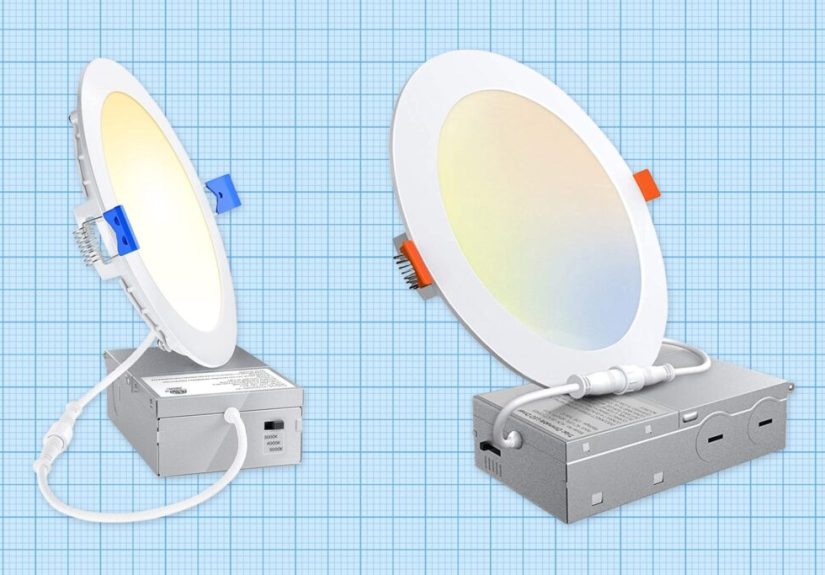
Canless lights (often called wafer, slim, or ultra-thin) are a single LED unit with a junction box and
spring clips. They’re a favorite for remodels and tight spaces because they don’t require a full housing.
In plain terms: if you have cans, retrofit is the easy button. If you don’t, canless is usually the modern default.
IC Rating and Airtight (AT): The Stuff That Saves Energy (and Headaches)
If your ceiling has insulation, look for IC-rated fixtures (insulation contact). This matters for both
safety and longevity. If the lights sit below an attic or unconditioned space, airtight performance can
help reduce air leakagemeaning less “why is my HVAC working overtime?” energy loss.
- IC-rated: safe for contact with insulation (important in many ceilings)
- Airtight/AT: reduces air leakage, especially helpful under attics
Brightness: Stop Thinking in Watts, Start Thinking in Lumens
LED recessed lights are commonly sold by lumens, not watts. For many rooms, recessed lights in the
600–1,200 lumen range per fixture are typical depending on ceiling height, spacing, and whether the light is
meant for ambient or task use.
Helpful shortcut: if you’re replacing older incandescent recessed bulbs, you can often choose an LED output that’s
roughly half to two-thirds the lumen output of the incandescent you’re replacing, then fine-tune with dimming.
Color Temperature (CCT): Warm, Neutral, or Daylight?
Color temperature is measured in Kelvin (K). Many modern recessed lights offer “selectable CCT,” letting you pick
between common options.
- 2700K–3000K: warm, cozy, living rooms and bedrooms
- 3500K: neutral, a balanced “whole home” choice
- 4000K–5000K: crisp, task-friendly, kitchens/garages/offices (and people who enjoy “alertness”)
If you’re unsure, choose selectable CCT. It’s like buying jeans with a forgiving waistbandquietly wise.
Trim Style: Glare Control and Aesthetics
Trim affects both appearance and comfort:
- Baffle: reduces glare, classic recessed look
- Reflector: brighter output feel, often more “sparkle”
- Regressed lens: helps reduce glare and harsh viewing angles
- Gimbal/eyeball: adjustable direction for accents
- Shower trim / wet-rated design: moisture-ready for bathrooms and showers
Dimming: Compatibility Is Everything
“Dimmable” on a box doesn’t guarantee “dimmable with your dimmer.” Flicker, buzzing, or lights that drop out at low
levels are usually compatibility issues between the LED driver and the dimmer. If you’re upgrading many fixtures,
it’s worth checking manufacturer compatibility lists or sticking with widely-supported dimmer types.
Certifications Worth Caring About
- ENERGY STAR: helps signal efficiency and tested performance expectations
- UL listing + location rating: dry/damp/wet suitability
- ETL listing: another common safety certification route
Especially in bathrooms, outdoors, or anywhere moisture exists, location ratings matter. “Damp” isn’t “wet,” and your
shower does not negotiate.
Room-by-Room Recommendations
Kitchens
Kitchens typically need a blend of ambient and task lighting. Consider 4-inch fixtures for a modern look and less
glare, or 5/6-inch for broader coverage. Neutral (3500K) or cool (4000K) lighting can help food prep feel easier and
colors look clearerespecially if your countertops are dark.
Living Rooms & Bedrooms
Warm (2700K–3000K) plus dimming is the comfort combo. Baffle or regressed trims help reduce glare so you’re not
squinting during “relaxing” time, which is not the point of relaxing.
Bathrooms
Use damp- or wet-rated recessed lights as needed. For showers, wet-rated fixtures are the safer choice. Consider a
neutral color temperature (3000K–4000K) for a cleaner look without turning your morning routine into a crime-scene
spotlight.
Basements & Garages
Higher lumens and cooler temperatures (4000K–5000K) can make these areas feel brighter and more functional. Multipacks
of slim canless lights are common for big coverage installs.
Installation Notes (Not a Substitute for Code)
Recessed lighting touches electrical work, insulation, and sometimes moisture-rated locations. If you’re not
comfortable working with wiring or local code requirements, hire a licensed electricianespecially for bathrooms,
kitchens, and any new circuits.
Final Advice: The Best Recessed Lights Are the Ones You Won’t Notice (In a Good Way)
Great recessed lighting fades into the background while making everything else look betteryour space, your finishes,
and even your mood. Start by choosing the right type (retrofit vs canless), then lock in the “boring but important”
specs: IC rating, airtight performance, location rating, dimmer compatibility, and a color temperature that matches
how you actually live.
Real-World Experiences: What Recessed Lighting Is Like After the Install
The most underrated part of buying recessed lights is what happens after they’re in. The ceiling looks clean,
you feel proud, and thenlike any long-term relationshiplittle quirks show up. Here are the kinds of real-life
experiences homeowners commonly run into in 2025, plus what tends to fix them.
Experience #1: “Why does this room feel… cold?” (Color temperature whiplash)
A very common story: you install new recessed lights, flip the switch, and suddenly your living room feels like an
upscale dentist office. Usually, it’s not the lights being “too bright”it’s the color temperature.
Many people underestimate how different 5000K feels compared to 2700K. If your couch is cozy, your throw blanket is
fluffy, and your lighting screams “spreadsheet,” the mismatch is real. Selectable CCT fixtures are lifesavers here.
People often end up choosing 3000K or 3500K for general areas because it feels clean without being icy.
Experience #2: The dimmer drama (flicker, buzz, or “it only dims to 60%”)
Another classic: you buy “dimmable” recessed LEDs and assume your existing dimmer will cooperate like an adult.
Sometimes it does. Sometimes it flickers like it’s auditioning for a haunted house. The culprit is typically the
relationship between the dimmer type and the LED driver in the fixture. In many homes, the fix is as simple as
swapping to a modern LED-rated dimmer that’s known to play well with recessed LED loads. A smarter approach many
homeowners take is to install one light first, test it with the dimmer for a few days, and only then
buy the big multipack. It’s not as exciting, but it’s cheaper than buying regret in bulk.
Experience #3: “Why is there a shadow line on my wall?” (Layout and spacing reality)
Recessed lights look simple, but layout is the secret sauce. People often notice after installation that one corner
feels dim, or a wall has a weird shadow gradient. This usually happens when fixtures are spaced too far apart, placed
too close to walls, or installed without considering where light is actually needed (like over a reading chair or
kitchen work zone). The real takeaway: recessed lighting is best as a system. A few well-placed lights plus a lamp or
under-cabinet lighting can look better than trying to make recessed lights do every job alone.
Experience #4: The “attic surprise” (insulation and air leaks)
In homes with attics, recessed fixtures can become little gateways for air leakage if the setup isn’t airtight or the
ceiling is full of older housings. Homeowners often notice drafts or hot/cold spots around recessed lights in extreme
seasons. This is why IC-rated and airtight-rated models matter so much, especially beneath unconditioned spaces.
Modern canless fixtures and well-sealed retrofit kits can help, but the real-world lesson is that lighting choices
can affect comfort and energy billsnot just aesthetics.
Experience #5: Smart lights: fun, until Wi-Fi gets moody
Smart recessed lights are awesome when you want scenes (movie night, dinner, “I need to feel productive”), but
homeowners sometimes discover the practical side: connectivity range, app ecosystems, and the occasional update that
makes you question modern life. A stable setup usually means choosing a platform you’ll stick with (and not mixing
five different brands unless you enjoy troubleshooting as a hobby). When it works, though, it’s hard to go back.
Dimming from your phone while you’re already comfy is the kind of luxury that feels suspiciously addictive.
Bottom line: the best recessed lights in 2025 are the ones that match your ceiling conditions, dim cleanly, flatter
your room’s vibe, and don’t demand constant attention. Install them right, pick the right color temperature, and
you’ll mostly forget they’re therewhich is the highest compliment ceiling lighting can receive.