Table of Contents >> Show >> Hide
- Fastest passenger plane: it depends on your definition
- Boom Supersonic and Rolls-Royce: what really happened
- How fast is Boom’s Overtureand why Mach 1.7 is a deliberate choice
- The real villains: sonic booms, regulations, and physics with a calculator
- Engines at supersonic speed: why this is the hardest part
- So, what is the fastest passenger plane?
- Experience Add-On : What supersonic travel feels likebefore it exists again
“Fastest passenger plane” sounds like a simple trivia questionuntil you realize it’s basically asking,
“What’s the best pizza?” without specifying New York slice, deep dish, or the one you ate at 2 a.m. that tasted like happiness.
Speed depends on what you mean by passenger (airliner vs. business jet), what you mean by fast
(max speed vs. cruise speed), and whether you mean ever, today, or what’s coming next.
Still, the question is having a moment againthanks to Boom Supersonic, the U.S. company building the
Overture supersonic airliner and the XB-1 demonstrator that has already gone supersonic.
And yes, Rolls-Royce has been part of this storyjust not in the way many headlines imply.
Fastest passenger plane: it depends on your definition
1) Fastest passenger airliner that actually flew (and carried passengers)
If we’re talking about a true commercial airliner designed to carry lots of people at supersonic speed, two legendary names
show up immediately:
-
Tupolev Tu-144 (Soviet Union): Often cited as the fastest passenger airliner on paper, with versions capable
of about Mach 2.15. It entered limited service and had a short, complicated operational life. -
Concorde (UK/France): The most famous supersonic airliner, with a typical cruise around Mach 2.02
and a maximum around Mach 2.04. It delivered real, repeatable supersonic service for decadesespecially on transatlantic routes.
So if your definition is “fastest passenger airliner ever built,” the Tu-144 tends to win on raw top-end numbers.
If your definition is “fastest passenger plane most people actually remember (and could reliably fly),” Concorde is the icon.
2) Fastest passenger plane you can fly in today
Here’s the plot twist: there is currently no supersonic commercial airliner in regular passenger service.
Today’s fastest passenger flights are usually in the world of business jetsthe sleek, pointy aircraft built to
move smaller groups quickly and comfortably.
Among modern civil aircraft, one of the speed celebrities is the Cessna Citation X+, often described as reaching
up to about Mach 0.935close enough to supersonic to make the speed-of-sound feel personally attacked.
That’s not “break the sound barrier” fast, but it’s “make time zones nervous” fast.
Meanwhile, big commercial airliners (the ones with boarding groups and overhead-bin drama) typically cruise around the mid–high
Mach 0.8 range. For example, Boeing performance documents list the 747-8 cruising around
Mach 0.845–0.855 depending on variant. Fast? Yes. Supersonic? Not even a little.
3) Fastest passenger plane in development
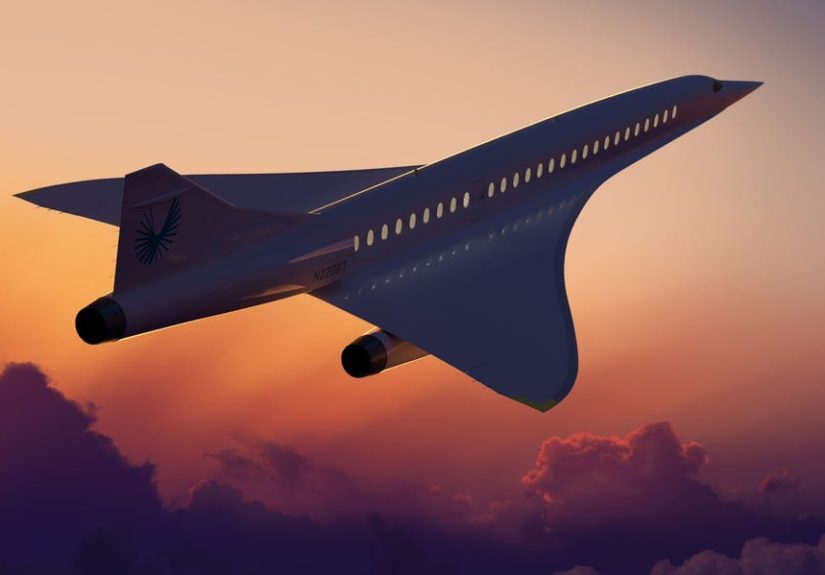
This is where Boom Supersonic comes in. Boom’s planned airliner, Overture, is designed for a
cruise speed of about Mach 1.7, carrying roughly 60–80 passengers with a published range in the
neighborhood of 4,250 nautical miles and cruise altitude around 60,000 feet.
If Overture reaches commercial service, it won’t beat Concorde’s headline Mach 2 numbersbut it’s aiming to revive supersonic travel
with a different strategy: modern aerodynamics, new materials, and a business plan that doesn’t require every ticket to cost the same
as a used sedan.
Boom Supersonic and Rolls-Royce: what really happened
Let’s clear up the name mashup in the title: Boom and Rolls-Royce did collaborate on engine studies for Overture
and then they parted ways in 2022. That split mattered because engines are the make-or-break piece of a supersonic airliner.
Airframes get the glory; engines do the heavy lifting (literally).
After the Rolls-Royce collaboration ended, Boom announced a new propulsion plan: Symphony, an engine program
“designed and optimized” for Overture, with named partners across design, manufacturing know-how, and maintenance support.
In other words: Boom still wants to go supersonicjust with a different engine roadmap.
The headline takeaway: Rolls-Royce isn’t currently slated to power Boom’s Overture, but Rolls-Royce remains relevant to the
broader “fast passenger plane” conversation because it powers (or has powered) many high-performance civil aircraft engines and has deep
expertise in propulsion. The supersonic puzzle is hard enough that almost everyone in aviation keeps an eye on iteven if they aren’t the
one holding the wrench on this specific project.
How fast is Boom’s Overtureand why Mach 1.7 is a deliberate choice
If you’re expecting “Mach 2.5 or it doesn’t count,” take a breath. Modern supersonic projects often pick a speed that balances:
range, fuel burn, engine complexity, and noise constraints.
Mach 1.7 is still wildly fastabout “you can finish a movie and still have time to complain about the ending” for many ocean-crossing routes.
What Mach 1.7 means for real trips
Concorde made transatlantic trips famously quickoften around the 3.5-hour mark, depending on route and winds.
Boom’s published Overture pitch aims at similar “shrink the ocean” travel times while carrying a smaller group than most widebody airliners
and focusing on premium seating.
But the bigger story is not just raw speed. It’s the network effect of speed:
shaving hours off a trip can turn “I’ll go next quarter” into “I can do it this week,” especially for business travel,
medical specialists, urgent technical teams, and anyone whose calendar looks like a game of Tetris.
The real villains: sonic booms, regulations, and physics with a calculator
The U.S. rulebook problem
Supersonic passenger flight didn’t disappear because everyone forgot how to build fast planes. It disappeared because the combination of
sonic boom impact, operating cost, and regulatory limits makes it brutally hard to run
a profitable, route-flexible service.
In the United States, civil supersonic operations are restricted under federal aviation rulesmeaning you generally can’t just fly faster
than Mach 1 wherever you want because your playlist is in a hurry. Historically, that pushed practical supersonic routes toward
over-water corridors, where sonic boom concerns over communities are reduced.
NASA’s “quiet supersonic” bet: the X-59
This is where the plot gets exciting again. NASA’s X-59 (part of its Quesst mission) is designed to reduce
the classic “BOOM!” into a quieter sonic thumpa key step toward data-driven rules that could eventually allow some form of
overland supersonic travel.
And this isn’t just a concept drawing: the X-59 has progressed through public rollout and early flight testing steps, with ongoing work
aimed at gathering real-world community response data. If that effort succeeds, it could help open a future where “supersonic” isn’t automatically
synonymous with “neighborhood-wide jump scare.”
Engines at supersonic speed: why this is the hardest part
Building a supersonic passenger plane is like hosting a dinner party where the guests include:
fuel efficiency, noise, maintenance, emissions, range,
and ticket price. They all hate each other and also judge your napkin choices.
Why Concorde’s approach is hard to repeat
Concorde used afterburning turbojets and specialized inlets optimized for supersonic cruise. It was brilliantand expensive.
Today’s market expects lower operating costs, better fuel efficiency, and fewer maintenance headaches than a museum exhibit that still
needs to fly 300 days a year.
Boom’s Symphony plan (in plain English)
Boom says Symphony is designed specifically for Overture’s mission profile and emphasizes sustainability compatibility.
The key idea: if you optimize the engine and the airframe together, you have a better chance of achieving a supersonic cruise that’s
economically realisticwithout needing the fuel flow of a small volcano.
Also, Overture is designed with four engines. That choice can help with performance and redundancy, but it also means:
four engines to maintain, four sets of parts, and four chances for an airline mechanic to mutter, “This is why I drink coffee.”
Supersonic speed is never “just go faster.” It’s “go faster and pay for it responsibly.”
So, what is the fastest passenger plane?
Here’s the clean answer, with the fine print you didn’t ask for (but your future readers will appreciate):
- Fastest passenger airliner ever: Often credited to the Tupolev Tu-144, with variants around Mach 2.15.
- Most famous supersonic passenger airliner: Concorde, typically cruising around Mach 2.02 and max around Mach 2.04.
-
Fastest passenger aircraft you can realistically fly in today: High-speed business jetswith the Citation X+
often cited up to around Mach 0.935. - Fastest passenger plane in development (major headline contender): Boom Overture, targeting about Mach 1.7.
If you’re writing for readers who want one satisfying sentence, try this:
The fastest passenger airliner ever was the Tu-144, the most famous was Concorde, and the next big supersonic hope is Boom’s Overture.
Experience Add-On : What supersonic travel feels likebefore it exists again
Even if you’ve never flown on Concorde (and most of us haven’t), supersonic travel still has a weird power over the imagination.
It’s the aviation equivalent of seeing a sports car in a grocery-store parking lot: you don’t need it, you can’t justify it,
but your brain immediately starts narrating a movie trailer.
The “time-travel” vibe at the gate
The first experience isn’t speedit’s intent. Supersonic flights, whether Concorde in the past or Overture in the future,
are usually positioned as premium. That changes the mood. The boarding line feels less like “shoes off, laptop out” and more like
“we are here to defeat geography.” You’re not just flying to a city; you’re trying to reclaim your day.
Takeoff: when your body notices the schedule is ambitious
Supersonic aircraft are built to perform, and performance has a personality. Imagine takeoff where acceleration feels more purposeful,
climb feels more determined, and the plane’s whole vibe says, “We have places to be.” It’s not necessarily dramatic,
but it’s crisplike the aircraft is clicking “skip intro” on the atmosphere.
The moment of “supersonic” (and why people geek out about it)
The classic fantasy moment is the speed-of-sound crossing. With Concorde, that was part engineering, part ritual.
With modern programs like Boom’s XB-1 and NASA’s X-59, it’s also a milestone with big implications: it signals the technology is real,
not just a glossy rendering. Aviation fans track these events the way sports fans track playoffsexcept the “score” is a Mach number.
But here’s the subtle truth: once you’re at cruise, the experience might feel surprisingly normal.
A premium cabin is still a cabin. You’ll still adjust your seat, pick your snack, and wonder why Wi-Fi is either lightning-fast or
emotionally unavailable. The difference is psychological: you land with more of your day intact. You don’t feel like travel ate your calendar.
How to experience “supersonic” today without a ticket
If you want the experience right now, you can still get surprisingly close:
-
Visit aviation museums and see supersonic airframes in person. Standing under a delta wing makes you understand the design instantly:
it’s built like it’s expecting to punch through the sky. -
Follow test flight milestones. When demonstrators like XB-1 or research aircraft like X-59 hit new phases of flight testing,
you’re watching history that could reshape future travelespecially if quiet supersonic rules evolve. -
Try a “speed mindset” itinerary on your next trip: carry-on only, pre-arranged transport, tight connections, and a realistic plan.
It’s not Mach 1.7, but it’s the closest a normal schedule can get to feeling “supersonic.”
The most interesting part of the supersonic comeback story isn’t the bragging rightsit’s the possibility that speed becomes useful again,
not just impressive. If companies like Boom can make Mach 1.7 economically viable on real routes, and if NASA’s quiet-supersonic research helps
regulators rethink what’s acceptable over land, the next era of passenger flight might not just be fasterit might be different.
And honestly? The world could use a little less waiting around at 35,000 feet.