Table of Contents >> Show >> Hide
- What Are Carrot Chips, Exactly?
- Why Carrot Chips Are Worth Making
- The Crunch Science (Without the Lab Coat)
- Choosing and Prepping Carrots Like a Pro
- Method 1: Oven-Baked Carrot Chips (The Everyone-Can-Do-It Option)
- Method 2: Air Fryer Carrot Chips (Fast, Loud, and Crunchy-Adjacent)
- Method 3: Dehydrated Carrot Chips (The Stay-Crunchy Champion)
- Method 4: Fried Carrot Chips (Restaurant-Level Crunch)
- Flavor Ideas That Don’t Taste Like “Sad Diet Chips”
- Best Dips and Pairings
- Troubleshooting: Why Aren’t My Carrot Chips Crispy?
- Storage & Make-Ahead Tips
- Conclusion
- Carrot Chips: The Real-Life Experience (The Part No One Warns You About)
Carrots have been quietly judging us from the crisper drawer for years. We buy a “healthy snack” bag, tell ourselves we’ll
eat them raw, and then… they become a science experiment next to the half-lemon and the mysterious container of “something
red.” Carrot chips are the glow-up those carrots deserve: thin slices turned salty, snackable, and surprisingly addictive.
If you’ve ever wanted a crunchy, colorful alternative to potato chips (without committing to a deep fryer and a full kitchen
oil slick), carrot chips are your new weekend project. They’re sweet, they’re savory, they’re spicy if you want them to be
and yes, they can actually get crisp. The key is learning how to treat carrots like chips, not like “carrots that were briefly
introduced to heat.”
What Are Carrot Chips, Exactly?
Carrot chips are very thin slices (coins, ovals, or ribbons) that are cooked until most of their moisture is gone. With less
water and a little oil, the edges curl, the sugars concentrate, and the texture shifts from “crunchy vegetable” to “I should
stop eating these but I won’t.” They can be baked, air-fried, dehydrated, or friedeach method creates a different kind of
crunch and a slightly different personality.
Quick expectation check: homemade carrot chips don’t always behave like store-bought chips that were engineered in a snack
lab. Some batches are ultra-crisp. Others are crisp on the edges with a gently chewy center (still deliciousjust more “artisan”
than “vending machine”). If you want the most consistent crunch, the dehydrator method is the MVP. If you want fast results,
air fryer carrot chips are hard to beat.
Why Carrot Chips Are Worth Making
- They’re naturally sweet. Carrots caramelize easily, so you get built-in flavor without a sugar dump.
- They’re budget-friendly. A couple of carrots can turn into a whole bowl of snackable chips.
- They’re customizable. Go smoky, garlicky, ranchy, cinnamon-y, chili-lime… you’re the snack director here.
- They play well with dips. Hummus, Greek yogurt ranch, guacamolecarrot chips show up and do the work.
Nutritionally, carrots bring fiber and plenty of carotenoids (like beta-carotene). And since carotenoids are better absorbed
with some dietary fat, using a small amount of oil isn’t “cheating”it can actually be helpful. Translation: a light toss of
olive oil can improve both flavor and nutrient absorption. That’s not a loophole; that’s dinner table physics.
The Crunch Science (Without the Lab Coat)
Crunch happens when water leaves and structure firms up. Carrots start out high in moisture, so your main mission is to
remove that moisture evenlywithout burning the sugars. That’s why carrot chips live and die by three things:
1) Thin, even slicing
When slices vary in thickness, the thin ones burn while the thick ones stay floppy. A mandoline gives the most consistent
results, but a steady hand and patience also work. If you’re using a vegetable peeler for ribbons, aim for similar-width
strips and accept that a few will become “crispy confetti.”
2) Dry surfaces
Water on the surface turns into steam, and steam is basically the enemy of crispness. After slicing, pat the carrots dry.
It’s a small step with big payofflike returning your shopping cart, but for your snack.
3) Space and airflow
Overlapping slices trap moisture and create soft spots. Keep slices in a single layer with breathing room. If you’re baking,
use multiple trays. If you’re air frying, cook in batches. Yes, this is annoying. Yes, it matters.
Choosing and Prepping Carrots Like a Pro
- Pick thicker carrots if you want wide chips (more surface area, more satisfying crunch).
- Peel if you want “chip shop” vibes; leave the skin if you want rustic vibes. Either works if you scrub well.
- Slice options:
- Coins: cute and classic, great for dipping.
- Bias slices (diagonal ovals): bigger “chip” feel and prettier on a snack board.
- Ribbons: easiest with a peeler; extra crispy edges; very “I brought an appetizer.”
Method 1: Oven-Baked Carrot Chips (The Everyone-Can-Do-It Option)
Oven-baked carrot chips are the best starting point because they’re simple and flexible. You can use either a low-and-slow
approach (more drying, less risk of burning) or a hotter bake (faster, but needs attention).
How to do it
- Heat the oven to 375°F–425°F. (Hotter cooks faster; lower gives you more control.)
- Slice thin and pat dry. Aim for very thin slices; consistency matters more than perfection.
- Toss lightly with oil (think “shiny,” not “soaking”) and season with salt.
- Arrange in a single layer on parchment-lined baking sheets. No overlap.
- Bake, rotate, and flip. Start checking around 10–12 minutes at 425°F or 15–20 minutes at 375°F.
Flip once, rotate pans if you’re using multiple racks. - Pull the winners early. Smaller pieces crisp faster. Remove crispy chips as they finish so the rest don’t burn.
- Cool on the pan for 5–10 minutes. They often crisp up more as steam escapes.
Example seasoning combos for baking
- Smoky: smoked paprika + garlic powder + pinch of cumin
- “Ranch-ish”: onion powder + garlic powder + dried dill + black pepper
- Sweet-heat: cinnamon + cayenne + flaky salt
If your chips are close but not quite crisp, you can finish them with a brief low oven “drying” phase: drop the temperature
and let them sit a few extra minutes. Think of it as a spa day for moisture removal.
Method 2: Air Fryer Carrot Chips (Fast, Loud, and Crunchy-Adjacent)
Air fryers are basically tiny convection ovens with a confidence problem. They move air aggressively, which is great for
crisping. But they also cook quickly, so thin slices can jump from “perfect” to “oops” in the time it takes to answer a text.
How to do it
- Preheat your air fryer (if your model recommends it) to around 370°F–380°F.
- Pat slices dry, then toss with a small amount of oil and seasonings.
- Cook in a single layer (or as close as your basket allows). Work in batches for best crispness.
- Air fry about 10–12 minutes, then flip/shake and cook another 3–5 minutes, watching closely.
- Cool for a few minutes to let them firm up.
Air-fried carrot chips are fantastic for “I want a snack now” moments. Just remember: overcrowding = steaming = soft chips.
If you want maximum crunch, treat batches like a non-negotiable rule, not a suggestion.
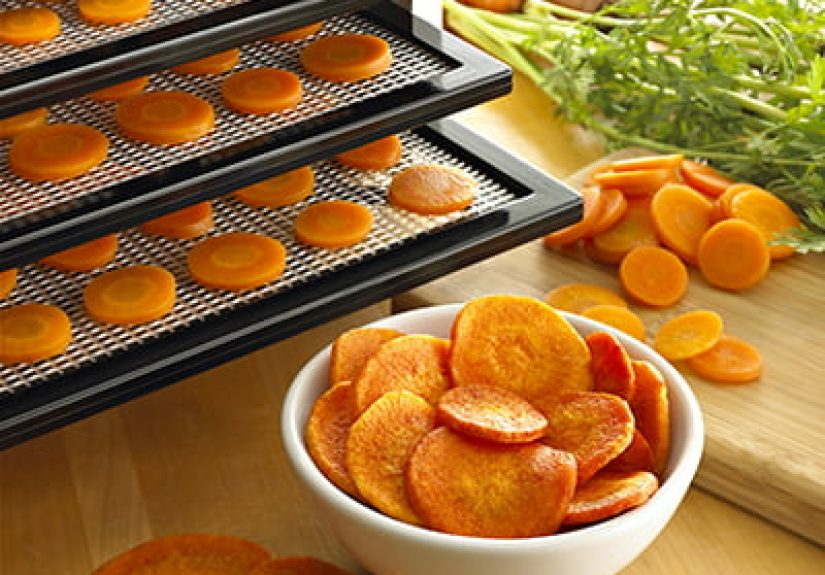
Method 3: Dehydrated Carrot Chips (The Stay-Crunchy Champion)
If you want carrot chips that keep their crunch longerand feel more like a true “chip”dehydrating is the best method.
Dehydrators remove moisture steadily at low heat, so you get a more consistent dry, crisp texture without flirting with
burnt edges.
How to do it
- Slice thin and uniformly (mandoline is ideal). Pat dry.
- Optional blanching: Some home-preservation guidance recommends blanching vegetables briefly to slow enzyme
activity and improve quality in storage. If you blanch, cool quickly, drain well, and dry the surface before dehydrating. - Dehydrate at vegetable-appropriate low heat (often around 125°F–145°F depending on guidance and equipment) until
the slices are brittle/crisp, not bendy. - Cool completely before storing so you don’t trap steam in your container.
- Store airtight in a cool, dry, dark place to prevent moisture reabsorption.
Dehydrated carrot chips also travel welllunchbox, road trip, hiking, “I might miss lunch so I brought backup snacks” energy.
The main trade-off is time: you’re swapping speed for consistency.
Method 4: Fried Carrot Chips (Restaurant-Level Crunch)
Fried carrot chips are the crunchiest and most chip-likebut also the most “now we have a pot of hot oil” option. If you go
this route, keep slices very thin, fry in batches, and season immediately so salt actually sticks.
Quick approach
- Heat oil to around 360°F.
- Fry in small batches for about 2–3 minutes until crisp.
- Drain on paper towels and season right away.
This method is best for parties, snack platters, or when you want that classic crunch and you’re okay with a little extra cleanup.
Flavor Ideas That Don’t Taste Like “Sad Diet Chips”
Carrots can lean sweet, so seasonings that balance sweetness with salt, acid, heat, or umami tend to shine.
Savory & umami
- Garlic-Parmesan: garlic powder + fine grated Parmesan (add Parmesan near the end for baking)
- BBQ-ish: smoked paprika + onion powder + pinch of brown sugar + salt
- Everything bagel vibe: sesame + poppy + garlic + onion + salt (use lightly so it doesn’t burn)
Spicy & tangy
- Chili-lime: chili powder + lime zest + salt
- Hot honey moment: light drizzle after baking + pinch of salt + chili flakes
Sweet & snacky
- Cinnamon-salt: cinnamon + tiny pinch of salt (yes, salt) + optional nutmeg
- Maple warmth: a whisper of maple syrup after baking (not before, unless you like sticky trays)
Best Dips and Pairings
- Hummus (classic, sturdy, and the chip won’t snap under pressure)
- Greek yogurt ranch (protein-friendly and cool against spicy seasonings)
- Guacamole (fat + carrots = a genuinely satisfying snack combo)
- Tzatziki (fresh, herby, and makes carrot chips feel fancy)
- Warm dips like spinach-artichoke (because rules are made up and snacks are joy)
Troubleshooting: Why Aren’t My Carrot Chips Crispy?
Your slices are too thick
Thick slices can roast, but they struggle to dehydrate fully before browning. Go thinneror accept “carrot crisps” with a
chewier bite.
They were wet going in
Moisture = steam = softness. Pat slices dry, especially if you rinsed them or used pre-cut carrot chips from a bag.
You used too much oil
Oil helps browning and flavor, but too much creates a shallow-fry effect that can turn chips greasy and soft. Aim for a light
coating.
Your pan was crowded
Overlap traps moisture. Use more pans, more space, or more batches. Your future crunch will thank you.
You didn’t let them cool
Like many people, chips need a moment to pull themselves together. Cooling lets steam escape and texture firm up.
Storage & Make-Ahead Tips
- Cool completely before storing. Warm chips “sweat” in containers and soften fast.
- Airtight matters. Humidity is the villain; sealed containers help preserve crispness.
- Keep them dry and cool. Heat and moisture shorten the crunchy window.
- Re-crisp when needed: Spread on a sheet and warm briefly in a hot oven until they perk back up.
Food-safety side note: dips and anything perishable should be refrigerated promptly and handled safelyespecially if you’re
serving snacks at a party or packing them for later.
Conclusion
Carrot chips are proof that a humble vegetable can absolutely become a “where did the bowl go?” snack. Slice thin, keep
surfaces dry, avoid crowding, and let the chips cool before you judge them. From oven-baked to air-fried to dehydrated,
there’s a method for every patience leveland a seasoning for every mood.
Start with a simple salt-and-olive-oil batch to learn your timing, then go wild: smoky paprika, chili-lime, garlic-parmesan,
cinnamon-salt. Soon you’ll be the person who casually says, “Oh, these? Just carrot chips,” while everyone else wonders why
their snacks suddenly feel underqualified.
Carrot Chips: The Real-Life Experience (The Part No One Warns You About)
Making carrot chips is a little like trying to take the perfect photo of a sunset: easy in theory, slightly chaotic in practice,
and somehow still worth it. The first time most people attempt it, there’s a moment of pure confidencecarrots are sliced,
oil is tossed, salt is sprinkled like you’re starring in a cooking show. Ten minutes later, reality shows up wearing a cape
labeled “uneven oven hot spots.”
The funniest part is how quickly you learn your kitchen’s personality. One corner of the pan becomes the VIP section where
chips turn crisp and gorgeous. Another corner is the chaos zone where edges darken like they’re auditioning for “burnt toast
understudy.” You start pulling chips off early, piece by piece, like you’re rescuing them from an overenthusiastic tanning bed.
Then you taste one that’s perfectly salty with a hint of carrot sweetness and you immediately forgive the ones that went a
little too far. Snack amnesty.
The cooling stage feels like waiting for a verdict. Fresh from the oven, they’re flexible and you think, “Well, that was a nice
experiment.” Then five minutes laterplot twistthey tighten up and crisp around the edges. That’s when you realize carrot
chips have a dramatic side. They want applause. They want time. They want you to stop touching them every 30 seconds to see
if they’re done (we all do it; it’s fine).
Air fryer carrot chips have a different vibe: they’re the impulsive cousin who shows up early and somehow still looks put
together. You get crunch faster, but you also get the “blink and they’re overcooked” adrenaline rush. It’s great for after-school
snack emergencies or late-night “I need something crunchy” cravings. You learn to shake the basket like it owes you money,
and you learn that overcrowding is basically a steam party you didn’t plan. A few batches in, you start timing it by instinct:
“Two songs on my playlist, then flip.” Culinary precision.
Dehydrated carrot chips feel like leveling up. Suddenly you’re thinking in terms of storage and long-game snack strategy.
You make a big batch, cool everything completely, seal it up, and feel suspiciously responsible. These are the chips you toss
into a lunch bag or keep near your desk for the moment when you want something crunchy but don’t want to wrestle with a
crinkly chip bag. They’re also the chips that make you notice humidity. On dry days they’re crisp for longer; on humid days
they soften like they’re trying to become carrot jerky. That’s when you discover the magic of a quick re-crisp in the oven
like giving your chips a second chance at greatness.
The most common “real life” outcome is this: you start making carrot chips because you want a healthier snack, and you keep
making them because they’re genuinely fun. You try new seasonings, you compare methods, you start using rainbow carrots
for party trays, and one day you catch yourself saying something like, “I think these would slap with a little smoked paprika.”
Congratulations. You’ve become a carrot chip person. There are worse destinies.