Table of Contents >> Show >> Hide
- What Are Chantry Modern Knife Sharpeners?
- How the Chantry System Works
- Why People Still Like Chantry Modern Knife Sharpeners
- Where Chantry Fits in the Modern Sharpener Market
- Who Should Use a Chantry Sharpener?
- How to Use Chantry Modern Knife Sharpeners Properly
- Common Mistakes to Avoid
- Chantry vs. Whetstones, Rolling Sharpeners, and Electric Models
- Is a Chantry Modern Knife Sharpener Worth Buying?
- Real-World Experiences With Chantry Modern Knife Sharpeners
- Final Thoughts
A dull kitchen knife is a little like a shopping cart with one bad wheel: technically usable, emotionally exhausting. That is part of the appeal behind Chantry Modern Knife Sharpeners. They promise something every home cook wants: a sharper knife without a chemistry degree in whetstones, slurry, bevel geometry, and other things that sound suspiciously like they belong in a blacksmith’s diary.
What makes the Chantry name especially interesting is that it sits at the intersection of function and design history. The original Chantry knife sharpener has roots in mid-century industrial design, and later “modern” versions carried that clean, sculptural spirit forward. In other words, this is not just a kitchen gadget that lives in a drawer next to the orphaned corn holders. It is a product line with real design credibility and a genuinely practical sharpening system.
If you are researching a manual knife sharpener that looks better than the usual plastic contraption and feels less intimidating than a whetstone, Chantry deserves a serious look. But it is not perfect for every knife, every cook, or every sharpening philosophy. Let’s break down what Chantry Modern Knife Sharpeners are, how they work, where they shine, and where they may be a little too confident for their own good.
What Are Chantry Modern Knife Sharpeners?
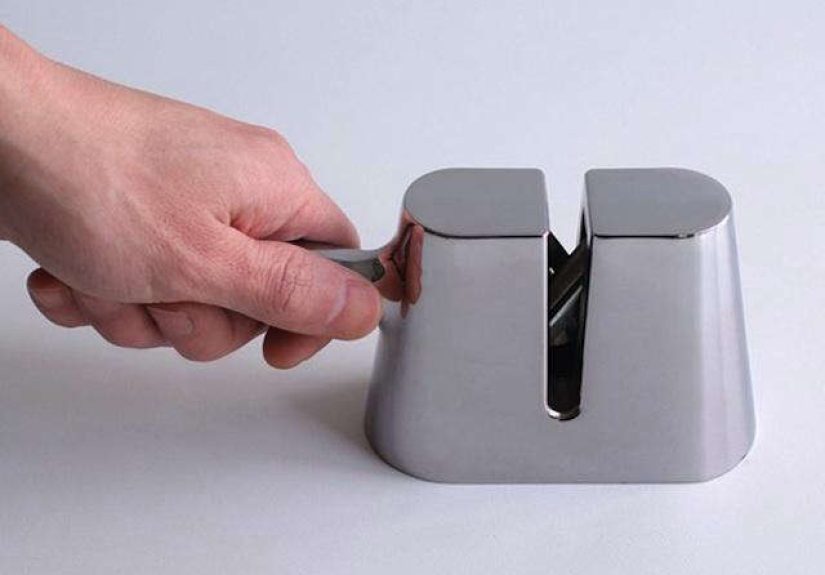
The Chantry concept is built around a simple idea: two small sharpening steels are fixed at a preset angle inside a stable tabletop body. Instead of freehand sharpening, you draw the knife through the steels a few times, almost as if you were slicing a loaf of bread. That preset-angle design is the whole selling point. It removes a lot of guesswork, which is exactly why many home cooks find it appealing.
The classic Chantry sharpener is tied to designer Robert Welch, whose 1964 Chantry Knife Sharpener is held in the Museum of Modern Art’s collection. Later, the Art Institute of Chicago cataloged a 2005 Chantry Modern Knife Sharpener by Industrial Facility, manufactured by Taylors Eye Witness. That history matters because it explains why Chantry has long stood apart from bargain-bin sharpeners: it was conceived as both a tool and a designed object.
Retail and product descriptions consistently describe the Chantry mechanism as using spring-loaded steel rods or small butcher’s steels set at an optimal angle. The idea is that the rods rotate slightly as the blade passes through, helping create a more controlled, less brutal sharpening action than some aggressively abrasive pull-through sharpeners. Replacement steels are also available for some versions, which suggests the product was built with long-term use in mind rather than a one-and-done kitchen fling.
How the Chantry System Works
Preset-angle sharpening
The biggest advantage of the Chantry system is consistency. Traditional sharpening methods demand that you hold a steady angle, often somewhere in the 15- to 20-degree range depending on the knife. That works beautifully in skilled hands, but many people do not maintain a consistent angle well. They start at “precise Japanese blade whisperer” and end at “chaotic butter spreader.” A preset-angle sharpener helps prevent that drift.
With a Chantry unit, you place the sharpener on a stable surface and pull the blade through the spring-loaded steels four or five times. Because the angle is already set, you do not have to babysit the geometry of every stroke. For a busy home cook, that is a huge advantage. You get speed, simplicity, and repeatability.
Steel-on-steel maintenance
Chantry sharpeners are often described as reproducing the action of a butcher’s steel. That is an important clue. In knife care, honing and sharpening are related but not identical. Honing helps realign the edge. Sharpening removes metal to restore a dull edge. In practice, Chantry sits somewhere between everyday maintenance and light sharpening, depending on the condition of the blade and the model you are using.
This is why the Chantry style feels so friendly in real kitchens. It does not demand a soaking stone, a flattening plate, or a free afternoon. It offers a fast, mechanical way to keep mainstream kitchen knives performing well enough for normal cooking tasks like slicing onions, trimming chicken, or chopping herbs without turning prep into an upper-body workout.
Why People Still Like Chantry Modern Knife Sharpeners
First, they are easy to use. In a market crowded with electric sharpeners, whetstones, rolling sharpeners, and multi-slot pull-through models, ease of use still wins hearts. Chantry’s appeal is not that it is the most technical option. It is that it is approachable. Home cooks can understand it instantly.
Second, the design is genuinely attractive. A lot of kitchen sharpening tools look like they were designed by someone who thought “aggressively useful” was an aesthetic. Chantry sharpeners look cleaner, tidier, and more deliberate. That may sound superficial, but it matters in a modern kitchen where countertop tools are part of the visual landscape.
Third, they are compact. A whetstone setup can be a whole event. An electric sharpener takes up more room than many people want to spare. Chantry units are comparatively small and can live on a shelf or counter without dominating the scene.
Fourth, the system is forgiving for ordinary knives. Not everyone owns handmade Japanese gyutos and speaks lovingly about burr formation. Plenty of people just want their chef’s knife to stop behaving like a butter knife with ambition. Chantry suits that audience well.
Where Chantry Fits in the Modern Sharpener Market
The current knife sharpener market is more crowded than ever. Testing from major food publications shows just how many categories now compete for your attention. Electric sharpeners are prized for speed and strong edge restoration. Rolling sharpeners are popular because they make angle control easier. Whetstones remain the gold standard for people who want precision and maximum control. Manual pull-through sharpeners continue to dominate the “I need this fixed before dinner” category.
That puts Chantry in an interesting position. It is not as aggressive or feature-heavy as many multi-stage manual sharpeners. It is not as powerful as an electric model. It is not as exacting as a whetstone. And it is not as trendy as the newer rolling designs with magnetic angle blocks. Instead, Chantry occupies a sweet spot: it is a manual kitchen knife sharpener for people who value straightforward maintenance, stable construction, and good design.
In plain English, Chantry is for the cook who wants fewer gadgets, fewer instructions, and fewer opportunities to accidentally turn a decent knife into an abstract sculpture.
Who Should Use a Chantry Sharpener?
Great match for Western-style kitchen knives
Chantry sharpeners make the most sense for mainstream Western-style knives with durable, everyday edges. Think classic chef’s knives, utility knives, and paring knives that are used often and expected to work hard. If your knives are stainless, moderately thick, and built for regular home use, a Chantry can be a practical maintenance tool.
Less ideal for delicate fine-edge knives
This is where restraint becomes attractive. One of the most common product warnings around Chantry models is that they are not recommended for fine-edge elite knives or Japanese knives. That warning should not be treated as decorative text. Fine Japanese blades often have harder steel, thinner edges, and more specialized sharpening requirements. They usually benefit from gentler, more precise methods such as whetstones or carefully chosen ceramic honing systems.
If your knife cost enough to make you whisper while opening the box, Chantry may not be your first choice. For premium cutlery, precision matters more than convenience.
How to Use Chantry Modern Knife Sharpeners Properly
Using a Chantry sharpener is refreshingly simple, but simple does not mean careless.
1. Start with a clean knife
Wipe the blade clean and dry before sharpening. Grease, crumbs, or moisture can interfere with smooth contact.
2. Place the sharpener on a stable surface
A level counter is best. Stability matters because wobble is the enemy of both safety and consistent results.
3. Draw the blade through evenly
Pull the knife through the steels in a smooth, controlled motion. Most Chantry descriptions suggest about four or five passes. Do not rush. This is sharpening, not a game show buzzer round.
4. Use moderate pressure
You want contact, not violence. Heavy-handed sharpening is a good way to remove more metal than necessary and shorten the life of the blade over time.
5. Test before repeating
After a few passes, test the knife on paper, herbs, or a tomato. If the edge improves, stop there. More sharpening is not automatically better.
Common Mistakes to Avoid
Using the wrong knife. This is the biggest one. If the manufacturer or retailer warns against fine-edge Japanese knives, believe them. Your expensive santoku is not the place for experimental optimism.
Over-sharpening. Every sharpening method that removes metal should be used thoughtfully. Knife experts consistently point out that daily maintenance and periodic sharpening are not the same thing. A Chantry sharpener is convenient, but convenience can tempt people into overuse.
Ignoring overall knife care. A sharpener cannot compensate for bad habits. If you cut on glass boards, toss knives into drawers, or send them through the dishwasher like tiny steel tourists, your edge will suffer no matter which sharpener you own.
Expecting miracle results on badly damaged blades. Chantry is great for regular upkeep and reviving moderately dull knives, but a blade with chips, severe wear, or a seriously misshapen edge may need a whetstone or a professional sharpening service.
Chantry vs. Whetstones, Rolling Sharpeners, and Electric Models
Vs. whetstones: Whetstones usually offer the best control and the best outcome in skilled hands. They are also the most labor-intensive. Chantry loses on precision but wins on convenience.
Vs. rolling sharpeners: Rolling sharpeners are popular because they also simplify angle control. Some test kitchens like them because they make precision easier for beginners. Chantry is simpler and often more compact, but rolling systems may be better for users who want a more refined sharpening process.
Vs. electric sharpeners: Electric sharpeners are fast and effective, especially on very dull knives. They can also be bulky, noisy, and more aggressive. Chantry is quieter, smaller, and easier to live with on a day-to-day basis.
Vs. multi-stage pull-through sharpeners: Many modern manuals include separate coarse and fine stages, plus angle options for Western and Japanese knives. Chantry is more minimalist. That simplicity is either elegant or limiting, depending on what you need.
Is a Chantry Modern Knife Sharpener Worth Buying?
For the right cook, yes. If you want a manual sharpener that is compact, handsome, historically respected, and easy to use, Chantry has a lot going for it. It is especially appealing for people who use reliable everyday knives and want a sharpening solution that does not require a tutorial, a workshop apron, or a spiritual commitment to grit progression.
It is less compelling if you want maximum versatility across many knife styles, especially delicate Japanese blades. It is also not the best fit for people who want ultra-precise sharpening control. In that case, a whetstone or a more specialized system makes more sense.
So the honest verdict is this: Chantry Modern Knife Sharpeners are best understood as stylish, practical maintenance tools for everyday Western-style kitchen knives. They are not nonsense. They are not magic. They are a smart middle-ground option that has stayed relevant because the core idea still works.
Real-World Experiences With Chantry Modern Knife Sharpeners
In real kitchen life, the experience of using a Chantry sharpener is usually less dramatic than advertising copy and more satisfying than you might expect. The first thing many people notice is how un-fussy it feels. There is no plugging anything in, no soaking a stone, and no trying to remember whether you should be at 15 degrees, 17 degrees, or “whatever angle your wrist invented under pressure.” You put it on the counter, run the knife through, and get on with dinner. That simplicity is a big part of why Chantry has kept its following.
Many home cooks describe the same small moment of relief: a knife that had started crushing tomatoes or sliding on onion skin suddenly feels useful again. Not theatrical. Not samurai-level. Just properly sharp in the way a weeknight knife should be. That matters. Most people are not chasing a whisper-thin mirror edge. They want clean prep, less force, and fewer muttered complaints while chopping cilantro.
Another common experience is appreciation for the sharpener’s physical design. Chantry sharpeners tend to feel stable and substantial compared with flimsy handheld tools. That makes them more comfortable for nervous users, especially cooks who do not love handling sharpening equipment. The compact footprint also helps. It can live in a practical kitchen without becoming a countertop diva.
That said, user experiences are not universally gushy. Cooks who own thinner, harder Japanese knives often become cautious fast, and wisely so. A sharpener that feels wonderful on a rugged Western chef’s knife can feel too blunt an instrument for a delicate high-end blade. People who are deeply into cutlery also tend to notice that Chantry trades precision for speed. It gives you a fast improvement, not the deeply controlled edge refinement that stone enthusiasts brag about at parties nobody asked for.
There is also the learning curve of pressure. New users sometimes assume that if a little pressure is good, a lot must be heroic. It is not. The best experiences usually come from a light, steady hand and a few controlled passes. When people stop trying to win a wrestling match with the sharpener, the results usually improve.
Over time, the most positive long-term experiences seem to come from people who use Chantry as part of a bigger knife-care routine. They store knives properly, avoid terrible cutting surfaces, wash blades by hand, and use the sharpener before the knife becomes hopelessly dull. In that role, Chantry feels less like an emergency fix and more like a low-effort maintenance habit. And honestly, that may be its greatest strength. It fits real life. It helps regular cooks keep regular knives working well without demanding a new hobby in return.
Final Thoughts
The enduring appeal of Chantry Modern Knife Sharpeners is not hard to understand. They combine design heritage, countertop friendliness, and straightforward performance in a category that often swings between cheap gimmicks and intimidating pro gear. If your goal is to keep everyday kitchen knives in good working shape with minimal fuss, Chantry is still a smart, stylish option.
Just be realistic about what it is. It is not the last sharpener every cook will ever need. It is not the universal answer for every blade profile. But for Western-style knives, practical households, and people who prefer simple tools that actually get used, Chantry remains impressively relevant. That is a pretty good trick for a sharpener with museum credentials.