Table of Contents >> Show >> Hide
- Table of Contents
- Why These Updates Feel Bigger Than They Sound
- The Headliners: Features People Actually Asked For
- 1) Media controls: Finally, your watch can do the one thing everyone uses on a run
- 2) Undo laps: A tiny button-saver with massive emotional impact
- 3) Resume Later: Because “one activity” sometimes takes all day
- 4) Updated lap screen design: More useful mid-workout, less “wait, what does that mean?”
- 5) Move alerts: A gentle wrist tap that says “Congrats, you’ve become furniture”
- Maps & Navigation: Less “Breadcrumb,” More “I Know Where I Am”
- Training & Recovery: More Useful Data, Less Spreadsheet Energy
- Everyday “Smart” Features (Without the Smartwatch Identity Crisis)
- Which COROS Watches Get Which Features?
- Should You Actually Care? A Quick Reality Check
- Extra: 500+ Words of Real-World “New Feature” Moments
- Wrap-Up
COROS has always felt like the friend who shows up to a marathon with a sensible training plan, a shockingly long battery life,
and zero interest in being your tiny wrist-based smartphone. I respect that. But even the most disciplined friend can be… stubborn.
For years, COROS nailed the “sports watch” fundamentals while leaving a few quality-of-life features on the cutting-room floor.
And thenquietly, through a string of software updatesCOROS started checking off the wish list. Media controls. Better maps.
Fixes for workout “oops” moments. Smarter training tools. Even a flashlight mode for when your house is dark and you refuse to turn on
the overhead light like a responsible adult.
This isn’t a single feature drop. It’s a pile of small, practical upgrades that add up to a much more polished everyday experience
without turning your watch into a needy little notification gremlin.
Why These Updates Feel Bigger Than They Sound
Fitness-watch upgrades often fall into two categories:
(1) “We added a metric you’ll never look at,” and (2) “We changed the icon shape, please clap.”
COROS’s recent run of updates lands in the rare third category: daily friction removers.
These are the features you notice when you’re actually movingmid-run, mid-ride, mid-hike, or mid-gym sessionwhen the only thing you
want to think about is pace, effort, and whether that hill is personally offended by your existence.
The best part? Most of this comes via software, so you don’t have to buy a new watch just to get the basics you expected in the first place.
It’s the tech equivalent of your apartment building finally fixing the front door locklate, yes, but deeply appreciated.
The Headliners: Features People Actually Asked For
1) Media controls: Finally, your watch can do the one thing everyone uses on a run
If you’ve ever tried to change a song with sweaty fingers while holding a phone the size of a paperback novel, you understand why media
controls are a big deal. With COROS adding on-watch control for audio playing on your phone, you can pause, play, and skip tracks or podcasts
without turning your tempo run into an interpretive dance called “Where Did My Playlist Go.”
The practical win here isn’t just convenienceit’s safety and focus. Fewer mid-run fumbles, less time staring at a screen, and more time
keeping an eye on… you know… traffic, roots, other humans, and that one unleashed dog who thinks intervals are a personal challenge.
2) Undo laps: A tiny button-saver with massive emotional impact
There are two kinds of athletes: people who have accidentally hit the lap button, and people who are lying.
The ability to undo laps (or back out of accidentally advancing a structured workout step) is the kind of feature that sounds boring until
it saves your workout file from turning into abstract art.
This is classic COROS: not flashy, but exactly what you want when your gloves, sweat, or pure chaos energy cause a misclick.
3) Resume Later: Because “one activity” sometimes takes all day
Long activities don’t always happen in one clean block. Maybe you’re running errands on foot. Maybe you’re doing a long walk with a coffee
stop. Maybe you’re pacing a friend’s race and need to pause without turning your day into six separate files named “Walk (1)” through “Walk (6).”
Resume Later lets you pause and come back for an extended period while keeping it as one activitygreat for real life, not just perfectly
controlled training sessions.
4) Updated lap screen design: More useful mid-workout, less “wait, what does that mean?”
Lap data is only helpful if you can understand it quickly. A refreshed lap screen that shows more relevant lap informationand stays on screen
long enough to readmakes intervals and race pacing smoother. It’s the difference between “Ah, nailed it” and “I think that said 6:30? Or maybe
it said 8:30? Cool, cool, cool.”
5) Move alerts: A gentle wrist tap that says “Congrats, you’ve become furniture”
COROS added a simple move reminder: if you’ve been inactive long enough, your watch nudges you to get up. It’s not revolutionary, but it’s
usefulespecially for people who train hard and then spend eight hours fused to a chair like a productivity gargoyle.
Think of it as low-drama accountability: not shame, not judgmentjust a small prompt to break up sedentary time.
Training & Recovery: More Useful Data, Less Spreadsheet Energy
COROS’s reputation is built on training-first features: performance metrics, structured workouts, recovery tracking, and tools that help you
stay consistent. Recent updates keep pushing in that directionwithout trying to become “everything for everyone.”
Voice alerts and voice tools: stay focused, stay informed
Voice alerts can provide real-time updates during an activitypace, distance, turns, remindersso you’re not constantly checking your wrist.
That’s helpful on long runs, bike rides, and navigation-heavy routes where you want your eyes up, not down.
Meanwhile, voice notes/voice logs are a surprisingly practical way to capture training context: effort, soreness, weather, fueling mistakes,
or “I went out too fast because I had main-character energy in mile one.” The point isn’t audio for audio’s sakeit’s better recall when you
look back at your training later.
Training plans and workouts built into the app
If you’ve ever started a plan and then immediately lost it in a pile of apps, files, and good intentions, you’ll appreciate a more centralized
library. Built-in training plans and workouts make it easier to follow a program without extra setup, especially for runners training for their
first race distance or rebuilding consistency after a break.
The best training tools aren’t the fanciestthey’re the ones you actually stick with. A smoother “find, download, follow” workflow helps
reduce decision fatigue, which is extremely real and absolutely not just an excuse to buy new shoes.
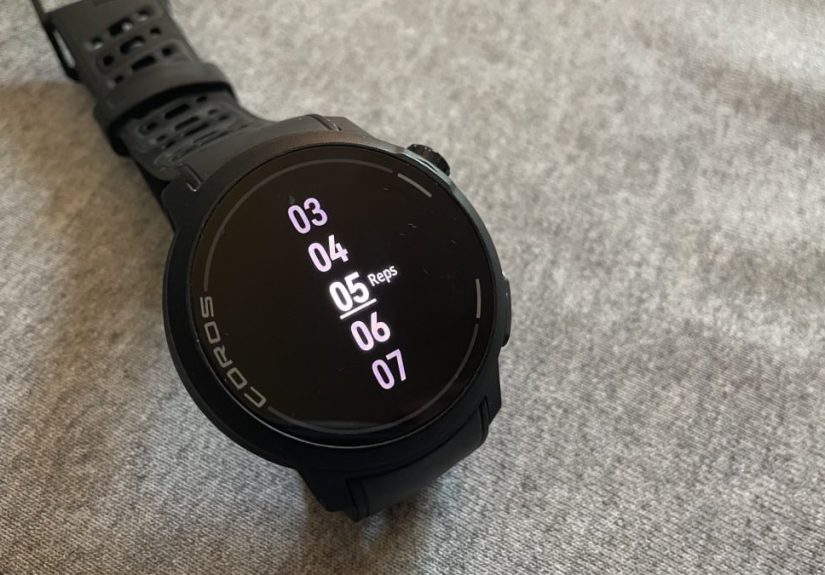
Strength mode improvements: fewer taps, more lifting
Strength tracking can get annoying fast if the watch asks too many questions mid-set. COROS has been refining strength mode so it’s less
interrupt-y and more adaptableletting you adjust reps/weight and keeping the flow moving.
If you lift regularly, you know the truth: the best workout log is the one that doesn’t make you stop and become a data-entry clerk
between sets.
Cycling personal records: fun, motivating, and sneakily useful
Cycling PR summarieslongest ride, elevation gain, power-duration bestsare a great example of COROS leaning into motivation without turning
it into a gamified circus. You can spot progress trends and get a quick sense of your best outputs across different durations.
For cyclists training with power, those “best efforts” can be a practical way to evaluate fitness changes, not just bragging rights
(though bragging rights are a valid training stimulus).
Everyday “Smart” Features (Without the Smartwatch Identity Crisis)
COROS isn’t trying to replace an Apple Watch. That’s intentional. But it’s clearly getting more comfortable adding “smart-ish” features that
don’t compromise the core sports-watch mission.
Flashlight mode: the screen-as-flashlight trick you’ll use more than you expect
A flashlight mode is one of those features you don’t think you need… until the moment you do. Finding your keys. Getting water at night.
Navigating a campsite. Avoiding the Lego you forgot your cousin’s kid left on the floor (an experience that can change a person).
It’s not a replacement for a real headlamp, but it’s genuinely useful in everyday situationsespecially on brighter displays.
Menstrual cycle tracking: training context that deserves a spot on the calendar
Menstrual cycle tracking adds another layer of context for recovery and planning. The point isn’t to force training into a rigid template
it’s to give athletes more information so they can plan smarter and understand patterns that affect energy, sleep, and perceived exertion.
Activity cropping: because nobody stops their watch perfectly every time
Activity cropping is the “thank you” feature for anyone who has ever finished a run, started stretching, chatted with a neighbor, driven home,
and then looked down in horror at a still-running activity.
Being able to trim the extra time keeps your stats cleaner, your training load more accurate, and your pride slightly less injured.
DJI camera control: niche, but very cool if it’s your niche
For cyclists, runners, or adventurers who record with an action camera, controlling the camera from your watch is a real convenience.
It means fewer stops, fewer awkward reach-and-fumble moments, and more time capturing the good stuff.
Which COROS Watches Get Which Features?
Not every feature lands on every model, and that’s normalhardware matters (screens, processors, sensors, speakers/mics). But the general
pattern with COROS has been wide software support across the lineup, especially for the big usability improvements.
For example, media controls have rolled out across many current and recent models, including popular running and adventure watches. Other
improvementslike map enhancements, voice tools, and display-specific featuresvary depending on the device.
Practical tip: update your watch and your app
If you haven’t checked for updates in a while, do it. Many of these features arrive through firmware and app updates, and some mapping-related
changes may require updated map formats or downloads. Translation: it’s not always “magically there” until you run the update.
Should You Actually Care? A Quick Reality Check
Here’s the honest take: if you only use your watch to track distance and time, most updates won’t change your life.
(But also: you can probably do that with a $12 kitchen timer and a vague sense of direction.)
These upgrades matter most if you do one or more of the following:
- Train with structure (intervals, workouts, plans, pacing goals)
- Run or ride with audio and want fewer phone interactions
- Navigate outdoors and want maps that reduce “Am I lost?” moments
- Care about data quality (cropping, lap fixes, workout flow)
- Use your watch all day and want quality-of-life features that don’t become distractions
In other words: the more your watch is part of your routinenot just your workoutsthe more these features feel like a meaningful upgrade.
Extra: 500+ Words of Real-World “New Feature” Moments
Let’s talk about how these updates play out in real lifethe messy, imperfect kind where you don’t always start your run on time,
your playlist has opinions, and your training log is held together by duct tape and optimism.
The “Media Controls Saved My Run” moment
Imagine you’re two miles into an easy run. You’re finally relaxed. Your breathing is steady. Your stride is smooth. You are, for the first time
all week, at peace.
Then your headphones decide it’s time for a podcast episode titled “Tax Law Updates: 93 Minutes of Thrill.” Your phone is in an armband,
a belt, a pocket, or somewhere in the shadow realm. Old you would’ve slowed down, wrestled with the phone, and possibly launched it into the
street out of pure frustration.
New you taps the watch, skips the audio, and keeps moving. That’s the difference: not a fancy feature, just fewer interruptions to the thing
you actually came here to do.
The “Undo Lap” redemption arc
Intervals are already hard. They don’t need bonus chaos. You’re mid-workout, you go to adjust your sleeve, and the lap button gets pressed.
Suddenly the watch thinks you’ve completed something you absolutely have not completed. Your brain starts doing math, and your soul starts leaving
your body.
Undo Lap is the calm friend in the corner saying, “Hey, it’s fine, fix it.” You reverse the mistake and keep going. No corrupted workout.
No weird split data. No post-run ritual of staring at graphs like they personally betrayed you.
Resume Later: the feature for people with lives
Not every long effort is “a run.” Sometimes it’s a long walk that includes a coffee stop, a scenic lookout, and a brief negotiation with your
own motivation. Sometimes it’s a day of exploring a city on foot. Sometimes it’s a hike where you stop for pictures, snacks, and the important
sport of arguing about whether that cloud looks like a dragon.
Resume Later makes those days cleaner. You can pause, live your life, and continue without turning the whole outing into a folder of fragmented
activities. Your training history stays readable. Your stats stay coherent. And you don’t have to explain to your friends why you have seven
separate “Walk” files that all happened on the same trail, fifteen minutes apart.
Move alerts: the desk-dweller’s reality check
You train in the morning. You feel proud. You deserve a gold star. Then work happens and you don’t move for hours. Your watch gently buzzes
and basically says, “Congrats, you’ve become a decorative object.”
You stand up, walk around, refill water, maybe do a quick stretch. It’s not a workout, but it’s a small habit that keeps your body feeling
betterespecially if you’re stacking training on top of a sedentary day.
Flashlight mode: unexpectedly useful in normal human situations
Flashlight mode is the feature you mock until you use it. You’re trying to find a charger under a couch at night. You don’t want to wake anyone.
You don’t want to blast your retinas with overhead lighting. You just need enough light to see what you’re doing.
The watch becomes your tiny, polite lantern. Is it a headlamp? No. Is it strong enough to guide you through a dark hallway, check a tent zipper,
or locate the water bottle you swear you placed “right here”? Yes. That’s a win.
Activity cropping: the post-workout cleanup crew
Everyone forgets to stop an activity eventually. You finish your run, you start cooling down, you chat with someone, you stretch, you walk inside,
and later realize your watch thinks you did a 47-minute run with a mysterious 12-minute “standing still” segment at the end.
Cropping fixes that. Clean file. Clean stats. Less confusion for your training load. Also: a small reduction in self-inflicted annoyance, which
is one of the most underrated forms of recovery.
Put it all together and you get the real reason these updates matter: they help your watch fit your life, not the other way around.
COROS didn’t suddenly become a different brand. It just got better at the little thingsand the little things are what you deal with every day.
Wrap-Up
The story here isn’t that COROS “added features.” It’s that COROS is smoothing out the everyday rough edges that used to make people say,
“I love this watch… but I wish it did this one basic thing.”
Media controls, better lap handling, Resume Later, clearer maps, and practical app tools like activity cropping are the kinds of improvements
that make a sports watch feel more completewithout turning it into a distraction machine.
If you already own a COROS watch, this is your sign to update your firmware and poke around the menus. There’s a good chance your watch can do
more than it could a few months ago. And if you’re shopping for a running or adventure watch, the “COROS is great but missing a few things”
argument is getting harder to make.