Table of Contents >> Show >> Hide
- Why Finishing Touches Matter More Than You Think
- 1. Layered Lighting Is Non-Negotiable
- 2. Window Treatments Make a Room Look Finished
- 3. A Properly Sized Rug Anchors the Space
- 4. Art Gives a Room a Point of View
- 5. Texture Is What Makes a Room Feel Alive
- 6. Greenery Brings Softness and Life
- 7. Styled Surfaces Need Restraint, Not Random Stuff
- 8. Hardware and Small Details Act Like Jewelry
- 9. Mirrors and Reflective Elements Add Depth
- 10. Personal Objects Are What Make a Home Feel Real
- 11. Editing Is the Final Finishing Touch
- How to Apply These Finishing Touches Room by Room
- Mistakes That Make a Room Feel Unfinished
- Real-Life Experiences: What These Finishing Touches Actually Change
- Final Thoughts
- SEO Tags
You know that weird moment when a room is technically “done” but still feels like it’s waiting for its personality to arrive? The sofa is there. The paint is dry. The coffee table is bravely doing its job. And yet the space somehow gives off strong “hotel lobby before check-in” energy.
That, friends, is where finishing touches come in.
Interior designers have been saying the same thing for years: a room rarely feels complete because of one giant purchase. It feels complete because of the smaller, smarter layers that bring warmth, polish, function, and character. These details are what take a room from furnished to finished. They soften the edges, create rhythm, add depth, and tell the eye, “Yes, you may relax now. This room has its act together.”
If you’ve ever looked around your home and thought, “Why does this still feel a little off?” there’s a good chance the answer is hiding in the final layer. Below are the finishing touches designers agree every room needs, plus practical ways to use them without making your home look like a furniture showroom had a mild identity crisis.
Why Finishing Touches Matter More Than You Think
Big furniture pieces set the foundation, but finishing touches create the mood. They guide how a room feels at different times of day, how comfortable it is to live in, and whether it reflects real life or just a Pinterest board with commitment issues.
Think of finishing touches like accessories in fashion. A great black dress is lovely. A great black dress with the right shoes, jewelry, and confidence? That’s the whole movie. The same is true in interiors. A room without its final layer can feel flat, cold, or unfinished. A room with the right details feels intentional, balanced, and memorable.
1. Layered Lighting Is Non-Negotiable
If your room has one overhead light and a dream, we need to talk.
Designers constantly emphasize layered lighting because it changes everything. Good lighting makes a room feel warm, dimensional, and inviting. It also helps the space function better. Overhead lighting alone can be harsh, especially at night, while a mix of light sources creates softness and flexibility.
What to add
Every room benefits from a combination of ambient, task, and accent lighting. That can mean a ceiling fixture for general light, a table lamp for cozy glow, a floor lamp for reading, and maybe sconces or picture lights for atmosphere. Suddenly the room has depth instead of interrogation-room vibes.
Why it works
Lighting placed at different heights moves the eye around the room. It highlights textures, adds intimacy, and makes even simple furniture look more polished. In plain English: lamps are magic, and yes, the big light should learn to share.
2. Window Treatments Make a Room Look Finished
Nothing says “we just moved in six months ago” quite like naked windows. Designers routinely point to window treatments as one of the clearest signals that a room is complete. Curtains, drapes, shades, or Roman blinds do more than block light and provide privacy. They frame the architecture, soften hard edges, and visually connect the whole room.
What to add
Choose treatments that match the room’s function. Bedrooms may need blackout panels. Living rooms often benefit from layered drapery and woven shades. In a dining room or office, tailored panels can add polish without fuss.
Pro move
Hang curtains higher and wider than the window frame when possible. It makes ceilings feel taller, windows look larger, and the whole room seem more elegant. This is one of those sneaky designer tricks that feels unfairly effective.
3. A Properly Sized Rug Anchors the Space
A rug is not just a floor accessory. It is the peace treaty between your furniture pieces.
One of the most common reasons a room feels awkward is that the rug is too small. When a rug floats in the middle of a seating area like a lonely postage stamp, the room feels disconnected. A well-scaled rug, on the other hand, grounds the furniture and helps define the conversation zone.
What to look for
In living rooms, the rug should usually be large enough for at least the front legs of your major furniture pieces to sit on it. In bedrooms, it should extend beyond the bed enough to feel soft underfoot when you get up. In dining rooms, it needs to be big enough that chairs stay on the rug when pulled out.
Beyond size, rugs also add texture, pattern, and color. They can warm up a neutral room, calm down a busy one, or tie together pieces that were previously acting like they had never met.
4. Art Gives a Room a Point of View
If furniture is the skeleton of a room, art is the personality. It tells people who lives there without requiring you to give a TED Talk at the front door.
Designers often say artwork is one of the best finishing touches because it brings meaning and emotion into a space. It also helps walls feel intentional instead of vaguely abandoned.
What kind of art works best
The best art is art that says something about you. It can be original work, framed photography, vintage finds, children’s drawings, textiles, or sculptural objects. Expensive is optional. Personal is not.
How to use it
Create a focal point with one large piece, build a gallery wall, or lean smaller works on a shelf for a layered look. The key is to avoid “placeholder art,” meaning pieces that are technically fine but emotionally give absolutely nothing.
5. Texture Is What Makes a Room Feel Alive
A room can have a beautiful color palette and still feel flat if every surface has the same visual weight. Texture solves that problem.
Designers love to layer materials like linen, velvet, wool, wood, leather, stone, ceramic, glass, and metal because texture creates contrast and richness. It makes a room feel lived-in rather than one-note.
Easy ways to add texture
Try a nubby throw on a smooth sofa, a woven basket near a polished console, a ceramic lamp on a lacquered table, or boucle pillows against crisp cotton upholstery. You do not need every material known to civilization. You just need enough variation for the room to have visual flavor.
This is especially important in neutral spaces. Without texture, beige can quickly become “sad oatmeal.” With texture, beige becomes serene, layered, and sophisticated.
6. Greenery Brings Softness and Life
Plants have a special talent for making rooms feel fresh, finished, and just slightly more expensive than they actually are. Even designers who lean minimalist often use greenery because it adds movement, organic shape, and a sense of life that hard furnishings cannot provide.
What to add
Use a tall plant in an empty corner, a trailing vine on a shelf, a small arrangement on a bedside table, or a simple branch in a sculptural vase. Fresh flowers are lovely, but a low-maintenance plant can do the job beautifully.
No green thumb?
Use high-quality faux stems sparingly. The keyword here is high-quality. Your fake plant should whisper “convincing botanical accent,” not scream “gas station fern.”
7. Styled Surfaces Need Restraint, Not Random Stuff
Designers are big believers in thoughtful vignettes. Coffee tables, consoles, shelves, nightstands, and dressers all benefit from styling, but the goal is not to cover every inch. The goal is to create little moments of interest that feel edited and useful.
What belongs in a vignette
Try a tray, a candle, a stack of books, a small bowl, a sculptural object, or a plant. Mix heights and shapes. Include something practical and something pretty. Leave breathing room.
A tray is especially handy because it corrals loose items and makes them look intentional. It’s basically the design equivalent of saying, “Yes, I absolutely meant for these things to be here.”
What to avoid
Too many tiny objects can make a room feel dusty before it even is dusty. Group items with purpose, and let negative space do some work too. Empty space is not a failure. It is punctuation.
8. Hardware and Small Details Act Like Jewelry
The smallest details can make a surprisingly big impact. Designers increasingly talk about hardware, trim details, and smaller decorative accents as the “jewelry” of a room. Cabinet pulls, knobs, hooks, switch plates, picture lights, and decorative edges can quietly elevate a space without requiring a full redesign.
Where to focus
Upgrade the hardware on a dresser, refresh drawer pulls in a bathroom, swap out a builder-grade knob, or add a beautiful wall hook in an entry. These choices may seem minor, but they contribute to the room’s overall finish.
Think of them as the cufflinks of interior design. Not mandatory, but when they’re good, everyone notices.
9. Mirrors and Reflective Elements Add Depth
Mirrors are one of the oldest designer tricks for a reason. They bounce light, add dimension, and help smaller rooms feel more open. But beyond function, they also act as decorative anchors.
Best uses for mirrors
Place one over a console, fireplace, dresser, or entry table. Use reflective elements like glass lamps, metallic accents, or polished stone to subtly catch light throughout the room.
A mirror can be both practical and decorative, which is a rare overachiever and should be appreciated accordingly.
10. Personal Objects Are What Make a Home Feel Real
There is a difference between a pretty room and a meaningful room. Designers often stress that homes feel most complete when they reflect the people who live in them. That means collections, books, heirlooms, travel finds, family photos, handmade pieces, or objects with history.
How to use them well
Display personal objects with intention. Group similar pieces. Mix sentimental items with more refined elements so the room feels collected rather than chaotic. Your grandfather’s clock, your favorite pottery, and that odd little bowl you bought on vacation can absolutely coexist.
Character beats perfection every time. A room that looks like no one actually lives there may photograph well, but it rarely feels good.
11. Editing Is the Final Finishing Touch
Here is the part no one wants to hear: sometimes the last thing a room needs is not more stuff. It needs less.
Designers frequently edit rooms by removing items, shifting furniture, simplifying shelves, or clearing visual clutter. A room can only shine if the good pieces have space to breathe.
What to edit
Remove anything that feels discordant, overly fussy, or unrelated to the room’s story. If every surface is busy, choose a few hero pieces and let the rest rest. A finished room does not need to prove itself with volume.
In other words, not every corner needs a candle, a bead garland, a framed quote, and a decorative bird with opinions.
How to Apply These Finishing Touches Room by Room
Living room
Add a large rug, layered lighting, curtains, art, and a styled coffee table. Then bring in texture through pillows and throws, plus one plant to soften the layout.
Bedroom
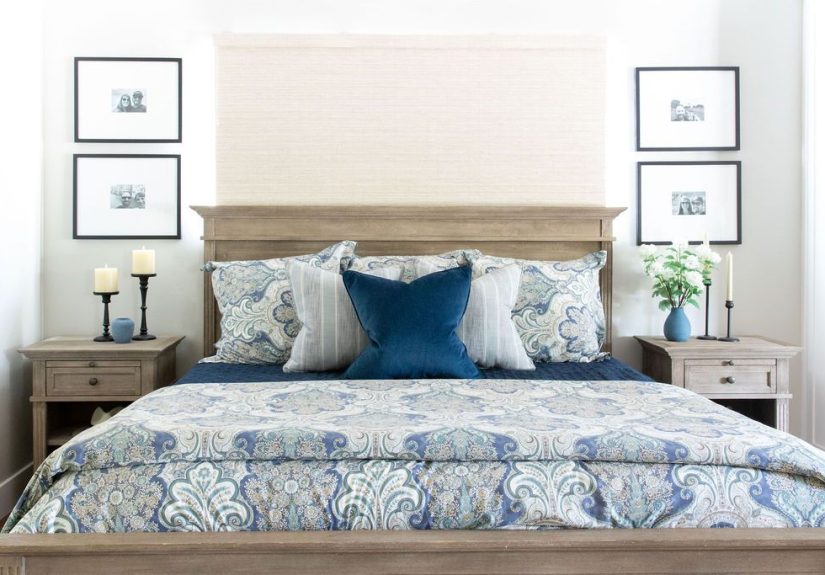
Use substantial bedding, bedside lamps, window treatments, a rug underfoot, and a calm surface on the nightstand. A book, a small tray, and one natural element can make the room feel instantly more restful.
Dining room
Focus on lighting overhead and at eye level, a centered arrangement for the table, art on adjacent walls, and curtains or shades to frame the room. A dining room should feel intentional even when no one is dramatically passing mashed potatoes.
Entryway
A mirror, a place to sit, a small table or shelf, and a rug can make the entry feel finished fast. Add a bowl or tray for keys and a lamp for warmth. First impressions matter, especially to you.
Mistakes That Make a Room Feel Unfinished
The fastest way to sabotage a good room is to ignore the finishing layer. Common mistakes include relying only on overhead lighting, skipping curtains, choosing a rug that is too small, hanging art too high, overfilling every surface, and forgetting to add anything personal. Another big one is buying decor in one frantic shopping spree instead of layering over time.
The best rooms usually feel collected, not rushed. They have rhythm, contrast, and a little restraint. They look like someone cared, but not like someone panicked at a home store on a Saturday.
Real-Life Experiences: What These Finishing Touches Actually Change
What’s interesting about finishing touches is that you don’t always notice them one by one. You notice the feeling they create. A room starts to feel calmer in the evening because the lighting is softer. It feels more private and more elegant once curtains go up. It feels warmer after a rug anchors the furniture. Suddenly people linger longer, sit more comfortably, and stop saying things like, “This place is nice, it just needs… something.”
That “something” is usually not dramatic. It’s often a series of small improvements that build on each other. For example, a living room can feel a little cold for months even with a good sofa and solid paint color. Then you add a floor lamp beside the chair, hang drapes a little higher than expected, place a textured rug under the seating area, and lean one large framed print over the console. The room doesn’t become unrecognizable. It simply becomes settled. It looks like it has exhaled.
Bedrooms show this transformation especially well. A bed frame and mattress alone may do the practical job, but the room can still feel temporary. Add layered bedding, a pair of bedside lamps, one piece of art over the dresser, and something natural like a branch in a vase or a small plant, and the space becomes more than a place to sleep. It starts to feel like a retreat. It becomes the kind of room that invites slower mornings and earlier nights, which is a rare and beautiful trick in modern life.
Entryways also benefit enormously from thoughtful finishing touches. Many people treat them like transitional zones and leave them a little bare. But once you add a mirror, a slim table, a small rug, and a tray for keys, the whole front-of-house experience changes. You stop dumping things. You start arriving home instead of merely entering it. That sounds dramatic, but good design often works that way: it changes behavior by making the desired action easier and more pleasant.
There’s also an emotional side to all this. Personal objects matter because they turn a stylish room into your room. A framed travel photo, a stack of books you actually read, your grandmother’s lamp, a thrifted bowl with a slightly crooked rim, or a handmade quilt can add soul in a way generic decor never can. These are the pieces that make guests ask questions and make you feel connected to the room. Without them, a space may still be beautiful, but it can feel strangely anonymous.
And then there is the quiet power of editing. Some of the best “before and after” changes happen when people remove three unnecessary accessories, relocate a chair, and clear off a surface that was trying to hold half their personality at once. A room doesn’t need constant decoration to feel finished. It needs the right elements in the right balance. That’s the real lesson designers return to again and again.
In everyday life, finishing touches are not just decorative extras. They influence comfort, routine, mood, and memory. They help a home support the way people actually live. They soften stressful days, make ordinary rooms more welcoming, and give your home that hard-to-define quality everyone wants: presence. Not perfection. Presence.
Final Thoughts
The finishing touches every room needs are not about chasing trends or stuffing a space with decor until it gives up and calls itself complete. They are about creating balance, warmth, and identity. Designers agree because the formula works: layer your lighting, dress your windows, anchor the room with a rug, add meaningful art, bring in texture, include greenery, style surfaces thoughtfully, upgrade the small details, and edit with confidence.
Most importantly, let the room reflect how you live. A finished room is not the one with the most accessories. It is the one that feels coherent, comfortable, and unmistakably yours. That’s the difference between a room that looks nice and a room that people remember.