Table of Contents >> Show >> Hide
- What Is the F/A-XX, Exactly?
- What the Navy Has Actually Said About It
- Why Range Matters More Than Top Speed Hype
- Will F/A-XX Work with Drones?
- Will It Replace the Super Hornet, the Growler, or Both?
- Who Is Competing to Build It?
- The Budget Drama: Why the Program Looked Stalled
- Images: What the Public Has Actually Seen
- What the Final Jet May Be Like
- Why F/A-XX Matters Strategically
- Experience: What Living Around a Program Like F/A-XX Really Feels Like
- Conclusion
- SEO Tags
If you were hoping the U.S. Navy would roll out the F/A-XX with fireworks, dramatic music, and a perfectly lit glamour shot on a carrier deck, I regret to inform you that the Pentagon prefers suspense. Lots of it. Instead of a big reveal, the public has gotten a trail of crumbs: a few official comments, budget drama, industry jockeying, and just enough concept art to make every aviation nerd lean toward the screen like they’re enhancing a blurry detective photo.
Still, there is more than enough real information to sketch a clear picture of what the Navy wants. The F/A-XX is the service’s secretive next-generation carrier fighter, widely described as a sixth-generation aircraft built for the 2030s and beyond. It is expected to bring longer range, better survivability, deeper stealth, tighter networking, and far more seamless teamwork with unmanned aircraft than today’s carrier fighters can manage. In plain English: the Navy wants a jet that can go farther, survive nastier air defenses, boss around robotic teammates, and keep aircraft carriers relevant in a world where anti-ship missiles are multiplying like rabbits with engineering degrees.
What Is the F/A-XX, Exactly?
At its core, F/A-XX is the crewed fighter centerpiece of the Navy’s Next Generation Air Dominance effort. That matters because people often lump it together with the Air Force’s NGAD program, but they are not the same thing. The Navy’s problem is uniquely difficult: it does not just need a futuristic fighter. It needs one that can survive carrier launches and recoveries, fit into the cramped geometry of a carrier deck and hangar, resist corrosion at sea, and still perform at the sharp end of a high-end fight.
That carrier requirement changes everything. Building a stealth fighter for a land base is hard. Building one for a floating airport that slams aircraft onto steel decks in rough seas is harder. So while public conversation often turns into “Is this the Navy’s F-47?” the better answer is no. The F/A-XX has a naval mission first, and that means range, deck handling, maintainability, and survivability all have to be balanced in a way the Air Force does not have to worry about to the same degree.
What the Navy Has Actually Said About It
For such a secretive program, Navy leaders have dropped a few unusually useful hints. The most important one is range. Senior officials have described increased range as a core attribute of the aircraft, with public remarks indicating it could fly more than 25% farther than the Navy’s current fighters before refueling. That is not a random performance brag. It is the whole ballgame.
Today’s carrier air wings are impressive, but geography is cruel. In a conflict against a well-armed opponent, carriers may need to operate farther from shore-based missiles, sensors, and fighter cover. If the jet cannot reach the fight with enough fuel, weapons, and survivability left over, the carrier’s theoretical power starts looking a lot less theoretical. The F/A-XX is supposed to fix that by stretching the reach of naval aviation without turning every mission into a desperate scavenger hunt for tanker support.
The Navy has also signaled that the aircraft will lean heavily into stealth, signature control, artificial intelligence, and battle management. This is not just about dogfighting with a shinier airframe. Public comments suggest the aircraft is being shaped as a node in a larger combat system, able to sense, share, direct, and coordinate rather than merely fly in, drop weapons, and head home. In other words, this jet is expected to think a little less like a lone gunfighter and a little more like the quarterback of a very expensive, very fast, very classified team.
Why Range Matters More Than Top Speed Hype
Whenever a new fighter is discussed, the internet immediately asks the same questions: How fast? How stealthy? How many missiles? Fair enough. But for the Navy, range may be the most important public clue we have.
The F/A-18E/F Super Hornet remains the backbone of the carrier air wing, and it is a capable aircraft. But the Navy knows tomorrow’s threat rings are getting uglier. Long-range anti-ship missiles, improved enemy fighters, denser air defenses, and broader surveillance networks make it harder for a carrier to park wherever it wants and launch short-legged aircraft with a grin. A future carrier wing needs more operational reach, not just more swagger.
That is where the F/A-XX appears to fit into a broader recipe. Public Navy messaging has tied it to the MQ-25 Stingray tanker, which is meant to provide organic carrier-based refueling. Add in longer-range weapons and better sensor networking, and the Navy is essentially trying to expand the “area of effect” of the carrier air wing. That phrase sounds like it escaped from a PowerPoint bunker, but it matters: the farther your air wing can reach, the more options your carrier strike group has, and the less predictable you become.
Will F/A-XX Work with Drones?
Almost certainly yes, and probably in a big way. Senior Navy officials have said the jet is being designed for deeper integration with collaborative combat aircraft and other uncrewed systems. That means the future fighter is not being envisioned as a solo act. It is being built to command, coordinate, and benefit from robotic teammates.
Think of it like this: instead of sending one crewed aircraft into a heavily defended environment and asking it to do everything, the Navy wants a family of systems. The crewed jet can manage the mission, fuse information, make key decisions, and direct uncrewed aircraft that take on supporting roles such as sensing, jamming, decoy work, or carrying additional weapons. That is also why Navy officials have described the aircraft as moving from “man in the loop” toward “man on the loop.” The pilot still matters enormously, but the machine and its networked teammates are expected to do much more of the routine and high-speed information handling.
If that sounds futuristic, well, yes. But it is also practical. Carrier decks are crowded. Sortie generation is difficult. Every aircraft launched has to justify its footprint. A crewed fighter that can multiply its combat power by working with unmanned systems is much more attractive than one that merely looks cool in artist renderings and burns fuel stylishly.
Will It Replace the Super Hornet, the Growler, or Both?
Public reporting strongly suggests the F/A-XX is expected to succeed the Super Hornet and absorb at least part of the mission space now associated with the EA-18G Growler, particularly in electronic attack and battle-management functions. That does not necessarily mean a one-for-one retirement chart will be posted tomorrow, but the direction is clear. The Navy does not just want another strike fighter. It wants a more capable aircraft that helps merge multiple roles inside a future air wing.
That makes sense. Modern naval aviation is under pressure to carry more capability with fewer deck spots to waste. An aircraft that can penetrate defended airspace, fight for air superiority, contribute to electronic warfare, manage unmanned teammates, and operate at longer distances is far more useful than a simple successor with prettier edges.
At the same time, the F-35C is not going anywhere. Navy messaging has repeatedly pointed toward a future carrier wing that combines the F-35C and F/A-XX rather than replacing one with the other. The F-35C brings stealth and sensor fusion today; the F/A-XX is expected to bring even greater range and next-wave systems integration tomorrow. The future looks less like a clean swap and more like a tag-team arrangement, only with more classified software and fewer folding chairs.
Who Is Competing to Build It?
By 2025, public reporting indicated the competition had narrowed to Boeing and Northrop Grumman after Lockheed Martin was pushed out of the running. That was one of the most concrete developments the public got, and it instantly fueled a fresh round of speculation.
Boeing makes intuitive sense as a contender because it already builds the Super Hornet and has deep naval aviation experience. Northrop Grumman also makes sense because it has long-standing stealth credentials and serious experience with advanced low-observable design. In short, the final contest became a fascinating contrast between a company with major Navy fighter lineage and a company with heavy stealth mystique. Basically, if you enjoy industrial strategy arguments, F/A-XX has been serving a full buffet.
As of the latest public reporting, however, a final public winner had still not been cleanly announced. Instead, the program became tangled in budget priorities, industrial-base concerns, and larger Pentagon debates over whether the defense sector could support both the Navy’s F/A-XX and the Air Force’s F-47 push at the same time.
The Budget Drama: Why the Program Looked Stalled
For a while, the F/A-XX looked like it might get shoved into the bureaucratic equivalent of a dimly lit closet. Reporting in 2025 showed Pentagon officials weighing a significant delay while the Navy and lawmakers pushed to keep the program moving. The stated concern was not that the Navy suddenly stopped wanting a sixth-generation fighter. It was that the industrial base might struggle to support multiple next-generation tactical aircraft efforts at once.
That tension spilled into the fiscal year 2026 budget fight. The administration’s request asked for relatively modest funding to keep the program alive, while Congress moved to add a substantial plus-up and explicitly urged the department to move toward a single-vendor engineering and manufacturing development award. That is a big clue. Congress was not treating the F/A-XX like a science-fair side project. It was acting like the program had drifted too long and needed a shove back toward real momentum.
So the public picture today is unusual but not hopeless: the Navy clearly wants the aircraft, senior leaders have publicly defended it, Congress has added pressure and money, and the strategic need has not gone away. The biggest unknown is not whether the mission exists. It is how fast the bureaucracy can stop arguing and sign the paperwork.
Images: What the Public Has Actually Seen
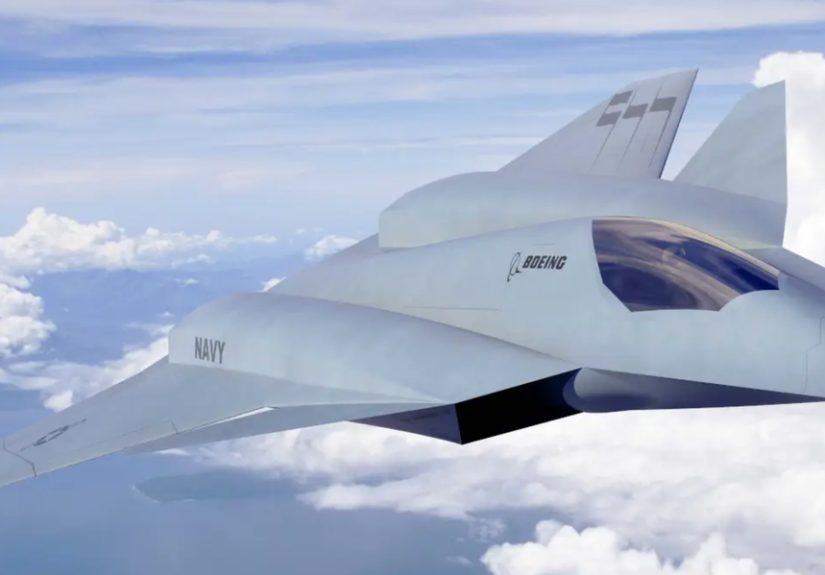
Here is the frustrating truth behind the “images” part of the headline: the public has not seen a confirmed final F/A-XX design. Not even close. What we have seen are concept images and controlled glimpses from industry.
Boeing has circulated notional sixth-generation naval fighter artwork for years, including flying-wing-style concepts that look stealthy enough to make radar operators develop trust issues. More recently, reporting described a newer Boeing rendering with similarities to the company’s F-47 language. Northrop Grumman also released a rare carrier-deck rendering in 2025 showing only part of its proposed configuration, with just enough visibility to confirm the usual stealth hallmarks and just enough shadow to keep every forum thread alive for another month.
So what do the images tell us? Mostly that the aircraft is expected to prioritize low observability, clean shaping, and a design optimized for high-end survival. What they do not tell us is the exact planform, engine arrangement, internal volume, or final configuration. Anyone claiming certainty from a moody rendering is basically reading tea leaves from a cloud machine.
What the Final Jet May Be Like
Based on public statements and the logic of the mission, the F/A-XX will probably emphasize five things: range, survivability, networking, adaptability, and command over unmanned teammates. That suggests an aircraft with a larger fuel fraction than legacy Navy fighters, substantial internal weapons capacity, advanced sensors, robust electronic warfare capability, and software architecture built for rapid upgrades.
Carrier suitability also means the aircraft has to be tough, not merely elegant. It needs landing gear and structural design that tolerate repeated catapult launches and arrested recoveries. It needs maintainers to work on it in salty, cramped, noisy conditions where everything from deck tractors to ocean weather is trying to ruin someone’s day. That practical naval reality may be why the Navy’s public comments focus less on flashy slogans and more on operational reach and integration. A carrier fighter that cannot survive the daily abuse of carrier life is just a very expensive hangar decoration.
Why F/A-XX Matters Strategically
The real question is not whether the Navy wants a cool new fighter. Of course it does. The real question is whether carriers can remain credible in a future fight without a jet like this. That is where F/A-XX matters most.
If the Navy can field a longer-range, stealthier, more networked carrier fighter that works with organic tanking and uncrewed teammates, then the aircraft carrier remains a deeply relevant tool for power projection. If it cannot, carriers still matter, but their offensive reach becomes easier to constrain. F/A-XX is therefore about much more than replacing the Super Hornet. It is about preserving the tactical and political value of the carrier air wing in an era when distance, detection, and missile reach all increasingly punish old assumptions.
Experience: What Living Around a Program Like F/A-XX Really Feels Like
Programs like the F/A-XX have a strange effect on everyone who follows naval aviation. For sailors and aviators, the experience is not cinematic in the way Hollywood imagines it. It is more like living inside a long transition. One generation of aircraft still flies the mission every day, while another generation exists mostly in briefings, funding charts, whispered requirements, and the occasional eyebrow-raising official comment. There is no grand “before and after” switch. There is just a long period where the future keeps arriving one sentence at a time.
For a carrier aviator, the appeal of something like F/A-XX is easy to understand. More range means more options. More survivability means better odds. Better integration with tankers and unmanned teammates means missions can be planned with less desperation and more control. That changes the feel of the air wing. Instead of pushing today’s fighters right up to the edge of what geography and threat rings allow, a future air wing built around F/A-XX could operate with more space, more deception, and more flexibility. In military aviation, that is not a luxury. That is survival dressed in engineering language.
For maintainers and deck crews, the experience is different but just as important. Every new aircraft promises miracles in brochures. Then it meets reality: salt air, flight-deck chaos, turnaround pressure, spare parts, software hiccups, and the universal law that a complicated machine will wait until the worst moment imaginable to become temperamental. So when people on the outside obsess over shape and stealth, the people closest to the deck are also asking less glamorous questions. Can it be serviced quickly? Can faults be isolated fast? Can it generate sorties without requiring a séance and three laptops? Those questions are not boring. They are the difference between combat power on paper and combat power at sea.
For the broader public, following F/A-XX is an exercise in strategic patience and disciplined skepticism. The aircraft is discussed as if it is both imminent and mythical, which is a very Pentagon way for something to exist. One month it seems on the verge of a contract decision. The next month it is trapped in budget trench warfare. Then a new rendering appears, and everyone zooms in on the nose shape like they are studying the Zapruder film for clues about engine architecture. The experience can be equal parts fascinating and ridiculous.
But that is also why the program matters. Secret aircraft are not just cool because they are secret. They are interesting because they reveal what the military believes it will need next. In the case of F/A-XX, the answer is pretty clear: more range, more survivability, more electronic warfare relevance, and much closer integration between humans and machines. That is a serious shift in how the Navy thinks air power will work from a carrier in the 2030s and 2040s.
So the experience of watching F/A-XX take shape is really the experience of watching naval aviation negotiate the future in public, but only partly in public. You get fragments. You get hints. You get budget battles, shadowy images, and carefully chosen words. Yet even through all the fog, one conclusion comes through loud and clear: the Navy does not see F/A-XX as a luxury item. It sees it as a necessary bridge to the next kind of carrier air wing. And that makes every small clue feel bigger than it looks.
Conclusion
The Navy’s F/A-XX remains one of America’s most intriguing military aviation programs precisely because so much about it is still hidden. But the big picture is no longer mysterious. The Navy wants a sixth-generation, carrier-capable fighter that goes farther than today’s aircraft, survives tougher defenses, works seamlessly with tankers and drones, contributes to electronic warfare, and helps anchor a future hybrid air wing alongside the F-35C.
The public still lacks a clean contractor reveal, a full spec sheet, or a trustworthy beauty shot. What it does have is enough evidence to understand the mission. F/A-XX is not just about replacing old jets. It is about making sure the carrier air wing can still matter when the map gets bigger, the missiles get longer, and the skies get meaner. In that sense, the secret is not what the Navy wants. The secret is only what the finished jet will look like when the curtain finally lifts.