Table of Contents >> Show >> Hide
- What Does “Patchwork Cartoonize” Actually Mean?
- Why Panda Photos Work Ridiculously Well in This Style
- How to Choose the Right Panda Photo
- What Makes a Great Patchwork Cartoon Portrait?
- Common Mistakes That Make the Art Look Cheap
- Best Uses for a Patchwork Cartoonized Panda Photo
- A Smart Workflow for Turning a Panda Photo into Patchwork Cartoon Art
- Should You Use AI, Manual Illustration, or a Hybrid Process?
- One Important Practical Note: Use Photos You Have the Right to Use
- Experiences People Often Have with Patchwork Cartoonized Panda Photos
- Conclusion
That headline sounds like a sentence typed by a delighted artist at 1:07 a.m. after too much coffee and one too many adorable animal photos. And honestly? That is exactly why it works. It is quirky, memorable, and weirdly charming. But behind the playful wording sits a very real creative trend: turning a favorite animal photo into a custom patchwork cartoon portrait that feels handmade, colorful, and deeply personal.
Whether you have a giant panda photo from a zoo trip, a stuffed-animal-inspired panda image for a nursery, or simply love the look of bold black-and-white animal art, the idea of having it “patchwork cartoonized” hits a sweet spot. It combines the emotional pull of photography, the fun of cartoon styling, and the cozy visual texture of patchwork design. In other words, it is half keepsake, half statement art, and all personality.
This guide breaks down what a patchwork cartoon portrait really is, why panda images are especially perfect for it, how to choose the right photo, what mistakes to avoid, and how to make the finished piece look polished instead of accidentally resembling a craft project that lost a fight with a glue stick.
What Does “Patchwork Cartoonize” Actually Mean?
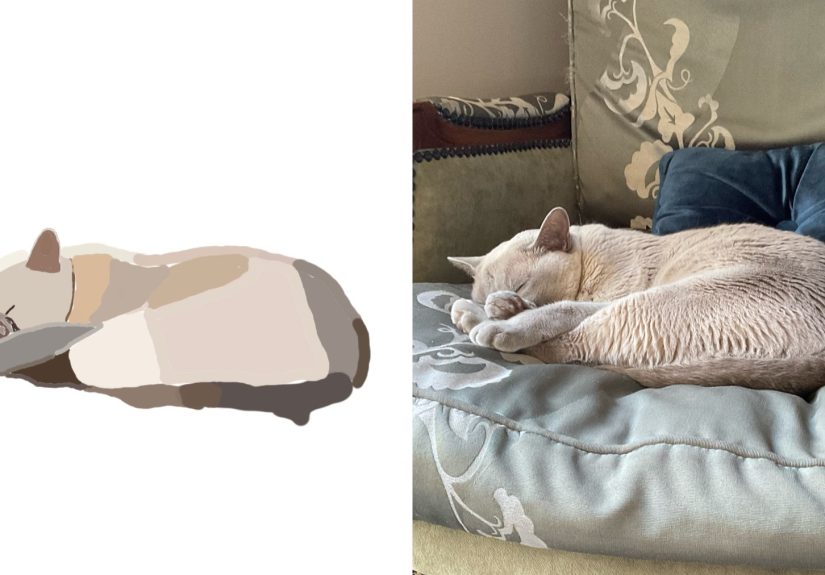
Patchwork cartoonizing is the process of transforming a photo into stylized artwork that looks both illustrated and pieced together. Instead of preserving every tiny photographic detail, the artist or design tool simplifies the subject into shapes, color blocks, outlines, and textures. The “patchwork” part usually comes from the way color areas are separated into distinct sections, almost like fabric pieces in a quilt, mosaic tiles, paper collage, or stitched panels. The “cartoonize” part adds exaggeration, softness, charm, and a more graphic, animated look.
That combination is especially appealing because it makes the final portrait feel intentional. A plain filter can look generic. A patchwork cartoon portrait feels designed. It has composition. It has rhythm. It has visual personality. It says, “Yes, this is a beloved image, and yes, someone gave it more thought than slapping on the first app preset they saw.”
Why Panda Photos Work Ridiculously Well in This Style
Pandas are almost unfairly photogenic. Their round faces, expressive eye patches, soft-looking fur, and natural black-and-white contrast give artists a head start. In visual design, contrast is a gift. It helps shapes read clearly, especially when you simplify a photo into graphic forms. With pandas, the major features are already strong: dark ears, dark limbs, bold eye markings, and a bright face that instantly pulls attention to the expression.
That is why a panda photo adapts beautifully to a patchwork cartoon portrait. The eye patches can become signature design anchors. The ears can be stylized into bold rounded shapes. The face can stay soft and friendly while the patchwork treatment adds movement and texture around it. Instead of fighting the source image, the art style enhances what is already iconic.
There is also an emotional reason panda imagery works so well. Panda visuals tend to feel gentle, funny, and comforting. A patchwork cartoon style amplifies that effect. It leans into warmth, storytelling, and decorative charm, making the finished image ideal for wall art, gifts, stickers, nursery decor, digital prints, and social media branding.
How to Choose the Right Panda Photo
1. Pick expression over perfection
The best source image is not always the most technically flawless one. It is the one with character. A panda looking directly at the camera, tilting its head, mid-snack, mid-climb, or caught in a funny lounging pose often works better than a flat, distant image. Cartoon styling thrives on attitude. If the photo has a mood, the final portrait has a heartbeat.
2. Use clean lighting
Good light saves time and improves everything. A clear, evenly lit photo makes it easier to separate facial features, define the fur pattern, and preserve the emotion in the eyes. Heavy shadows, blown highlights, and muddy contrast force the artist to guess. Guessing is where charm goes on vacation.
3. Make sure the eyes read clearly
Eyes matter in animal portraits. Even with a highly stylized result, viewers connect with the face first. If the eyes are blurry, hidden, or too dark, the final cartoon portrait can feel flat. Sharp eyes help the finished piece feel alive, even when the image is reduced to simplified blocks and bold outlines.
4. Watch the background
A busy background can be distracting. If the panda blends into branches, fencing, crowds, or random objects, the patchwork effect starts to feel cluttered. The easiest solution is choosing a photo where the subject is already separated from the background, or cropping tighter before editing. Cleaner inputs almost always produce cleaner art.
5. Start with enough resolution
If you plan to print the final portrait, file quality matters. A tiny screenshot may look fine on a phone, then fall apart when enlarged. Higher-resolution images preserve edge clarity and make the final artwork more flexible for posters, framed prints, pillows, cards, or canvas. If your dream is a statement piece above the couch, do not feed the process a blurry little postage stamp and hope for magic.
What Makes a Great Patchwork Cartoon Portrait?
A strong patchwork cartoon portrait is not just a filtered photo. It usually balances five design ingredients:
- Shape simplification: the main features are reduced to readable forms.
- Controlled exaggeration: the image feels playful without becoming unrecognizable.
- Intentional color blocking: sections look arranged, not random.
- Texture or faux-fabric detail: subtle grain, stitching, quilting, or paper-cut effects add warmth.
- Focus on expression: the portrait still feels like that specific panda, not just any panda.
The best results usually keep the face simple and expressive while allowing the patchwork treatment to become more decorative in the background, scarf, border, frame, or surrounding shapes. That balance keeps the portrait cute without becoming visually chaotic.
Common Mistakes That Make the Art Look Cheap
Over-editing the face
Too many effects can flatten the expression. When everything is sharpened, smoothed, saturated, textured, outlined, and glow-ified at once, the image stops feeling handcrafted and starts looking like a design app got overexcited.
Using too many colors
Pandas already have a naturally strong palette. If you add twelve neon accent colors for no reason, the portrait can lose its elegance. A smaller color palette usually creates a more premium look. Think controlled charm, not visual confetti explosion.
Ignoring print dimensions
Square art, portrait art, horizontal art, and story-size graphics all need slightly different cropping choices. If you do not plan for the final output, important details can get chopped off. Nobody wants a beautiful panda portrait where one ear mysteriously disappeared because the frame ratio had other plans.
Choosing a weak source photo
No software can fully rescue a photo that is extremely blurry, badly cropped, or missing the subject’s key features. Better input still wins. Fancy tools help, but they are not magicians wearing tiny digital capes.
Best Uses for a Patchwork Cartoonized Panda Photo
This style is surprisingly versatile. It works beautifully for:
- custom wall art for a bedroom, nursery, office, or reading corner
- personalized gifts for panda lovers and animal fans
- children’s room decor with a softer, storybook feel
- greeting cards, invitations, or themed party signage
- phone wallpapers, stickers, and digital profile art
- print-on-demand merchandise like mugs, totes, and pillows
- brand visuals for playful art shops, handmade businesses, or animal-themed pages
Because the style feels both cute and crafted, it bridges the gap between novelty art and decor-worthy design. That matters. People do not just want something adorable. They want something adorable that also looks like it belongs in their space.
A Smart Workflow for Turning a Panda Photo into Patchwork Cartoon Art
Step 1: Start with the strongest image
Choose the clearest photo with the most personality. Crop it so the subject is prominent. If needed, remove distracting background elements first.
Step 2: Decide on the mood
Do you want soft and cozy? Bold and graphic? Nursery-sweet? Modern and artsy? Vintage quilt vibes? Defining the mood before editing keeps the design consistent.
Step 3: Simplify the shapes
Reduce the image into major forms: ears, face, eye patches, muzzle, paws, body outline, and a few supporting background pieces. The stronger the big shapes, the cleaner the final result.
Step 4: Build the patchwork effect
Add segmented color fields, fabric-inspired textures, stitched borders, geometric panels, or collage-like cutouts. This is where the piece starts to feel custom instead of generic.
Step 5: Preserve facial identity
Keep the expression readable. The mouth, eyes, and tilt of the head should still feel connected to the original photo. Stylized does not mean anonymous.
Step 6: Export for the final use
Prepare separate versions for web, social, and print. A file meant for online sharing is not always the file you want for a large framed piece. Size matters. Sharpness matters. Aspect ratio definitely matters.
Should You Use AI, Manual Illustration, or a Hybrid Process?
All three can work. AI tools are fast and useful for concept generation, style exploration, and rough drafts. Manual illustration gives the most control and tends to create the most distinctive final piece. Hybrid workflows are often the sweet spot: start with digital tools, refine the structure, then add custom design details by hand or with precise editing.
If the portrait is for a meaningful gift, a product listing, or a piece of decor you want to keep for years, refinement matters. The difference between “cute for a minute” and “I genuinely love this” usually comes down to decisions made after the first effect is applied.
One Important Practical Note: Use Photos You Have the Right to Use
If the original image is yours, great. If it belongs to someone else, get permission before transforming it into custom artwork, especially if the final result will be sold, printed commercially, or used in branding. This is one of those boring-but-important details that saves future headaches. Creative fun is better when it does not arrive with an unexpected copyright problem attached to it.
Experiences People Often Have with Patchwork Cartoonized Panda Photos
One of the most interesting things about this niche is that the emotional reaction is usually bigger than expected. On paper, it sounds simple: take a photo, apply a style, print the artwork, hang it up. In real life, people tend to respond to these portraits as if they are part memory, part decoration, and part little personality capsule. That is because the final image is not just about what the panda looked like. It is about how the photo felt.
For some people, the experience starts with travel. Maybe they took a photo during a zoo visit and forgot about it until they found it again in their camera roll six months later. The original picture was sweet, but once it becomes patchwork cartoon art, it changes category. It is no longer just documentation. It becomes a souvenir with style. It can move from “nice photo” to “actual thing I want framed in my hallway.” That is a surprisingly big leap.
For others, the experience is tied to gifting. A custom panda portrait has a way of looking thoughtful without feeling over-rehearsed. It says, “I paid attention to what you love,” which is the golden rule of good gifts. People often talk about these pieces as conversation starters. Guests ask where the art came from. Kids point at it. Friends laugh at the expression. Suddenly the portrait has a social life of its own, which is more than most throw pillows can say.
There is also a decorating experience that comes with this style. Patchwork cartoon art often works because it softens a room without making it childish. In a nursery, it feels cozy. In a home office, it feels playful. In a hallway gallery wall, it adds personality between more serious prints and photos. The right piece can make a space feel less staged and more lived in. It says the people here have humor, affection, and at least one soft spot for charming animal faces.
Then there is the experience of seeing a familiar image improved by interpretation. Many people are surprised that they prefer the stylized version to the original photo. Why? Because design clarifies what memory often values most. The patchwork cartoon effect removes clutter, strengthens the expression, and highlights the features people remember. The result can feel more emotionally accurate than the raw image, which is a funny little paradox and also the reason stylized portraiture keeps surviving every trend cycle.
Even creators and small business owners have their own version of this experience. A panda portrait turned into a polished patchwork cartoon can become a logo-adjacent graphic, a product mockup, a social post, or a signature print in a small art shop. In that context, the image is not just cute. It becomes useful. It can anchor a visual identity while still feeling warm and handmade.
And perhaps the best part is this: the final piece usually makes people smile faster than they expect. Not because it is flashy, but because it feels personal. It takes something familiar and gives it a fresh visual voice. That is the magic. Not bigger. Not louder. Just more lovable.
Conclusion
So, do you pandas have a photo that you would like me to patchwork cartoonize? If the answer is yes, you are in very good company. This style works because it mixes strong design with emotional warmth. A great panda photo already has charm. A patchwork cartoon portrait gives that charm structure, texture, and staying power.
Choose a clear image, focus on expression, keep the design intentional, respect the final format, and do not let the tools bully the personality out of the picture. Done well, a patchwork cartoonized panda photo is more than a novelty. It is a keepsake with style, a gift with humor, and a piece of art that feels custom in the best possible way.