Table of Contents >> Show >> Hide
- Once Upon a Time: How We Got to This Not-So-Magical Premiere
- Disney Scales Back the ‘Snow White’ Premiere
- Rachel Zegler in the Crosshairs: Sexism, Racism, and Fandom Rage
- Gal Gadot: When Your Villain Comes With Geopolitics
- Is the Movie Itself Any Good?
- Internet Fairy Tale: The Bored Panda–Style Reaction Roundup
- What It Feels Like to Watch a “Doomed” Movie Anyway (Experience Section)
- Conclusion: No Fairy-Tale Ending, But a Very 2025 Story
Once upon a time, Disney announced a shiny new live-action remake of its very first princess movie,
Snow White and the Seven Dwarfs. Instead of a fairy-tale rollout, though, the film has stumbled
through what feels like every possible modern controversy: online culture wars, casting debates, political
boycotts, and more think pieces than actual dwarfs on screen. By the time Disney quietly scaled back the
Hollywood premiere, many observers were joking that the movie was “doomed” long before opening weekend.
So what actually happened? Why did a family movie about a girl, an apple, and some woodland roommates
end up in the center of a political storm? Let’s unpack the Rachel Zegler and Gal Gadot controversies,
the scaled-down Snow White premiere, and what it all says about fandom, representation, and
Disney’s “live-action remake” era.
Once Upon a Time: How We Got to This Not-So-Magical Premiere
The remake that was supposed to be an easy win
On paper, Disney’s decision to remake Snow White looked like a safe bet. The 1937 animated film
is a cornerstone of Disney history and still a recognizable brand even for kids raised on Marvel and
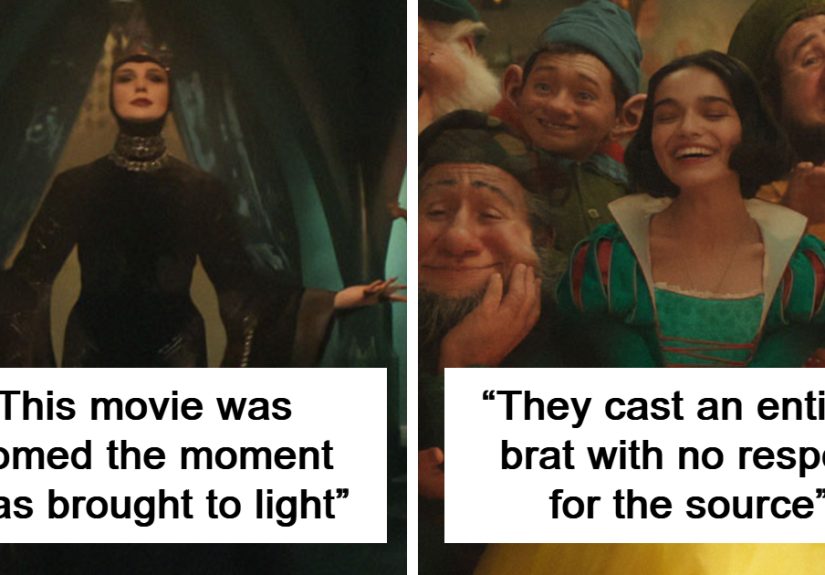
streaming. Disney cast Rachel Zegler, a Golden Globe–winning breakout from Steven Spielberg’s
West Side Story, as Snow White, and Gal Gadot, global superstar and former Wonder Woman, as the
Evil Queen. Big IP, rising star, established star what could go wrong?
The new film was framed as a modern musical reimagining, with updated songs and a more character-driven
story. Early interviews emphasized that this would not be a shot-for-shot remake but a fresh take on
Snow White’s journey, with more emphasis on her agency, leadership, and inner life rather than just
“waiting for a prince.”
Rachel Zegler’s “stalker prince” comments and the internet dogpile
The real trouble started long before the film hit theaters. In interviews dating back to 2022 and
resurfacing repeatedly in 2023 and 2025, Rachel Zegler described the original 1937 movie as
“of its time” and criticized how much of Snow White’s story revolved around a man she barely knows.
In one widely shared clip, she referred to the original prince as “a guy who literally stalks her” and
called the whole situation “weird,” emphasizing that the new movie would not center a traditional love story.
For some fans, especially those who grew up loving the original, that sounded less like thoughtful
critique and more like the new lead publicly trashing a beloved classic and the people who
enjoyed it. Add in years of frustration about remakes in general, and the backlash snowballed. Clips
were edited, reposted, and stripped of context a perfect recipe for outrage.
By 2025, Zegler was walking some of that language back, calling the prince “misunderstood” and
stressing that she was proud to be part of a classic story, even as she defended the decision to modernize
Snow White as a character. She also spoke about how constant criticism “rolls right off my back” now,
comparing herself to a duck letting the water slide away, but acknowledged how intense it’s been to grow
up under that level of scrutiny.
The dwarfs, representation, and the “go woke, go broke” chorus
The dwarfs (or, depending on the week, “magical creatures”) became controversy number two.
After actor Peter Dinklage criticized the idea of recreating the original seven dwarfs as
“backward” and potentially offensive to people with dwarfism, Disney publicly promised to
re-evaluate its approach.
That re-evaluation turned into a PR headache. On-set photos appeared in 2023 showing a mixed group of
performers with different heights, genders, and ethnicities, reportedly standing in for the dwarfs.
The images went viral, with some commentators accusing Disney of being “too politically correct” and
using the film as proof of a supposedly “woke” agenda. Others argued in the opposite direction
that changing the dwarfs and using CGI characters took away potential roles from actors with dwarfism.
In other words: no matter what Disney did, someone was mad. Online, the narrative that this movie was
“cursed,” “doomed,” or destined to flop settled in long before anyone had seen a full trailer, let alone
the finished film.
Disney Scales Back the ‘Snow White’ Premiere
From massive red carpet to “let’s keep this quiet”
Normally, a live-action remake of Disney’s first princess would get the full royal treatment:
giant Hollywood premiere, multi-day press blitz, influencers, photo ops, the whole pumpkin carriage.
Instead, reports in March 2025 revealed that Disney was scaling back the Hollywood premiere for
Snow White.
According to multiple industry outlets, the studio opted for a smaller, more controlled event:
fewer press outlets, a less splashy red carpet, and a focus on invited guests rather than a giant
fan spectacle. The move came after months of negative headlines, online calls for boycotts, and fears
that any live mic near anyone involved might generate another viral controversy clip.
Conservative media framed the scaled-back premiere as Disney reacting to its own “woke” missteps,
pointing to Zegler’s interviews and the dwarfs debate as proof that the studio had alienated core
audiences. Others argued the decision was simply risk management a way to limit both costs and chaos
at a time when even a family movie can become a front line in larger cultural battles.
“Doomed” before the box office even opened?
By premiere week, the story surrounding Snow White wasn’t “Is it good?” so much as
“Is this the most cursed movie of the year?” Coverage focused on delays, rewrites, online feuds,
and whether the negative buzz would sink the film no matter what the final product looked like.
That narrative can become self-fulfilling. If audiences hear repeatedly that a movie is “doomed,”
some will skip it out of curiosity fatigue alone. Others show up mainly to rubberneck the train wreck
less “take my kids to a fairy tale” and more “let’s see if it’s really as bad as TikTok says.”
Rachel Zegler in the Crosshairs: Sexism, Racism, and Fandom Rage
Not just about a quote who’s allowed to critique a classic?
It’s impossible to talk about the Zegler discourse without mentioning who she is: a young,
Latina actress cast as a character historically depicted as a pale, raven-haired princess
whose “skin is white as snow.” For some viewers, especially fans excited about more diversity in
Disney casting, her role was a sign of progress. For others, it became a lightning rod.
Zegler didn’t just quietly take the job; she spoke openly about updating outdated gender dynamics and
reframing Snow White as less prince-obsessed and more self-driven. Critics online accused her of
disrespecting the original, being ungrateful, or talking down to fans. Embedded within that backlash
were clear notes of racism and misogyny, with some attacks focusing less on her actual comments and
more on her identity and appearance.
Walking the tightrope between honesty and PR
In later interviews, Zegler tried to strike a more careful balance: still defending the idea that
modern fairy tales should reflect contemporary values, while also affirming that she loves the
original movie and understands why it means so much to people. She highlighted that the new film gives
Snow White more agency, while still keeping elements of romance and fantasy.
At the same time, she’s been candid about the emotional toll of nonstop criticism, describing how she’s
had to develop thicker skin and lean on friends and collaborators to stay grounded. It’s a very 2025
problem: promotion for your movie doubles as group therapy for surviving your own Twitter searches.
Gal Gadot: When Your Villain Comes With Geopolitics
Acting, singing, and “is she miscast?”
You might think playing the Evil Queen would be the fun job: cackle, wear dramatic capes, sing a big
villain song, go home. For Gal Gadot, it hasn’t been that simple. Some early reviews described her
performance as campy and enjoyable, praising her signature “evil queen bop,” while others argued that
her voice didn’t quite match the demands of a musical role or that she was miscast overall.
Those debates are normal movie-criticism territory. But in Gadot’s case, they collided with something
much larger: her identity as an Israeli actress and her public support for Israel, particularly after
the events of October 7 and the subsequent war in Gaza.
Bans, boycotts, and competing political narratives
The politics didn’t stop at social media. Lebanon banned the film outright because of Gadot’s casting,
citing its longstanding policies against releasing movies featuring Israeli actors. Other campaigns called
for boycotts in various regions, arguing that supporting the film meant indirectly supporting Gadot’s
political stance.
Months later, Gadot herself suggested that the film’s poor box office performance reportedly earning
less worldwide than its large production budget was partly driven by pressure on celebrities to
take specific positions on Israel and Palestine, and by audiences’ politically charged reactions.
At the same time, coverage noted that her co-star Zegler faced criticism from the opposite direction
for expressing support for Palestinians, adding another layer of tension to how different groups
perceived the film and its stars.
Suddenly, a movie about poisonous apples and mirrors that talk was being treated as a referendum on
global politics. No studio marketing plan, no matter how carefully crafted, can fully control that.
Is the Movie Itself Any Good?
Early reactions: praise, criticism, and a lot of “it’s fine”
Lost in all the noise is a basic question: is Snow White actually terrible, or just okay with a
cursed PR campaign? Early critical reactions landed in the “mixed but not catastrophic” zone. Many reviewers
praised Zegler’s singing and screen presence, calling her performance “supernova-like” and noting that she
anchors the film even when the tone or CGI wobbles. Gadot’s Evil Queen, meanwhile, divided opinion; some
viewers enjoyed her theatrical villain energy, while others found her songs or line delivery underwhelming.
The most consistent complaints targeted the dwarfs or magical companions and the heavy use of CGI,
which some audiences felt made the movie look oddly artificial. Others questioned whether the story’s
updates went far enough, arguing that it tried to please everyone and ended up feeling like a compromise
between old-fashioned romance and modern empowerment.
Financially, the movie struggled to recoup its large budget in theaters, eventually being framed as a
box-office disappointment that found a second life on streaming the now-standard path for a lot of
big studio releases that fail to become global phenomena.
Internet Fairy Tale: The Bored Panda–Style Reaction Roundup
If you scroll through social media, comment sections, and fan forums, the vibe around Snow White
looks like a Bored Panda gallery of very specific 2025 emotions:
- The “Let People Enjoy Things” Crowd: Parents who just want to take their kids to a movie
without explaining three different controversies on the car ride home. - The “Not My Snow White” Purists: Fans who feel like the original film’s charm is being
overwritten by modern politics and snarky interviews. - The Representation Advocates: Viewers thrilled to see a Latina Snow White and a more
empowered heroine, frustrated that progress is being drowned out by culture-war talking points. - The Industry Cynics: People who think the real villain is the endless remake machine and
the huge budgets poured into familiar IP instead of new stories. - The Meme Lords: Everyone turning “the prince is a stalker” discourse into jokes,
reaction images, and mashups with other Disney movies.
In other words: nobody can agree on anything, but everybody has Wi-Fi.
What It Feels Like to Watch a “Doomed” Movie Anyway (Experience Section)
Imagine you’re an everyday Disney fan scrolling through headlines. You see that the Snow White
premiere has been scaled back, the lead actress is “canceled” for the third time this week, and the villain
is at the center of international boycotts. At some point you have to decide: do you skip the drama, or
buy a ticket just to see what all the fuss is about?
People who did go whether for their kids, for nostalgia, or out of curiosity often describe a strange
disconnect between the film on screen and the hurricane of discourse around it. In the theater, it’s still
a Disney musical: big songs, sweeping camera moves, ornate costumes, an over-the-top villain with a killer
eyeliner game. Kids laugh at the physical comedy, gasp at the poisoned apple, and cheer when Snow White
gets her happy-not-quite-like-the-original ending.
The adults, though, are watching with Twitter in the back of their minds. When Snow White sings about
finding her own path, some viewers see a smart update to a 1930s script. Others hear echoes of Zegler’s
controversial interviews and wonder if the movie is trying to reassure angry fans. When the dwarfs appear
in their reimagined form, some people think, “Okay, that’s a reasonable compromise,” while others mentally
replay months of arguments about representation, access to roles, and “PC culture.”
A lot of moviegoers report a kind of split-screen experience: one channel is the film itself earnest,
colorful, trying really hard and the other is the cultural baggage that came attached to it. Afterward,
you might leave the theater feeling oddly tired, not because the movie is emotionally devastating,
but because you’re bracing for the inevitable “So what did you think of all the controversy?”
conversation at work, in group chats, or online.
There’s also a quieter group of viewers who relate more to the people involved than to the political
arguments. They see a young actress navigating fame in real time, a global star whose identity has become
a geopolitical flashpoint, and hundreds of craftspeople who spent years building sets, costumes, and
visual effects only to have their work flattened into “that cursed Disney remake.” For them, watching
Snow White is a reminder that movies are made by actual humans not just studio logos and
trending hashtags.
Of course, some folks walk out and shrug: “It was fine. The apple looked cool. My kid liked the songs.
What’s for dinner?” That might be the most honest reaction of all. The internet loves a narrative where
a movie is either a world-saving masterpiece or a catastrophic failure, but real-life experiences are
messier. Sometimes you just get a pretty good musical that had an extremely bad PR journey.
In that sense, the “doomed” Snow White becomes a kind of time capsule of our current media moment:
a reminder that no modern fairy tale arrives untouched by politics, social media, and the expectation that
every entertainment choice is also a moral statement. Whether you end up loving, hating, or barely
remembering the film, you can’t deny it gives us plenty to talk (and argue) about.
Conclusion: No Fairy-Tale Ending, But a Very 2025 Story
Disney’s decision to scale back the Snow White premiere wasn’t just about red-carpet logistics.
It was the culmination of years of overlapping controversies: Rachel Zegler’s blunt critiques of the
original film and the backlash that followed, intense debates over representation and the dwarfs,
Gal Gadot’s political baggage and international boycotts, and a growing exhaustion with big-budget remakes.
Was the movie truly “doomed”? Not in the sense that nobody enjoyed it plenty of viewers found things
to love, from the performances to the music. But it was definitely haunted by expectations and arguments
that no fairy godmother could wave away. In the end, Snow White isn’t just a story about a girl,
a mirror, and a poisoned apple anymore. It’s also a story about how modern fandom, politics, and
corporate branding collide and how even the fairest of them all can get lost in the funhouse of
online outrage.