Table of Contents >> Show >> Hide
- First, a quick reality check: “cellophane” means two different things
- Supplies checklist: what you need (and what makes life easier)
- Easy Ways to Do Cellophane Wrapping: 12 Steps
- Fast variations: same skill, different shapes
- Troubleshooting: when your wrap starts acting like it has opinions
- Pro styling tips (that don’t require a craft degree)
- Safety and sanity notes (short, but important)
- Conclusion: your wrap can look fancy without being fussy
- Extra : Real Experiences (So You Don’t Repeat My “Oops” Moments)
- SEO Tags
Cellophane wrapping is the gift-wrapping equivalent of putting on sunglasses: suddenly everything looks more put-together, slightly mysterious, and 73% more “I definitely planned this.” Whether you’re wrapping a gift basket, a bouquet, baked goods, or that oddly shaped present that looks like it escaped from a geometry textbook, clear cello wrap can make it look polished fastif you know the tricks.
This guide gives you a simple, repeatable 12-step method, plus variations, troubleshooting, and a final “learned it the hard way” experience section. Grab your roll, your tape, and your best “I’m a calm adult” face. Let’s wrap.
First, a quick reality check: “cellophane” means two different things
In everyday American shopping-speak, “cellophane” often refers to any clear gift wrap filmusually polypropylene or similar plastic “cello” wrap. True cellophane, technically, is a regenerated cellulose film (plant-based). Both can look nearly identical on a gift, but they behave differently:
- Gift-wrap cello film (common): sturdy, glossy, great for baskets, tends to hold creases, may build static.
- Shrink wrap (bag or roll): tightens with heat for a crisp “retail-ready” finishawesome, but you must use heat carefully.
- Food-safe cellophane bags/film: intended for food contact; still let hot items cool before packaging to avoid fogging and moisture issues.
Bottom line: use what you have, but read the label if you’re wrapping food or using heat. “Clear cello wrap” for gifts is perfect for presentation.
Supplies checklist: what you need (and what makes life easier)
Must-haves
- Cellophane/cello wrap (roll or pre-made basket bag)
- Sharp scissors (dull scissors = sad, jagged edges)
- Clear tape (packing tape or gift wrap tape)
- Ribbon or a bow (because finishing matters)
- Twist tie, rubber band, or pipe cleaner (temporary “third hand” for the gather)
Nice-to-haves (a.k.a. “I like peace”)
- Double-sided tape for hidden seams and less “tape sparkle”
- Glue dots for attaching decor without visible tape
- Heat gun or hair dryer if you’re using shrink wrap
- Anti-static help: dryer sheet, a tiny spritz bottle, or just a clean, slightly damp cloth
- Shred/filler (paper crinkle, tissue) to stabilize items in baskets
Pro tip: wrap on a clean, dry, wide surface. If your workspace is tiny, you’ll spend half the time wrestling the film like it owes you money.
Easy Ways to Do Cellophane Wrapping: 12 Steps
This 12-step method works best for gift baskets, but it also adapts to bouquets, treat bundles, and “I bought five small gifts and I refuse to wrap five separate things” situations.
- Choose your wrap strategy: roll, bag, or shrink.
If you’re new: use a roll (most forgiving). If you want easy: use a pre-made basket bag. If you want “store display”: use shrink wrap. Pick one before you start so you’re not improvising mid-wrap like a cooking show contestant.
- Build a stable base (because wobbly gifts look nervous).
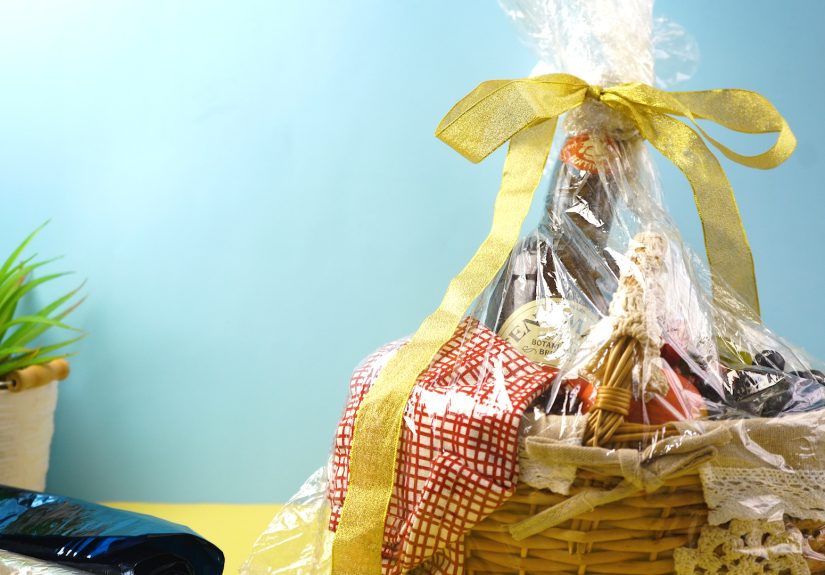
In a basket: place heavier items low and centered. Use filler to prevent shifting. For a bottle: set it in a small box or add a stabilizing base. For treats: stack them so the package looks intentional, not accidental.
- Add “pretty, but practical” supports.
Tuck in tissue, crinkle paper, or shredded kraft to fill gaps and keep items upright. If something can tilt, it will tilt. This is physics.
- Measure your film like a reasonable person.
Rule of thumb for baskets: the film should be wide enough to wrap around the base with overlap, and tall enough to rise above the highest item with extra to gather (think “enough to make a fluffy top”). Cut longer than you thinkyou can trim later; you can’t un-cut.
- Lay the film shiny-side out and center your item.
Place the basket or gift in the middle of the film. If the film has a seam or fold line, position it so the “front view” stays as clear and uninterrupted as possible.
- Bring up opposite sides and create a clean front.
Lift two opposite sides of the film and bring them up around the item. Then lift the other two sides. Aim for a smooth “window” in front. If wrinkles form, gently pull the film outward (away from the gift) to smooth, not downward (downward makes bunching).
- Secure the gather temporarily (aka the “third hand” move).
Hold the film above the gift and gather it neatly. Use a rubber band, twist tie, or pipe cleaner to hold it in place while you adjust. This step is the difference between “professional” and “I wrapped this in a wind tunnel.”
- Adjust the “skirt” around the base.
Before tying the final ribbon, check the bottom. You want the film to hug the basket base without bulky folds. Use small pieces of clear tape underneath or behind the basket to control excess film. Keep tape off the front when possible.
- Make the top look like a deliberate design choice.
Once the base looks smooth, fluff the gathered top into a “fan” or “flower” shape. Pull sections outward evenly so it looks symmetrical. If it’s too tall, trim the top with sharp scissors.
- Tie it for real: ribbon, bow, and “no slipping” insurance.
Replace the temporary tie with ribbon. Cinch firmly, knot once, then tie a bow. If you want extra hold, tie a second knot before the bow. If ribbon slides on slick film, rough up the tie area slightly by twisting the film tighter (more grip).
- Add finishing touches that look expensive (even if they weren’t).
Add a gift tag, greenery sprig, mini ornament, dried orange slice, or a tiny note. Attach with a small piece of tape hidden behind the bow, or use glue dots. Keep accents small so the wrap still looks clean.
- Do a 10-second “retail inspection.”
Turn the gift 360 degrees. Look for: visible tape on the front, sagging areas, crooked bow, or items shifting inside. Fix now, not after you’ve arrived and everyone is watching you carry the gift like it’s a newborn.
Fast variations: same skill, different shapes
Wrapping a single gift box in cellophane
Use a sheet large enough to cover the box with a little extra at the top. Center the box, bring film up and around like standard paper wrapping, then tape the seam underneath. Gather the excess at one end (or at the top like a candy wrapper), tie with ribbon, and trim. If you want a fun look, add confetti between the box and the clear film for a “snow globe” vibe.
Wrapping a bouquet
Wrap stems with a damp paper towel and cover that with a small layer of plastic (to protect the wrap). Then place bouquet on the film at an angle, roll into a cone, and tape the seam. Tie ribbon around the stems. The goal: pretty blooms up top, tidy “no leaks” situation down below.
Wrapping treats and baked goods
Let baked goods cool completely (warm items create condensation and foggy film). Use food-safe cello bags when possible. Tie with ribbon or twist tie, and add a label with ingredients if you’re gifting to people with allergies.
Using shrink wrap for that tight, glossy finish
Place the basket inside a shrink bag (or wrap with shrink film), gather at the top, and seal the excess with a tie. Apply heat gradually, keeping the heat source moving and not too close. Start at the lower areas and work upward so the bag tightens evenly. Stop as soon as it’s snugoverheating can warp the film or damage delicate decorations.
Troubleshooting: when your wrap starts acting like it has opinions
“It’s full of wrinkles.”
- Use more film than you think you needtight film wrinkles, generous film drapes.
- Pull outward to smooth, not downward to compress.
- If you must tape, tape underneath or behind the basket to hide the “evidence.”
“It keeps tearing.”
- Switch to sharper scissors and avoid jagged starter cuts.
- Don’t yank; lift and guide the film.
- For heavy or spiky items, add a layer of tissue between the item and the film as a buffer.
“Static is making it cling to everything except the basket.”
- Lightly wipe your hands with a dryer sheet or use a barely damp cloth on the outer film.
- Avoid over-handling the filmstatic loves attention.
- Keep pets away. They are basically static generators with feelings.
“The bow keeps slipping.”
- Twist the gathered top tighter to create texture before tying ribbon.
- Use wired ribbon or grosgrain ribbon for better grip.
- Tie a firm knot first, then a bow, then a second knot if needed.
“It looks cloudy or foggy.”
- Moisture is the usual suspect: don’t wrap warm items and avoid wet decor touching the film.
- Store wrapped gifts in a cool, dry place, away from heat vents and direct sun.
Pro styling tips (that don’t require a craft degree)
- Match the ribbon to one color inside the basket (instant “cohesive”).
- Use two ribbons: one to cinch, one as the decorative bow for extra volume.
- Hide the seam: place it behind the basket handle, under the base, or directly under the bow.
- Add a small “signature element”: a tag, sprig of rosemary, or mini ornament makes it look custom.
- Keep the front clear: treat the front like a display window. Tape and seams belong backstage.
Safety and sanity notes (short, but important)
- Heat tools: if using shrink wrap, keep heat moving and at a safe distance. Don’t aim at ribbons, dried florals, or anything meltable.
- Ventilation: use heat in a well-ventilated space, especially with plastic films.
- Food gifts: use packaging intended for food contact when possible, and cool foods completely before wrapping to prevent condensation.
- Kids and pets: clear film is a choking/suffocation hazardstore rolls and scraps out of reach.
Conclusion: your wrap can look fancy without being fussy
The secret to great cellophane wrapping isn’t magicit’s setup. Build a stable gift, use enough film, gather neatly, and finish with a confident bow. After a couple tries, you’ll start wrapping baskets like you run a boutique, not like you’re trapped in a clear-plastic wrestling match.
And if your first attempt looks a little chaotic? Congratulations: you’ve joined the proud tradition of people who’ve learned that cellophane is both a wrapping material and a personality test.
Extra : Real Experiences (So You Don’t Repeat My “Oops” Moments)
The first time I tried to wrap a gift basket in cellophane, I assumed it would be like wrapping a presentjust see-through. That confidence lasted exactly seven seconds, which is the time it took for the film to cling to my sweater, my elbow, and (somehow) the ceiling fan. I learned Lesson #1: cellophane does not respect personal space.
Lesson #2 arrived when I cut the film too short. I told myself I could “stretch it.” Spoiler: you cannot stretch cellophane in a way that improves the situation. You can only stretch it in a way that creates dramatic tearing noises and an urgent need for fresh tape. From then on, I started cutting extra length on purpose. I call it “wrap insurance.” It costs nothing and saves your dignity.
Then there was the Great Bow Slip of 2024 (a historic event in my household). I wrapped a gorgeous snack basket, tied a silky ribbon bow, and set it aside. Ten minutes later, the bow had slowly migrated up the gathered film like a determined inchworm. The basket looked like it was wearing a tie that didn’t fit. That’s when I discovered the power of twisting the gathered top tighter before tying the ribbon. A little texture gives ribbon something to grip. Smooth film plus smooth ribbon equals “gravity wins.”
My most useful “wow, that actually works” trick came from wrapping multiple baskets for a holiday party. I had a stack of items that were impossible to keep uprightsmall jars, candy, and one extremely top-heavy mug. I stopped trying to force it and instead added filler like I meant it. Once everything was snug, the wrap looked cleaner because the basket was stable. It’s counterintuitive: the more you support the inside, the less you have to fight the outside.
I’ve also learned the difference between “wrapping for looks” and “wrapping for travel.” If the gift needs to survive a car ride (or worse, a well-meaning relative carrying it sideways), tape the underside strategically and keep the front pristine. I’ve seen too many beautiful wraps ruined by a single visible strip of tape across the front like a “do not cross” line.
Finally, if you ever try shrink wrap for that tight, professional finish, start slow. The first time I used heat, I went in like I was toasting a bagel. The film tightened too fast in one spot, creating a weird puckered area that looked like the basket had inhaled sharply. Now I treat heat like seasoning: you can always add more, but you can’t un-burn the vibe.
If you take anything from these stories, let it be this: cellophane wrapping is forgiving if you give yourself marginextra film, extra filler, a temporary tie while you adjust. Your gift doesn’t need perfection. It needs to look loved, intentional, and just shiny enough to make someone smile before they even open it.