Table of Contents >> Show >> Hide
- Why Ericka Hart’s Story Hits Different
- 2014: When Family History Becomes Your Timeline
- Treatment Choices, Hair, and the Cultural Weight We Don’t Talk About
- The Bigger Reality: Black Women and Breast Cancer Outcomes
- “Not Seeing Myself in Advocacy”: The Representation Problem
- Afropunk 2016: Choosing Visibility on Purpose
- What Hart’s Advocacy Says About Healthcare in America
- Screening: What Guidelines Say (and What Equity Requires)
- Practical Ways to Support Black Women Facing Breast Cancer
- What to Take From Ericka Hart’s Story
- Additional Experiences (Extended Section)
Breast cancer is already a life-shaking diagnosis. Add being Black in a healthcare system that doesn’t always listen, plus a culture that often treats “awareness” like it has one default face, and you get something bigger than a medical journey. You get an identity collisionplus a crash course in self-advocacy you didn’t ask for.
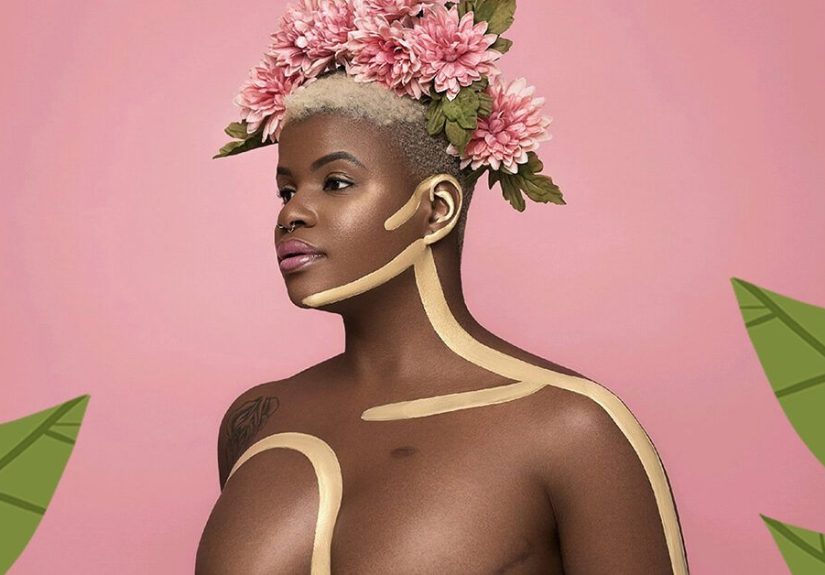
Ericka Hart’s story sits right at that intersection. Hart is a Black, queer breast cancer survivor and educator who became widely known for refusing to hide what survivorship can look like. Not the airbrushed “pink ribbon” version. The real version: scars, anger, humor, grief, and the radical decision to keep showing up anyway.
Why Ericka Hart’s Story Hits Different
Many public conversations about breast cancer still orbit a narrow image: thin, bald, frail, quietly brave, andtoo oftenwhite. Hart’s lived reality challenges that framing. Their point isn’t “look at me.” It’s “look at what you’ve been trained not to see.”
Hart has spoken about learning early that the world’s mental picture of breast cancer didn’t include women who looked like their motherand how that disconnect stuck. When a disease is everywhere but representation isn’t, it can quietly teach you that your pain is an exception instead of something the system should be prepared for.
2014: When Family History Becomes Your Timeline
Hart was 13 when their mother died of breast cancer, after being diagnosed in her early 30s. That’s not just “family history”that’s childhood shaped by hospitals, uncertainty, and the kind of worry that moves into your brain and refuses to pay rent.
Self-exams, body awareness, and taking symptoms seriously
Hart has described learning self-breast exams young and doing them regularly. Years later, that awareness mattered: they found a lump and chose to get it checked. That decision sounds simpleuntil you remember how many people delay care because they’re busy, afraid, uninsured, or used to being dismissed.
One of the most quietly powerful parts of Hart’s story is that it underlines a truth people don’t say loudly enough: early action often depends on being taught that your body is worth paying attention to.
Treatment Choices, Hair, and the Cultural Weight We Don’t Talk About
Hart’s doctor recommended a double mastectomy in 2014, followed by about a year of chemotherapy. They went through both. And while surgery and chemo are physically grueling for anyone, Hart has been candid about how the emotional math can be different for Black women and Black feminine people.
“Will I lose my hair?” isn’t a shallow question
Hart has shared that one of their first fears was losing their hairbecause in Black communities hair can carry deep cultural meaning, identity, and history. When outsiders roll their eyes at that concern, it reveals how little they understand the full human cost of treatment.
Survivorship includes what you loseand what you’re forced to redefine
Hart has also spoken about realizing after surgery that breastfeeding wouldn’t be possible for them. That’s the part many “warrior” narratives skip: survivorship can include grief for futures you imagined and didn’t get to keep.
The Bigger Reality: Black Women and Breast Cancer Outcomes
Hart’s story isn’t just personalit’s situated in a national disparity that researchers, clinicians, and advocacy organizations have been documenting for years. In the U.S., Black women have a lower (or similar) overall incidence of breast cancer compared with white women, yet a substantially higher risk of dying from it.
Why the gap exists (and why “awareness” alone can’t fix it)
Multiple factors show up again and again in the research and reporting:
- Later-stage diagnosis: Delays in follow-up after abnormal screens, barriers to timely appointments, and unequal access to high-quality imaging and specialists can all shift diagnosis later.
- Differences in tumor subtype: Black women are more likely to be diagnosed with aggressive subtypes such as triple-negative breast cancer (TNBC), which has fewer targeted treatment options.
- Unequal treatment quality and delays: Studies suggest survival differences persist even when accounting for biologypointing to access, timeliness, insurance, and systemic racism in care delivery.
- Underrepresentation in clinical trials: When fewer Black patients are included, new treatments can arrive with less clarity about real-world effectiveness across populations.
The point isn’t that Black bodies are “mysteriously more complicated.” The point is that systems can be consistently less protectivestarting with who gets believed, who gets timely testing, and who gets the best care without having to fight for it.
“Not Seeing Myself in Advocacy”: The Representation Problem
Hart has talked about the dissonance of knowing Black people die from breast cancer at higher rates, while advocacy campaigns often don’t center Black survivors. That gap isn’t just annoyingit can change outcomes.
Representation affects what people think is “normal,” what symptoms they take seriously, and whether they feel welcome seeking support. It also affects funding priorities, public policy urgency, and which communities are treated as an afterthought.
Afropunk 2016: Choosing Visibility on Purpose
In 2016, Hart made headlines for baring their double mastectomy scars at Afropunk Fest in Brooklyn. The act wasn’t about shockit was about rewriting the visual story of survivorship.
Hart has explained the moment in grounded, almost practical terms: it was hot, they saw men shirtless, and they questioned why bodies coded as feminine are expected to cover up by default. Then they made it bigger: scars became a public statement that Black, queer people also get breast cancerand deserve to be centered in care and advocacy.
Visibility as education (and as protest)
Hart has described the experience as a kind of teachingusing their body instead of a lecture. People asked what happened, which revealed a harsh truth: many Americans still don’t recognize what breast cancer can look like on different bodies, at different ages, and in different communities.
What Hart’s Advocacy Says About Healthcare in America
Hart’s activism is often described as bold. But underneath the boldness is a very practical message: if a system isn’t built to hold you, you end up building your own support structuresand then trying to leave the blueprint behind for the next person.
Self-advocacy isn’t a personality traitit’s often a requirement
One of the hardest truths in breast cancer care is that patients frequently have to push for themselves: asking about options, requesting second opinions, clarifying pathology results, and making sure follow-up happens quickly. Hart has emphasized that identity doesn’t “protect” anyone from breast cancerand that people of color often have to advocate harder to get equitable care.
Screening: What Guidelines Say (and What Equity Requires)
Screening recommendations have evolved, and different organizations have slightly different guidance. A major U.S. recommendation (USPSTF) now advises biennial screening mammography for women ages 40 to 74 at average risk. Other organizations, including the American Cancer Society, recommend options that can include starting earlier or screening annually at certain ages.
But here’s the equity piece that matters: a screening is only the start. The benefit depends on timely follow-up for abnormal results and access to effective treatment. If those steps break down, the “guidelines” become just words on a page.
Practical Ways to Support Black Women Facing Breast Cancer
Hart’s story invites something more useful than admiration. It invites actionespecially for families, friends, workplaces, clinicians, and advocacy groups.
If you’re a friend or family member
- Offer specific help: rides, meal drop-offs, childcare, note-taking during appointmentsconcrete beats “let me know.”
- Respect body boundaries: don’t interrogate scars, hair, or reconstruction choices like they’re public property.
- Back their voice in medical settings: if invited, help ask questions and make sure concerns are addressed.
If you’re a clinician or health communicator
- Do not minimize symptoms: listen without bias, especially when patients describe pain, lumps, or changes.
- Close follow-up gaps: systems should track abnormal results and make navigation easypatients shouldn’t have to chase care.
- Represent real survivors: include Black women and LGBTQ+ survivors in messaging, research, and decision-making.
What to Take From Ericka Hart’s Story
Hart didn’t just survive breast cancer. They challenged the narrative architecture around it: who gets centered, who gets believed, and who gets pictured when we say the word “survivor.”
Their visibility doesn’t erase the fear, the loss, or the anger. It transforms it into something communalsomething that can warn, guide, and empower the next person who feels alone in a waiting room.
Additional Experiences (Extended Section)
To understand the topic “Ericka Hart on Facing Breast Cancer as a Black Woman,” it helps to zoom out from headlines and into the day-to-day experiences that survivors and patients frequently describeespecially Black women navigating systems that can feel both lifesaving and exhausting at the same time.
1) The “prove it” feeling. Many Black women talk about walking into appointments already braced to be doubted. Symptoms that should trigger urgency can get met with watchful waiting, vague reassurance, or a tone that suggests the patient is overreacting. That’s not just emotionally draining; it can change timelines. When a patient senses dismissal, they may delay coming backor feel they have to arrive with receipts: photos, written symptom logs, and the confidence to insist on follow-up.
2) The hidden labor of coordination. Breast cancer care can be a full-time job: scheduling imaging, tracking results, juggling referrals, negotiating insurance, finding transportation, and figuring out who’s covering work. Survivors often describe this as the “second diagnosis”the moment you realize treatment is not just medicine, it’s logistics. A supportive system makes navigation automatic. A strained system makes patients become their own case managers.
3) Hair, body image, and the politics of appearance. Hair loss isn’t only cosmetic; it can feel like losing a layer of cultural identity and personal control. Some survivors describe trying to decide what will feel empowering: cutting hair early, using headwraps, choosing wigs that match natural texture, or going fully uncovered. Meanwhile, surgery changes how clothes fit, how posture feels, and how strangers look (or don’t look). The body becomes a conversation people think they’re allowed to have out loudwhen the person living in it is just trying to get through the grocery store.
4) The “pink ribbon fatigue.” A lot of patients describe mixed feelings during Breast Cancer Awareness Month. The color pink can feel both supportive and strangely commercialespecially when messaging focuses on inspiration while skipping the hardest parts: medical bills, fertility grief, chronic pain, anxiety about recurrence, and the reality that some communities are dying at higher rates. Survivors often say they don’t need more slogans; they need better access, better research, and faster care.
5) Finding community that actually fits. Support groups can be a lifelineunless you’re the only Black woman in the room, the only queer person, the youngest by decades, or the only one asking questions about how bias affects treatment. Many survivors describe a turning point when they find spaces that reflect themwhere they don’t have to translate cultural context, justify emotions, or explain why representation matters. That’s why visibility like Hart’s resonates: it signals, “You’re not an outlier. You’re part of the story.”
6) Healing isn’t a straight line. Survivorship is often portrayed as a finish line. In reality, people describe it as a new landscape: follow-up scans, long-term side effects, shifting relationships, and the mental whiplash of going from constant appointments to quiet. Some feel pressure to be grateful every second. Others feel angry that “normal life” expects them to bounce back on schedule. Many experience bothsometimes on the same Tuesday.
Threading through these experiences is a shared lesson: outcomes improve when patients are heard early, guided through follow-up quickly, and treated with dignity throughout. Hart’s public stance makes that lesson harder to ignore. And for the person quietly searching late at nightwondering if anyone else has scars like theirs, fears like theirs, or a body like theirsthat matters more than any perfect slogan.