Table of Contents >> Show >> Hide
- What Made JF & Son Different?
- The Real Appeal of Hand-Woven Blankets
- What the JF & Son Blankets Actually Looked Like
- Why Fiber Choice Matters More Than People Think
- How to Style a Hand-Woven Blanket Without Making It Look Staged
- How to Care for Hand-Woven Blankets Like You Deserve to Keep Them
- Why Blankets Like These Still Matter in a Fast-Furniture World
- Extra Experience Section: What It Feels Like to Live With a Hand-Woven Blanket from JF & Son
- Final Thoughts
- SEO Tags
Some blankets are made for warmth. Others are made for drama. The best ones, though, do both without making your room look like it lost a fight with a ski lodge gift shop. That is part of the charm behind hand-woven blankets from JF & Son: they sit at the sweet spot where fabric, craft, and good taste all agree to cooperate.
In a market crowded with mass-produced throws that feel suspiciously shiny and somehow both stiff and slippery, hand-woven blankets still have a pulse. They carry irregularity, texture, and just enough human touch to keep a room from feeling flat. JF & Son’s blankets stand out because they were described not as generic bedding accessories, but as design objects with personality: limited-edition pieces, thoughtful materials, and patterns that looked collected rather than churned out by an algorithm with a passion for beige.
This is exactly why the story of JF & Son hand-woven blankets still feels relevant. Even if you are not actively hunting down one of the original pieces, the blankets offer a useful lesson in what makes artisan textiles worth talking about. They remind us that fabrics and linens are not just background players in a home. Sometimes they are the whole plot.
What Made JF & Son Different?
JF & Son occupied a memorable lane between fashion, home goods, and small-batch textile design. Public descriptions of the brand painted it as a style-driven label with a socially conscious production story and a sharp eye for texture. That combination matters because a lot of brands can give you a blanket, but far fewer can give you a blanket with a point of view.
The available descriptions of the line suggest that JF & Son was interested in more than softness alone. The blankets were positioned as part of a larger world of textiles and handwork, not random add-ons tossed into a catalog because “cozy” was trending. That distinction shows up in the details. The line included limited-edition angora-blend blankets as well as cotton styles with graphic names like Hudson and Black Hatch-mark. In other words, these were not sleepy basics. They had opinions.
That design confidence is a big reason the blankets still feel interesting. Good artisan blankets do not scream for attention, but they also refuse to disappear. They add warmth, yes, but they also contribute shape, rhythm, and mood to a room. JF & Son appears to have understood that a blanket can function like a painting that happens to be useful on a cold night.
The Real Appeal of Hand-Woven Blankets
If you have ever handled a truly hand-woven blanket, you already know the difference before anyone starts explaining warp, weft, or fiber blend. It has a certain life to it. The surface is not too perfect. The drape is softer, more natural, and often more expressive. Even the slight variation in tension can become part of the beauty.
That is the magic of woven textiles. A hand-woven piece tends to feel less anonymous than a factory-perfect alternative. It shows the structure of the weave instead of hiding it. Pattern is often built through the movement of yarn itself, not just printed on top like a costume. That means the texture is honest. What you see is what the fabric is actually doing.
This is also why hand-woven blankets age so well visually. A machine-made blanket often looks its best in the first five minutes after you cut the tag off. A woven blanket made with good natural fibers tends to mellow into itself. It becomes more relaxed, more at home, and more convincing over time. It develops character instead of just developing fuzz. That is a very different career path.
From a design perspective, hand-woven blankets pull off something difficult: they can be both useful and atmospheric. They warm a bed, soften a chair, bring color to a neutral sofa, and make a guest room feel cared for instead of merely assembled. That is a lot of work for one rectangle of fabric, but the good ones are overachievers.
What the JF & Son Blankets Actually Looked Like
Based on the surviving product descriptions, the JF & Son blankets were not trapped in one visual mood. Some leaned soft and luxurious, while others had a more graphic, utilitarian spirit.
The Limited-Edition Angora-Blend Blankets
The best-known description points to hand-woven, limited-edition angora-blend blankets made in Noida, India. They were approximately 60 by 90 inches, which is a generous size for layering across a bed, folding over the back of a sofa, or claiming as your personal TV blanket if you are prepared to defend your territory. The palette reportedly came in four colorways, which suggests that JF & Son understood an important truth: a good blanket should give you options, but not so many that you spiral into a decorative identity crisis.
The Cotton Hudson Blanket
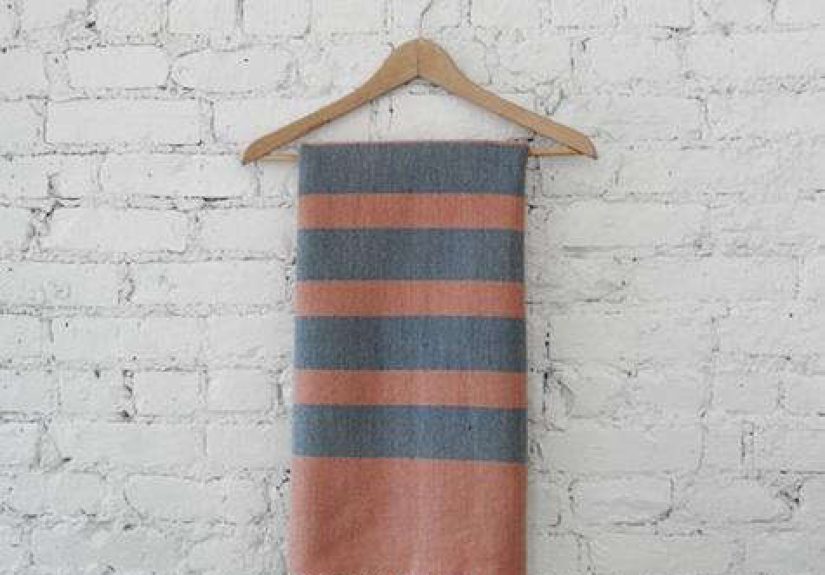
The Hudson Blanket was described as a thick, hand-woven cotton car blanket in pink with blue stripes and tasseled edges. That phrase alone deserves applause. “Car blanket” is somehow practical and romantic at the same time. It suggests a throw that can move from road trip to porch swing to guest bed without complaining. The pink-and-blue stripe combination also signals that JF & Son was not afraid of color, but used it with restraint rather than chaos.
The Black Hatch-Mark Blanket
The Black Hatch-mark Blanket was described as lightweight, hand-woven, and black-and-white with a darker black outer edge. This version sounds especially versatile. A black-and-white woven blanket can live almost anywhere: minimal bedroom, rustic cabin, modern apartment, or living room where every other object is trying very hard to be “quiet luxury.” It adds pattern without starting an argument with the furniture.
Together, these styles suggest a line that balanced softness with graphic structure, and comfort with a slightly editorial look. That is a difficult balance to strike. Many blankets are either so precious you are afraid to touch them or so basic they might as well come with a shrug. JF & Son appears to have aimed for the middle ground, which is usually where the smartest design lives.
Why Fiber Choice Matters More Than People Think
One of the most useful ways to understand the appeal of woven throw blankets is to look at fiber. Material is not just a technical detail. It affects temperature, breathability, weight, drape, care, and the overall look of the textile.
Cotton
Cotton is often the easiest fiber to live with. It is breathable, approachable, and usually more relaxed in everyday spaces than a fussier luxury fiber. In blanket form, cotton works especially well when you want layering flexibility. It can sit on the end of a bed in warmer months, act as an extra living-room throw in cooler weather, and generally behave like a team player. A cotton blanket also tends to show weave beautifully, which helps hand-woven patterning stand out.
Angora Blend
An angora-blend blanket leans softer, warmer, and more tactile. It is the fiber equivalent of turning “cozy” into a personality trait. When used thoughtfully, an angora blend can create that light, insulating softness people want from an heirloom-style blanket. It also adds a more elevated feel, which is probably why JF & Son’s limited-edition versions attracted attention. The trick with a fiber like this is balance. The softness is the appeal, but the weave still has to hold the design together.
Why Natural Fibers Win
Natural fibers also tend to look richer than many synthetic alternatives. They catch dye differently, respond to light with more depth, and feel more nuanced in the hand. That is why a blanket made from cotton, wool, mohair, or an angora blend can make a room look more sophisticated even before anyone sits down. The fabric simply has more to say.
How to Style a Hand-Woven Blanket Without Making It Look Staged
A beautiful blanket should not look like it was placed by a nervous intern with a ruler. The best styling is relaxed, intentional, and just a little bit unfussy.
On the Bed
Fold a hand-woven blanket in thirds and place it across the lower third of the bed. This works especially well when the blanket has visible pattern or tasseled edges. If the rest of the bedding is mostly neutral, a woven blanket becomes the thing that makes the room feel finished rather than merely clean. If your bedding already has color, choose a blanket that echoes one tone instead of competing with all of them at once.
On the Sofa
Drape the blanket casually over one arm or fold it into a soft rectangle over the back cushion. The goal is to add texture, not create a textile origami challenge. A blanket like the Black Hatch-mark style would work especially well in modern interiors because its graphic structure keeps the room crisp while still adding warmth.
In a Reading Nook or Guest Room
This is where a thicker cotton or angora-blend blanket really earns its keep. It makes a chair look more inviting, gives a guest room an extra layer of hospitality, and suggests that someone actually thought about comfort. In design terms, that matters. People remember spaces that feel finished at the level of touch, not just at the level of photography.
As a Seasonal Switch
One hand-woven blanket can refresh an entire room. Trade brighter tones for earthy ones in fall, bring in black-and-white for winter contrast, or use striped cotton in spring when you want the room to feel lighter. It is one of the easiest updates in home decor, and unlike repainting a wall, it does not require emotional recovery time.
How to Care for Hand-Woven Blankets Like You Deserve to Keep Them
A hand-woven blanket is not impossible to maintain, but it does ask for a little respect. Think of it as a brilliant houseguest: easy to love, but not thrilled by chaos.
Read the Care Label First
This sounds obvious, but it is the most useful advice in the room. Fiber content changes everything. Cotton is usually more forgiving. Wool and angora blends require gentler handling and much cooler washing conditions.
Use Cold Water and Gentle Detergent
For delicate fibers, cold water and a mild detergent are your safest bets. High heat is the villain in most blanket tragedies. It can shrink wool, stress blended fibers, distort the weave, and turn a soft blanket into something with the personality of a doormat.
Skip Harsh Chemicals
Bleach and aggressive stain treatments are not your friends here, especially on animal fibers. Spot-clean carefully, test any treatment on an inconspicuous area, and remember that “powerful cleaner” is often code for “future regret.”
Air-Dry Whenever Possible
Air-drying is the safer move for most hand-woven and natural-fiber blankets. Lay the blanket flat or line-dry it as recommended. This protects both the yarn and the structure of the weave. The dryer may be convenient, but convenience has ruined many good textiles.
Store It Properly
Do not cram a beautiful blanket into a plastic tomb and call it organization. Store it in breathable fabric, away from direct light, dampness, and tight creases. If the blanket is especially delicate or sentimental, rolling it can be smarter than folding it repeatedly. Moisture and mildew are the enemies, so air circulation matters.
Why Blankets Like These Still Matter in a Fast-Furniture World
There is something quietly radical about choosing a textile that shows evidence of labor. A hand-woven blanket resists the idea that everything in the home should be instant, disposable, or trend-chasing. It suggests a slower relationship with objects. You buy it because it feels right, lives beautifully, and improves daily life, not because it briefly went viral next to a ceramic mug and a suspiciously beige croissant.
That is why the JF & Son blankets still feel worth discussing. They represent a design philosophy that values materials, craft, and visual restraint. Even the surviving descriptions of the line communicate care: distinctive weaves, tactile fibers, thoughtful scale, and color stories that sound edited rather than accidental.
In practical terms, a hand-woven blanket can solve a lot of small design problems. It softens hard edges. It fills an empty visual gap. It adds weight to a room that feels too thin. It gives guests something to reach for. And, crucially, it makes everyday life look better without shouting about it.
Extra Experience Section: What It Feels Like to Live With a Hand-Woven Blanket from JF & Son
Living with a hand-woven blanket like one from JF & Son is less like owning bedding and more like adopting a low-maintenance piece of functional art. You notice it first with your eyes. A mass-market throw usually reads from a distance as color, maybe pattern, maybe fluff. A woven blanket reads as surface. You see the structure before you even touch it. The texture catches light differently in the morning than it does at night. It can make an ordinary chair look intentional and a plain bed look layered in a way that feels personal rather than overdecorated.
Then there is the touch factor, which is where the relationship gets serious. A good hand-woven blanket has a kind of honesty in the hand. It does not feel vacuum-sealed into perfection. It feels human. There may be a little slub here, a shift in texture there, a softness that comes from fiber and weave rather than from chemical fluffing. You pull it over your lap on a rainy afternoon and suddenly understand why people get emotionally attached to textiles. It is comfort with visual standards.
There is also a practical pleasure in how such a blanket moves through the day. In the morning, it may be folded at the foot of the bed, making the room look sharper in thirty seconds flat. By late afternoon, it migrates to the sofa because someone is reading, working, napping, or pretending to work while actually daydreaming. At night, it might end up in a guest room, where it instantly makes the bed feel more generous. The best blankets are nomads with manners.
A piece like the Hudson style likely brings a more cheerful experience, especially with stripes and tassels adding personality. It feels like the kind of blanket you take into the car for an early drive, wrap around your shoulders on a porch, or spread over grass at a picnic when you want things to look charming but not overly curated. Meanwhile, a darker graphic style like the Black Hatch-mark version probably changes the atmosphere of a room with less effort. It can make a simple interior feel smarter, cleaner, and more collected.
Over time, the experience becomes less about the brand name and more about habit. You start reaching for the blanket automatically. It becomes part of how a room functions and how the home feels. That is the quiet success of a beautifully made textile. It does not sit in a corner waiting to be admired like a diva. It joins your life, improves it, and somehow keeps the room looking better while doing so. Frankly, more household items should aim that high.
Final Thoughts
Fabrics & Linens: Hand-Woven Blankets from JF & Son is really a story about why certain textiles outlast their moment. The public record on the line may be limited, but the design message comes through clearly: use natural fibers, let the weave speak, keep the palette thoughtful, and make something useful enough to live with and beautiful enough to remember.
That combination still works. It worked then, it works now, and it will probably keep working long after the latest miracle blanket made from “space-age plush technology” has retired in disgrace. A well-made hand-woven blanket is warm, tactile, stylish, and deeply human. JF & Son seems to have understood that from the start.