Table of Contents >> Show >> Hide
- What Happened: The Short Version (That Still Raises Your Blood Pressure)
- The Timeline: When “A Few Minutes” Becomes a Whole Universe
- Why the Hudson? The Decision That Sounds Wild Until You Do the Math
- The Ditching: A Water Landing Is Not a “Soft Crash”
- Evacuation and Rescue: Where Ferries Became the MVPs
- What the Investigation Found: Birds, Engines, and the Human Clock
- Safety Ripple Effects: How One River Landing Changed the Industry
- Legacy: From “Miracle” to Museum (and to Better Questions)
- What Travelers Can Learn (Without Becoming an Aviation NerdUnless You Want To)
- Conclusion: The Hudson Wasn’t LuckIt Was Preparedness Meeting Opportunity
- Experiences From the Hudson: What It Felt Like (Reconstructed From Public Accounts)
If you’ve ever flown out of New York City, you know the standard routine: taxi, takeoff, a quick peek at the skyline, and thenif you’re luckya beverage cart that appears before your email loads. On January 15, 2009, US Airways Flight 1549 followed that familiar script for about two minutes… and then wrote a brand-new one in the most unlikely place imaginable: the Hudson River.
This wasn’t a Hollywood stunt or a “pilot’s worst day” daydream. It was a real Airbus A320 with 155 people on board, two engines that suddenly forgot how to engine, and a crew that had only a few minutes to make decisions that would be dissected in slow motion for years. The result became known as the “Miracle on the Hudson”but the miracle was built from training, teamwork, physics, and a whole lot of calm under pressure.
What Happened: The Short Version (That Still Raises Your Blood Pressure)
Flight 1549 departed LaGuardia Airport in the afternoon, headed for Charlotte with a planned onward leg to Seattle. Shortly after takeoff, the aircraft encountered a flock of large birdsCanada geeseand ingested birds into both engines. Thrust dropped dramatically. The crew attempted engine restart steps, coordinated with air traffic control, and evaluated options for landing at nearby airports.
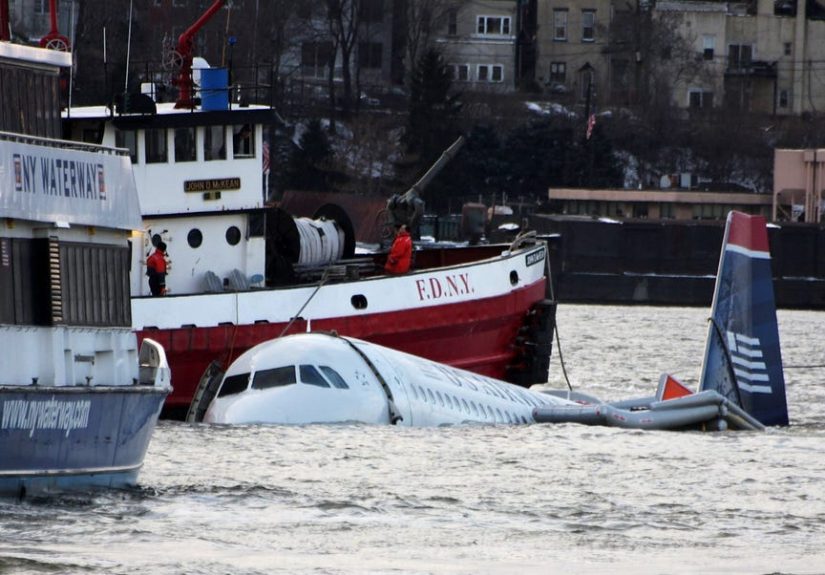
With altitude bleeding away and the geography of New York offering more obstacles than open pavement, the captain and first officer committed to a water landing (a “ditching”) on the Hudson River near Midtown Manhattan. The aircraft touched down on the river, stayed largely intact, and passengers evacuated onto slides/rafts and wings. Ferries and rescue boats arrived quickly, pulling people from the icy water and off the aircraft. Everyone survived.
Key Facts at a Glance
- Date: January 15, 2009
- Aircraft: Airbus A320-214 (US Airways), tail number N106US
- People on board: 155 (150 passengers, including a lap child, and 5 crew members)
- Cause of emergency: Bird strike involving large birds (Canada geese) leading to near-total loss of thrust in both engines
- Outcome: Successful ditching on the Hudson River and rapid rescue with no fatalities
The Timeline: When “A Few Minutes” Becomes a Whole Universe
Aviation emergencies are often described in minutes, but those minutes contain dozens of decisions. In this case, the clock started the moment the birds hit. The crew had to do four things at once: fly the airplane, diagnose the problem, run procedures, and plan a landingall while the ground (and the city) rushed up to meet them.
What the Crew Was Balancing
- Altitude and energy: An airliner without thrust is basically a very expensive glider with strict handling limits.
- Distance to runways: LaGuardia and Teterboro were nearby, but “nearby” is not the same as “reachable” when you’re descending fast.
- Time to troubleshoot: Identifying a dual-engine failure, initiating relight attempts, and confirming results takes precious seconds.
- Safe landing surface: New York doesn’t exactly hand out spare runways like free mints.
Investigators later emphasized an uncomfortable truth: simulations can make runway returns look plausible if you assume instant recognition and instant action. Real crews need a beat to process what just happenedespecially when what just happened is “both engines rolled back after birds filled the windshield.”
Why the Hudson? The Decision That Sounds Wild Until You Do the Math
To someone watching from an office building, the Hudson landing looked like a bold choice. From the cockpit, it was the option that offered the best combination of length, width, and minimal obstacles. Water landings are rare in commercial aviation, but rivers have one major advantage over city streets: fewer lamp posts.
The Hudson also had another life-saving feature that day: boats. The crew’s goal wasn’t just to touch downit was to put the aircraft where people could be rescued quickly. In winter conditions, “quickly” is not a motivational poster slogan; it’s the difference between survival and cold-water tragedy.
Risk Tradeoffs the Public Doesn’t Always See
- Runway return risks: Tight turns at low altitude, uncertain engine response, and the chance of impacting buildings if the glide falls short.
- Teterboro option: Distance and alignment challenges in a dense airspace while the aircraft’s energy state keeps shrinking.
- Hudson option: Cold water, rapid evacuation needs, potential hypothermiabut fewer hard obstacles and immediate access for rescue boats.
When the crew committed to the river, the mission narrowed: set the aircraft up with the best possible attitude, speed, and descent profile for a survivable ditching. That sounds tidy on paper. In practice, it’s like landing a skateboard on a moving treadmill… while reading a checklist… while everyone behind you wonders why the engines suddenly got shy.
The Ditching: A Water Landing Is Not a “Soft Crash”
A successful ditching requires keeping the aircraft stable and controlled, touching down with the right pitch and descent rate, and avoiding a cartwheel or breakup. Flight 1549’s A320 struck the water and stayed togetherno small feat. The aircraft remained afloat long enough for evacuation, even as water entered the fuselage and conditions deteriorated.
It’s tempting to describe this as “perfect piloting,” but it was also systems knowledge and crew coordination. One pilot focused on flying. The other worked procedures and communications. That division of laborclassic crew resource management (CRM) prevented task overload from turning a bad day into an unrecognizable one.
Evacuation and Rescue: Where Ferries Became the MVPs
The landing wasn’t the end. It was halftimeexcept the halftime show was hypothermia. After impact, passengers evacuated using forward exits, overwing exits, and available slides/rafts. The cold was immediate and punishing. People stood on wings as the aircraft floated. Others waited on slides/rafts that functioned as lifelines in freezing conditions.
The rescue response became legendary for a reason: it was fast. Ferries already operating on the river, along with emergency responders, arrived quickly and began pulling people aboard. Investigators later noted that nearby vessels were on scene within minutes and that everyone was rescued within about 20 minutes of the ditching.
What Made the Evacuation Work
- Cabin crew performance: Clear commands, urgency without panic, and rapid management of exits.
- Aircraft survivability: The fuselage stayed largely intact and afloat long enough to evacuate.
- Rescue proximity: Ferries and boats were close, experienced in the waterway, and able to improvise quickly.
- Winter realism: Cold water drastically reduces survival time without immediate extractionso speed mattered more than “perfect order.”
What the Investigation Found: Birds, Engines, and the Human Clock
The National Transportation Safety Board (NTSB) concluded the probable cause was the ingestion of large birds into both engines, causing a near-total loss of thrust and leading to the ditching. That’s the headline. The deeper lesson is how many layers of safety sit behind a single sentence.
1) Bird Strikes Are Common; This Was Uncommonly Severe
Birds and airplanes have shared airspace since the first pilot looked up and said, “Huh, that goose seems confident.” Most strikes are minor. But large flocking birds present a different risk profile, especially during climb-out when aircraft are low and engine power is high. The birds involved were identified as Canada geese, with scientific analysis and DNA-based methods used to confirm the species from engine remains.
2) Engine Certification vs. Real-World Complexity
Turbine engines are certified under bird-ingestion standards, but Flight 1549 highlighted the practical limits of those standards in a flocking-bird scenario. The incident fueled renewed scrutiny of certification tests, including how they account for flock size, bird mass, and ingestion into critical engine sections. Aviation safety isn’t just about “does it pass a test,” but “does it pass a test that resembles what actually happens at 2,800 feet over Queens.”
3) Checklists HelpUnless Time Doesn’t
The crew used quick-reference procedures for dual-engine issues and attempted relight steps. The NTSB discussed checklist design and training considerations for rare but high-consequence events at low altitude. In emergencies, the best checklist is the one that fits inside the time you have, not the time you wish you had.
4) Ditching Training and Certification Assumptions
The NTSB also pointed to systemic issues: how ditching parameters and certification expectations translate to real pilot performance without engine thrust. The report highlighted contributing factors tied to ditching certification assumptions, limited training and guidance, and the reality of task saturation during an extreme, rapidly unfolding emergency.
Safety Ripple Effects: How One River Landing Changed the Industry
Flight 1549 didn’t just create an unforgettable news cycle; it influenced how aviation thinks about bird hazards, emergency preparedness, and survival factors. Several key areas received renewed attention:
Wildlife Hazard Mitigation
Airports, wildlife biologists, and regulators have long worked to reduce bird strike risk through habitat management and monitoring. After Flight 1549, public awareness surged, and the aviation community continued pushing for better data collection and wildlife hazard programs. Managing hazardous species near airports is complicatedecologically, legally, and logisticallybut it’s one of the few safety interventions that keeps an emergency from happening in the first place.
Passenger Survival Factors
The ditching spotlighted uncomfortable details: where life vests are stored, how quickly people can don them, how brace positions affect injury, how slides function as rafts, and how quickly cold shock can overwhelm even healthy adults. Flight 1549 became a case study in the reality that “survivable impact” can still be deadly if rescue is delayed.
CRM: The Unflashy Superpower
“Crew resource management” doesn’t trend on social media, but it saves lives. The cockpit’s calm division of tasks, the cabin crew’s leadership, and the coordination with air traffic control and responders all reflect CRM principles: communicate clearly, confirm decisions, and prioritize the airplane’s energy state and survivability. It’s the teamwork version of “measure twice, cut once,” except the measuring happens at 3,000 feet with two quiet engines.
Legacy: From “Miracle” to Museum (and to Better Questions)
Over time, Flight 1549 became more than an eventit became a reference point. News coverage, books, and the film Sully made the story widely known, but the deeper legacy lives in training rooms, certification debates, and wildlife hazard planning meetings where people ask better, sharper questions: “What would we do?” “How fast could we do it?” “What assumptions are we making that reality won’t honor?”
The aircraft itself was preserved and displayed, turning a damaged A320 into a teaching tool. Museums use it to show visitors not only what happened, but how complex systemspeople, machines, procedures, responderscan align in a crisis to prevent loss of life.
What Travelers Can Learn (Without Becoming an Aviation NerdUnless You Want To)
You don’t need to memorize aircraft systems to take one practical lesson from Flight 1549: the safety briefing matters. Yes, you’ve heard it a hundred times. Yes, you know where the exits are… until your row is tilted, the cabin is loud, and the nearest “obvious exit” is suddenly not usable.
A Fast, Realistic Passenger Checklist
- Actually note your nearest exit and the one behind you.
- Wear shoes that stay on easily during takeoff and landing.
- Keep your seatbelt low and snug (the goal is “secure,” not “fashionable”).
- In an evacuation: move, listen, and don’t stop to retrieve bags. Your suitcase will not save you from cold shock.
Conclusion: The Hudson Wasn’t LuckIt Was Preparedness Meeting Opportunity
Flight 1549 is often described as a miracle, and emotionally, that makes sense. All 155 people survived a dual-engine failure over New York City and ended up on the water in January. But the story is most powerful when we treat it as more than a miracle: it’s a demonstration of how training, disciplined decision-making, and rapid rescue response can turn a worst-case scenario into a survivable one.
And if you ever find yourself looking out a plane window thinking, “What a view,” just remember: somewhere, a goose is also admiring the scenery. Let’s all try to admire it from a respectful distance.
Experiences From the Hudson: What It Felt Like (Reconstructed From Public Accounts)
The facts of Flight 1549 are well documented, but the human experience is what makes the story stick in your chest like a held breath. The following moments are reconstructed from widely reported passenger, crew, and responder accountsblended into a narrative view so you can feel the pace of what happened without pretending a single person experienced it all at once.
The Passenger Experience: “My Brain Didn’t Have a Folder for This”
For many passengers, the first sign of trouble wasn’t a dramatic announcementit was sound. A loud bang, a shudder, and then the eerie absence of the familiar engine roar. Some people described it as the plane suddenly becoming “too quiet,” like the world had hit mute. You can be a frequent flyer and still be completely unprepared for silence at climb-out.
Then came the shift in body language. Flight attendants moved fast, with that no-nonsense urgency that says, “We are past the point of polite.” When the captain’s voice came over the intercom with instructions to brace, the cabin mood condensed from casual to laser-focused. People who didn’t know each other moments earlier started acting like a team: adjusting seatbacks, tightening belts, reminding seatmates to put heads down. Not because they rehearsed itbecause humans are surprisingly good at cooperating when the situation makes it unavoidable.
The Cabin Crew Experience: Training Kicks In, Feelings Catch Up Later
A flight attendant’s job is often misunderstood as “snacks and smiles.” In an emergency, the job becomes leadership: commanding attention, directing movement, and keeping panic from becoming contagious. Reports from crew members describe that strange clarity in crisisyour hands move before your thoughts finish their sentences. You check for heat, scan the cabin, brace yourself, and when impact comes, you stand up into a world that no longer looks like an airplane.
The Hudson landing created a new set of challenges: cold water, a tilting aircraft, and exits that don’t behave like they do in a classroom video. Crew commandsshort, loud, repeatedbecome the soundtrack: move, jump, step out, keep going. In moments like that, professionalism is not a personality trait. It’s a practiced response that keeps strangers alive.
The Responder Experience: “We Were Already on the River”
One of the most remarkable aspects of Flight 1549 is that rescue didn’t have to be invented from scratch. Ferries and boats were already working the Hudson, and crews already knew how to handle people, cold, and urgency. When the aircraft appeared on the water, it wasn’t “wait for instructions”it was “turn the boat now.” The river became a moving triage line: pull people aboard, wrap them, keep them upright, move them to safety.
Survivors have described the relief of seeing boats arrivebecause it meant they didn’t have to test their bodies against freezing water for long. In cold immersion, the danger isn’t only hypothermia hours later; it’s the immediate shock and rapid loss of useful movement. The rescue was fast enough that the story stayed in the realm of “injuries and trauma” rather than “obituaries.”
The After Experience: The Moment That Splits Time
Many survivors talk about the day dividing their lives into “before” and “after.” Not always with dramatic speechessometimes with small changes: calling family more often, rethinking priorities, or quietly appreciating ordinary things like warm hands and dry socks. And for some, flying again wasn’t immediate. The mind is capable of courage, but it also keeps receipts.
Flight 1549 is remembered because it’s rare. But it’s also remembered because it shows something hopeful: a chain of competent actionsby pilots, cabin crew, boat crews, and responderscan hold, even in the middle of chaos. That’s not a fairy tale. That’s a system working when it matters most.