Table of Contents >> Show >> Hide
- What Google Announced (and What It Costs)
- The Real Upgrade: It’s a Wellness Tracker, Not Just a Workout Buddy
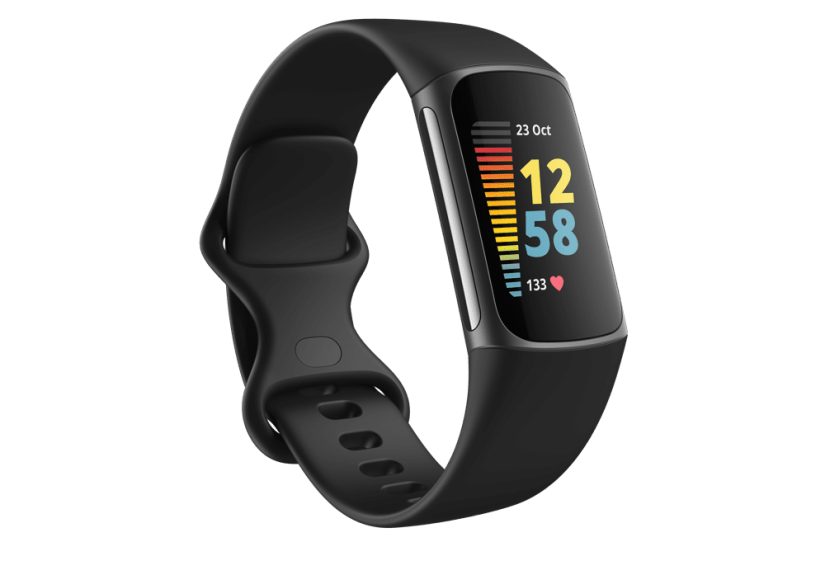
- Design Changes: Slimmer, Brighter, and More Watch-Like
- Fitness Tracking: Still the Core, Now More Polished
- Smart Features: Useful, Not Overbearing
- The Fine Print: What Charge 5 Drops (and Why You Should Care)
- Who the Fitbit Charge 5 Is For
- Charge 5 vs. a Smartwatch: The “Do I Need More Screen?” Question
- Quick Setup and Wear Tips That Actually Help
- Real-World Experiences: Living With the Fitbit Charge 5 (500+ Words)
- Conclusion: A Smaller Device With Bigger Ambitions
Google just gave your wrist a promotion. With the announcement of the Fitbit Charge 5, the company is making a very clear pitch:
you don’t need a full-blown smartwatch to get serious health and fitness insightsyou just need a band that’s smarter than your group chat’s “we should totally work out sometime” plans.
The Charge line has always lived in that sweet spot between “simple step counter” and “tiny computer that demands to know why you only stood up twice today.”
The Charge 5 leans harder into wellnessstress, heart health, recoverywhile keeping the tracker vibe: slim, light, and (mostly) focused on the basics that actually matter.
What Google Announced (and What It Costs)
The big headline: Fitbit Charge 5 arrives at $179.95, and it ships with a six-month Fitbit Premium membership included (eligibility can vary by country and account status).
Preorders opened at launch, with broader availability planned for the fall release window.
That price bump is part of the story: the Charge 5 is positioned as Fitbit’s most advanced trackercloser than ever to the company’s smartwatch features,
but still in a smaller, more “wear-it-and-forget-it” package.
What’s New at a Glance
- AMOLED color touchscreen with an optional always-on mode
- EDA sensor for stress-response scans (a first for the Charge line)
- ECG capability planned via an on-wrist app (rolling out via updates, region-dependent)
- Daily Readiness Score (Premium feature) for workout vs. recovery guidance
- Built-in GPS, sleep tracking, 24/7 heart rate, SpO2 estimates, and health metrics dashboard
The Real Upgrade: It’s a Wellness Tracker, Not Just a Workout Buddy
Yes, the Charge 5 still tracks workouts, steps, and heart rate. But the announcement made it clear: this generation is about context.
Not just “you did 9,412 steps,” but “your body looks a little cooked todaymaybe choose a walk instead of trying to PR your squat.”
Daily Readiness Score: “Can I Go Hard Today?”Now With Math
Fitbit’s Daily Readiness concept blends multiple signalsrecent activity, sleep, and heart-rate variability (HRV)to estimate whether you’re primed for intensity or better off prioritizing recovery.
The goal is simple: reduce the guesswork that leads to overtraining, burnout, or the classic “I’ll just push through” routine that ends with your foam roller becoming your best friend.
Practical example: imagine you slept poorly, your HRV dipped, and you stacked two tough workouts in the last 48 hours. A readiness score nudges you toward mobility work or light cardio.
On a high-readiness day, it might encourage more intensity and set a higher activity target.
One important detail: this feature is tied to Fitbit Premium. The tracker collects the data, but the readiness interpretation is part of the paid coaching layer.
(Translation: the band can’t magically become your personal trainer unless you also invite the subscription into your life.)
Stress Tools: EDA Scans and Stress Management Score
Charge 5 introduces an EDA (electrodermal activity) sensor, which looks at tiny changes in your skin’s sweat response during a guided scan.
Fitbit pairs this with a Stress Management Score inside the appan attempt to turn stress into something you can track and respond to, rather than just silently absorb like a sponge in a busy sink.
Here’s where it gets useful: stress doesn’t always feel like panic. Sometimes it looks like disrupted sleep, a higher resting heart rate, and a short fuse when someone chews too loudly.
Having a daily stress score can help you connect those dots and experiment with solutionsshort breathing sessions, mindfulness content, walks, earlier bedtime, fewer late-night emails, etc.
Heart Health: ECG and High/Low Heart Rate Notifications
Charge 5 is built with sensors that support an ECG app intended to help assess for signs associated with atrial fibrillation (AFib).
Fitbit emphasized that availability can be country-dependent and that some heart features arrived via software updates rather than being fully live on day one.
The tracker also supports high and low heart rate notificationsa practical safety-style feature that can alert you when your resting heart rate is outside your usual range.
That said (and this is important), the Charge 5 is not intended to provide medical or scientific data. It’s a consumer wellness devicehelpful for patterns and prompts, not a replacement for a clinician.
Design Changes: Slimmer, Brighter, and More Watch-Like
Fitbit didn’t just add sensors; it changed how the Charge feels day-to-day. The Charge 5 is about 10% thinner than the Charge 4 and shifts to a more rounded, polished look.
It also goes fully buttonless, leaning on touchscreen navigation.
AMOLED Display: Better Outdoors, Better at a Glance
The Charge 5’s AMOLED color display is a big quality-of-life upgradeespecially if you’ve ever tried to read a monochrome tracker screen in bright sunlight and felt like you were decoding ancient runes.
Fitbit also added an always-on display option for people who want it to behave more like a watch.
There’s a tradeoff: always-on display can significantly reduce battery life. If you love always-on, you may be living closer to smartwatch-style charging habits.
If you leave it off, you’re more likely to enjoy the longer multi-day battery that made the Charge line popular in the first place.
Those “Side Rails” Aren’t Buttons
A fun design quirk: the Charge 5’s side rails look like buttons, but they function as sensors used for ECG and EDA scanning.
It’s a “don’t judge a tracker by its pretend buttons” moment.
Fitness Tracking: Still the Core, Now More Polished
Under the wellness headlines, Charge 5 remains a fitness tracker with the essentials you’d expect:
built-in GPS, multiple exercise modes, automatic exercise recognition, Active Zone Minutes, and cardio fitness estimates (VO2 max-style metrics).
Built-in GPS: Great for RunsBut Watch Your Battery
If you like leaving your phone behind on runs, built-in GPS is the headline feature that keeps the Charge in “serious tracker” territory.
But GPS is also a battery bully. Fitbit’s own documentation notes that frequent GPS tracking can bring typical battery life down (compared with the headline “up to 7 days” claim).
A practical approach: use GPS for runs where you truly care about the map, pace, and distance accuracy. For casual walks, consider connected GPS (phone-assisted) or skip route tracking.
You’ll still get steps, heart rate, and activity minutes without draining the battery like it’s auditioning for a magician act.
Sleep Tracking: More Than “You Slept”
Sleep is one of Fitbit’s long-standing strengths, and Charge 5 continues that focus with Sleep Score, sleep stages, and smart alarm tools.
The real value is consistency: wearing a slim band overnight is easier than wearing a bulkier watch, and consistent sleep data is what makes trends meaningful.
Smart Features: Useful, Not Overbearing
Charge 5 sits in a middle lane: it’s not trying to replace your phone, but it’s also not pretending you live in a world without notifications.
You can view notifications on-wrist, and Android users can use quick replies for certain messages.
Payments and Setup Convenience
The Charge 5 supports contactless payments via Fitbit’s payment features, which is perfect for the “I went out for a run and now I want a coffee” scenario.
It also benefits from easier pairing experiences on Android (including fast pairing flows), while still supporting iPhone compatibility through the Fitbit app.
The Fine Print: What Charge 5 Drops (and Why You Should Care)
Here’s the part many announcements whisper: adding new hardware and a new interface sometimes means losing old favorites.
Early coverage and deep-dive reviews flagged several notable omissions compared with Charge 4-era expectations.
Missing Features Some Users Will Notice
- No altimeter (so stairs/floors tracking doesn’t make the cut)
- No Spotify controls for phone music playback
- No weather app on-device (at launch)
- Some relaxation tools moved to the phone app rather than running on the band
None of these are deal-breakers for everyone, but they matter if you relied on them daily.
If you loved checking weather on your wrist or controlling music mid-workout, you should go in with eyes open.
This is also where the Charge 5’s “Premium-first” direction becomes clearer: Fitbit is emphasizing app-based insights and subscription coaching over extra on-device mini-apps.
Who the Fitbit Charge 5 Is For
You’ll Love Charge 5 If…
- You want advanced health sensors without the size (or price) of a smartwatch.
- You care about stress, sleep, and recovery, not just step counts.
- You want built-in GPS in a lighter device.
- You prefer a tracker that nudges youthen politely disappears.
You Might Want Something Else If…
- You want robust smartwatch apps, calling, and deep phone integration (especially on iPhone).
- You dislike subscriptions and don’t want to pay for Premium features long-term.
- You relied on Charge 4 perks like stairs tracking or music controls.
Charge 5 vs. a Smartwatch: The “Do I Need More Screen?” Question
The Charge 5’s biggest competitor isn’t another trackerit’s the idea that you should just get a smartwatch.
If you’re an iPhone user who wants tight integration, a smartwatch can be tempting. But if your priorities are health trends, sleep, GPS workouts, and fewer distractions,
a tracker still makes a strong case.
Think of it like this: a smartwatch is a small smartphone. The Charge 5 is a small coach.
One wants your attention. The other mostly wants your consistency.
Quick Setup and Wear Tips That Actually Help
If you want better data (and fewer “why is my heart rate weird?” moments), the basics matter:
- Wear it slightly above your wrist bone for daily wear, and a bit higher during workouts for better sensor contact.
- Keep it snug, not tight. Too tight can affect comfort and potentially impact sensor readings.
- Give your wrist breaks and keep the band cleanespecially after sweaty sessions.
- Be mindful with soaps and lotions; frequent exposure can irritate skin and isn’t great for long-term wearables.
Also worth knowing: a full charge typically takes around 1–2 hours, and battery life varies with settings and features like GPS and always-on display.
Real-World Experiences: Living With the Fitbit Charge 5 (500+ Words)
Let’s talk about what “Google announces the Fitbit Charge 5” looks like once the press-release confetti settles and the band is actually on a human wrist
the kind of wrist that carries groceries, types emails, attempts push-ups with questionable form, and sometimes stress-scrolls at 11:47 p.m.
Day 1: Setup and first impressions. The first thing most people notice is the screen: the AMOLED display feels like Fitbit finally turned the lights on.
You don’t need to squint, tilt your arm, and negotiate with the sun to read your stats. Setup is straightforward through the Fitbit app, and if you’re on Android,
the pairing flow feels smoother than the old “Bluetooth hide-and-seek” routine. Within minutes, the Charge 5 starts doing what Fitbit does bestquietly collecting
data in the background while you go about your day.
Day 2–3: The “Oh, this is a wellness device” moment. Steps and workouts are nice, but the Charge 5’s personality shows up through the wellness metrics.
The stress tools are a good example. An EDA scan doesn’t magically erase your to-do list, but it does give you a structured pausea couple minutes where you stop,
breathe, and check in. Many users describe it like a tiny, polite interruption: “Hey, before you answer that email in ALL CAPS, want to breathe first?”
The stress score becomes more meaningful after several days, when you can compare it to sleep quality, workload, caffeine, and workouts.
Workouts: GPS and heart rate in the real world. For runners, built-in GPS is the practical perk. You can head out without your phone and still get a route map.
The tradeoff is battery: GPS tracking is powerful, but it eats energy. A common “real life” strategy is to use GPS for runs you care abouttempo runs, long runs, races
and skip it for casual walks. That way, you keep the accuracy where it matters without turning charging into a nightly ritual.
Sleep: the underrated daily win. The Charge form factor makes it easier to wear overnight than a chunkier watch.
People who struggle with sleep consistency often like the gentle feedback loop: a Sleep Score, sleep stages, and patterns over time.
The tracker doesn’t scold you (it’s not your mom), but it does make it harder to ignore the obvious connectionslike how doom-scrolling can mysteriously sabotage sleep.
Readiness and the “Premium question.” The Daily Readiness concept is compellingespecially for anyone who alternates between “beast mode”
and “couch mode” with no middle gear. But it also highlights the subscription reality: some of the best coaching-style insights live behind Premium.
In practice, many users treat the included Premium window like a trial run for their habits. If the readiness guidance genuinely helps them train smarter and recover better,
Premium feels like a tool. If not, they still get a strong tracker experiencejust with fewer “coach in your pocket” features.
The most honest takeaway: The Charge 5 fits best when you want structure without distraction.
It’s not trying to replace your phone. It’s trying to replace your guessworkabout stress, sleep, recovery, and the difference between “I’m tired”
and “I’m due for a rest day before my knees file a formal complaint.”
Conclusion: A Smaller Device With Bigger Ambitions
With the Charge 5 announcement, Google and Fitbit made a clear statement: the future of fitness tracking isn’t just counting movementit’s understanding readiness,
stress, and long-term health patterns in a way that feels approachable.
If you want a bright screen, built-in GPS, and advanced sensors like EDA (and eventually ECG features depending on your region), the Charge 5 is one of the most
feature-packed trackers in its price range. Just remember the two big realities: battery life depends on how you use it, and Fitbit’s most “coach-like” insights
are closely tied to Premium.