Table of Contents >> Show >> Hide
- What Plane Was at the Center of the Leak?
- So What Exactly Was Leaked?
- Why Leaking Files About a Surveillance Plane Is a Big Deal
- The Bigger Lesson: In Defense, the Weakest Link May Be Off the Flight Line
- Did the Leak Derail the Program?
- Conclusion
- 500-Word Perspective: The Experience Around a Leak Like This
Note: Body-only HTML for direct web publishing. SEO JSON appears at the end.
If you saw the headline and pictured a shadowy black aircraft roaring out of a classified desert base, you are not alone. The phrase “military spy plane” does that to people. It flips a switch in the brain that says, “Ah yes, secret hangars, hidden tech, and at least one person dramatically whispering into a headset.” But the real story is both less cinematic and more important. In 2021, hackers reportedly leaked material tied to Saab’s GlobalEye after Bombardier suffered a cyber breach connected to the wider Accellion file-transfer hack. In other words, the aircraft itself was not hacked out of the sky. The files around the program were exposed through a vulnerable corporate system. That distinction matters a lot.
And it matters because GlobalEye is not some toy project or obscure aerospace side quest. It is a serious airborne early warning and control platform, built on a Bombardier Global business jet and equipped with Saab’s Erieye Extended Range radar and other surveillance systems. It is designed to watch large areas of air, sea, and land from a single platform. That makes it the kind of aircraft militaries buy when they want to see trouble early, track it fast, and react before the other side gets comfortable.
This article breaks down what happened, what GlobalEye actually is, what may have been exposed, why the leak attracted so much attention, and what the incident reveals about the very modern problem of protecting old-fashioned military secrets in a deeply networked world. Because in 2026, secrecy does not just live behind locked doors. It also lives on servers, file-transfer tools, contractor networks, and the digital equivalent of that one cabinet everyone swore was secure.
What Plane Was at the Center of the Leak?
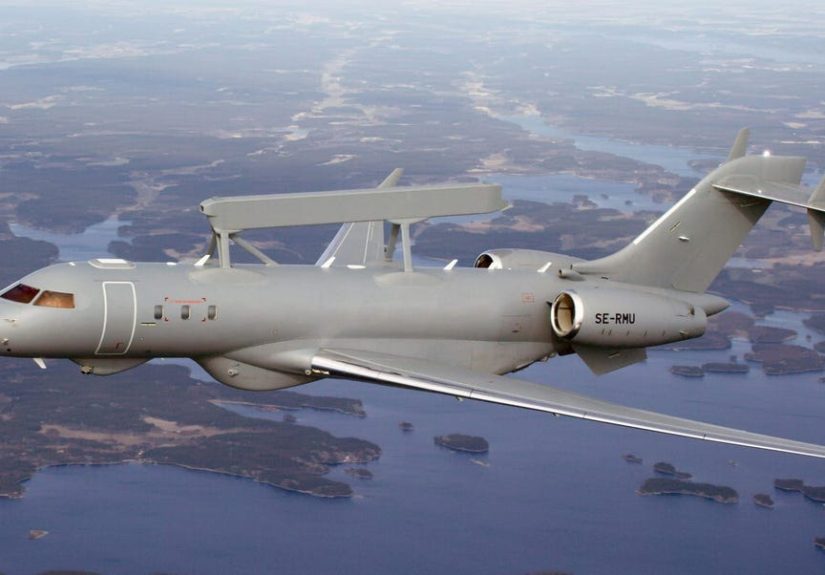
The aircraft linked to the leak was Saab’s GlobalEye, a multi-role airborne early warning and control aircraft. Calling it a “spy plane” is not entirely wrong, but it is not quite precise either. GlobalEye is better described as an airborne surveillance and battle-management platform. It does not sneak around in the classic sense like a Cold War reconnaissance jet. Instead, it acts like a flying command post with a giant electronic attention span.
At its core, GlobalEye is a modified Bombardier Global 6000 platform, later associated with the newer 6500 family in more recent marketing and export discussions. Saab adds its Erieye ER radar in the long dorsal fairing often nicknamed the “ski-box” because, well, it looks like the world’s most expensive roof rack. That radar is the star of the show, but it is not working alone. The aircraft also integrates maritime surveillance radar, an electro-optical sensor, identification systems, and other mission equipment that lets it monitor airspace, surface traffic, and ground movement.
That mix is what makes GlobalEye stand out in the crowded and expensive universe of military surveillance aircraft. Instead of needing one plane to watch the sky, another to scan the sea, and another to help track activity on land, GlobalEye aims to combine those jobs into one sleek package. Think of it as a multitool with wings, except the multitool costs a fortune and can help shape a nation’s entire air-defense picture.
Why GlobalEye Matters
Military planners love information, and they love early information even more. GlobalEye is built for that exact job. Its radar and sensors are designed to detect threats at long range, including low-flying objects that can be difficult for ground-based radars to spot because of terrain and curvature limitations. Its endurance also matters. A platform that can stay aloft for long hours gives commanders more persistent awareness, which is a polite defense-industry way of saying, “We would prefer not to be surprised.”
That is why GlobalEye has drawn attention well beyond its original customer base. The platform has been marketed as a modern alternative to older airborne warning fleets, offering long endurance, smaller-airfield access, and broad surveillance capability from a business-jet airframe. It is smaller than the classic big-body AWACS image many people have in mind, but smaller does not mean less relevant. In fact, modern electronics have made compact, high-performance surveillance aircraft much more viable than they used to be.
So What Exactly Was Leaked?
Public reporting from the time indicated that hackers posted material associated with Bombardier and that at least some of it appeared to include images or design-related content connected to GlobalEye. Reports described aircraft renderings and what looked like radar-related imagery. That is enough to trigger alarm bells, even if the full scope of the leak was never publicly laid out in neat, labeled folders for the internet to inspect like a garage sale of aerospace secrets.
It is important to stay accurate here. There is a difference between saying “hackers leaked some program-related material” and saying “the complete blueprint of the aircraft was dumped online.” The first is supported by reporting. The second goes too far. What was clear is that the leak involved sensitive corporate data tied to a defense-related aircraft program, and that alone made the incident significant.
Bombardier said the breach compromised personal and other confidential information relating to employees, customers, and suppliers. The company described the incident as limited and said the unauthorized access was tied to a third-party file-transfer application rather than the main Bombardier IT network. That detail is crucial because it points to the real lesson of the story: the weak point was not the aircraft’s radar, avionics, or flight controls. It was enterprise software used to move files.
The Hack Path Was Boring, Which Is Why It Was Dangerous
No one wants to hear that a major defense-adjacent breach started with a file-transfer appliance, because that sounds far less dramatic than a movie-worthy cyber duel involving green code rain and a countdown clock. But boring infrastructure is often where the real risk lives. The wider campaign exploited vulnerabilities in Accellion FTA, an aging file-transfer product that multiple organizations were still using. Security researchers linked the operation to threat actors associated with data theft and extortion, while the Clop ransomware ecosystem became tied to the leaking and shaming side of the campaign.
That means the “military spy plane leak” was, in practical terms, a supply-chain and document-security story. The hackers did not need to compromise the aircraft itself. They only needed a path into the ecosystem that handled sensitive files. In aerospace and defense, that can be enough to expose drawings, presentations, integration notes, schedules, vendor records, and technical imagery that outsiders were never supposed to see.
Why Leaking Files About a Surveillance Plane Is a Big Deal
Modern military aircraft are built from layers of value. Some of that value is obvious: radar hardware, mission systems, sensors, performance, and platform integration. But a huge portion of the value also lives in the supporting information. Engineering drawings, subsystem layouts, supplier communications, maintenance concepts, test imagery, conversion details, and capability presentations can all help adversaries understand how a platform is built, supported, and potentially exploited.
Even partial exposure can be useful. A clear rendering can reveal configuration choices. Sensor placement can suggest mission priorities. Internal program material can expose suppliers or development timelines. A leaked image does not have to include a neon sign reading “classified secret” to become strategically useful. In intelligence work, fragments matter. A lot.
That is why aerospace cybersecurity is not just an IT department problem. It is a national-security problem. And it becomes even more serious when the aircraft in question is meant to improve situational awareness for military operations. Platforms like GlobalEye are valuable because they help nations see incoming aircraft, monitor maritime activity, track movement on the ground, and connect information across domains. Anything that sheds light on how such a platform is built or supported can attract intense interest.
GlobalEye Is Not a One-Trick Plane
Part of the fascination around this leak came from what GlobalEye represents in the broader defense market. This is not merely a radar plane with one job and one giant spinning dome. It is a newer-generation surveillance aircraft designed to handle multiple mission sets. Saab has emphasized its ability to watch air, sea, and land activity from one platform. That versatility makes it more than a niche aircraft. It makes it a strategic asset.
Its radar arrangement is particularly important. The Erieye ER system mounted along the top of the fuselage is meant to deliver wide-area surveillance, while additional sensors help fill in the maritime and identification picture. The aircraft’s endurance, business-jet speed, and smaller-airfield compatibility make it attractive for countries that want serious surveillance reach without operating the largest and most expensive legacy airborne warning fleets on Earth.
So when headlines said hackers leaked details of this “military spy plane,” people paid attention because the plane in question was not random. It was tied to a growing class of modern ISR and AEW&C platforms that combine advanced sensors with lower operating footprints than older heavy aircraft.
The Bigger Lesson: In Defense, the Weakest Link May Be Off the Flight Line
The most valuable lesson from the GlobalEye-related leak is also the least flashy. Defense programs are only as secure as the entire chain that supports them. That includes primes, subcontractors, software vendors, logistics providers, consultants, and file-sharing systems that may look totally harmless until they become tomorrow’s headline.
This is where cybersecurity collides with industrial reality. Aerospace programs generate huge files and require constant sharing between organizations. Teams exchange models, drawings, performance documents, and customer materials across countries, business units, and partners. If that flow depends on aging software or poorly segmented systems, a single vulnerability can become a wide-open window.
In other words, a highly advanced surveillance aircraft can be surrounded by very ordinary digital risk. You can spend billions on radar sophistication and still get burned by neglected enterprise plumbing. That is not a fun lesson, but it is a useful one.
Why the Incident Still Feels Relevant
Even years after the breach, the story remains relevant because it captures a pattern that has only become more obvious: attackers love concentration points. File-transfer tools, cloud repositories, external vendor portals, and shared collaboration platforms all sit in places where sensitive information naturally gathers. That makes them efficient targets.
For defense companies, the message is simple and painful. Security cannot stop at the lab, the airbase, or the assembly floor. It has to extend into the digital paperwork layer, where modern programs actually live day to day. If not, the next “secret military aircraft” story may once again begin with a neglected business application rather than a compromised cockpit.
Did the Leak Derail the Program?
Publicly, there is no sign that the breach killed GlobalEye’s momentum. The platform continued to be discussed as a serious airborne early warning and surveillance option in international markets. That does not mean the leak was trivial. It means modern defense programs are resilient enough to keep moving even when they absorb reputational and security shocks. But make no mistake: that kind of resilience should not be confused with immunity.
A leak like this can still trigger internal reviews, customer concern, harder scrutiny from governments, and a fresh round of questions about data segregation, supplier security, and program confidentiality. In defense sales, trust matters almost as much as technology. Nations buying high-end surveillance aircraft are not just purchasing hardware. They are buying confidence in the ecosystem behind it.
Conclusion
The headline was sensational, but the underlying story was real and worth understanding. Hackers did not magically crack open a flying spy plane mid-mission. They exploited weaknesses in a file-transfer system and reportedly exposed material tied to a high-value military surveillance aircraft program. The aircraft at the center of the story, Saab’s GlobalEye, matters because it represents the modern direction of airborne early warning and multi-domain surveillance: smaller, smarter, long-endurance, and intensely networked.
That is exactly why the breach mattered. It showed that in the defense world, secrecy no longer depends only on guarded facilities and restricted airfields. It depends on software maintenance, vendor discipline, digital compartmentalization, and how seriously organizations treat the invisible plumbing that moves sensitive files around. The plane may grab the headline, but the breach usually starts somewhere much less glamorous. A server rack does not look thrilling on a magazine cover, yet it can decide whether secrets stay secret.
500-Word Perspective: The Experience Around a Leak Like This
One of the strangest things about a story like this is how different it feels depending on where you are standing. For the public, it lands as a fascinating headline. For aviation fans, it is the sort of story that sends people down a rabbit hole of radar fairings, endurance numbers, and export contracts. For cybersecurity professionals, it is less “wow, a spy plane” and more “here we go again, another critical organization burned by a weak transfer system.” And for the people inside the companies involved, it is probably a stomach-drop moment that starts with a bad call, gets worse with every meeting, and does not get better when the internet notices.
Imagine being an engineer who has spent years on a program like GlobalEye. You are dealing with aircraft integration, mission systems, certification, customer requirements, and the million tiny details that make specialized aerospace programs so demanding. Then suddenly the story is not about your design work or the aircraft’s capability. It is about leaked files. That has to be frustrating in a uniquely modern way. You can do exceptional technical work and still end up represented in public by the weakest software link in the workflow.
There is also the customer side of the experience. Countries that buy airborne surveillance aircraft are not shopping for toys. They are buying national capability. They want to know what can be seen, how quickly it can be tracked, how long the aircraft can stay on station, and how much trust they can place in the companies behind it. So when a leak happens, even a limited one, it creates a different emotional temperature around the program. Questions multiply. Who had access? What was stored there? What else might be connected? Could an adversary learn anything meaningful? Nobody enjoys buying expensive peace of mind only to discover it came with an unexpected software footnote.
Then there is the media experience, which is practically built for confusion. A headline needs to be short. Reality is not. “Hackers Leaked Secret Details of This Military Spy Plane” is punchy and clickable. “Threat actors exploited vulnerabilities in a legacy file-transfer product and reportedly exposed program-related material associated with a multi-role airborne early warning and control platform” is accurate, but it sounds like it was written by a committee trapped in a windowless conference room. So the public gets the dramatic version first, and the careful explanation usually has to jog behind it carrying a stack of clarifications.
What lingers after the headline fades is the broader experience of modern insecurity. The event reminds us that sophisticated defense technology now lives inside ordinary digital workflows. Secretive aerospace programs do not move only through guarded hangars; they move through attachments, portals, vendor systems, and collaborative tools. That creates a strange contrast: astonishingly advanced aircraft on one side, surprisingly mundane cyber exposure on the other. And maybe that is the most memorable experience tied to this story. It is the realization that in the age of connected industry, even military mystery can leak out through something as unromantic as the wrong file-transfer box.