Table of Contents >> Show >> Hide
- The Incident: When the Weather Didn’t Read the Plan of the Day
- Can Wind Really Move a 30,000-Pound Jet?
- Flight Deck Safety 101: Tie-Downs, Chocks, Chains, and “Why We Don’t Wing It”
- What Happens After a Jet Goes Overboard?
- Why the Navy Took This So Seriously (Beyond the Price Tag)
- Lessons Learned: Weather Is an Adversary, Not a Background Prop
- Quick FAQ
- Conclusion: The Ocean Doesn’t Care How Advanced Your Jet Is
- of Experience: When Wind Becomes the Boss
If you’ve ever chased a runaway patio umbrella down the street, you already understand the basic plot.
Now replace the umbrella with a multi-million-dollar F/A-18 Super Hornet, replace the street with the
flight deck of a U.S. Navy aircraft carrier, and replace your neighbor’s yard with the
Mediterranean Sea. That’s not a movie pitchit’s a real-world mishap that turned an ordinary day at sea into
an aviation safety case study and a very expensive “oops.”
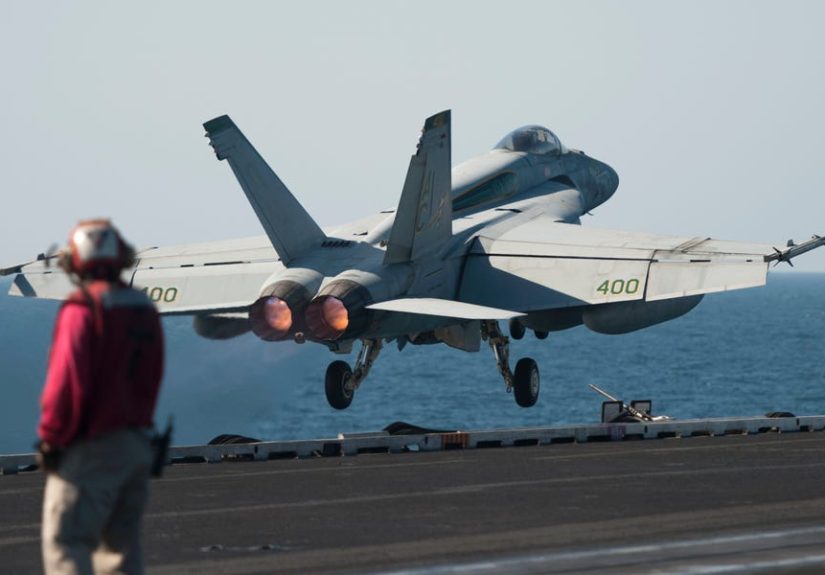
In July 2022, the aircraft carrier USS Harry S. Truman (CVN-75) encountered unexpected heavy weather during an
underway replenishment (often called UNREP or replenishment-at-sea). Amid intense winds and heavy rain, an
F/A-18 Super Hornet was blown overboardoff the deck and into the water. One Sailor suffered minor
injuries during the operation, the ship remained mission capable, and the Navy opened an investigation. Later, the Navy mounted a deep-water recovery
that reads like a “how-to” manual for modern salvage operations.
The Incident: When the Weather Didn’t Read the Plan of the Day
What was happening on USS Harry S. Truman?
The Truman was conducting a replenishment-at-sea in the Mediterraneanone of those essential but inherently complicated evolutions where ships transfer
fuel and supplies while underway. Picture forklifts, hoses, rigging, deck crews communicating with hand signals and radios, and a lot of moving parts
that all assume the ocean will behave itself for a few hours. Then the weather decided to freestyle.
How did a fighter jet go overboard?
During what the Navy described as unexpected heavy weather, the Super Hornet “blew overboard.”
In plain English: powerful winds (with heavy rain) overcame the normal safeguards and sent the aircraft off the carrier’s edge.
Multiple reports noted the jet was unoccupied when it went into the seano pilot strapped in, no dramatic last-second takeoff, just
raw weather and a bad moment on a busy deck.
The Navy stated that all personnel were accounted for and that Truman and embarked aircraft remained fully mission capable. In other words:
the carrier didn’t suddenly turn into a floating yard saleoperations continued, but the event triggered immediate reviews and longer-term questions
about procedures, tie-down practices, and weather decision-making.
Can Wind Really Move a 30,000-Pound Jet?
It sounds ridiculous until you remember two key facts:
(1) aircraft sit on wheels (which are designed to roll, not anchor) and
(2) a fighter jet has a whole lot of surface area that can act like a sail when gusts hit at the wrong angle.
Add a wet deck, ship motion, and a time window where the aircraft may be temporarily less secured, and suddenly “impossible” becomes “statistically rare
but painfully real.”
The “sail effect” and why gusts are sneaky
Wind doesn’t need to lift a jet like a cartoon leaf. It just needs to apply enough sideways force to overcome friction and whatever restraints are in place.
Carriers operate with careful chaining and chocking procedures because the sea is constantly trying to nudge everything toward chaos.
And gusts are not politethey don’t ramp up gradually like a dimmer switch. A sudden squall can deliver brief, sharp pulses of force that catch crews mid-evolution.
Deck motion, rain, and human factors
A carrier deck is not a parking lot. It pitches, rolls, and vibrates, even in decent conditions.
During heavy rain, traction drops. During replenishment or aircraft re-spotting, equipment and people are moving fast.
If a jet is in a transitional statetemporarily repositioned, being prepared for another task, or not fully tied down for any number of operational reasons
the margin for error shrinks fast.
Flight Deck Safety 101: Tie-Downs, Chocks, Chains, and “Why We Don’t Wing It”
On an aircraft carrier, flight deck safety isn’t a sloganit’s physics plus habits plus discipline.
Aircraft are typically secured with chocks (blocks placed at wheels) and tie-down chains attached to deck points.
The system works because it assumes consistent execution. The sea, meanwhile, is always running penetration tests.
So how do safeguards fail?
Reports about the Truman incident didn’t publicly detail whether the aircraft was fully tied down at the moment it went overboard,
and investigations like this often keep specifics close until findings are finalized.
But broadly speaking, vulnerabilities tend to show up in predictable places:
- Transition moments: when an aircraft is being moved, inspected, staged, or reconfigured.
- Weather windows: when forecasts suggest “manageable,” but local conditions spike beyond expectations.
- Competing priorities: the operational need to keep evolutions moving versus the safety need to pause and re-secure.
- Communication friction: one team thinking the other team “already chained it.”
It’s also worth remembering that the Navy has centuries of hard-earned tradition behind the phrase “respect the sea.”
From historic storms that damaged fleets to modern incidents where weather compromises high-tech systems, the ocean has never cared what the schedule says.
The Truman mishap is a modern reminder that nature can still land a hit without firing a single missile.
What Happens After a Jet Goes Overboard?
Immediate priorities: people first, mission second, paperwork forever
The first concern in any mishap is personnel safety and accountability. The Navy confirmed that all personnel were accounted for and that the injured Sailor’s
condition was stable with an expected full recovery. Operationally, the replenishment-at-sea was safely terminated through established procedures.
That “established procedures” phrase is doing a lot of workin a good way. It means crews train for the moment when a complex evolution suddenly needs to stop.
Recover it or write it off?
A modern strike fighter is not something you casually shrug into the ocean like a dropped phone.
The decision to recover a lost aircraft typically weighs multiple factors:
cost, environmental concerns, operational feasibility, andvery importantlytechnology security.
Even if a jet is damaged, sensitive components can matter. The Mediterranean is not a private swimming pool.
The deep-water recovery: 9,500 feet down is not “grab a snorkel” depth
In August 2022, the Navy announced a successful recovery: the Super Hornet was brought up from roughly 9,500 feet below the surface.
A team involving U.S. Sixth Fleet, Task Force 68, and the Navy’s Supervisor of Salvage and Diving (SUPSALV),
among others, conducted a deep-water operation using a remotely operated vehicle to attach specialized rigging and lift lines before hoisting the aircraft aboard
a multi-purpose vessel. The jet was delivered to a nearby military installation and slated for transport back to the United States.
The salvage story matters because it shows the “second half” of the incident: a mix of operational persistence and technical capability.
Losing a fighter to heavy winds is a nightmare headline; recovering it from deep water is a reminder that modern navies plan for ugly scenarios.
Why the Navy Took This So Seriously (Beyond the Price Tag)
Yes, the cost is enormousestimates for a Super Hornet vary depending on model and accounting, but it’s safely in the “tens of millions” category,
and the figure often cited publicly lands around the $60–70 million range. That’s the kind of number that makes any taxpayer blink and any logistics officer
reach for a stress ball.
It’s also about readiness and tempo
A carrier air wing is a carefully balanced ecosystem. Lose one aircraft and you don’t just lose a machineyou disrupt maintenance plans, sortie generation,
training cycles, and spares management. Even if the ship remains mission capable (as the Navy stated Truman did), the ripple effects are real.
And it’s about protecting technology
Modern fighters are full of sensors, mission computers, and software-driven systems.
Even older variants can include upgrades worth safeguarding.
Recovering an aircraft can reduce the risk of sensitive components being accessed, studied, or exploitedeven if the likelihood is low.
In contested regions or near strategic competitors, that calculus becomes sharper.
Lessons Learned: Weather Is an Adversary, Not a Background Prop
The Truman incident is fascinating because it’s not a pilot error story or a mechanical failure story in the traditional sense.
It’s a heavy weather storyand those are deceptively important because they challenge our modern belief that forecasting and technology have made
nature “manageable.”
Lesson 1: “Unexpected” weather still happensbuild buffers anyway
Forecasts are models, not promises. On the open sea, localized squalls can show up fast and hit hard.
High-risk evolutions like replenishment-at-sea and flight deck operations benefit from deliberate safety buffers:
extra tie-down checks, clear stop-work triggers, and a culture that rewards pausing instead of pushing through.
Lesson 2: Transitional states are where accidents breed
Most systems are safest in “steady” conditions: aircraft fully chained, teams in standard positions, operations in routine flow.
Mishaps often happen during transitionsmoving equipment, shifting configurations, changing tempo.
If you’re looking for the weak seam, it’s usually where the checklist is half-done because the next step was “about to happen.”
Lesson 3: Resilience includes recovery capability
The recovery operationfinding and lifting an aircraft from 9,500 feetdemonstrated deep-water salvage competence that doesn’t get much public attention
until something goes wrong. In a world where military tech matters, the ability to retrieve lost equipment is part of operational resilience.
Quick FAQ
Was anyone in the jet when it went overboard?
Public reporting on the incident indicated the aircraft was empty when it was blown off the deck.
Did USS Harry S. Truman have to end operations?
The replenishment-at-sea was safely terminated through established procedures, and the Navy stated the ship and embarked aircraft remained mission capable.
Was the aircraft recovered?
Yes. The Navy reported the Super Hornet was recovered in early August 2022 from roughly 9,500 feet using deep-water salvage tools and teams.
Conclusion: The Ocean Doesn’t Care How Advanced Your Jet Is
The phrase “heavy winds blew a fighter over the side of an aircraft carrier” sounds like it belongs in a tall tale.
But the Truman incident was a real collision between high technology and old-fashioned sea power: weather.
A sudden storm turned an F/A-18 Super Hornet into an unplanned donation to Poseidon, and the Navy responded with a mix of procedural discipline,
investigation, and impressive deep-water recovery capability.
The lasting takeaway isn’t just “tie things down” (though, yes, please). It’s that risk management at sea must treat weather like an active opponent:
unpredictable, occasionally rude, and fully capable of doing mission-level damage without ever showing up on radar as a hostile contact.
of Experience: When Wind Becomes the Boss
You don’t have to be a naval aviator to understand what happened on that flight deckyou just need one memorable day outdoors when the weather decided you
weren’t the main character. Maybe it was trying to carry plywood in a gusty parking lot. Maybe it was holding a ladder that suddenly felt like a sail.
Or maybe it was pushing a shopping cart that took off like it had a flight schedule and a personal grudge.
Multiply that by the seriousness of a carrier deck, and you start to appreciate why seasoned crews treat wind with the kind of respect usually reserved for
fire alarms and angry supervisors. The experience lesson is simple: wind doesn’t announce itself politely. It escalates in bursts. It comes
sideways. It finds the one loose thing you thought was “fine for now” and turns “for now” into “for the rest of the week, we’ll be writing reports.”
One practical takeawayuseful whether you’re handling aircraft, equipment, or just your weekend DIY projectis to treat transitions as the
danger zone. The moment you’re moving something is the moment it’s least secure. If you’ve ever carried a couch through a doorway, you know the couch is
safest when it’s sitting still. It gets sketchy when you pivot, when your grip changes, when your friend says “I got it” but what they really mean is
“I have it emotionally, not physically.” On a carrier, that transition might be a jet being repositioned during replenishment or staged for another evolution.
The lesson is: secure it like the worst gust is five minutes awaybecause it might be.
Another experience-based lesson is cultural: you want a team environment where someone can say, “Stop. Re-check the chains,” and that person gets respect,
not eye-rolls. In normal life, that’s the friend who insists on strapping down the kayak a second time. In the military, it’s the Sailor who calls for a pause
when conditions shift. That “annoying” extra minute is often the cheapest minute you’ll ever buy.
Finally, there’s the humility lesson: the ocean (and the weather above it) doesn’t care about your résumé.
A Super Hornet is one of the most capable fighter aircraft on Earth. It can do incredible thingswhen it’s flying.
On the deck, it’s a heavy object on wheels in a dynamic environment. The sea is the oldest system in the room, and it still wins arguments.
If that sounds dramatic, good. A little drama is healthy when the alternative is watching your expensive equipment audition for a swimming career.