Table of Contents >> Show >> Hide
- First, a Quick Shroud Refresher (Because Context Is a Superpower)
- The “Fraud Document”: What Historians Actually Found (and Why It’s a Big Deal)
- Does a Medieval Document “Prove” the Shroud Is Fake?
- Modern Evidence: The Carbon Dating That Wouldn’t Stop Being Famous
- If Not a Miracle Cloth, Then What? The Medieval “How Was It Made?” Question
- Why the “Fraud” Label Shows Up So Early: Relics, Rivalries, and Revenue
- So Where Does That Leave the Shroud Today?
- FAQ: Fast Answers to the Questions People Actually Ask
- Neat Conclusion: What the “Fraud” Documents Really Add
- Experiences Related to the Topic (Because the Shroud Debate Isn’t Just Academic)
Every few years, the Shroud of Turin returns to the spotlight like a celebrity who swore they “left the industry”
and then shows up in a surprise cameo. Sometimes the buzz comes from science: new imaging, new statistics, new debates
about old tests. Other times it’s history: a letter, a memo, a medieval complaint that reads like a customer-service
email written with a quill.
The latest wave of excitement centers on exactly that: historians pointing to (and in some cases newly highlighting)
medieval writings that don’t just express doubt, but treat the Shroud as a deliberate deceptionan artifact used to
inspire devotion and, not coincidentally, attract offerings. If you’ve seen headlines that sound like
“Smoking-Gun Document Proves the Shroud Is Fake,” you’re not alone. But the real story is more interesting than a
one-word verdict, because it shows how skepticism, belief, church politics, and medieval “relic economics” collided
in public view.
Let’s unpack what these documents actually say, why they matter, and how they fit alongside modern testingwithout
turning your browser into a 90-tab conspiracy corkboard.
First, a Quick Shroud Refresher (Because Context Is a Superpower)
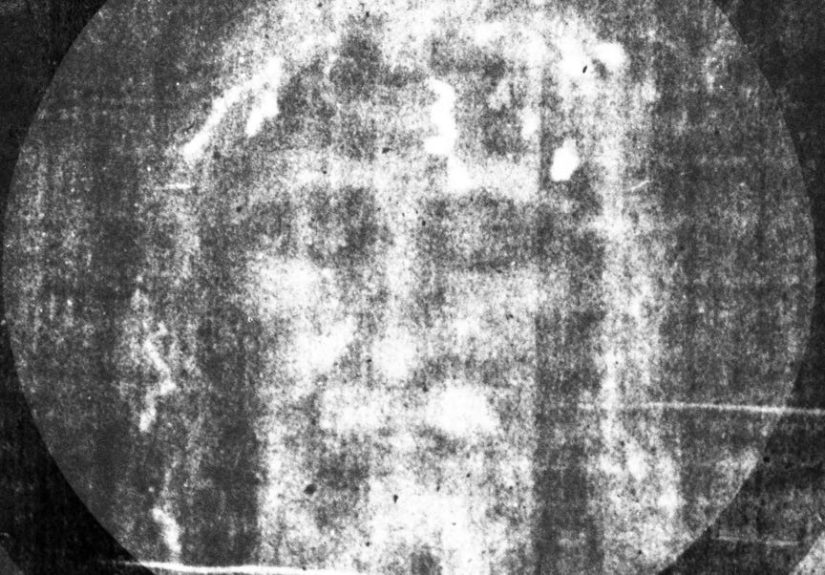
The Shroud of Turin is a long linen cloth bearing the faint image of a man who appears to have been crucified.
For many believers, it’s revered as the burial cloth of Jesus. For skeptics, it’s one of history’s most famous
“how did they do that?” artworks. For scientists, it’s a complicated object that has been photographed, scanned,
sampled, argued over, and occasionally treated like the world’s most contentious lab report.
What most mainstream summaries agree on is this: the Shroud’s documented history becomes clearer in the mid-1300s,
when it appears in France, and it later ends up in Turin. The Catholic Church has generally treated it as a powerful
devotional symbol without formally declaring it authentic in the strict, forensic sense.
The “Fraud Document”: What Historians Actually Found (and Why It’s a Big Deal)
When people say “historians found a document declaring the Shroud a fraud,” they’re usually talking about a cluster
of medieval sourcessome long known, some newly emphasized by recent scholarshipthat portray the Shroud (or its early
exhibitions) as a constructed religious attraction rather than a genuine relic.
1) The Medieval Skeptic’s Mic Drop: A Theologian Calls It a Fake
Recent reporting highlighted writings attributed to the 14th-century scholar Nicole Oresme, who criticized religious
frauds used to extract offerings. In the passages discussed by modern scholars, the alleged “Shroud” at a church in
Champagne is referenced as an example of deceptive clerical practices. The key point isn’t that Oresme wrote “I, Nicole,
hereby cancel the Shroud.” It’s that his critique treats the object as an obvious case of institutional trickery
not a mysterious relic that might be misunderstood, but a “this is how scams work” illustration.
Why does that matter? Because it potentially pushes explicit, named skepticism earlier than many casual histories
assumeand it shows that doubt wasn’t a modern invention created by carbon dating and Twitter threads. People in the
Middle Ages could be deeply religious and still say, “Yes, and also: not everything with a halo is legit.”
2) The Bishop’s Complaint: “We Investigated, and This Is Painted”
The better-known historical grenade comes from the late 1300s: a memorandum associated with Pierre d’Arcis,
Bishop of Troyes, complaining about the Shroud’s exhibition. This document is frequently summarized as alleging
the cloth was “cunningly painted” and that an artist had effectively confessed to creating it. Whether you read this
as decisive evidence or a partisan attack depends on how you weigh motives, documentation, and the wider context
but there’s no denying it: the accusation is direct, and it’s aimed at stopping or controlling how the relic is presented.
It also reveals something modern readers sometimes miss: medieval disputes about relics weren’t only about theology.
They were also about authority, money, local prestige, and who gets to host the spiritual Super Bowl in their town.
3) The Church’s Middle-Ground Response: “Display ItBut Call It a Representation”
The papal response in this era is often described as allowing the Shroud to be displayed while requiring that it be
presented as a representation rather than the literal burial cloth. That’s the historical equivalent of putting a
museum placard next to the exhibit that reads: “This is a replica. Please enjoy responsibly.”
That doesn’t settle every questionhistory rarely does. But it does show that, even in the 14th century, Church
authorities were navigating competing pressures: popular devotion, skepticism from clergy, and the risk of public fraud.
Does a Medieval Document “Prove” the Shroud Is Fake?
It proves something importantbut not necessarily what a viral headline implies.
A document that calls the Shroud a fraud is strong historical evidence that credible people in its own era believed
it was manufactured and that controversy followed it early. It does not, by itself, function like a laboratory test.
Documents are arguments. They can be honest, strategic, biased, accurate, incomplete, or all of the aboveespecially
when the stakes include money, influence, and public devotion.
Still, these texts matter because they anchor the “fraud hypothesis” in medieval testimony rather than modern cynicism.
They also line up intriguingly with other facts: the Shroud’s more solid historical visibility in the 1300s and the
way later debates kept circling back to origin stories and authenticity claims.
Modern Evidence: The Carbon Dating That Wouldn’t Stop Being Famous
If the Shroud debate were a movie franchise, the 1988 radiocarbon dating would be the installment that split the fanbase
and guaranteed sequels forever.
What the 1988 Radiocarbon Tests Concluded
In 1988, small samples were radiocarbon dated by labs including the University of Arizona, producing a medieval date range
commonly summarized as about AD 1260–1390. This result, published shortly afterward, strongly supported a medieval origin
and aligned with the Shroud’s clearer emergence in historical records in the 14th century.
Why Some People Still Dispute It
Critics of the 1988 sampling and analysis have raised questions such as:
-
Sampling location: The Shroud was sampled from one corner area, and skeptics argue that section might not
represent the whole cloth if repairs, contamination, or later additions exist. -
Contamination and fire history: The Shroud was damaged in a 16th-century fire, and critics argue that
heat, water, handling, or other factors could complicate clean dating. -
Statistical debate: Some analyses have suggested the data show heterogeneity, which critics interpret as
evidence something unusual affected the sample set.
Supporters of the medieval-date conclusion respond that contamination claims often fail to explain the size of the shift
needed to move dates by many centuries, and they emphasize that the labs used cleaning protocols and that the result is
broadly consistent across measurements.
The key takeaway for regular humans who do not spend weekends arguing about isotopes: carbon dating remains one of the
strongest scientific pillars supporting a medieval origin, but it has also become the focal point for debates about
sampling, methodology, and what additional testing might show if broader samples were permitted.
If Not a Miracle Cloth, Then What? The Medieval “How Was It Made?” Question
Here’s where the Shroud stays fascinating even for people who have never watched a single documentary with dramatic choir music.
The image is faint, negative-like in photographic properties, and not easily explained by simple pigment paintingat least
not in a way that everyone agrees on.
Over the years, proposals have included:
- Artistic techniques involving pigments, rubbing, or low-relief methods.
- Chemical reactions that could discolor surface fibers without heavy paint layers.
- Contact-image theories where the cloth touched a body or a sculpted form.
- Non-contact hypotheses that attempt to explain shading and image formation through energy or radiation-like effects.
A newer twist in the conversation is digital modeling: some researchers have used 3D simulations to argue that the image’s
geometry fits better with a low-relief sculpture than a cloth draped over a full human body. That idea doesn’t identify
the exact medieval technique, but it supports the broader claim that the image could be a crafted devotional object.
Notice the pattern: even arguments against authenticity often end up admiring the craftsmanship. The Shroud can be treated
as a fraud and still be considered a masterpiece of medieval religious imagingmuch like how a forged “ancient” statue can
still be brilliantly sculpted.
Why the “Fraud” Label Shows Up So Early: Relics, Rivalries, and Revenue
To understand why bishops and theologians were willing to throw the word “fraud” around, you have to picture the medieval
religious landscape:
- Pilgrimage drew crowds. Crowds meant donations, local pride, and influence.
- Relics competed. A famous relic could elevate a small location into a major destination.
-
Authority mattered. Who had the right to authenticate? A local bishop? A powerful noble patron?
A papal court trying to keep order across regions?
In that environment, a new, high-impact relicespecially one with a human imagewasn’t just devotional. It was disruptive.
A bishop might worry about scandal, theological confusion, or simply losing control over religious messaging in his jurisdiction.
And yes, sometimes he might worry that someone was selling tickets to a miracle.
So Where Does That Leave the Shroud Today?
The Shroud occupies a rare category: an object that can be simultaneously:
- a devotional icon for millions,
- a historical artifact with a traceable medieval footprint,
- a scientific puzzle about image formation and material history,
- a media magnet that turns every new paper into a headline battle.
Institutions and commentators often emphasize that faith and authenticity claims don’t always operate on the same track.
The Shroud’s spiritual meaning to believers can persist even if historians argue its origins are medieval. Meanwhile,
skeptics see the medieval documentsespecially explicit accusations of fraudas reinforcing the simplest explanation:
it was made in a period that produced many devotional images, relics, and relic-like objects.
FAQ: Fast Answers to the Questions People Actually Ask
Did the Vatican officially declare the Shroud fake?
Over centuries, Church messaging has varied in emphasis, but modern summaries often describe the Church as valuing the Shroud
as a powerful symbol without issuing a definitive scientific declaration of authenticity.
Is the “fraud document” brand-new?
Some critical medieval references have been known for a long time, but recent scholarship and reporting have spotlighted
earlier or more explicit skeptical writings, adding fresh context to an old debate.
Does carbon dating settle it?
Carbon dating is strong evidence for a medieval origin, but disputes persist about sampling, contamination, and whether
broader, modern testing could clarify open questions.
Why is the image so hard to explain?
Because it’s faint, detailed, and behaves oddly under photography and image analysisleading to competing explanations
involving art, chemistry, physical contact, and other mechanisms.
Neat Conclusion: What the “Fraud” Documents Really Add
The most honest way to describe the historians’ “fraud document” moment is this:
it strengthens the historical case that the Shroud’s authenticity was challenged early, explicitly, and by educated voices
with institutional authority. It also shows that medieval people were not automatically dazzled by a dramatic relicsome were
sharp-eyed, skeptical, and willing to accuse religious leaders of using spectacle to attract money.
Does that end the debate? Not completely. The Shroud has survived fires, wars, restorations, and approximately one million
heated arguments that begin with, “Okay, but hear me out.” Yet every time a medieval text resurfacesespecially one that speaks
plainly about deceptionit reminds us that the controversy isn’t a modern invention. It’s part of the Shroud’s story.
Experiences Related to the Topic (Because the Shroud Debate Isn’t Just Academic)
Even if you never plan to read a medieval treatise or argue about isotopes at a dinner party, the Shroud of Turin has a way
of showing up in real lifethrough museums, replicas, documentaries, church exhibits, and the internet’s endless talent for
turning complicated history into a two-sentence certainty.
One common experience is encountering the Shroud through an exhibit designed to make it feel immediate and personal.
People often describe walking into a darkened room, seeing a life-size reproduction on a long panel, and having a surprisingly
strong emotional reactionregardless of whether they think it’s authentic. The image is subtle, not flashy. It doesn’t look like
a typical bold painting. That faintness makes it feel “earned,” like you’re discovering something rather than being sold something.
And that’s exactly why medieval officials worried about how it was presented: subtle images can be more persuasive than loud ones.
Another experience is the “research spiral.” Someone watches a short video about a newly discussed medieval textmaybe the one
connected to Nicole Oresme’s skepticismand suddenly they’re reading about bishops, papal bulls, and medieval Champagne like they’re
preparing for a trivia showdown. They learn that debates about relics included politics, money, and reputation, and that medieval
intellectuals could be brutally practical. For many readers, that’s the surprising part: the Middle Ages were not a permanent fog
of unquestioning belief. There were people asking for receiptssometimes literally.
A third experience is the way the Shroud becomes a mirror for personal worldview. For a believer, a “fraud” accusation can feel
like an attack on devotion, even if the document is really describing how an object was marketed in one place at one time. For a
skeptic, the same document can feel like permission to stop listening to any counterargument. The Shroud debate often reveals how
differently people define evidence. Some prioritize laboratory results; others prioritize historical continuity; others prioritize
lived faith and symbolism. The object sits at the intersection of all three, which is why discussions can feel less like a calm seminar
and more like a family reunion where someone brings up politics.
People also experience the Shroud through community storytelling. In some churches and study groups, it’s presented as a faith-building
mystery: a visual aid to reflection on suffering and hope. In other spacesespecially online forums and skeptical communitiesit’s framed
as a cautionary tale about pseudoscience and confirmation bias. The same artifact can inspire reverence in one room and eye-rolling in
another. That contrast is part of what keeps the Shroud culturally alive: it’s not only an object, it’s a conversation.
Finally, there’s the “museum effect,” where modern institutions build immersive experiences around the Shroud to help visitors connect
with its history, scientific debates, and devotional meaning. Visitors often come away with a more nuanced view than they expected:
the Shroud can be historically controversial and still spiritually significant; it can be debated scientifically and still meaningful
culturally. That kind of complexity is hard to compress into a headline, but it’s exactly what many people report feeling after spending
real time with the topicwhether through exhibits, lectures, or deep reading. The Shroud debate, at its best, teaches a broader lesson:
history is messy, evidence comes in different shapes, and certainty is sometimes the least educational part of the story.