Table of Contents >> Show >> Hide
- What a tone capacitor actually does in a guitar
- Why foil-and-oil caps fascinate guitar players
- The biggest tone change comes from capacitance value
- Pot values matter more than most players expect
- Do foil-and-oil caps really sound different from ceramic or film caps?
- Why voltage rating is mostly a non-story in passive guitars
- How to evaluate a homebrew cap without fooling yourself
- Best use cases for homebrew foil-and-oil caps
- Should you build one, buy one, or skip the whole thing?
- Conclusion
- Real-World Experiences With Homebrew Foil-and-Oil Caps
If you hang around guitar forums long enough, you will eventually meet two kinds of people. The first group says a tone capacitor is just a tiny electrical part that politely minds its business until you roll the tone knob down. The second group speaks about capacitors the way sommeliers speak about pinot noir: airy highs, velvety mids, smoother decay, more musical sweep, and possibly spiritual enlightenment. Somewhere between those camps lives the truth, and it is far more interesting than either extreme.
The recent buzz around homebrew foil-and-oil caps taps into an old obsession in the guitar world: the idea that small changes inside a passive wiring harness can wake up a familiar instrument. And to be fair, they can. But not always in the way the hype machine suggests. If you are wondering whether a homemade guitar tone capacitor can really reshape your sound, the answer is yes, but the real story is about which value you choose, how your tone control interacts with your pickups, and whether your ears are judging the cap or your expectations.
So let’s pull the control plate off the mystery. Here is what homebrew foil-and-oil caps can do, what they probably cannot do, and how to think about them without turning your guitar cavity into a shrine to expensive folklore.
What a tone capacitor actually does in a guitar
In a passive electric guitar, the tone capacitor works with the tone pot to shave off high frequencies. When you roll the tone knob down, more treble gets redirected to ground, leaving you with a warmer, darker sound. That part is not controversial. It is basic passive guitar wiring, and it is why the tone knob can take you from bright and snappy to smoky and mellow without touching your amp.
Where it gets interesting is that the cap is not just an on-off darkness switch. It changes the way your pickup’s resonant peak behaves. In plain English, that means it affects not only how much treble disappears, but also where the guitar seems to speak most strongly. That is why some players swear one setup sounds more vocal, another sounds smoother, and another sounds like the guitar put on a wool sweater and forgot to take it off.
This is also why the capacitor value matters so much. If you only remember one thing from this article, make it this: cap value changes your guitar’s tone more dramatically than capacitor mythology. The dielectric material, construction style, and brand may influence the feel of the sweep or produce subtle differences, but the value is the heavyweight champion.
Why foil-and-oil caps fascinate guitar players
The appeal is easy to understand. Vintage-style paper-in-oil capacitors are wrapped in history, especially in guitars associated with 1950s and early 1960s wiring. They are tied to old Gibson lore, old-school parts bins, and the irresistible fantasy that the secret to better tone might be a tiny cylindrical object hidden under a control cavity cover. Guitar culture loves that story because it feels mechanical, romantic, and just nerdy enough to sound serious.
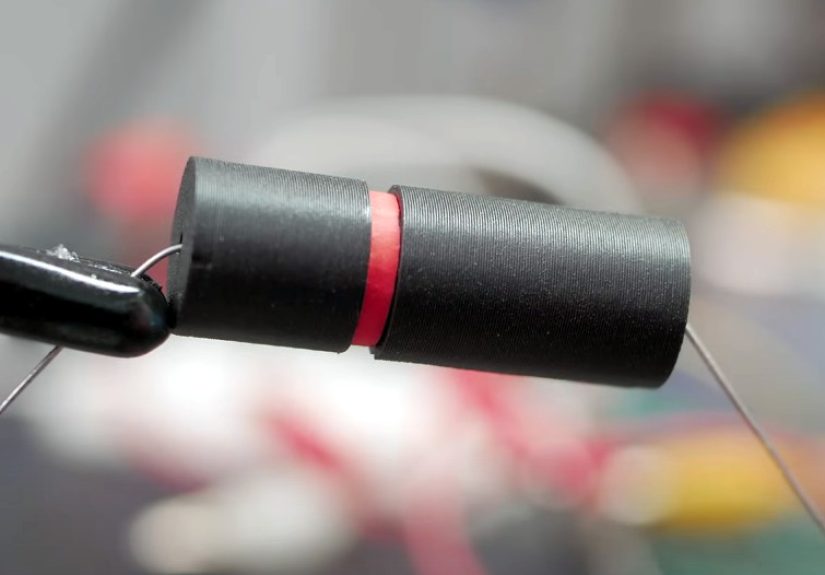
A foil-and-oil cap, especially a homebrew one, doubles down on that appeal. Now the part is not just vintage-flavored; it is handmade. It suggests intention. It suggests craft. It suggests that while everyone else was scrolling through pedal demos, you were in the garage making your own tone component like a mad scientist with a soldering iron and a suspicious amount of aluminum foil.
And yes, a homemade cap can work. The basic concept is simple: create a capacitor from conductive foil separated by an insulating material, often paper, then use oil to help stabilize the dielectric and reduce air gaps. That is enough to make a functioning part for a guitar tone circuit. The charm is undeniable. It is practical electronics with a side of wizardry.
But romance is not the same thing as repeatability. Two homemade caps with the “same” target value may not measure the same. Leakage, tolerance, physical size, and consistency can vary. In other words, your homebrew cap may be brilliant, or it may be a beautifully wrapped little goblin that sounds different mainly because it is not actually the value you think it is.
The biggest tone change comes from capacitance value
If you want to change the behavior of your guitar’s tone control, start with value before you start arguing about materials. Here is the practical breakdown.
0.047 µF: darker, quicker roll-off
This value is commonly associated with brighter guitars and single-coil pickups. It removes more top end as you turn the knob down, so the darkest settings can get thick, jazzy, or downright cloudy depending on the guitar. On a bright Strat or Tele, that can be useful. On a naturally warm guitar, it can feel like somebody threw a blanket over your amp.
0.022 µF: the all-around favorite
This is the classic middle ground and a common choice for humbuckers. It still gives you a meaningful treble roll-off, but it usually keeps more articulation than a 0.047 µF cap. If you want your tone knob to travel from crisp to creamy instead of crisp to swamp, this value is often the sweet spot.
0.015 µF and 0.01 µF: subtler, more usable for some players
Smaller values let less treble escape, so the darkest settings stay clearer. These can be excellent if you rarely turn the tone knob all the way down but want to tame harshness without losing attack. Neck humbuckers in particular can benefit from a smaller cap if they tend to sound too thick too fast.
That is the first big reality check for the homebrew foil-and-oil cap conversation: many players hear a “huge improvement” after a cap swap because they changed from one value to another, not because one capacitor was blessed by ancient tone spirits and the other came from a drawer labeled “generic.”
Pot values matter more than most players expect
Capacitors do not operate in isolation. Your tone pot and volume pot are part of the same ecosystem, and they shape the guitar even when the controls are all the way up. Lower-value pots tend to bleed off more high end. Higher-value pots retain more brightness and edge. That is why 250k pots are often paired with single-coils, while 500k pots are commonly used with humbuckers.
Here is the funny part: some players swap a capacitor, hear more clarity, and immediately credit the cap, when the real hero may be the pot value, wiring layout, or the simple fact that the new part has a tighter tolerance than the old one. Guitar electronics are like soup. You can absolutely taste the thyme, but only after you admit the broth exists.
If your guitar still sounds dull with a boutique or homebrew cap, the cap may not be the bottleneck. A muddy neck pickup, a low-value pot, or a high-capacitance cable can flatten the sound faster than your fancy oil-filled creation can rescue it.
Do foil-and-oil caps really sound different from ceramic or film caps?
This is where the conversation gets spicy. Some builders and players describe paper-in-oil capacitors as smoother, sweeter, or more musical. Others hear the difference as tiny at best. Still others think the whole debate is one blind test away from a dramatic collapse.
The most honest answer is that different cap types can sound different in practice, but the difference is usually subtle, and the degree of difference depends on the rest of the circuit, the actual measured value, the taper of the pot, the pickup, the amp, the cable, your playing style, and whether you are listening with your ears or with your wallet. That last factor has ruined many perfectly good afternoons.
Where foil-and-oil designs often win admirers is not always in some night-and-day frequency shift. It is often in the feel of the sweep. Players describe certain caps as sounding more useful across the full turn of the tone knob, especially in the middle positions. That matters. A part that makes positions 6, 7, and 8 sound musical may be more valuable than one that only sounds exciting in a fully rolled-off demo clip.
So yes, a homebrew foil-and-oil cap may change your tone. But in many real-world cases, what you will notice most is the character of the roll-off, not a miracle transformation from ordinary guitar to celestial thunder machine.
Why voltage rating is mostly a non-story in passive guitars
Guitarists love big numbers, and capacitor voltage ratings offer plenty of them. A 400V or 600V capacitor looks serious. It looks expensive. It looks like it has opinions. But in a passive guitar circuit, the voltage rating mostly affects the physical size of the component, not whether your E chord suddenly sounds more expensive.
That matters because some vintage-style caps are physically huge compared with modern alternatives. Stuffing a giant cap into a cramped control cavity can turn a fun upgrade into a game of electrical Tetris. If your goal is a clean, reliable wiring job, fit and tolerance matter at least as much as the marketing language on the label.
How to evaluate a homebrew cap without fooling yourself
If you really want to know whether your DIY cap changed the sound, do not just strum one chord, nod wisely, and declare victory. Test it like you mean it.
Use the same guitar, same cable, same amp settings, same pickup selection, and same playing phrases. Record clean parts with the tone on 10, around 5, and near 0. Compare a homebrew foil-and-oil cap with a ceramic or film cap of the same measured value. That last phrase matters more than anything. If the values do not match closely, you are not testing materials fairly. You are testing two different filters.
Better yet, wire a temporary switch or simple test harness so you can compare caps quickly. Fast comparison reduces the theater of memory. Human ears are wonderful, but human memory is basically a guitarist at a used gear expo: enthusiastic, emotional, and not always precise.
Best use cases for homebrew foil-and-oil caps
A homemade cap makes the most sense when you fall into one of these camps. First, you genuinely enjoy DIY electronics and want to experiment. Second, you use your tone knob a lot and care about the shape of the sweep. Third, you are already happy with your pickups and pots, and you are fine chasing a subtle improvement rather than expecting a total personality transplant.
It makes less sense if your guitar has bigger issues. If the pickups are harsh, weak, muddy, or mismatched to your style, changing the cap is not the first move. Likewise, if you always play with the tone on 10 and never touch it, you may be modifying a control you barely use. That is not illegal, but it is very on-brand for guitar players.
Should you build one, buy one, or skip the whole thing?
If you love tinkering, build one. A DIY foil-and-oil capacitor is a fun project, it teaches you how your guitar works, and it gives you a hands-on way to understand how capacitance shapes tone. Even if you decide the difference is tiny, you will come away smarter than you were before. That is a good return on a small pile of parts.
If you want convenience and consistency, buy a known cap value from a reliable parts supplier and focus on matching the value to your pickup and musical goals. In many cases, that will get you 90 percent of the benefit with 10 percent of the drama.
If you are hoping for a dramatic tonal makeover, skip the mythology and look at the whole signal chain. Pickup height, pot values, cable capacitance, amp EQ, and speaker choice can dwarf the effect of a cap swap. The capacitor is not irrelevant, but it is not the dictator of your tone universe either.
Conclusion
Homebrew foil-and-oil caps can change your guitar’s tone, but the smartest way to think about that change is not as magic. It is as filter behavior. The value of the cap determines how aggressively highs are bled off. The pot values determine how much natural brightness survives. The type of cap may affect the feel and subtle flavor of the sweep, but it usually works in inches, not miles.
That is actually good news. It means you do not need to become a conspiracy theorist about boutique parts to improve your instrument. You just need to understand what the circuit is doing and test changes in a controlled way. Build the cap if the project excites you. Buy the cap if convenience wins. But above all, choose values that suit your pickups and your ears.
Because in the end, guitar tone is not about winning an argument on the internet. It is about rolling the knob back a little, hitting a chord, and grinning when the guitar finally answers in the voice you had in your head all along.
Real-World Experiences With Homebrew Foil-and-Oil Caps
One of the most common experiences players report with a homebrew foil-and-oil cap is not an immediate “wow” on the first loud chord, but a gradual appreciation over time. At first, the guitar may seem only slightly different. Then, during a rehearsal or recording session, the player notices that the tone knob suddenly feels more useful. Instead of living at 10 all night and occasionally dropping to 0 for a muffled jazz joke, the control becomes something you actually want to ride. That is a meaningful change, even if it does not sound dramatic in a quick bedroom test.
Another frequent experience is that clean tones reveal the difference more clearly than heavily distorted tones. On a clean or edge-of-breakup amp, players often describe the sweep as smoother, rounder, or more gradual. The bridge pickup may lose a bit of sting without losing its identity. The neck pickup may become easier to warm up without turning into oatmeal. Under high gain, however, those subtle distinctions can get swallowed by compression, overdrive, and speaker coloration. That does not mean the cap is doing nothing; it means the rest of the signal chain is shouting over it.
Some builders also discover that the biggest lesson from making a foil-and-oil cap is not that one material is magical, but that tolerances matter. A homemade cap that was supposed to land around 0.022 µF might measure closer to 0.028 µF, and suddenly the guitar sounds noticeably darker. The builder may initially credit the “oil” or “foil” for the tonal shift, only to realize the real reason is that the cap value drifted into a different tonal neighborhood. That can be humbling, but it is also useful. It teaches you to trust measurements and ears together instead of treating either one like a religion.
There is also the emotional side of the experience, and it should not be dismissed. Guitar is a tactile instrument, and ownership matters. When you build a part by hand and install it yourself, you listen differently. You play differently. You become more invested in what the guitar is saying back to you. That does not automatically mean the tonal difference is imaginary. It means the player-guitar relationship has changed, and that can be creatively valuable all by itself. Inspiration is not fake just because it arrived wearing a soldering burn.
At the same time, many honest players come away from the experiment saying the difference was real but modest. That may be the healthiest conclusion of all. A homebrew foil-and-oil cap is rarely the single greatest upgrade you can make, but it can be a satisfying one when the rest of the guitar is already dialed in. The players who tend to enjoy it most are the ones who love fine adjustments, who use the tone control musically, and who enjoy the process as much as the result. For them, the reward is not just a slightly sweeter roll-off. It is the whole journey of hearing a familiar instrument become a little more responsive, a little more personal, and a lot more fun.