Table of Contents >> Show >> Hide
- Harvey, in a few unforgettable numbers
- When the curriculum floods, real learning starts
- The moment that changed how this med student listens
- Harvey revealed the hidden anatomy of a city
- The professional shift: from “future doctor” to “health advocate”
- What this med student carried back into training
- So… how did Hurricane Harvey change this medical student?
- Extra: of lived experience from a “Harvey-changed” med student (composite)
Before Hurricane Harvey, I thought I understood “pressure.” Medical school pressure: the kind that comes with
flashcards, frozen pizza, and the constant fear that a professor will ask you a question that starts with,
“So, what would you do if…”
Then Harvey showed up and introduced a new kind of pressurehydrostatic. The “your street is a river” kind.
The “how do we keep people alive when the city is temporarily an aquarium?” kind.
This is a story about a medical student in Houston (and honestly, about a lot of them) whose training got an
unscheduled rotation in disaster medicine, public health, and human resiliencetaught by a storm that refused
to leave.
Harvey, in a few unforgettable numbers
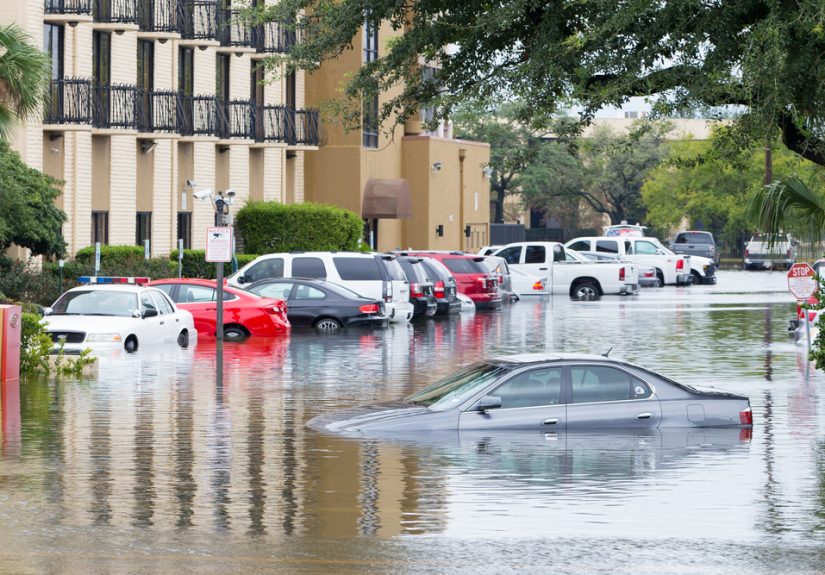
Hurricane Harvey wasn’t just a big storm. It was a big storm that parked itself over Texas like it had
a long-term lease. After landfall, it stalled and dumped historic rainfall for days, turning neighborhoods
into islands and hospitals into command centers.
- It lingeredthe system hovered and cycled moisture over the same region for days.
- It pouredparts of southeast Texas saw rainfall totals that broke U.S. tropical cyclone records.
- It displacedtens of thousands were forced out of their homes, creating urgent shelter and medical needs.
- It exposed gapsespecially in medication access, chronic disease management, and mental health support.
If you’re a medical student, that last bullet lands hardest. Because you can memorize physiology. You can
recite antibiotic coverage in your sleep. But you can’t “study” your way out of a citywide medication
shortage, a shelter full of exhausted families, or a flood that turns routine care into improvisation.
When the curriculum floods, real learning starts
The first change Harvey brought wasn’t clinical. It was personal. The storm didn’t care about your exam
schedule. It didn’t care that your white coat was freshly pressed. It didn’t care that you had exactly
three dollars and a granola bar to your name.
What it did care about was waterwhere it went, how fast it rose, and which communities had fewer resources
to recover when it finally drained away.
Lesson #1: Medicine isn’t only practiced in hospitals
During Harvey, care moved wherever people were: shelters, convention centers, school gyms, parking lots,
and neighborhoods that still smelled like wet drywall. Students who expected to learn medicine in neat
clinical lanes suddenly saw health care delivered in the messy, loud, human places where life happens.
Shelters needed basics: blood pressure checks, glucose monitoring, wound care, refills for inhalers, insulin,
hypertension meds, and seizure medications. Disaster response quickly becomes chronic disease responsebecause
chronic disease doesn’t pause for weather.
Lesson #2: Triage is a skill, but it’s also a mindset
A shelter clinic isn’t an ER, but the logic is similar: you prioritize, you stabilize, you refer when necessary,
and you document as best you can while the printer is mysteriously “down” for the seventh time. Students helped
gather brief histories and perform focused examsoften with incomplete medication lists and no reliable records.
Here’s what triage looked like in real life: a patient with chest discomfort needs urgent evaluation, but
the patient next to them isn’t “fine” eitherbecause they ran out of antidepressants two days ago and haven’t
slept since the flood. Triage teaches you that “sick” has many faces.
The moment that changed how this med student listens
Every disaster story has a momentthe one that quietly rewires you.
For this medical student, it wasn’t a dramatic rescue or a heroic montage. It was a simple question asked
in a shelter clinic: “What do you need right now?”
The patient didn’t say “a doctor.” They said: “A charger.” Then: “My kid’s asthma medicine.” Then: “Somewhere
quiet.” Then: “I can’t find my mom.”
That’s when the student realized medicine is rarely a single problem with a single answer. In disasters,
health is tightly braided with housing, electricity, transportation, family reunification, paperwork,
insurance, language, and fear. You can’t treat the body like it’s separate from the world it lives in.
Harvey revealed the hidden anatomy of a city
Medical training teaches anatomy by systems: cardiovascular, pulmonary, renal. Harvey taught anatomy by
infrastructure: roads, shelters, pharmacies, clinics, power grids, social networks.
Medication access became a medical emergency
In shelters, one of the biggest challenges wasn’t performing fancy proceduresit was getting people the
medications they’d been stable on for years. The flood didn’t just ruin furniture; it ruined pill bottles,
refrigerators for insulin, and the ability to reach a pharmacy. Some evacuees arrived with nothing but wet
clothes and a name they could barely remember of “that little white tablet.”
Students learned to ask better questions: “What is it for?” “What did it look like?” “What time do you take it?”
“Do you remember the pharmacy name?” It was detective work with real stakes.
Floodwater isn’t “just water,” and mold isn’t “just gross”
When the waters recede, the health risks don’t politely pack up and leave. Floodwater can carry sewage,
chemicals, and other contaminants. Homes that stay wet become perfect mold factoriesfast. Cleanup becomes its
own public health event, and not everyone has protective equipment or the ability to gut a home safely.
For a medical student, this was eye-opening: the disaster wasn’t a single day. It was an unfolding chain of
exposuresskin infections, respiratory issues, asthma flares, and heightened risk for people with weakened
immune systems.
The professional shift: from “future doctor” to “health advocate”
After Harvey, this medical student didn’t just feel inspired. They felt draftedinto a bigger idea of what a
clinician is supposed to do.
1) Health equity stopped being a lecture and became a map
Storms don’t hit everyone equally. The same rainfall can produce wildly different outcomes depending on housing,
insurance status, immigration concerns, disability needs, and whether someone has a car, savings, family nearby,
or job flexibility.
Students saw patients who delayed care because they feared missing work, losing wages, or navigating systems that
felt hostile. They saw how underinsured communities relied on pop-up clinics and mobile outreach for basics like
tetanus shots, inhalers, and wound care.
2) Mental health became impossible to ignore
In the aftermath, anxiety and grief weren’t “secondary.” They were central. People lost homes, cars, keepsakes,
and a sense of safety. Some had to move multiple times. Others returned to mold-damaged homes because they had no
alternative. Even those who “did fine” carried stress that showed up as insomnia, panic symptoms, irritability,
and depression.
The student learned a crucial clinical skill: presence. Sometimes the most therapeutic thing you
can offer in a shelter is a steady voice, a chair, and five minutes of non-rushed listeningespecially when
everything else feels unstable.
3) Disaster preparedness is part of medicine now
Harvey didn’t just change one student. It changed how institutions think. Hospitals used ride-out teams, backup
staffing plans, and logistics systems to maintain patient care while roads were flooded and relief crews couldn’t
easily reach facilities. Students watched how preparedness isn’t a binder on a shelfit’s staffing, communication,
supplies, leadership, and training.
What this med student carried back into training
When classes resumed and clinics reopened, the world looked the same on paper. But the student wasn’t the same.
Harvey left behind a new set of instincts:
- Ask about barriers early: transportation, housing stability, pharmacy access, insurance, language, caregiving.
- Respect “small” needs: chargers, clean socks, diapersbecause those needs become health needs fast.
- Plan for continuity: refills, backup medication lists, and realistic safety advice for cleanup.
- Lean into teamwork: nurses, pharmacists, social workers, public health teams, volunteerseveryone matters.
- Practice humility: you won’t fix everything, but you can be useful, kind, and consistent.
And maybe the biggest change: the student stopped seeing medicine as an individual achievement and started seeing
it as a community promise. You don’t become a physician to be impressive. You become a physician to be
dependableespecially when things fall apart.
So… how did Hurricane Harvey change this medical student?
It turned medicine from an academic pursuit into a lived responsibility.
It taught that a hurricane is not only a meteorological eventit’s a health event, a housing event, a mental
health event, a medication event, and a long-term recovery event. It showed that the “social determinants of
health” aren’t a sidebar; they’re the main plot.
And it left a student with a clearer sense of purpose: not just to treat disease, but to show up for people when
the world gets unstablewhether that instability comes from storms, systems, or simple bad luck.
Extra: of lived experience from a “Harvey-changed” med student (composite)
Note: The following vignette is a composite based on many real, publicly shared Hurricane Harvey medical and
volunteer experiences. Details are blended to protect privacy while reflecting what responders repeatedly described.
I remember the sound first: rain that didn’t “fall” so much as arrive, aggressively, like it had a vendetta.
My phone buzzed with alerts until it basically gave up and accepted its new job as a tiny, anxious meteorologist.
When the roads flooded, the world shrank to what we could reach: neighbors, shelters, and whatever supplies were
already in the building.
The shelter clinic wasn’t glamorous. There were folding tables, a few bins of donated items, and a line of people
who looked like they’d been awake for a weekeven if it was only day two. Someone handed me a box of gloves and a
blood pressure cuff and said, “Start here.” So I did.
A woman asked for insulin. She said it like she was ordering coffeecalm, politebecause she didn’t want to be a
burden. But her voice shook when she explained her refrigerator had died, the bottle was gone, and she hadn’t
eaten because she was afraid of her blood sugar. That’s when my brain stopped thinking in multiple-choice and
started thinking in human.
We became detectives. “Do you remember the dose?” “Was it a pen or a vial?” “Any chance you have a photo of the
label?” Sometimes people didbecause modern love is apparently expressed by taking pictures of your prescriptions.
When we couldn’t find exact answers, we worked with what we had: careful assessment, conservative plans, and lots
of collaboration with people who actually knew how disaster logistics worked.
I learned how quickly “minor” problems become major. A blister from wet shoes turned into a raging infection.
A kid’s cough wasn’t just a coughhe’d lost his inhaler, slept in damp air, and spent two days breathing whatever
the flood dragged in. People came for rashes, headaches, nausea, anxiety, panic attacks, and the kind of grief that
doesn’t cryit just sits quietly in your chest.
The hardest part was realizing that health advice has to match reality. Telling someone, “Go rest,” is ridiculous
when they’re sleeping under fluorescent lights with 800 strangers. Saying, “Avoid mold,” is impossible when their
house is mold. So we shifted: “Here’s how to protect yourself as much as you can.” “Here’s what symptoms mean you
need help.” “Here’s what to throw away even if it hurts, because it’s not safe.”
At the end of each shift, I expected to feel like a hero. Mostly, I felt smalland oddly grateful. Not for the
disaster, but for the clarity it brought. I started medical school thinking I’d earn a role. Harvey taught me the
role is borrowed. People lend you their trust because they need you to be steady when everything else isn’t.
I still study. I still stress. I still fear questions that start with, “So, what would you do if…”
But now I have an answer that isn’t from a textbook: I would show up, listen carefully, do the next right thing,
and keep doing it until the water goes down.