Table of Contents >> Show >> Hide
- Before You Start: What Makes a Nickname “Cool” (Not Just Loud)?
- Step Zero: Do a 2-Minute Nickname Audit
- 11 Creative Options for a Cool Nickname
- 1) The Classic Clip: Shorten Your Name (But Make It Intentional)
- 2) The Friendly Twist: Add a “-y / -ie” Ending (Or a Softener)
- 3) The Initial Play: Turn Your Initials Into a Name
- 4) The Sound Trick: Alliteration and Rhyme (Instant Memorability)
- 5) The “Trait-to-Title” Method: Name Your Superpower
- 6) The Hobby Badge: Build It From What You Actually Do
- 7) The Inside-Joke Upgrade: Convert a Moment Into a Name
- 8) The Myth/Animal/Icon Route: Borrow Strong Imagery
- 9) The Last-Name Remix: Twist Your Surname Into Something Catchy
- 10) The Mashup Method: Combine Two Things Into a New Word
- 11) The Online Handle Strategy: Cool and Safe
- How to Test-Drive a Nickname Without Making It Weird
- Nickname Do’s and Don’ts (Aka How Not to Accidentally Become “Broccoli”)
- Quick Examples: From Blank Page to Nickname in 5 Minutes
- FAQ: Common Nickname Questions
- Experiences People Commonly Have With Nicknames (The Part Nobody Warns You About)
- Conclusion
A cool nickname is basically a tiny personal brand: it should feel like you, be easy for other people to say, and never make you cringe when you hear it in public.
The good news? You don’t need a dramatic backstory or a championship ring to earn one. You just need a smart method, a little wordplay, and one important rule:
the best nickname is the one you actually like being called.
Below are 11 creative options to help you come up with a nickname that fits your vibeplus tips for testing it, making it stick, and avoiding the classic nickname face-plant
(you know, when you introduce yourself as “Razor” and your friend immediately says, “Absolutely not.”).
Before You Start: What Makes a Nickname “Cool” (Not Just Loud)?
Dictionaries define a nickname as a familiar form of a proper name or a descriptive name used in addition to (or instead of) someone’s given name.
In real life, “cool” usually comes down to a few practical things:
- It’s consent-based: You choose itor you actively approve it.
- It’s easy to say: If people stumble over it, it won’t spread.
- It fits the setting: “Coach calls you” energy is different from “email signature” energy.
- It’s positive (or at least harmless): Avoid anything that’s insulting, embarrassing, or too personal.
- It sounds like it belongs to a real person: Not a rejected energy drink flavor.
Step Zero: Do a 2-Minute Nickname Audit
Don’t overthink this. You’re just collecting raw material. Pick 3–5 items from each list:
- Your name pieces: first name, last name, initials, middle name, syllables you like.
- Your “signals”: hobbies, favorite music, sports, fandoms, skills, personality traits.
- Your aesthetics: playful, mysterious, classic, goofy, serious, soft, bold.
- Your boundaries: what you don’t want (height jokes, family references, anything too personal).
Now you’re ready for the fun part: generating options like you’re a nickname chef, not a nickname victim.
11 Creative Options for a Cool Nickname
1) The Classic Clip: Shorten Your Name (But Make It Intentional)
Shortening is popular because it’s fast and familiarpeople instantly understand it. The trick is choosing a clip that sounds good on its own.
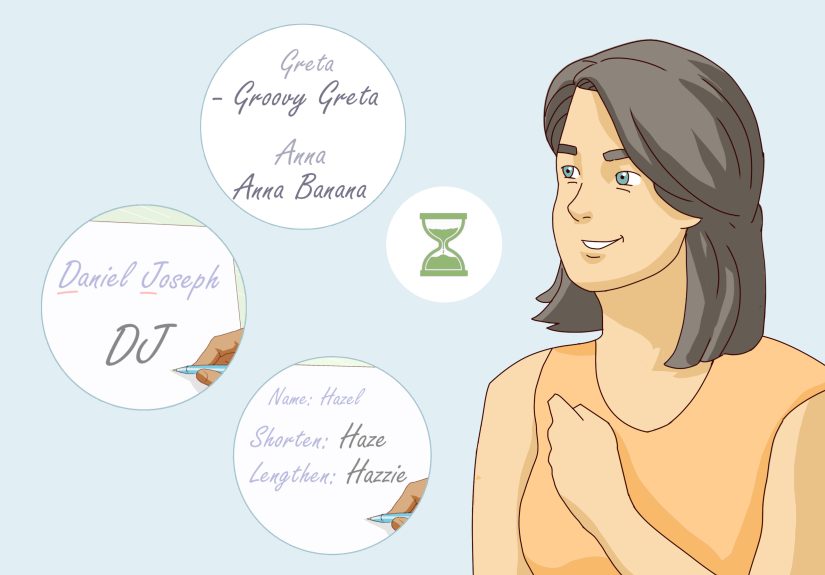
Try trimming to one strong syllable (“Alexandra” → “Alex”) or picking an unexpected slice (“Matteo” → “Teo”).
If your name has a punchy middle sound, highlight that: “Dominic” → “Nico,” “Katrina” → “Trin.”
Examples: Cameron → Cam; Danielle → Dani; Benjamin → Ben; Jasmine → Jaz.
2) The Friendly Twist: Add a “-y / -ie” Ending (Or a Softener)
English nicknames often get more casual with a “-y” or “-ie” sound. It can read as friendly, approachable, and familiar.
That said, not everyone wants “cute.” If you do, greatgo for it. If you don’t, skip it.
You can also “soften” with a gentle sound change: “Sam” → “Sammy,” “Rob” → “Robby,” “Jen” → “Jenny.”
Examples: Alex → Lexi; Chris → Chrissy; Max → Maxie; Charlie works as both full name and nickname vibe.
3) The Initial Play: Turn Your Initials Into a Name
Initial nicknames feel effortless, and they scale well from casual to professional. Say them out loud and listen for rhythm:
two letters can sound snappy (J.T.), three can feel musical (K.J. or A.J.), and combined initials can become a whole thing (J-Mac, T-Rex).
If your initials don’t roll off the tongue, add a connector: “Double” (Double J), “Big” (Big T), or a simple last-name hook.
Examples: T.J., A.J., K.C., J-Mac, D-Lo, T-Rae.
4) The Sound Trick: Alliteration and Rhyme (Instant Memorability)
Repeated sounds are sticky. That’s why you hear alliterative nicknames in sports, school, and friend groups:
they’re fun to say and easy to remember. Use first-letter repetition (“M” + “M”) or a rhyme that isn’t too sing-song.
Keep it short, and avoid anything that sounds like a children’s TV sidekickunless that’s your vibe, in which case, commit.
Examples: “Mighty Maya,” “Calm Cam,” “Jazzy Jess,” “Quick Nick,” “Brave Dave.”
5) The “Trait-to-Title” Method: Name Your Superpower
Think of a nickname like a highlight reel. What do people rely on you forbeing calm, being quick, being funny, being organized, being the one who fixes things?
Turn that into a title. The key is to keep it flattering and believable. You’re aiming for “signature,” not “self-parody.”
Examples: “Captain Calm,” “The Fixer,” “Sunny,” “Ace,” “Sparks,” “Zen.”
6) The Hobby Badge: Build It From What You Actually Do
A hobby-based nickname works because it comes with a built-in story. You don’t have to explain it every timepeople can see it.
If you draw, cook, game, skate, code, run, dance, or play an instrument, your nickname can be a clean nod to that skill.
Choose something that feels natural when shouted across a room (or typed in a group chat).
Examples: “Sketch,” “Chef,” “Strummer,” “Runner,” “Pixel,” “Tempo,” “Salsa,” “Coach.”
7) The Inside-Joke Upgrade: Convert a Moment Into a Name
Some of the best nicknames are born from one ridiculous momentthen they follow you forever (respectfully).
The trick is to pick an inside joke that’s not humiliating and can be shared without a 10-minute explanation.
If the story is too complicated, the nickname won’t travel. If it’s too embarrassing, you’ll hate it.
Examples: “Waffles” (you always order waffles), “GPS” (you navigate everywhere), “Professor” (you explain everything), “Clutch” (you show up in big moments).
8) The Myth/Animal/Icon Route: Borrow Strong Imagery
Imagery nicknames work because they paint a picture fast. Animals and mythic references can signal confidence, speed, calm, or mystery.
Keep it respectfulavoid borrowing sacred cultural terms you don’t understand. You want “cool,” not “awkward apology tour.”
Also, choose references people can pronounce without panic.
Examples: “Raven,” “Fox,” “Atlas,” “Nova,” “Arrow,” “Orion,” “Wolf,” “Sage.”
9) The Last-Name Remix: Twist Your Surname Into Something Catchy
Last names are nickname gold because they’re less common in casual conversationso they feel distinct.
Look for built-in words (“Baker,” “Stone,” “Parks”), sound-alikes (“Carter” → “Cart”), or easy edits (drop a syllable, change one vowel).
This is also a great option if you want something that sounds more grown-up.
Examples: Johnson → “J,” “Jono,” or “Magic” style (based on a trait); Stone → “Stoney”; Parker → “Parks.”
10) The Mashup Method: Combine Two Things Into a New Word
Mashups are perfect when you want something unique. Combine a name piece with a trait, hobby, or aesthetic word.
Keep it short enough to type and say. If it needs punctuation gymnastics, it’s going to lose in the group chat.
Examples: “Sam” + “Sun” → “Samsun”; “Kai” + “Storm” → “Kaistorm”; “Liv” + “Laugh” → “LivLaugh.”
(You can do better than these, but you get the idea.)
11) The Online Handle Strategy: Cool and Safe
If you’re choosing a nickname for gaming, social media, or any online platform, “cool” also needs to be “not accidentally doxxing yourself.”
Avoid putting your full name, school, city, phone area code, or birth year in a handle. Keep personal details off the table.
Instead, use a two-word combo (Adjective + Noun), a hobby word + vibe word, or an abstract concept you like.
Bonus points if it’s easy to spell and say out loud.
Examples: “CalmComet,” “MidnightMango,” “PixelPilot,” “QuietRaptor,” “NeonNotebook.”
How to Test-Drive a Nickname Without Making It Weird
You don’t have to announce a nickname like you’re unveiling a statue. Try these low-pressure approaches:
- The soft intro: “I go by Jordan, but my friends call me ‘Jace’ sometimes.”
- The profile trial: Update a display name for a week and see what people naturally use.
- The small circle rollout: Ask 2–3 friends to try it first.
- The “two options” approach: Give people two nicknames and see which one survives.
If it feels forced, that’s useful data. The right nickname should feel like putting on a jacket that already fits.
Nickname Do’s and Don’ts (Aka How Not to Accidentally Become “Broccoli”)
Do
- Pick something you’d be okay hearing in front of family, teachers, coworkers, or a barista with a Sharpie.
- Choose a nickname that matches the “room.” You can have a fun one and a more neutral one.
- Ask for consent if you’re giving someone else a nickname.
- Keep it easy to pronounce and spell.
Don’t
- Use nicknames based on someone’s body, appearance, or insecurities.
- Force a nickname that no one wants to use (it will not survive the ecosystem).
- Use personal info in online handles (birth year, location, school, etc.).
- Pick something offensive “as a joke.” Jokes have expiration dates; usernames don’t.
Quick Examples: From Blank Page to Nickname in 5 Minutes
Example A: “Jordan” (friendly, sporty vibe)
- Clip: Jord, Jor
- Initial play: J.D., J.T.
- Trait-to-title: “Clutch” (if they show up under pressure)
- Alliteration: “Jolt Jordan” (energetic), “Jersey J” (sports-heavy)
Example B: “Samantha” (creative, calm vibe)
- Clip: Sam
- Friendly twist: Sammy (if they like cute)
- Imagery: “Sage,” “Nova”
- Mashup: “SamSage” (if their brand is “calm and wise”)
Example C: Online nickname for a music lover
- Two-word combo: “QuietTempo,” “NeonChord,” “VelvetVinyl”
- Hobby badge: “Strummer,” “Loop,” “Tempo”
- Safety check: no birth year, no hometown, no real last name
FAQ: Common Nickname Questions
Can I choose my own nickname?
Yes, especially for online handles or a preferred name in a new setting. The best approach is to introduce it naturally and give it time to catch on.
If it doesn’t stick, it’s not a personal failureit’s just not the nickname your social circle adopted.
How do I get people to actually use it?
Consistency helps. Put it where people see it (display name, bio, email signature if appropriate), and have one or two friends model it.
But don’t correct people every five seconds. Gentle reminders work; nickname policing does not.
What if someone gives me a nickname I hate?
You’re allowed to say no. A simple, calm correction usually works: “I don’t love that onecan you call me ___ instead?”
The sooner you address it, the less likely it is to spread.
Experiences People Commonly Have With Nicknames (The Part Nobody Warns You About)
Nicknames often show up in the wild when you least expect themlike a surprise pop quiz, but with more laughter. A lot of people first get a nickname in
places where you’re around the same group repeatedly: a sports team, a club, a friend group that texts too much, a gaming squad, a summer job, or a classroom
where three people share the same first name.
One common experience: the “default nickname” happens to you, not for you. Someone shortens your name because it’s easier to shout across a hallway, and suddenly
everyone’s doing it. If you like it, greatfree nickname, no effort. If you don’t, it can feel weirdly personal, like someone rearranged your furniture without asking.
The best move is usually early and simple: “I actually go by ___.” Most people will adjust if you’re clear and not apologizing for having preferences.
Another classic: the nickname that starts as an inside joke. Maybe you were the only one who remembered snacks, so “Captain Snacks” shows up. Or you always carry a
charger, so you become “Battery.” These can be great because they’re rooted in something real. But there’s a hidden rule: the best inside-joke nicknames are the ones
that make you look good (helpful, reliable, funny) rather than the ones that replay your most embarrassing moment like a highlight reel you never asked for.
People also learn that nicknames can be “contextual.” You might be “Doc” in your friend group because you always have advice, but in your family you’re still the childhood
nickname that only your aunt uses. Online, you may have a totally separate identitya handle that feels cooler, more creative, or more anonymous. That split is normal.
In fact, it can be useful: different spaces bring out different sides of you.
There’s also the “trying to make it happen” phasewhen someone picks a nickname they love, then discovers that social reality is an undefeated opponent.
The nickname that sticks usually has at least one of these qualities: it’s easy to say, easy to remember, and it gives other people a reason to use it.
Sometimes that reason is practicality (shorter than your full name). Sometimes it’s fun (it makes people smile). And sometimes it’s just repetition: one friend uses it
consistently, and it spreads like a catchy chorus.
Finally, lots of people experience the “nickname glow-up.” A nickname you hated at 12 might feel hilarious at 17. Or you might outgrow something that felt cute and want a
more grown-up version. That’s allowed. You’re not legally bound to “Tiny” because you were short in middle school. You can retire a nickname by switching your display name,
introducing yourself differently, and gently correcting people when it comes up. It’s not dramaticit’s just updating your label to match who you are now.
Conclusion
Coming up with a cool nickname isn’t about being the loudest person in the roomit’s about being the easiest person to remember.
Start with what already belongs to you (your name, your vibe, your hobbies), pick a method from the 11 options above, and test-drive your favorites in real life.
If it sticks, it’ll feel natural. If it doesn’t, you’re not back to zeroyou’re just refining the brand.