Table of Contents >> Show >> Hide
- Frozen vs. Fresh Scallops: What Changes (and What Doesn’t)
- Before You Cook: Thawing, Drying, and the One Little Muscle
- Method 1: Restaurant-Style Pan-Seared Scallops (Crispy Edge, Tender Center)
- Method 2: Broiled Scallops With Garlic Butter and a Crunchy Top
- Method 3: Air Fryer Scallops (Fast, Crispy-Edged, No Drama)
- Troubleshooting: Why Scallops Turn Rubbery or Won’t Brown
- What to Serve With Scallops (So Dinner Feels Fancy)
- Storage and Leftovers (Yes, You Can Reheat Them)
- FAQ
- Conclusion
- Personal Kitchen Notes: 10 Scallop Lessons I Learned the Hard Way
Scallops are the rare kind of “fancy restaurant food” that can also be a Tuesday-night winassuming you don’t
accidentally turn them into tiny, expensive hockey pucks. The good news: cooking scallops (frozen or fresh) is
less about chef-level wizardry and more about two simple things: dry them well and don’t overcook them.
Below you’ll learn how to cook frozen scallops (or fresh ones) in three tasty wayspan-seared, broiled,
and air-friedplus the small prep steps that make a massive difference in flavor and texture. If you can pat
something dry and set a timer, you’re overqualified.
Frozen vs. Fresh Scallops: What Changes (and What Doesn’t)
Fresh scallops cook fast. Frozen scallops also cook fastafter they’re thawed. The main difference is moisture:
frozen scallops tend to release more water, which can block browning and leave you with scallops that steam instead
of sear. Translation: the path to delicious scallops is basically a paper-towel business plan.
Sea scallops vs. bay scallops
- Sea scallops are larger and ideal for searing, broiling, and grilling-style cooking.
- Bay scallops are smaller, cook even faster, and are better for quick sautés, pasta, and chowders.
Dry scallops vs. wet scallops (this matters for browning)
If you’ve ever wondered why your scallops refused to brown, you may have bought “wet” scallopstreated to retain
extra moisture. They can still taste fine, but they’re harder to sear because they shed liquid in the pan. If a label
mentions phosphates (often STPP), expect more moisture. “Dry” scallops brown more easily and tend to taste cleaner.
Before You Cook: Thawing, Drying, and the One Little Muscle
Step 1: Thaw frozen scallops safely
For the best texture, thaw scallops slowly in the refrigerator overnight. In a hurry? Seal them in a leak-proof bag
and submerge in cold water, changing the water every 30 minutes. Avoid thawing at room temperature.
Quick rule: If you thaw in cold water (or the microwave), cook them right away. No lounging on the counter
like they’re sunbathing in the danger zone.
Step 2: Remove the side muscle (if it’s still attached)
Many scallops come “cleaned,” but some still have a small rectangular flap on the side (the adductor muscle). It’s
edible, but chewy. Peel it off with your fingers before cooking.
Step 3: Don’t wash scallopsdry them
Rinsing adds moisture (the enemy of browning). Instead, drain them well and pat dry aggressively with paper towels.
For an even better sear, place scallops on a plate (or rack) lined with paper towels and refrigerate uncovered for
10–20 minutes to air-dry.
Step 4: Season simply (at first)
Scallops are naturally sweet and briny. Start with salt and pepper. You can add garlic, chili, citrus, herbs,
or a spice blend afterward (or in a finishing butter/sauce) without masking that sweet scallop flavor.
How to tell when scallops are done
- Color/texture cue: The flesh turns opaque (milky white) and feels firm but springy.
- Temperature cue: If you use a thermometer, many food-safety charts list 145°F as a safe target for seafood.
- Chef cue: For peak tenderness, some cooks pull scallops earlier (when just opaque). The tradeoff is personal preference and risk tolerance.
Method 1: Restaurant-Style Pan-Seared Scallops (Crispy Edge, Tender Center)
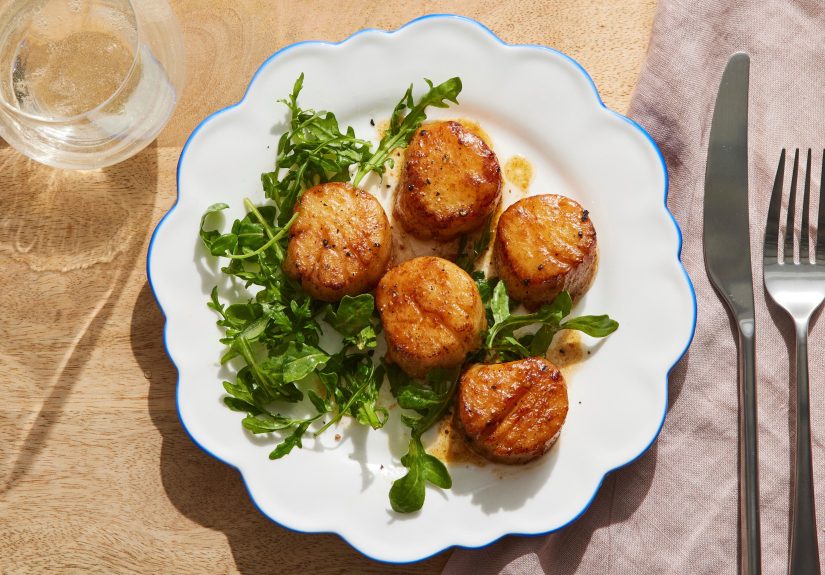
Pan-searing is the classic method for a reason: it gives you that golden crust and sweet, buttery interior in minutes.
This is the method to choose when you want scallops that taste like they came with a white tablecloth.
What you’ll need
- Sea scallops (fresh or thawed and well-dried)
- Kosher salt and black pepper
- High-heat oil (avocado, grapeseed, canola)
- Butter
- Optional: garlic, lemon, parsley, chili flakes
- A stainless-steel or cast-iron skillet
Step-by-step
- Dry thoroughly. Pat scallops dry on all sides. If they’re damp, your “sear” becomes “steam therapy.”
- Season right before cooking. Salt and pepper both sides.
- Heat the pan. Place skillet over medium-high to high heat until it’s properly hot.
- Add oil. Swirl in just enough to coat the bottom.
- Sear without moving. Add scallops in a single layer with space between them. Cook 1½–2 minutes (depending on size) until a deep golden crust forms.
- Flip once. Turn scallops and cook another 1–2 minutes.
- Finish with butter. Reduce heat slightly. Add a tablespoon of butter (plus garlic if using) and baste for 20–30 seconds.
- Brighten and serve. A squeeze of lemon and a sprinkle of parsley turns “good” into “why don’t I do this weekly?”
Frozen scallops note
For the best browning, thaw first and dry very well. If you’re working with especially wet scallops, consider an
extra drying step: after patting dry, rest them uncovered in the fridge for 20 minutes. That small wait often buys
you a dramatically better crust.
Quick serving ideas
- Over creamy polenta with lemon zest
- Tossed into pasta with garlic, butter, and capers
- On a salad with citrus segments and shaved fennel
Method 2: Broiled Scallops With Garlic Butter and a Crunchy Top
Broiling is the “hands-off cousin” of searing: high heat from above, quick cook time, and a beautiful finishespecially
if you add a buttery breadcrumb topping. This method is great when you want scallops for a crowd (or you’d like
your stove to stop judging you).
What you’ll need
- Sea scallops (fresh or thawed and dried)
- Butter, melted
- Garlic (minced) and lemon juice
- Panko breadcrumbs
- Parmesan (optional but strongly encouraged)
- Salt, pepper, chopped parsley
Step-by-step
- Preheat the broiler. Set broiler to high. Position a rack about 6 inches from the heat.
- Prep the pan. Lightly grease a broiler-safe pan or baking dish.
- Dry and season. Pat scallops dry; season with salt and pepper.
- Make the topping. Mix panko + Parmesan + a drizzle of melted butter + a pinch of salt and pepper.
- Assemble. Arrange scallops in a single layer. Spoon a little garlic-lemon butter over each one, then add a small mound of topping.
- Broil. Broil 6–8 minutes, until the topping is golden and scallops are opaque and firm. (Very large scallops may need an extra minute.)
- Finish. Sprinkle parsley and serve with lemon wedges.
Flavor variations
- New England vibe: Add paprika and a tiny pinch of Old Bay to the crumb mix.
- Italian-ish: Add lemon zest, parsley, and a pinch of red pepper flakes.
- Extra fancy: Add a splash of white wine to the pan (not the crumb topping) for a quick pan sauce under the scallops.
Method 3: Air Fryer Scallops (Fast, Crispy-Edged, No Drama)
If you want scallops with browned edges and minimal cleanup, the air fryer is a surprisingly strong choice. Think of
it like a tiny convection oven that doesn’t require a pep talk to preheat.
What you’ll need
- Sea scallops (thawed if frozen), patted very dry
- Olive oil (or avocado oil) just a little
- Salt, pepper, paprika or garlic powder
- Optional: butter + lemon for finishing
Step-by-step (simple, unbreaded)
- Preheat. Preheat air fryer to 390–400°F.
- Season. Toss scallops with a teaspoon or two of oil, salt, pepper, and your chosen seasoning.
- Arrange. Place in a single layer. Don’t overcrowdair needs room to circulate.
- Cook. Air fry 6–10 minutes depending on size, flipping or shaking halfway through.
- Finish. Toss with a small knob of butter and a squeeze of lemon. Serve immediately.
Optional: quick “crispy” version
Want crunch? Lightly coat dried scallops in a whisper of cornstarch (or a thin panko layer) before air frying. Keep it
lightscallops cook quickly, and thick breading can brown before the interior is perfect.
Troubleshooting: Why Scallops Turn Rubbery or Won’t Brown
Problem: “My scallops are pale and watery.”
- Cause: Too much moisture (common with frozen scallops or “wet” scallops).
- Fix: Thaw, drain, and pat dry thoroughly. Air-dry uncovered in the fridge for 10–20 minutes. Cook in batches.
Problem: “They’re rubbery.”
- Cause: Overcooking. Scallops go from tender to tough in a hurry.
- Fix: Use high heat and short cook times. Pull when just opaque and firm-springy, not shrunken and stiff.
Problem: “They stuck to the pan.”
- Cause: Pan not hot enough or you flipped too early.
- Fix: Preheat longer, use enough oil, and let them sear until they release easily.
What to Serve With Scallops (So Dinner Feels Fancy)
- Starches: risotto, mashed cauliflower, lemony couscous, buttered noodles
- Veg: asparagus, sautéed spinach, roasted broccoli, shaved fennel salad
- Sauces: brown butter + lemon, garlic-herb butter, quick pan sauce with wine and capers
Storage and Leftovers (Yes, You Can Reheat Them)
Scallops are best eaten immediately. If you have leftovers, cool them quickly and refrigerate in an airtight container.
Reheat gently (low heat in a skillet with a splash of water or butter) just until warmedhigh heat will toughen them.
Leftover scallops are also great chopped into a cold pasta salad or folded into an omelet, where nobody expects them
to be as tender as the day-of.
FAQ
Can you cook frozen scallops without thawing?
You can, but you’ll usually sacrifice browning because frozen scallops shed water as they cook. For the best texture
and caramelization, thaw first and dry thoroughly. If you must cook from frozen, choose methods that tolerate extra
moisture (like a gentle covered cook, then a quick high-heat finish).
Do I need a thermometer?
Not required, but helpful. Scallops are small, so temperature changes quickly. If you do use a thermometer, aim for
opaque, firm texture and follow safe-cooking guidance that commonly lists 145°F for seafood. Many home cooks rely on
visual cues: opaque and springy, not shrunken and hard.
What’s the easiest method for beginners?
Broiling is very beginner-friendly because you don’t have to manage pan heat as much. Air frying is also forgiving
if you avoid overcooking and keep them in a single layer.
Conclusion
If scallops had a motto, it would be: “Dry me, then cook me fast.” Once you nail that, you can choose your
adventurepan-seared for a restaurant crust, broiled for buttery crunch, or air-fried for fast weeknight ease.
Keep your prep simple, your cook time short, and your lemon wedges plentiful.
Personal Kitchen Notes: 10 Scallop Lessons I Learned the Hard Way
1) Moisture is the true villain. The first time I “seared” scallops, I ended up with scallops simmering in their
own puddle like they were auditioning for a soup role. Now I treat paper towels like a required ingredient. If you
think they’re dry, pat them again. It’s not paranoiait’s crust insurance.
2) Don’t multitask like a maniac. Scallops cook so fast that answering a text can turn “perfect” into “why is this
chewy?” If your phone buzzes, let it buzz. Your scallops are your new screen time.
3) One flip. That’s it. I used to “check on them” every 12 seconds like an anxious lifeguard. But scallops need
steady contact with heat to brown. Leave them alone and they’ll reward you with that golden crust that makes people
think you own matching plates.
4) Overcrowding is basically self-sabotage. When scallops are packed tight, steam gets trapped and browning
suffers. Cooking in batches feels annoyinguntil you taste the difference. This is one of those moments where
patience tastes like caramelization.
5) Butter is a finisher, not a starter. I once began with butter on high heat and created a smoky kitchen
situation that could be described as “campfire chic.” Start with a high-heat oil, then add butter near the end for
flavor and basting glory.
6) Frozen scallops aren’t “worse,” they’re just wetter. I used to assume frozen meant low quality. Not always.
Sometimes frozen scallops are handled quickly and well. The trick is thawing properly and drying like your crust
depends on itbecause it does.
7) Garlic can burn in a blink. If you add minced garlic too early in a hot pan, it can go from fragrant to bitter
in seconds. I like to add it with the finishing butter so it perfumes the scallops without turning into little brown
confetti of regret.
8) Acid is the secret “fancy” button. Lemon juice, a splash of white wine, or even a tiny bit of vinegar in a
sauce makes scallops taste brighter and more balanced. Without it, everything can feel a little heavy. With it,
your brain goes, “Oh! Restaurant!”
9) Scallops don’t like long marinades. I once left scallops in a lemony marinade too long. The texture turned
oddly firm, like the scallops were trying to become ceviche against their will. For scallops, keep marinades short
and let finishing sauces do most of the flavor work.
10) The best scallops are the ones you don’t overthink. After enough practice, you realize scallops are simple:
dry, hot, quick, done. When you treat scallops like delicate, expensive celebrities, they get weird. When you treat
them like a quick-cooking protein with great PR, they behave beautifully.