Table of Contents >> Show >> Hide
- First, What “Dip” Actually Means (and What It Doesn’t)
- A Quick Reality Check: Why Health Experts Don’t Call Dip “Safe”
- What You’ll Need (So You Don’t Look Like a Leaky Fountain Pen)
- How to Dip Smokeless Tobacco in 8 Steps (with Picture Prompts)
- Step 1: Choose the least complicated option to start
- Step 2: Wash your hands and check your mouth
- Step 3: Measure a small amount (or place one pouch)
- Step 4: Place it between your gum and lip (not on your teeth)
- Step 5: Let it sitdon’t chew it like gum
- Step 6: Manage saliva safely (spit if neededinto the right container)
- Step 7: Set a time limit, then remove and dispose properly
- Step 8: Aftercarewatch for irritation, “nic-sick” feelings, and habit creep
- Common Beginner Mistakes (and How to Avoid Them)
- What Does a “Nicotine Buzz” Feel Likeand When Is It Too Much?
- Safety Rules If You Live With Kids, Teens, or Pets
- If You’re Actually Trying to Quit: The Playbook That Works Better Than Willpower Alone
- Experiences People Commonly Report (About )
- Conclusion
Let’s be upfront: there is no safe tobacco product, and smokeless tobacco can still lead to nicotine addiction and serious health problems.
That said, people search “how to dip” for a reasonso this guide explains what dipping is, what people typically do, and how to reduce avoidable mess and risk
if an adult chooses to use it. If you’re under 21, skip the dip and scroll to the quitting section (future-you will high-five you).
Medical note: This is general education, not medical advice. If you feel sick or think a child/pet got into nicotine products, seek urgent help.
First, What “Dip” Actually Means (and What It Doesn’t)
“Dipping” usually refers to moist snuff (a form of smokeless tobacco) that’s placed between your gum and lip. Some people call it “dip,”
“snuff,” or “chew” (even though you generally don’t chew moist snuff like gum). There are also:
- Loose dip: you pinch a small amount with your fingers.
- Portion pouches: pre-portioned “tea bag” style packetsless messy for beginners.
- Snus: traditionally a moist oral tobacco product often used without spitting (varies by product).
- Nicotine pouches: contain nicotine but no tobacco leaf; often marketed as “spitless” (still addictive).
The key concept: whether it’s tobacco dip or nicotine pouches, you’re typically putting a nicotine-containing product in your mouth where nicotine can absorb
through oral tissuesmeaning it can still be habit-forming.
A Quick Reality Check: Why Health Experts Don’t Call Dip “Safe”
Smokeless tobacco isn’t “smoke-free therefore consequence-free.” Major health organizations warn it can cause cancers (including mouth and pancreatic cancer),
oral lesions like leukoplakia (white patches), gum disease, tooth decay, and other problems. Nicotine is highly addictive and can change how the brain works,
which is why quitting can be tough.
Big risks people underestimate
- Cancer risk: mouth, esophagus, and pancreas are commonly highlighted in public health guidance.
- Mouth and dental damage: gum recession, irritation at the placement site, tooth staining/decay, and oral lesions.
- Heart and blood vessel effects: nicotine can affect heart rate and blood pressure; some guidance links smokeless tobacco use with higher risk of heart problems.
- Nicotine poisoning danger for kids: products can be toxic if swallowed by children (or pets). Safe storage is not optional.
- Pregnancy risks: some public health sources warn of serious pregnancy-related harms with smokeless tobacco use.
If you’re reading this because you’re trying to switch off cigarettes: talk to a clinician about evidence-based quit supports (like nicotine replacement therapy)
rather than “DIY-ing” a new nicotine habit. If you’re reading this because you’re curious: curiosity is freenicotine dependence is not.
What You’ll Need (So You Don’t Look Like a Leaky Fountain Pen)
- Smokeless tobacco or nicotine pouches (pouches are usually less messy than loose dip).
- Hand sanitizer or soap and water.
- Tissues/napkins and a small sealable bag for disposal.
- A dedicated spit cup/bottle if the product requires spitting (opaque + screw-top = fewer regrets).
- Water (dry mouth is a common complaint).
- Optional: sugar-free gum or mints for cravings and mouth “busy-ness.”
How to Dip Smokeless Tobacco in 8 Steps (with Picture Prompts)
These steps describe common use patterns. They are not an endorsement. If you choose to proceed, start small, pay attention to how you feel,
and avoid turning “trying it” into “needing it.”
Step 1: Choose the least complicated option to start
If you’re brand-new, portion pouches are typically easier: consistent size, less loose tobacco floating around your mouth, and less finger-math.
If you’re using loose dip, plan to take a very small pinch at first. “More” doesn’t equal “better”it often equals nausea.
Step 2: Wash your hands and check your mouth
Wash your hands (this is mouth-adjacent activitytreat it like food handling). If you already have sores, bleeding gums, dental work healing, or painful
irritation, it’s smarter to not place dip on that area.
Step 3: Measure a small amount (or place one pouch)
For loose dip, take a pinch that’s closer to “a modest crumb” than “a golf ball.” For a pouch, use onedon’t stack pouches like you’re
building nicotine Jenga.
Step 4: Place it between your gum and lip (not on your teeth)
Common placement is along the lower lip (left or right side), tucked between the gum and lip. Try to keep it in one spot rather than
“rolling” it around. Avoid placing it directly against the front gumline if you’re worried about visible gum recession.
Step 5: Let it sitdon’t chew it like gum
The goal is usually to park it and leave it alone. Chewing or constantly moving it can irritate tissues and make it harder to manage saliva.
Breathe normally. If you start feeling lightheaded, sweaty, or nauseated, that’s your body waving a tiny red flag.
Step 6: Manage saliva safely (spit if neededinto the right container)
Some products lead to more saliva. If the product is not spitless, use a dedicated container with a lid. Don’t spit on the ground, in sinks,
or anywhere that will make other humans instantly dislike you. And do not leave a spit cup where kids or pets can get to itnicotine can be toxic when swallowed.
If you accidentally swallow some saliva, many people report a sour stomachespecially early on. If you feel significantly unwell, stop and remove the product.
Step 7: Set a time limit, then remove and dispose properly
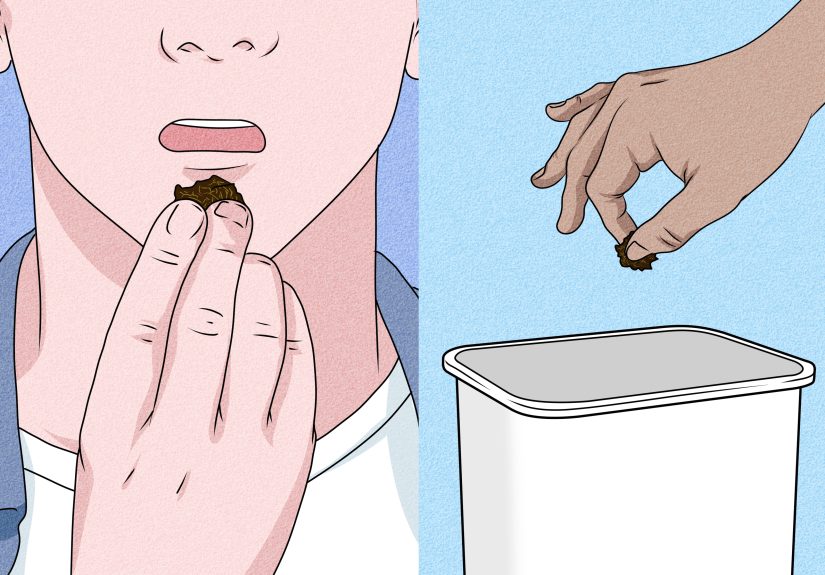
Beginners often do better with shorter sessions. When you’re done, remove it with a tissue (not your bare fingers if you can help it), wrap it, and toss it
in the trash. Avoid flushing. Rinse your mouth with water afterward; some people prefer brushing later to reduce irritation and odor.
Step 8: Aftercarewatch for irritation, “nic-sick” feelings, and habit creep
Pay attention to your mouth over the next day or two. Persistent soreness, white/red patches, bleeding, or recession are “don’t-ignore-me” signals.
Also watch for signs you’ve had too much nicotine: nausea, vomiting, dizziness, shaking, or unusual heart sensations. If symptoms are severeor if a child
ingests any nicotine productseek urgent help and contact poison control immediately.
The sneakiest risk isn’t only the messit’s the routine. Nicotine can be powerfully reinforcing. If “once” becomes “every break,” that’s a
trend worth interrupting.
Common Beginner Mistakes (and How to Avoid Them)
Going too big, too fast
A large pinch is the fastest route to feeling sick. Start small. Your body doesn’t hand out “toughness points” for nausea.
Using the wrong container for spit
Open cups are a spill waiting to happen. Use a sealable bottle. Label it. Keep it away from children and pets.
Keeping it in the same spot every time
Repeated irritation at one placement site is a common issue. If someone continues use, rotating sides may reduce concentrated irritationthough it does not remove risk.
Ignoring mouth changes
White patches, red patches, or chronic soreness are not “just part of the lifestyle.” Oral health organizations warn that smokeless tobacco use is linked to lesions
and gum disease, and some lesions can become cancerous. If you notice changes, get evaluated.
What Does a “Nicotine Buzz” Feel Likeand When Is It Too Much?
People commonly describe early nicotine effects as a head rush, warmth, mild stimulation, or a calming “settle-in.” But the line between “buzz” and “bad time”
can be thin, especially for new users.
Signs you’ve crossed into “too much nicotine” territory
- Nausea, stomach cramps, or vomiting
- Dizziness, sweating, or shaking
- Fast or irregular heartbeat sensations
- Confusion, severe headache, or feeling faint
If you feel unwell: remove the product, rinse your mouth, sip water, and sit down. If symptoms are severe, worsening, or involve a child exposure, seek urgent help.
Safety Rules If You Live With Kids, Teens, or Pets
- Store products locked up (high shelf is not the same as locked).
- Never leave used pouches/pinch leftovers on nightstands, couches, or car consoles.
- Dispose in sealed trashespecially in homes with curious toddlers or dogs that treat garbage like a buffet.
- Know emergency steps: if nicotine is swallowed, call poison control or local emergency services.
If You’re Actually Trying to Quit: The Playbook That Works Better Than Willpower Alone
Quitting smokeless tobacco can be challenging because nicotine is addictive and withdrawal can include irritability, low mood, sleep issues, cravings, and trouble concentrating.
The good news: proven tools exist.
Strategies many quit programs recommend
- Set a quit date and remove cans/pouches/spit bottles from your environment.
- Use nicotine replacement therapy (NRT) appropriately (patch, gum, lozenges) to reduce withdrawaloften increases success rates.
- Plan for triggers (driving, stress, after meals). Swap in gum, mints, water, or a quick walk.
- Get support: text programs, coaching, or counseling can helpespecially during the first couple weeks.
If you’ve tried quitting before and slipped: that’s not failure; that’s data. Adjust the plan and try againmost people need more than one attempt.
Experiences People Commonly Report (About )
Since I can’t speak from personal use, here’s what people commonly describe in forums, quit programs, and clinical conversationsshared to help you
understand what the experience can be like in real life, not just in “instruction mode.”
First-timers often say the biggest surprise isn’t the nicotineit’s the saliva management. Many expect a discreet moment and instead discover their
mouth suddenly produces enough spit to qualify for a small aquarium. That’s where the “spit bottle” becomes less of an accessory and more of a relationship status.
People also mention that the taste can be intense (earthy, salty, sometimes sweet), and that the smell tends to stick around longer than they’d likeespecially on hands
if they use loose dip.
The “buzz” is frequently described as a quick head rush or a warm wave that can feel energizing at first. But beginners also commonly report that the same sensation can
flip into nausea or dizziness if they use too much, keep it in too long, or swallow a lot of saliva. A recurring theme is embarrassment: someone tries it at a social
gathering, feels woozy, and suddenly they’re pretending to be fascinated by the floor while their friends ask, “You good?” (They are not good.)
Long-time users often describe dipping as a routine anchor: after meals, during long drives, while gaming, at work breaksmoments that start to feel
“unfinished” without it. That’s one reason quitting can be tough. People in quitting programs frequently say cravings are strongest in these patterned moments, not
necessarily because life is terrible, but because the brain has learned, “This is when nicotine happens.” The most successful quit stories tend to include a replacement
ritualgum after meals, a walk during breaks, a different drink while drivingplus some form of structured support.
Many people also talk about mouth changes over time: irritation where they place dip, gum tenderness, sensitivity, and sometimes visible patches that
make them uneasy. Others mention dental visits where they finally connect the dots between dipping and gum recession or persistent inflammation. That “mirror moment”
is a common pivot pointwhen the habit stops feeling like a small choice and starts feeling like a health negotiation.
Finally, people who quit often say the first stretch is the hardest, but it’s not endless. They describe mood swings, restlessness, and strong urges that come in waves.
A practical takeaway from their stories: cravings usually peak, pass, and returnso the skill is learning to “ride the wave” without acting on it, using small tactics
like water, movement, and distraction until it fades again.