Table of Contents >> Show >> Hide
- Before You Start: Reality Check (A Friendly One)
- What You’ll Need
- Step-by-Step: Prep Your Date Seeds
- Two Reliable Germination Methods
- The Germination Conditions That Matter Most
- Transplanting & Early Seedling Care
- Indoors vs Outdoors: Where Your Palm Should Live
- Troubleshooting: Common Problems (and Fixes)
- FAQ
- Conclusion
- Experiences & Lessons Learned (Extra )
You ate a date, you met the pit, and now you’re staring at that smooth little “seed” like it owes you a palm tree.
Good news: it just might. Growing a date palm from a seed (also called a date pit) is totally doable at homeeven if
you don’t live next door to an oasis. The catch? Date seeds run on “desert time.” They like warmth, steady moisture,
and patience. Lots of patience. (If you’re impatient, consider growing basil. Basil is basically a golden retriever.)
This guide walks you through the full process: choosing viable seeds, prepping them to avoid moldy drama, germinating
with two reliable methods, and caring for seedlings so they don’t tap out after their first tiny leaf. Along the way,
you’ll get practical troubleshooting, a realistic timeline, and the honest truth about whether your future palm will
ever produce fruit.
Table of Contents
- Before You Start: Reality Check (A Friendly One)
- What You’ll Need
- Step-by-Step: Prep Your Date Seeds
- Two Reliable Germination Methods
- The Germination Conditions That Matter Most
- Transplanting & Early Seedling Care
- Indoors vs Outdoors: Where Your Palm Should Live
- Troubleshooting: Common Problems (and Fixes)
- FAQ
- Conclusion
- Experiences & Lessons Learned (Extra )
Before You Start: Reality Check (A Friendly One)
Let’s set expectations so your seed and your heart don’t break at the same time:
-
Seed-grown date palms won’t be identical to the parent fruit. Dates are often propagated by
offshoots in farming because seeds produce genetic variety. That’s great for nature, less great if you want a
guaranteed “Medjool 2.0.” -
Date palms are usually dioecious. That means you typically need both a male and a female plant
to get fruit. From seed, you don’t know what you’re gettingabout half may be male. -
Fruiting takes years. Under warm, ideal conditions, a seed-grown palm may take many years
(often 6–10+ years) before it’s mature enough to fruit. Indoors, fruit is unlikely unless you’re basically running
a sunny greenhouse and living your best desert-farmer life. -
Not every pit will sprout. Some dates are processed in ways that reduce seed viability. Also, nature
enjoys a little chaos. Plan to sprout multiple seeds so you’re not pinning all your hopes on one pit.
What You’ll Need
You don’t need fancy lab equipment. You need basic supplies and the willingness to check on a baggie like it’s a
reality TV contestant.
- Several date pits (5–10 is a nice number)
- Clean water (for soaking and rinsing)
- Paper towels or small pots with drainage
- Resealable plastic bag (if using the paper towel method)
- Seed-starting mix or a well-draining potting mix (more on this below)
- Optional but helpful: a heat mat (seedling heat mat) to keep things warm
- Optional: peroxide (3%) for a quick anti-mold rinse, and labels so you remember what you did
Step-by-Step: Prep Your Date Seeds
1) Pick the right dates (and don’t overthink it)
For the best chance of success, start with ripe dates that still have intact pits. Many people use store-bought dried
dates successfullyjust know that heavy processing or heat treatment can reduce germination rates.
Pro move: Use more than one seed. A “date pit project” is basically a numbers game with better snacks.
2) Remove every last bit of fruit flesh
This step matters more than most people think. Any sticky fruit pulp left on the pit can invite mold and fungus,
especially in warm, humid germination conditions. Rinse the pits thoroughly and rub them clean. If the flesh is stubborn,
soak the pits for a few hours first, then scrub again.
If you want to be extra cautious, you can do a quick rinse in diluted peroxide (3% peroxide + water). Not required,
but it can help reduce mold issues.
3) Soak the pits to “wake them up”
Soaking helps the seed absorb water and can speed germination. A common home approach is 24–48 hours, but many palm
references recommend soaking palm seeds for several days (up to about a week), changing the water daily.
- Place cleaned pits in a cup of room-temperature water.
- Change the water once a day (this helps prevent funky smells and reduces microbial growth).
- After soaking, plant immediately rather than letting the pits dry out for long periods.
4) Optional: a quick “viability reality check”
Some gardeners use a float test (seeds that float may be less viable). Consider it a clue, not a verdict.
A seed can float and still sprout, and a seed can sink and still fail. If you have many pits, you can prioritize the
sinkersbut don’t throw the floaters into exile unless you’re short on space.
Two Reliable Germination Methods
You can germinate date seeds in a baggie (pre-sprout first) or plant them directly in soil. Both work. The best method
depends on your style:
- If you like checking progress: use the paper towel bag method.
- If you prefer “set it and forget it” (mostly): direct sow in a pot.
Method A: The Paper Towel “Baggie Greenhouse”
This method makes it easy to see when a seed germinates, which is deeply satisfying and only slightly addictive.
- Moisten a paper towel so it’s damp but not dripping. (Think “wrung-out sponge,” not “swamp.”)
- Place 2–4 pits on the towel, fold it over them, and slide it into a resealable bag.
- Leave a little air in the bag, seal it, and place it somewhere consistently warm.
- Check every few days for mold and moisture. If you see mold, swap to a fresh paper towel and rinse the pit.
- When you see a root or sprout emerging, move the seed into a pot with well-draining mix.
What you’re looking for: a pale root or a long, white “wormy” structure may appear first.
With palms, early germination can look unfamiliardon’t panic. Your seed is not growing a spaghetti monster; it’s
doing palm biology.
Method B: Direct Sow in a Pot
Direct sowing is simple and works well if you can keep warmth and moisture steady.
- Choose a deep pot with drainage holes. Palms often send down a long root early, so depth helps.
-
Fill with a well-draining mix. A seed-starting mix works, or you can lighten regular potting soil
with perlite. If your mix stays soggy for days, it’s too heavy. -
Plant the pit shallowly. Many gardeners press it into the surface and cover it lightlyroughly
1/2 inch to 1 inch deep is a reasonable home guideline. - Water so the mix is evenly moist, then let excess drain. No standing water.
- Keep warm and lightly moist until germination.
The Germination Conditions That Matter Most
Warmth: the secret sauce
Warm temperatures are the single biggest driver of faster, more even palm seed germination. Many palm references
describe an effective germination range around 70–100°F, with especially good results in the mid-to-high 80s and 90s.
In a typical home, that often means using a heat mat or placing the seeds somewhere naturally warm (like above a fridge),
while still avoiding direct hot sun that can overheat a closed bag.
Moisture: steady, not swampy
Date seeds like consistent moisture during germination. The goal is “evenly damp,” not “constantly soaked.”
Alternating between bone-dry and soaking-wet can reduce success. At the same time, standing water can promote rot.
If your container looks like a tiny rice paddy, your seeds are not impressed.
Light: important later
The seed doesn’t need bright light to germinate. Once you have a sprout and leaves begin to form, then
light mattersbright light helps the seedling grow sturdier and reduces stretching.
A realistic timeline (with an example)
Germination can happen in as little as a few weeks, but it can also take a few months. Here’s a practical example:
- Day 0–3: Clean pits, soak, change water daily.
- Week 1–4: Warm germination begins; you may see the first root.
- Week 4–12: More seeds sprout; plant into pots as they germinate.
- Month 3+: Slow and steady seedling growth; focus on light and careful watering.
Transplanting & Early Seedling Care
When to pot up (or re-pot)
If you pre-sprouted in a bag, pot the seed once you have a clear root or emerging sprout. If you direct-sowed, wait
until the seedling is up and forming leaves. Either way, use a container that gives roots room to run.
Soil mix that won’t sabotage you
Date palms prefer soil that drains well. For seedlings, a light mix helps you avoid the two classic tragedies:
root rot and “I watered once and now it’s wet for three weeks.”
- Simple mix: seed-starting mix, or potting mix + extra perlite.
- Desert-leaning mix: cactus mix + perlite (helps drainage).
Watering the seedling (aka: the art of not drowning it)
After sprouting, keep the soil lightly moist but allow the top inch to dry slightly between waterings. Palms can handle
consistent moisture, but seedlings in containers also need oxygen at the roots. Overwatering is usually the fastest way
to turn your palm dream into a compost contribution.
Light and placement
Give seedlings bright light once they’re upnear a sunny window or under a grow light. If you move a plant to stronger
light, do it gradually over a week or two so leaves don’t scorch.
Fertilizer: don’t rush it
Young palm seedlings typically don’t need fertilizer right away. Let the seedling establish. When it’s growing steadily
and has several leaves, you can begin a gentle feeding routine (a diluted balanced fertilizer or a palm-specific one),
but avoid overdoing ittoo much fertilizer can burn tender roots.
Indoors vs Outdoors: Where Your Palm Should Live
Growing indoors (most common)
Indoors, your date palm is mainly an ornamental project. You’re aiming for healthy growth: bright light, warm temps,
and a pot that drains well. Rotate the pot occasionally so the plant grows evenly instead of leaning like it’s trying
to eavesdrop on your neighbors.
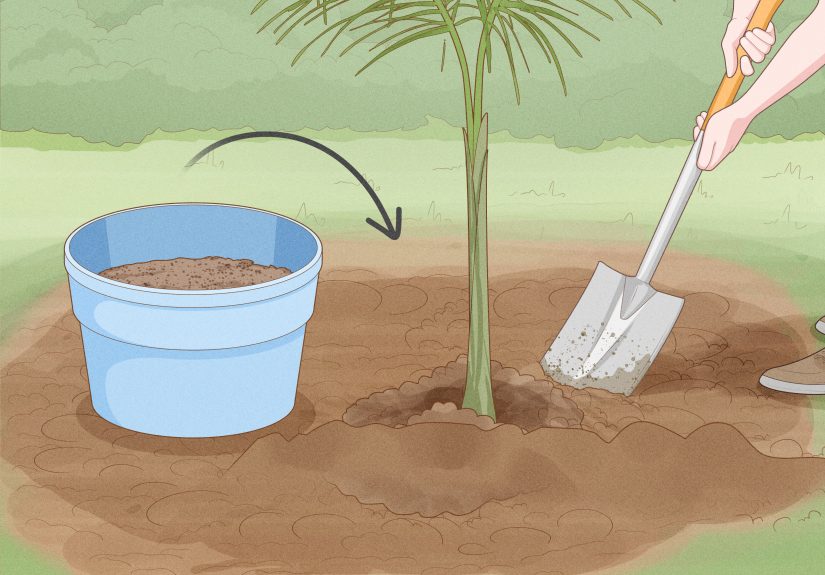
Growing outdoors (climate matters)
True date palms are warm-climate plants. If you’re in a region with freezing winters, a seed-grown palm should stay
in a container so you can protect it from cold. If you live in a warm zone and want to plant outdoors, wait until the
palm is sturdier and the weather is reliably warm. Full sun and well-drained soil are major helpers for long-term success.
Will it produce edible dates?
Possible, but not guaranteedand usually not quick. You’d need a mature female palm plus a nearby male for pollination
(or hand pollination), plus a long hot growing season for fruit to ripen properly. Many home growers treat fruit as a
“someday bonus,” not the main goal.
Troubleshooting: Common Problems (and Fixes)
Mold in the bag (paper towel method)
- Why it happens: leftover fruit sugars, overly wet towel, not enough airflow, or warmth + moisture = mold party.
- Fix: rinse the pit, replace the towel, wring the towel out more, and check more often.
Seed rots in soil
- Why it happens: soil stayed soggy, pot had poor drainage, or the seed was buried too deep in heavy mix.
- Fix: switch to a lighter, better-draining mix; use a pot with drainage holes; water less frequently.
Nothing happens for weeks
- Why it happens: not warm enough, seed not viable, or it’s just being a palm.
- Fix: add steady warmth (heat mat), keep moisture consistent, and give it timemany seeds take months.
Seedling grows slowly
Totally normal. Date palms are not speed-runners. Focus on consistent light and careful watering. “Slow” is not a
problem unless the plant is also yellowing, collapsing, or showing obvious stress.
FAQ
Do I need to crack or scarify the pit?
Usually, no. Some growers gently sand one spot on very hard seeds, but it’s easy to damage the embryo. Most home growers
succeed with cleaning, soaking, warmth, and patienceno DIY dentistry required.
Should I plant the pit sideways, pointy side up, or…?
Don’t lose sleep over orientation. If you’re direct sowing, planting shallowly in a warm, evenly moist mix matters far
more than which end is “up.”
How many pits should I plant?
If you want one plant, plant several pits5 to 10 is reasonable. Germination rates vary, and you can always gift extra
seedlings to friends who love houseplants and long-term commitments.
When can I move it to a bigger pot?
When roots fill the container, when drainage holes show roots, or when growth slows despite good care. Choose a pot only
a bit larger so the soil doesn’t stay wet forever.
Conclusion
Planting date seeds is one of those projects that feels like a tiny science experiment and a tiny life lesson at the same
time. The keys are simple: clean the pits well, soak them, keep them warm,
and maintain steady moisture without waterlogging. Use the baggie method if you love seeing progress, or
direct sow if you want a low-drama setup.
And remember: a date palm grown from seed is a long game. It’s less “instant houseplant” and more “future legend.”
If your seed sprouts, celebrate. If it doesn’t, you can always try againwith snacks included.
Experiences & Lessons Learned (Extra )
Gardeners who try to sprout date pits almost always have the same emotional arc: excitement, suspicion, obsession,
and thenfinallyeither victory or a dramatic lecture to an inanimate object. If you’re doing this at home, here are
the real-world patterns people tend to notice (and the little tweaks that often make the difference).
First, the biggest “aha” moment is realizing that warmth is not optional. A date pit sitting on a cool
windowsill in January is basically on vacation. Many growers report that nothing happens… until they add steady warmth.
A seedling heat mat can feel like cheating, but it’s really just matching the conditions palms evolved to like.
If you don’t have a heat mat, a consistently warm spot can work, but consistency matters. Warm one day and chilly the
next can drag out the timeline and increase the chance of mold or rot.
The second big lesson is that cleaning the pit is half the battle. People often rinse quickly, plant,
and then wonder why things get fuzzy. Dates are sugary. Sugar + moisture + warmth = microbial party. When gardeners take
time to scrub off every trace of fruit, soak with daily water changes, and start with a cleaner pit, the process tends
to go smoother. It’s not glamorous, but neither is peeling moldy paper towels off your hopes and dreams.
Third, there’s a common mistake with the paper towel method: the towel is too wet. If water pools in the
bottom of the bag, that’s not “extra humidity,” that’s “an audition for rot.” The best results usually come from towels
that are damp and breathable. Many gardeners also learn to open the bag briefly every few days (a quick air exchange),
especially if they notice condensation building up. It’s like letting your seeds take a tiny breath.
Next comes the “Is this normal?” phase. Date pits can send out a pale root or an odd-looking structure before anything
that resembles a classic sprout. New growers sometimes toss seeds too early because the growth looks weird. The practical
experience here is: if it’s firm, pale, and growing, it’s usually progress. If it’s soft, dark, smelly,
or collapsing, that’s when you intervene (or say goodbye).
Once seedlings are potted, another lesson appears: deep containers help. Palms often push roots down
early, and shallow pots can lead to stressed roots, slower growth, and more frequent watering problems. Gardeners who
switch to a deeper pot (with good drainage) often find their seedlings look sturdier over timeeven if they still grow
slowly, because palms are committed to the slow-and-steady lifestyle.
Finally, many growers discover that the most rewarding part isn’t fruitit’s the process. You’re growing a tree from a
snack. That’s genuinely cool. Some pits won’t sprout. Some seedlings will be stronger than others. But once you get one
healthy plant established, you’ve basically proven you can run a tiny ecosystem on your windowsill. And that’s a win,
even if your palm never hands you a homegrown date as a thank-you.