Table of Contents >> Show >> Hide
- Why Basil Is So Tricky to Store
- The Best Way to Store Fresh Basil
- Should You Refrigerate Basil?
- Should You Wash Basil Before Storing It?
- How Long Does Fresh Basil Last?
- How to Freeze Basil for Long-Term Storage
- Can You Dry Basil?
- Common Mistakes That Ruin Fresh Basil
- How to Tell If Basil Has Gone Bad
- What to Do With Basil That Is Starting to Wilt
- Final Thoughts on How to Store Fresh Basil
- Real-Life Experiences With Storing Fresh Basil
Fresh basil is one of those kitchen ingredients that makes you feel like a genius for buying it and a fool for forgetting it on the counter. One minute it is lush, fragrant, and ready to star in your pasta, pizza, or sandwich. The next minute it looks like it went through an emotional breakup with your refrigerator. If you have ever opened a bag of basil and found limp leaves, black spots, or a sad green puddle of regret, you are not alone.
The good news is that storing fresh basil is not complicated. The trick is realizing that basil is not built like parsley, cilantro, or romaine. It is tender, warm-weather, and a little dramatic. Treat it like a bouquet instead of a bag of lettuce, and it will reward you by staying fresher, greener, and more aromatic much longer.
In this guide, you will learn exactly how to store fresh basil, when to keep it on the counter, when refrigeration makes things worse, how to freeze it for later, and what to do when your basil is looking slightly tired but not totally doomed. In other words, we are here to save your herbs and your dignity.
Why Basil Is So Tricky to Store
Basil looks delicate because it is delicate. Unlike hardier herbs, fresh basil does not love cold temperatures. It bruises easily, darkens quickly, and reacts badly to being handled like ordinary greens. That is why tossing it into the refrigerator next to your carrots and sandwich meat often ends with blackened leaves and disappointment.
Fresh basil also has a high moisture content and tender leaves, which means too much dampness can speed up decay. Too little care, and it wilts. Too much water on the leaves, and it rots. Basil basically wants a balanced, spa-like environment without ever saying the word “spa.”
That is why the best fresh basil storage method focuses on three things: avoiding cold shock, keeping stems hydrated, and protecting the leaves without trapping too much moisture.
The Best Way to Store Fresh Basil
If you only remember one thing from this article, make it this: store fresh basil like a bouquet of flowers. That means stems in water, leaves above the rim, and the whole bunch kept at room temperature.
Step 1: Inspect the basil
As soon as you get home, remove any slimy, black, or crushed leaves. A few damaged leaves can speed up the decline of the whole bunch. Basil is a little like office gossip: one bad apple can spread trouble fast.
Step 2: Trim the stems
Use a sharp knife or kitchen scissors to snip a small amount off the bottom of the stems. This fresh cut helps the stems absorb water better, just like cut flowers.
Step 3: Place it in a jar with water
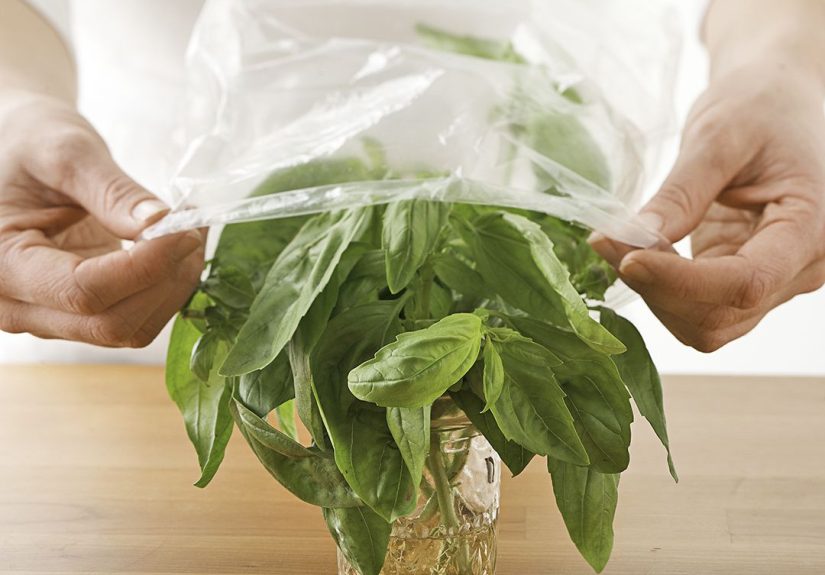
Fill a glass, jar, or small vase with about an inch or two of water. Place the basil inside so the stems sit in the water while the leaves stay above it. Do not dunk the whole bunch. Basil is not training for a swim meet.
Step 4: Loosely cover the top
Loosely drape a thin plastic bag over the basil. This helps hold humidity around the leaves without sealing in too much moisture. Keep it loose, not airtight. Basil likes a little breathing room.
Step 5: Keep it on the counter
Store the jar in a cool room-temperature spot with indirect light. Avoid direct sun, hot appliances, or a windowsill that turns into a greenhouse by noon. Change the water daily or every other day, and remove any leaves that start to look tired.
When stored this way, fresh basil can often stay in good shape for about a week and sometimes longer, depending on how fresh it was when you bought it.
Should You Refrigerate Basil?
Usually, no. Refrigeration is one of the most common mistakes people make when storing fresh basil. Basil is sensitive to chilling injury, which can cause the leaves to brown, blacken, lose gloss, curl, or turn mushy faster than expected. In plain English, the fridge can make your basil look like it aged a decade overnight.
That said, real kitchens are messy, and there are exceptions. If your home is extremely hot, or if your basil came prepackaged and already chilled from the store, a short stay in the refrigerator may be better than letting it bake on a hot counter. In that case, keep it as dry as possible, wrap it loosely, and use it quickly. But for most bunches of fresh basil with stems attached, room-temperature storage is the better move.
Should You Wash Basil Before Storing It?
In most cases, it is better to wait and wash basil right before you use it. Extra moisture on the leaves can encourage faster spoilage, especially if the basil is sealed up while still damp. So if your basil looks clean, keep it dry and wash only what you need later.
If the leaves are visibly dirty, gritty, or garden-fresh in the most literal sense, rinse them gently under cool running water and dry them thoroughly before storage. A salad spinner can help, but go easy. Basil bruises easily, and bruised basil has a very short career.
How Long Does Fresh Basil Last?
The answer depends on how you store it and how fresh it was to begin with. Basil bought in perfect condition and stored bouquet-style at room temperature may last around 7 to 10 days, sometimes a bit longer. Basil shoved into a cold fridge drawer without ceremony may last only a couple of days before turning dark and limp.
Here is a simple rule of thumb:
Counter in water: best for short-term freshness and flavor.
Fridge in a bag or towel: possible, but usually not ideal for basil.
Freezer: best for long-term preservation when texture matters less than flavor.
Dried: usable for pantry storage, though the flavor changes a lot.
How to Freeze Basil for Long-Term Storage
If you have more basil than you can use in the next few days, freezing is your best backup plan. Frozen basil will not have the same texture as fresh, but it keeps much of the flavor and works beautifully in soups, sauces, dressings, and pesto.
Option 1: Freeze chopped basil in cubes
Chop the basil and place it into ice cube trays. Add a little water or olive oil, then freeze. Once solid, pop the cubes into a freezer bag or airtight container. This method is great for pasta sauces, sautés, and quick flavor boosts.
Option 2: Freeze whole or blanched leaves
You can freeze basil leaves whole, but blanching them first helps preserve the color better. Briefly dip the leaves into boiling water, transfer them to ice water, dry thoroughly, and freeze in a single layer before moving them to a freezer-safe bag.
Option 3: Freeze pesto
This is one of the smartest ways to preserve a big basil haul. Blend basil into pesto, freeze it in small portions, and pull out only what you need. It is convenient, flavorful, and makes future you look wildly organized.
Frozen basil is best used in cooked dishes, sauces, or spreads rather than as a garnish. Nobody wants thawed basil ribbons pretending to be fresh on top of a salad.
Can You Dry Basil?
Yes, but with one important warning: dried basil does not taste like fresh basil with better time management. It tastes different. Still useful, still pleasant, but definitely not the same. The sweet, bright, peppery notes become softer and more concentrated.
To dry basil, remove the leaves, spread them out in a dry, well-ventilated place, or use a dehydrator or a very low oven setting. Once the leaves are fully dry and crumbly, store them in an airtight container away from heat and light.
Dried basil is handy for soups, sauces, marinades, and spice blends, but if your goal is to preserve that just-picked flavor, freezing usually wins.
Common Mistakes That Ruin Fresh Basil
1. Putting it straight into the fridge
This is the classic mistake. Basil is not cilantro. It does not want to live that way.
2. Washing it too early
Wet basil plus poor airflow equals spoilage. Wash close to use time whenever possible.
3. Removing all the leaves from the stems right away
Keeping the bunch intact helps it hold moisture and aroma longer. Strip leaves only as needed.
4. Sealing it airtight while damp
Too much trapped moisture can turn your basil into a science experiment.
5. Ignoring damaged leaves
One slimy leaf can drag down the whole bunch. Check the basil every day or two and remove problem leaves early.
How to Tell If Basil Has Gone Bad
Fresh basil should smell sweet, herbal, and vibrant. If it smells sour, swampy, or oddly fermented, it is time to let it go. The same goes for leaves that are slimy, fully blackened, or mushy. A few wilted leaves can still be used in cooked dishes, but once the bunch becomes wet, sticky, and foul-smelling, it is done.
When in doubt, trust your nose and your eyes. Basil should whisper “summer.” It should not shout “compost.”
What to Do With Basil That Is Starting to Wilt
If your basil is fading but not spoiled, do not toss it yet. Slightly wilted basil still has plenty of flavor. It is perfect for:
Making pesto
Blending into salad dressing
Stirring into tomato sauce
Making basil oil
Adding to soups, eggs, or compound butter
This is often the best way to avoid waste. Once basil stops looking dinner-party pretty, it can still be delicious in blended or cooked recipes.
Final Thoughts on How to Store Fresh Basil
The best way to store fresh basil is surprisingly simple: trim the stems, stand the bunch in water, loosely cover it, and keep it at room temperature. That one method solves most basil problems before they begin. From there, freezing is your best long-term option, while drying is fine if you are okay with a different flavor profile.
If you remember that basil is a warm-weather herb that dislikes cold and hates being waterlogged, you are already ahead of the game. Treat it gently, keep it hydrated, and do not shove it into the refrigerator out of habit. Basil deserves better, and frankly, so does your caprese salad.
Real-Life Experiences With Storing Fresh Basil
I have learned the hard way that basil storage is one of those tiny kitchen skills that feels unimportant until you keep wasting basil every single week. For years, I treated basil the same way I treated parsley. I brought it home from the grocery store, shoved it into the fridge, and then acted personally betrayed when it turned black and limp by the next day. It was basically a repeating cycle of optimism, neglect, and pesto-related regret.
The first time I tried the bouquet method, I honestly expected it to be one of those clever kitchen ideas that sounds good online and falls apart in a normal home. But it worked. I trimmed the stems, dropped the bunch into a jar with water, loosely covered it, and left it on the counter. Not only did the basil stay green much longer, but I also used it more often simply because I could actually see it. That turned out to be a bigger deal than I expected. Invisible basil in a fridge drawer is forgotten basil. Visible basil by the coffee maker somehow becomes part of lunch, dinner, and random tomato toast situations.
I also noticed that basil freshness starts at the store. If I buy a bunch with dark spots, crushed leaves, or condensation trapped in the package, no storage trick in the world can turn it into a weeklong success story. The best results always come from buying basil that looks lively, smells strong, and has firm stems. In other words, basil gives back what you put into the relationship.
Another lesson came from summer heat. In a mild kitchen, counter storage works beautifully. In a hot kitchen, basil can struggle unless the room stays reasonably cool and the water is changed often. I once left basil near a sunny window and accidentally created a little steam-room disaster. Since then, I keep it in bright but indirect light, away from heat and chaos. Basil likes being admired, not roasted.
Freezing has also saved me more than once when I bought too much for one recipe. I now make small basil cubes with olive oil, and they are ridiculously useful. One cube in a pot of tomato sauce makes dinner feel more intentional, like I planned it, when in reality I was just trying to avoid wasting herbs from three Tuesdays ago. Pesto is another favorite rescue strategy. If the basil is starting to slump but still smells great, into the food processor it goes.
The biggest practical takeaway from experience is this: storing basil well is not about perfection. It is about paying attention early. Remove damaged leaves. Change the water. Use it while it still looks and smells alive. Basil has a short shelf life, but it is not impossible. Once you understand its quirks, it stops feeling fussy and starts feeling manageable. And that is a nice upgrade from opening the fridge and discovering what looks like a haunted salad garnish.