Table of Contents >> Show >> Hide
- Why Old Paint Aprons Make Great Material for an Apron Dress
- What I Wanted the Dress to Look Like
- How I Turned Paint Aprons Into a Dress
- What Worked Better Than I Expected
- What I Would Do Differently Next Time
- Why This Kind of Upcycling Project Actually Matters
- Styling the Finished Apron Dress
- My Experience Turning Old Paint Aprons Into an Apron Dress
- Conclusion
Some people see a pile of old paint aprons and think, “Wow, that is an impressive collection of drips, splatters, and questionable color choices.” I looked at mine and thought, “This is either textile genius or the start of a very specific midlife crisis.” Happily, it turned out to be the first one. Instead of tossing those stiff, paint-freckled aprons into a donation bin and hoping the universe understood my intentions, I turned them into an apron dress that is part workwear, part conversation starter, and part proof that old fabric can still have plenty of personality left.
This project started as a practical idea. I wanted a garment I could wear while painting, gardening, or tackling chaotic weekend DIY jobs without looking like I had wrapped a drop cloth around myself and called it fashion. I also wanted pockets. Real pockets. Not decorative nonsense. And because apron dresses are naturally relaxed, forgiving, and easy to layer, they felt like the ideal way to repurpose sturdy old aprons into something wearable, useful, and honestly kind of charming.
If you have worn-out shop aprons, utility aprons, denim aprons, or painter’s smocks lying around, this kind of upcycling project makes a lot of sense. Aprons are already designed to take abuse. They are usually made from durable woven fabrics, often have reinforced seams, and sometimes come with built-in straps and pockets that are too good to waste. In other words, they are halfway to becoming a functional dress before you even thread the machine.
Why Old Paint Aprons Make Great Material for an Apron Dress
The beauty of using old paint aprons is that they arrive pre-loaded with character. Mine had faded brush marks, bleachy streaks, and one mysterious teal smudge that looked artistic enough to keep and suspicious enough not to investigate. That patina is part of the charm. Upcycled clothing does not need to pretend it came from a spotless bolt of fabric. It can look lived in, worked in, and still completely intentional.
From a construction standpoint, old aprons are surprisingly useful. Many are cut from medium- to heavy-weight woven cotton, canvas, duck cloth, or denim-like fabrics that hold shape well. That structure is excellent for an apron dress, especially if you want a relaxed silhouette that stands away from the body instead of clinging like a needy houseguest. Existing straps can be reused as shoulder ties or cross-back supports, and original patch pockets can be repositioned onto the skirt or bib area with minimal drama.
Another bonus is sustainability. Textile waste is a real problem in the United States, and one of the smartest things a home sewer can do is extend the life of fabric already in circulation. Upcycling an apron into a dress will not single-handedly save the planet, but it does keep usable material out of the trash and proves that “worn” and “finished” are not the same word. That is a pretty stylish distinction.
What I Wanted the Dress to Look Like
I did not want a costume. I wanted a garment I could actually wear. So I leaned toward a simple apron dress design with a square-ish bib front, roomy body, gentle A-line shape, and straps that crossed in the back. Think practical studio outfit, not historical reenactment where someone asks whether I churn my own butter.
The plan was to combine the strongest sections of multiple aprons into one cohesive piece. I used the flattest apron panels for the front and back body, harvested intact straps from the least paint-stiff apron, and saved the best pockets for the skirt. Because pieced garments can become bulky fast, I kept most seam joins away from the bust and hem wherever possible. That matters more than people think. A patchwork garment looks much cleaner when the piecing feels deliberate instead of accidental.
My Design Priorities
Before cutting anything, I made a short list:
1. Keep the shape easy and wearable.
2. Reuse original pockets whenever possible.
3. Preserve the prettiest paint marks.
4. Avoid fussy closures.
5. Finish the edges well enough that the dress looks handmade in the good way.
How I Turned Paint Aprons Into a Dress
1. I Sorted the Aprons Like a Very Judgmental Costume Department
First, I laid out every old paint apron and checked the fabric for weak spots, thin areas, stains that felt charming, and stains that felt like biohazards. Any section that was torn beyond repair or stiff as cardboard went into the “maybe for patches later” pile. The strong panels, straps, waist ties, and pockets stayed in play.
I washed everything thoroughly before sewing. That step matters with reused fabric because old cotton can shrink differently, and paint-room dust has no business joining your new wardrobe full time. Once dry, I pressed the usable sections flat so I could see what I was working with instead of wrestling a wrinkled fabric octopus.
2. I Built Panels Before Cutting the Dress Shape
Because no single apron was large enough to become the full dress front or back, I pieced multiple apron sections together first. This is one of the most useful tricks in upcycled garment sewing: build your new “fabric” before cutting your final pattern. It gives you more control over placement, balance, and visual rhythm. I paired lighter paint-splattered sections with darker worn panels so the finished dress looked collected, not chaotic.
I kept seam allowances consistent and pressed them open to reduce bulk. Where I knew a seam might take stress, such as around the side panels, I topstitched for strength. The result was sturdier and looked more polished, which is a nice way of saying it no longer resembled a craft emergency.
3. I Used a Loose Pattern and Adjusted for Fit
For the shape, I traced an existing loose pinafore-style dress that fit me well through the chest and swung gently through the hips. Apron dresses are forgiving, but fit still matters. I measured carefully at the bust, waist, and hip, then smoothed the lines so the silhouette stayed balanced. If you are between sizes, blending gradually works better than making abrupt jumps from one width to another. Smooth transitions are the difference between “custom fit” and “why does this side look surprised?”
I cut a front, a back, and facings for the top edge. Because my apron fabric was already fairly substantial, I skipped heavy interfacing. I wanted structure, not armor.
4. I Reused the Best Straps and Added Better Finishing
The old apron ties became shoulder straps, which felt satisfyingly circular. I stitched them into the upper edge and reinforced the insertion points well because straps are not the place to gamble with optimism. For the armholes and neckline, I used clean facings on some edges and bias-bound finishes on others. Bias binding works beautifully on curves because it bends more easily than straight-cut fabric and gives a neat, durable edge.
That finishing step made a huge difference. Upcycled garments can look elevated quickly when the edges are clean. Even a simple dress starts to look intentional when the inside is tidy and the outside has crisp topstitching.
5. I Added Pockets Because I Believe in Joy
Some of the original apron pockets were too good to waste, so I removed them carefully and reused them on the dress skirt. One became a deep front patch pocket big enough for a phone, paint rag, or seed packets. Another smaller pocket landed higher on the bib area where I can tuck a pencil or measuring tape. They are practical, but they also preserve the history of the aprons. You can still tell these pieces used to work for a living.
If your original aprons do not have reusable pockets, you can draft basic pocket shapes from cotton and stitch them on after fitting the dress. It is a simple add-on that delivers wildly unfair levels of satisfaction.
What Worked Better Than I Expected
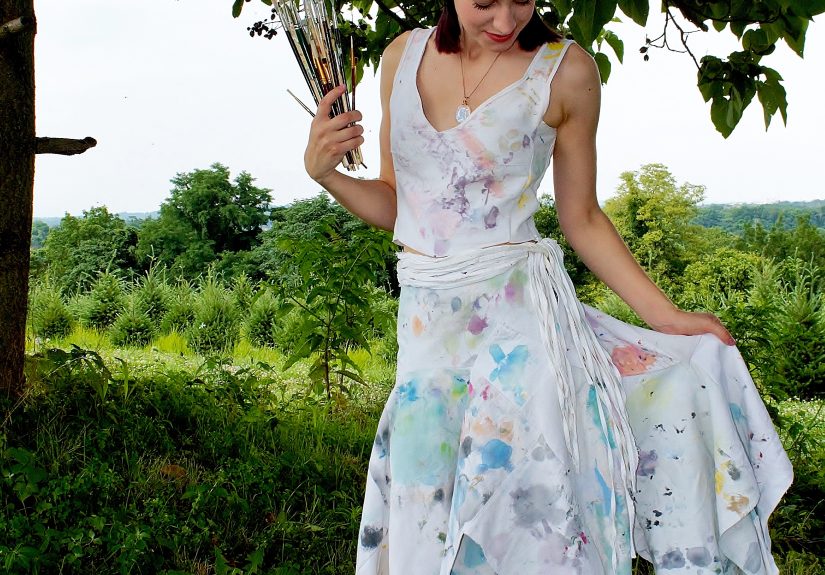
The biggest surprise was how cohesive the finished apron dress looked. I expected “adorable scrap project.” What I got was “art teacher with excellent boundaries.” The paint splatters read as texture, not mess. The mixed tones looked intentional. And because the fabric already had a broken-in hand, the dress felt comfortable almost immediately.
I also loved the practicality. This is the kind of garment you can throw over a T-shirt in spring, layer over a turtleneck in fall, or wear over leggings when you are pretending you only ran to the hardware store for one thing. The relaxed cut makes it easy to move in, and the sturdy fabric stands up to actual work. That part matters. A DIY garment should not be so precious that you are afraid to live in it.
What I Would Do Differently Next Time
Even successful projects come with notes to self. Next time, I would map the paint marks more carefully before sewing the panels together. One of my favorite splattered sections ended up mostly hidden in a side seam, which is a tragedy in the tiny world of artisanal chaos. I would also make the back straps adjustable from the start. Fixed straps are fine, but adjustable ones make layering easier and save you from the eternal sewing question: “Will I wear this with a sweatshirt?”
I might also try a version with contrast topstitching or a lower back tie for more shape. The current dress is comfortably loose, which I like, but adding a subtle waist option would make it even more versatile.
Why This Kind of Upcycling Project Actually Matters
There is something deeply satisfying about making clothes from materials that already exist. It slows you down in a good way. You start paying attention to fabric weight, seam placement, pocket construction, and wear patterns. You begin to notice how much value still lives in old textiles, especially workwear that was built to last longer than trend-driven fashion. An apron dress made from paint aprons is not just cute; it is also a small argument against disposable habits.
Projects like this also remind us that sewing is not only about producing something new. It is about editing, preserving, repairing, and reinventing. You are not merely making a dress. You are translating one useful object into another. That is part craftsmanship, part storytelling, and part refusal to let good fabric retire early.
Styling the Finished Apron Dress
Once the dress was done, I discovered it was weirdly easy to style. For painting days, I wear it over an old white tee and sneakers. For farmers market mornings, it goes over a striped shirt with clogs. For colder weather, it layers well over a fitted knit top with boots and a cardigan. It has enough structure to feel put together and enough looseness to stay comfortable. That combination is basically the holy grail of casual dressing.
If you make your own version, lean into the workwear charm. Let the pockets show. Keep some of the old stitching lines visible. Do not over-sanitize the design. The tiny imperfections are the point. They tell the truth about the fabric, and the truth is much more interesting than perfection anyway.
My Experience Turning Old Paint Aprons Into an Apron Dress
The most memorable part of this project was how emotional it felt once I got started. I thought I was just repurposing old sewing material, but each apron carried a little bit of the projects it had survived. One had white specks from a bookshelf I painted in a heat wave. Another had green streaks from a backyard bench that looked easy online and turned into a two-week negotiation with sandpaper. One had charcoal smudges from the time I swore I could “freshen up” a hallway in one afternoon and ended up repainting trim until midnight. As I cut around those marks, I realized I was not erasing the mess. I was keeping the evidence.
That changed the whole mood of the project. Instead of chasing a perfect, precious garment, I let the dress become a scrapbook with seams. I kept a splash of rust-colored paint near the hem because it looked accidental in the best way. I centered one pocket with faint blue brush marks because it reminded me of a cabinet makeover that nearly ended my patience but improved my kitchen. A few stains were too ugly to feature proudly, so they got buried inside facings or turned into test scraps. That felt right too. Not every memory needs center stage.
I also loved how forgiving the process was. Upcycling old aprons takes a lot of pressure off because the material already has history. If you mis-stitch a line, you unpick it and keep going. If a panel looks slightly wonky, it often reads as handmade character instead of failure. That freedom made me bolder. I experimented more. I stopped fussing over every tiny imperfection. Somewhere in the middle of the build, I remembered that making clothes can be fun, not just technically correct.
When I finally tried the apron dress on, I expected to feel pleased. I did not expect to feel weirdly triumphant. It was comfortable, useful, and far more stylish than it had any right to be, considering its previous life involved paint rollers and poor decision-making. The pockets sat exactly where I wanted them. The cross-back straps felt secure. The fabric had just enough weight to swing nicely without turning stiff. Best of all, the dress still looked like me. Not costume-me. Not curated social-media version of me. Just regular me, only better prepared to spill paint.
Now it hangs near my worktable, and I reach for it constantly. I wear it while painting furniture, potting herbs, sorting craft supplies, and sometimes while doing none of those things at all. It reminds me that practical clothes can still be beautiful, and old materials can still surprise you. More than anything, it reminds me that creativity does not always start with something new. Sometimes it starts with the battered pile you almost threw away, the one that looks past its prime until you spread it out under good light and realize it has one more great story left in it.
Conclusion
Turning my old paint aprons into an apron dress ended up being one of those rare DIY projects that is equal parts useful, wearable, and deeply satisfying. It gave tired fabric a second life, preserved a little bit of creative history, and produced a garment I can actually use instead of one that sits in a closet waiting for a themed occasion that never comes. If you have old aprons, shop smocks, or workwear scraps tucked away, this is your sign to look at them differently. They might not be done yet. They might just be waiting to become your favorite dress.