Table of Contents >> Show >> Hide
- What This Trend Actually Is (And What It Definitely Isn’t)
- The “20 Pics” Gallery (Text-Only Captions You Can Pair With Your Own Images)
- Why These Results Feel So Weirdly Believable
- The Tech Behind It: From Simple Morphs to Modern Generators
- Consent, Privacy, and the “Please Don’t Upload Your Whole Life” Section
- The Legal and Cultural Backdrop (Why This Isn’t Just a Silly Filter)
- So… Should You Try It?
- 500 More Words: What the Experience Feels Like (And What You Learn Fast)
- Conclusion
Confession: the internet doesn’t need another reason to argue about cheekbones. And yet… here we are. Over the past few years, “AI baby” and “face-mix” generators have turned into a full-on pastime: upload two faces, press a button, and voilàan imaginary person appears who looks like they could star in a teen drama called Genetics, But Make It Content.
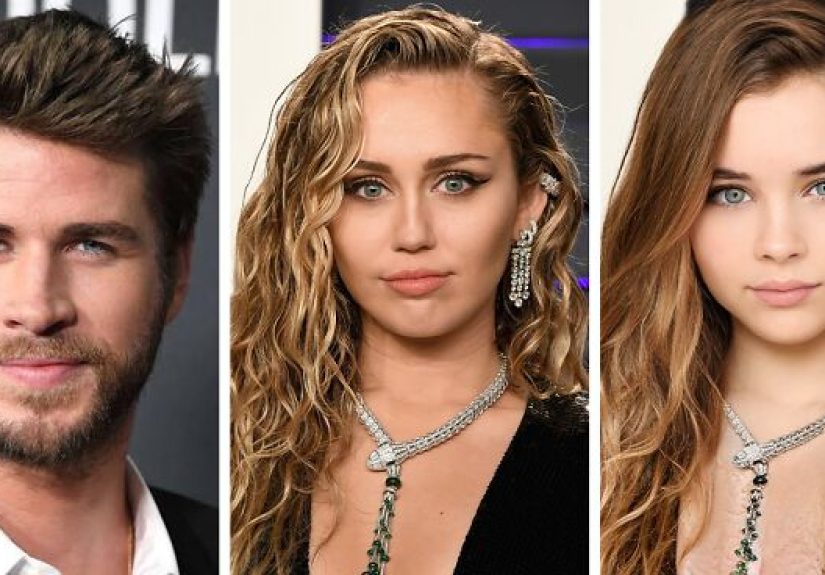
This post is a playful, text-only take on that trend: I’m sharing a “gallery” of 20 imagined kids from famous ex-couplesno real children, no real photos, and no claims that any of this is how genetics works. Think of it like a Hollywood casting director met a photo filter and decided science was optional. (It is.)
But we’re also going to be smart about it. Because the same tech that makes a cute “what if” can also raise real questions about privacy, consent, and how easily a face can be manipulated. So we’ll do both: laugh a little, learn a little, and leave with practical tips that don’t require you to hand your entire camera roll to a mystery app.
What This Trend Actually Is (And What It Definitely Isn’t)
At a high level, these “future kid” generators and face mashups do one of two things:
- Face morphing / blending: software blends features from two photos into one synthesized face. This can look surprisingly realisticsometimes too realistic.
- Generative AI “interpretation”: newer tools may use generative models to create a fresh face that “resembles” the inputs, often with smoothing, beautification, and creative guessing layered on top.
What it is not: a DNA simulator, a genetics oracle, or a preview of anyone’s real child. These tools don’t have access to actual hereditary data (and if an app claims it does, you should back away slowly while maintaining eye contact).
So treat the results like a horoscope or a movie trailer: fun, intriguing, occasionally accurate by accident, and absolutely not a legally binding prophecy.
The “20 Pics” Gallery (Text-Only Captions You Can Pair With Your Own Images)
Important note: These are fictional, for entertainment, and written as if you’re scrolling a gallery. If you’re publishing this on the web, you can insert your own AI-generated images (with consent and rights to use the source photos) where the placeholders areotherwise, the captions stand on their own.
Reality check: if you swap the source photos, lighting, angles, or ages, you’ll often get a completely different “kid.” That’s your reminder that this is a creative remixnot a biological forecast.
Why These Results Feel So Weirdly Believable
1) Our brains are built to find “family resemblance”
Humans are pattern machines. If the AI gives you two familiar traitssay, a recognizable smile shape and similar eye spacingyour brain fills in the rest. It’s like seeing a cloud that looks like a dog. Once you see it, you can’t unsee it.
2) AI tools often “beautify” by default
Many popular face apps smooth skin, balance shadows, and subtly shift proportions toward conventional beauty standards. That makes results look more “studio-ready” than a normal candid photoespecially if the source images are already professional, well-lit celebrity shots.
3) The uncanny valley is part of the entertainment
The tiny not-quite-human detailsoverly perfect symmetry, slightly “painted” texture, or a smile that’s a millimeter too smoothare exactly what makes people share the results. Your reaction becomes: “This is creepy… send me ten more.”
The Tech Behind It: From Simple Morphs to Modern Generators
Traditional face morphing blends pixels and landmark points (eyes, nose, mouth) to create an averaged image. Modern AI can go further, synthesizing a brand-new face that “matches” both inputs in a more holistic way.
Either way, here’s the big takeaway: the algorithm is optimizing for plausibility, not truth. It wants to create something that looks like it could exist, even if the path it takes has nothing to do with actual inheritance.
And because morphing can be used outside of harmless funlike identity fraudserious organizations have studied it as a security risk. That’s a hint: this is powerful image manipulation, even when it’s wearing a cute “baby predictor” costume.
Consent, Privacy, and the “Please Don’t Upload Your Whole Life” Section
Here’s where we stop giggling for a moment. Face-mixing trends live at the intersection of entertainment and sensitive biometric data (your face). If you’re using an app, you’re typically sharing images that can be stored, analyzed, or repurposed depending on the company’s policies.
Smart ways to enjoy the trend without regretting it later
- Use photos you have the right to use. If you’re mixing celebrity faces, remember: likeness rights and usage rights can get complicatedespecially for commercial publishing.
- Get consent from real people whose photos you upload. “It’s just a joke” doesn’t feel as funny when someone didn’t agree to be part of it.
- Avoid uploading children’s photos. Kids can’t meaningfully consent, and their images are especially sensitive.
- Read the privacy policy like a detective. Look for whether images are stored, how long they’re kept, and whether they’re used for “improving services” (sometimes a euphemism for training or testing).
- Prefer local/offline editing when possible. If a tool can run on-device, that can reduce risk (though you should still verify what it does).
- Limit what you share publicly. Posting the output is optional; your privacy doesn’t need to be sacrificed for a few likes.
The Legal and Cultural Backdrop (Why This Isn’t Just a Silly Filter)
Across the U.S., policymakers, unions, and agencies have been paying attention to synthetic media because it’s easy to cross the line from playful to harmful.
Right of publicity and “digital replica” worries
In many contexts, the key concern is the unauthorized use of someone’s name, image, likeness, or voiceespecially for commercial gain. That’s why you’ll see “right of publicity” discussed in relation to deepfakes and AI replicas. Even when something is technically possible, it may not be ethically or legally okay.
Creators and performers want guardrails
Entertainment professionals have pushed for clearer consent standards around digital replicas, because AI makes it easier to create convincing lookalikes and voice clones at scale. In other words: your face is not a free stock asset.
Transparency is becoming a bigger deal
Some newer laws and proposals emphasize disclosure (so people know what they’re seeing) and consent (so creators and individuals have control). That matters even for lighthearted trends, because culture is where norms get set. Today it’s a celebrity mashup; tomorrow it’s someone’s identity being used in a way they never agreed to.
So… Should You Try It?
If you treat it like a party trickand you do it responsiblythis trend can be harmless fun. The problems start when:
- people upload photos without consent,
- apps are unclear about how they store or reuse images,
- outputs are presented as “real” or used to mislead,
- or someone’s likeness becomes content they can’t control.
The best version of this trend is the one where you laugh, learn something about how AI “imagines,” and then close the app without handing over more personal data than necessary.
500 More Words: What the Experience Feels Like (And What You Learn Fast)
Trying the “AI kids of famous ex-couples” trend feels a lot like walking into a carnival funhouseexcept the mirrors have read too many celebrity magazines. The first thing that happens is curiosity: you think you’re about to see something totally random, and then the result pops up and your brain does that little snap-to-focus move, like, “Wait… that kinda makes sense.” It’s the same feeling as spotting a lookalike in a crowd. You don’t need perfection; you just need a few familiar signals for your mind to connect the dots.
Then comes the second phase: experimentation. People quickly realize the output changes dramatically depending on the photos you choose. A red-carpet portrait gives one vibe; a candid gives another. Different lighting makes the AI “inherit” different features, even though real genetics doesn’t work that way. That’s when you start understanding the trick: the model isn’t calculating DNA; it’s remixing visual cues. In practice, this is why these tools can feel magical one minute and completely off the rails the nextone image gives you a believable “blend,” and another gives you a face that looks like it was designed by a committee of algorithms that never met a human.
There’s also a social element that sneaks up on you. The trend is basically built for sharing: people love comparing results, arguing about which parent “won,” and pretending the AI is a tiny casting director. But if you’re paying attention, you’ll notice something else: the more realistic the face looks, the more you feel a tiny pinch of discomfort. Not because it’s scary-scary, but because it’s convincing. It’s a reminder that image manipulation isn’t new, but it is now fast, cheap, and accessible. That’s a big shift from “Photoshop experts” to “anyone with a phone.”
And that leads to the most useful lesson people take away: you start caring about privacy policies in a way you didn’t before. When the tool asks for photo access, you suddenly think, “Do I want to give this app my entire life in JPEG form?” A lot of folks switch from uploading a whole library to using a couple of carefully chosen images, or they decide not to upload anything sensitive at all. If you do try the trend, the best experience is the one where you stay in control: pick images you have the right to use, avoid posting anything that could embarrass someone later, and remember that the fun isn’t worth trading away your personal data.
In the end, the trend is entertaining because it sits right on a cultural sweet spot: celebrity fascination, “what if” storytelling, and AI that feels like a magic trick. Enjoy it like a magic trick. Don’t treat it like a crystal balland don’t let it turn your face into someone else’s permanent dataset.
Conclusion
AI face-mix trends are a modern form of pop culture fan fiction: they look real enough to spark arguments, but they’re ultimately creative guesses. If you’re going to play, play responsiblyuse images you’re allowed to use, get consent, protect privacy, and label AI outputs clearly when you publish. You can enjoy the “wow” without turning your digital identity into collateral damage.