Table of Contents >> Show >> Hide
- Wait, Japan Really Sent Gundams to Space?
- Meet G-SATELLITE: Tiny Box, Huge Geek Energy
- How the Gundam Satellite Got to Space
- Why Send Gundams to Space for the Olympics?
- What This Means for Fans Around the World
- A Fan’s-Eye View: Imagining the Gundam Satellite Experience
- Bottom Line: Plastic Robots, Real Inspiration
Only Japan could look at the Olympic Games and say, “You know what this really needs? Giant space robots.” And then actually do it.
For Tokyo 2020, Japan launched a tiny satellite packed with even tinier Mobile Suit Gundam models into orbit to cheer on athletes from space. The project, called “G-SATELLITE Go to Space”, turned decades of mecha anime dreams into a very real, very nerdy orbital PR campaign. Think of it as a cross between aerospace engineering, fandom culture, and the world’s most extra good-luck charm.
Behind the memes and excitement is a genuinely fascinating story about how a 3U CubeSat, a national pop-culture icon, and the Olympic movement ended up sharing the same mission: inspire people around the globe. Let’s unpack how Japan ended up sending Gundams to space for the 2020 Olympics, what the satellite actually did up there, and why this goofy-sounding stunt is a surprisingly serious glimpse into the future of space-age storytelling.
Wait, Japan Really Sent Gundams to Space?
Yes. This is not a fan animation, not an April Fools’ joke, and not some concept art that never left the PowerPoint stage. Japan literally launched Gundam figures into orbit as part of the official Tokyo 2020 program.
The project was created under the Tokyo 2020 “ONE TEAM PROJECT”, a campaign designed to show off Japan’s creativity and technology in the lead-up to the Games. The Tokyo 2020 organizing committee teamed up with:
- JAXA (Japan Aerospace Exploration Agency)
- The University of Tokyo, specifically the Intelligent Space Systems Laboratory
- Bandai, the company behind Gunpla (Gundam plastic model kits)
The result: an ultra-small satellite called G-SATELLITE, built to carry miniature figures of the original Gundam and Char’s Zaku into orbit. From there, they would “watch” the Games, display messages of support on an electronic billboard, and beam images back down to Earth.
From Anime Classic to Orbital Mascot
Mobile Suit Gundam isn’t just another anime; it’s one of Japan’s most influential sci-fi franchises. Debuting in 1979, it helped define the “real robot” genre, mixing political drama, war, and space colonies with giant humanoid machines. Over the decades, it evolved into a multimedia empire of TV shows, movies, novels, video games, and a mountain of model kits.
For Tokyo 2020, Gundam was the perfect choice: recognizable worldwide, intrinsically tied to space, and deeply beloved at home. Sending Gundam into orbit was like Japan saying, “This is who we are: tech-obsessed, anime-loving, and absolutely willing to launch plastic robots into space for fun and inspiration.”
Meet G-SATELLITE: Tiny Box, Huge Geek Energy
Despite the dramatic premise, the hardware itself is small enough to fit in a backpack. G-SATELLITE is a 3U CubeSat that means it measures roughly 10 cm × 10 cm × 30 cm, weighs only a few kilograms, and is based on Japan’s existing TRICOM-1R nanosatellite design.
What’s Inside the Gundam Satellite?
The satellite’s interior is like a tiny space diorama that also happens to be a functioning spacecraft. Inside the G-SATELLITE:
- A small compartment houses two custom-made figures: a Gundam and Char’s Zaku.
- There is an electronic bulletin board to display messages supporting the Olympic and Paralympic Games.
- Up to seven onboard cameras capture the figures, Earth, and the message board from multiple angles.
Outside, the satellite looks like a modest rectangular box, but once it’s in orbit, a special “cockpit” section opens up so that the figures can be seen by the cameras with Earth in the background. The Gundam’s and Zaku’s eyes were engineered to light up in the five Olympic colors, giving the whole setup a playful, ceremonial vibe.
Space-Grade Gunpla: Not Your Average Model Kit
These aren’t the same model kits you rage-build on your desk at 2 a.m. after losing a tiny wrist joint. To survive the harsh conditions of space, the Gundam and Zaku figures had to be:
- Scaled to fit inside the small satellite volume (just under 4 inches tall)
- Made from special materials and paints that could withstand vacuum, radiation, and extreme temperature swings
- Tested for vibration and impact during launch conditions
Engineers put the models through simulations of launch stress and vacuum tests to make sure nothing cracked, flaked, or off-gassed in a way that would damage the satellite. It’s a weird but wonderful fusion of toy design and aerospace engineering.
How the Gundam Satellite Got to Space
G-SATELLITE didn’t hitch a ride on some giant Gundam-shaped rocket (sadly). Instead, it followed a very modern route to orbit.
From Earth to ISS to Orbit
The satellite was integrated into a deployer and loaded aboard a SpaceX Dragon cargo spacecraft as part of a resupply mission to the International Space Station. Once it arrived, the satellite was stored in Kibo, the Japanese Experiment Module on the ISS.
From there, G-SATELLITE was deployed into low Earth orbit using a dedicated satellite deployer, a kind of mechanical “airlock slingshot” that gently releases CubeSats into space. The original plan was for deployment around March–April 2020 so it could orbit throughout the Tokyo 2020 Olympic and Paralympic Games period.
Of course, the COVID-19 pandemic delayed the Games to 2021, but the project retained the “Tokyo 2020” branding and symbolism. The satellite’s mission still aligned with the same goal: cheer on athletes and share messages of hope from orbit.
What Did the Gundam Satellite Actually Do Up There?
Once deployed, G-SATELLITE circled Earth at high speed (roughly 90 minutes per orbit, like other low Earth orbit satellites). During its mission, it was designed to:
- Display support messages on the onboard electronic bulletin board in English and Japanese
- Capture images and short video clips of the Gundam and Zaku models with Earth in the background
- Transmit that visual data down to ground stations to be used in broadcasts and digital content related to the Games
In other words, the satellite served as a kind of floating space billboard and cosmic fan cam for the Olympics. Instead of fans waving flags in the stadium, we had Gundams silently staring down at Earth with multicolored eyes and LED pep talks.
Why Send Gundams to Space for the Olympics?
On the surface, this whole thing sounds delightfully ridiculous. But beneath the memes, it’s a clever piece of national branding, soft power, and science outreach.
Blending Pop Culture and High Tech
Japan has long used pop culture icons from Hello Kitty to Doraemon as ambassadors. With Gundam, the country chose a franchise that sits exactly at the intersection of science fiction, robotics, and space. Sending Gundam into orbit is like Japan saying, “Our science and our stories belong together.”
The Olympics themselves are about pushing human limits. Pairing that with a satellite mission framed around a legendary mecha series creates a narrative: just as athletes strive for gold, humanity strives for the stars. It’s marketing, yes, but also metaphor.
Inspiring the Next Generation of Engineers and Fans
The University of Tokyo and JAXA didn’t just want a flashy publicity stunt; they wanted a project that would get kids and young adults excited about space. When you tell students, “We’re building a nanosatellite,” you get some interest. When you add, “Also, it’s carrying Gundam,” suddenly every anime and STEM nerd in the room is paying attention.
Project leaders talked about using this mission to show that space is no longer a distant dream but a practical, collaborative arena where creativity matters. The message is clear: if you love robots, stories, and science, there’s a place for you in the future of space exploration.
A Glimpse of Future “Space Olympics”
Another quietly bold idea baked into the project is the notion that space and global events will continue blending. G-SATELLITE is the first Olympic satellite commissioned specifically to orbit during a Games, but probably not the last.
Today it’s tiny robots sending messages. Tomorrow? Maybe relay satellites that enable more immersive broadcasts, mixed-reality views of events from orbit, or even preliminary demonstrations for sports in microgravity. G-SATELLITE doesn’t just decorate the Games; it hints at a timeline where humanity’s big cultural moments routinely have a presence in space.
What This Means for Fans Around the World
You didn’t have to be in Tokyo to enjoy the Gundam satellite. The project was heavily promoted through international media, social channels, and fan communities. For many people, seeing images of Gundam and Char’s Zaku floating against the curve of Earth was an oddly emotional experience a mix of nostalgia, pride, and “I can’t believe this is real.”
For longtime Gundam fans, the mission was almost poetic. The franchise spent decades imagining orbital colonies, Lagrange point battles, and space-faring mobile suits. Now, pieces of that imagination even if only in the form of small plastic models had finally crossed that line into actual space.
For casual Olympic viewers, it showcased Japan in a way that felt authentic. Instead of trying to be generically “futuristic,” the country leaned fully into what it’s known for: detailed craft, meticulous engineering, and unabashed nerd culture.
A Fan’s-Eye View: Imagining the Gundam Satellite Experience
To really appreciate how cool this project is, imagine you’re a fan following Gundam and the Tokyo Games from home.
You wake up early one morning, grab your coffee, and open a live stream from JAXA or a news site. The broadcast shows animation of a small satellite leaving the ISS’s Kibo module. Commentators explain that inside this little box, two tiny mecha are about to start their own mission, not in a war for the One Year War, but as hype crew for the Olympics.
Later, social media starts filling with images: a Gundam and Zaku, their eyes glowing in Olympic colors, with Earth’s blue curve in the background. The LED board under their feet flashes a message like “GO TOKYO 2020!” or “CHEER FOR THE ATHLETES!” Suddenly, all those model kits on your shelf feel just a little more connected to the real universe outside your window.
If you’re a kid seeing this for the first time, it’s a powerful combination: the anime robot you adore, the global sports event everyone is talking about, and the very real technology that makes spaceflight possible. Maybe you start googling “CubeSat,” “JAXA internships,” or “how to study aerospace engineering.” That’s exactly the kind of quiet ripple effect projects like this are designed to create.
If you’re an adult fan, it hits differently. You remember watching Gundam late at night, renting VHS tapes, or streaming episodes online. You remember when the idea of private companies launching rockets was still sci-fi. Now you’re living in a world where an anime mecha is literally in orbit cheering on swimmers, sprinters, and gymnasts. It feels like the future you were promised finally decided to show up.
Visiting Japan during the Games (or in the surrounding years), you might make a kind of “Gundam pilgrimage”:
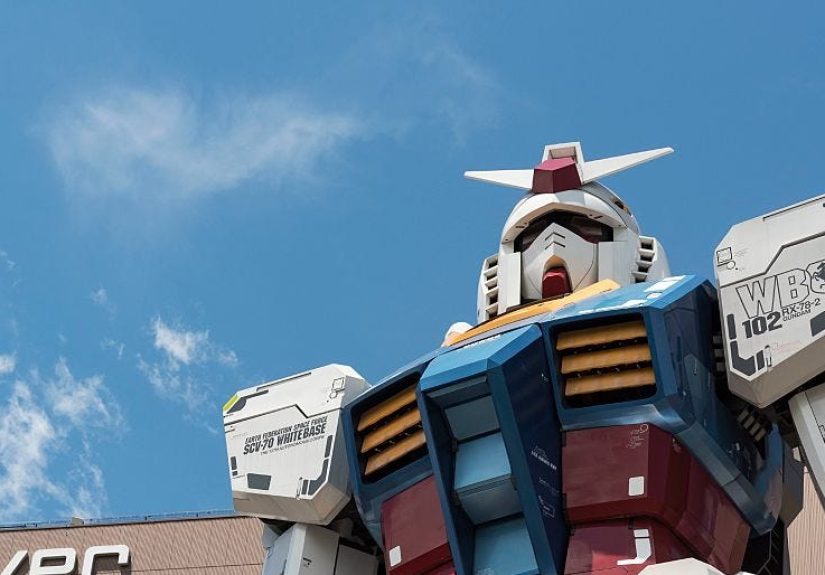
- Stop by the life-size moving Gundam in Yokohama or the full-scale statue in Odaiba.
- Check out a Gundam Base store to see limited-edition Gunpla tied to the G-SATELLITE mission.
- Browse exhibits or displays showing a replica of the satellite, learning how its cameras, solar panels, and electronics all fit into that tiny frame.
Even if you never see the actual satellite, the idea that somewhere above your head a small Gundam has orbited Earth leaves a permanent mark. It turns the sky into part of the story.
And that’s the real magic of “Japan is sending Gundams to space for the 2020 Olympics.” It’s not just about a clever headline; it’s about weaving together fandom, science, national identity, and global celebration into one compact, solar-powered package. The satellite will eventually burn up in the atmosphere, but the memory and the inspiration sticks around much longer.
Bottom Line: Plastic Robots, Real Inspiration
On paper, launching Gundam models into space for the Olympics sounds like a novelty. In practice, it’s a symbol of how culture and technology are merging in the 21st century. Japan took a beloved anime about humanity’s future in space and used it to energize a global sporting event, spotlight its aerospace capabilities, and inspire the next wave of engineers and dreamers.
As more countries and companies head to orbit, expect to see more projects like G-SATELLITE missions that are part science, part storytelling, and 100% designed to make people look up and feel something. Today it’s Gundam and Char’s Zaku; tomorrow, who knows? Maybe the first “space halftime show” or a relay race watched in real time from a satellite’s point of view.
For now, it’s enough to know that during the Tokyo 2020 era, while athletes chased records on the ground, a couple of anime robots were silently cheering from above, proving once again that in Japan, the line between fiction and reality is not so much a wall as a launchpad.